Showing posts with label Purim. Show all posts

Monday, February 26, 2018

Why was Esther Chosen to be the Queen?

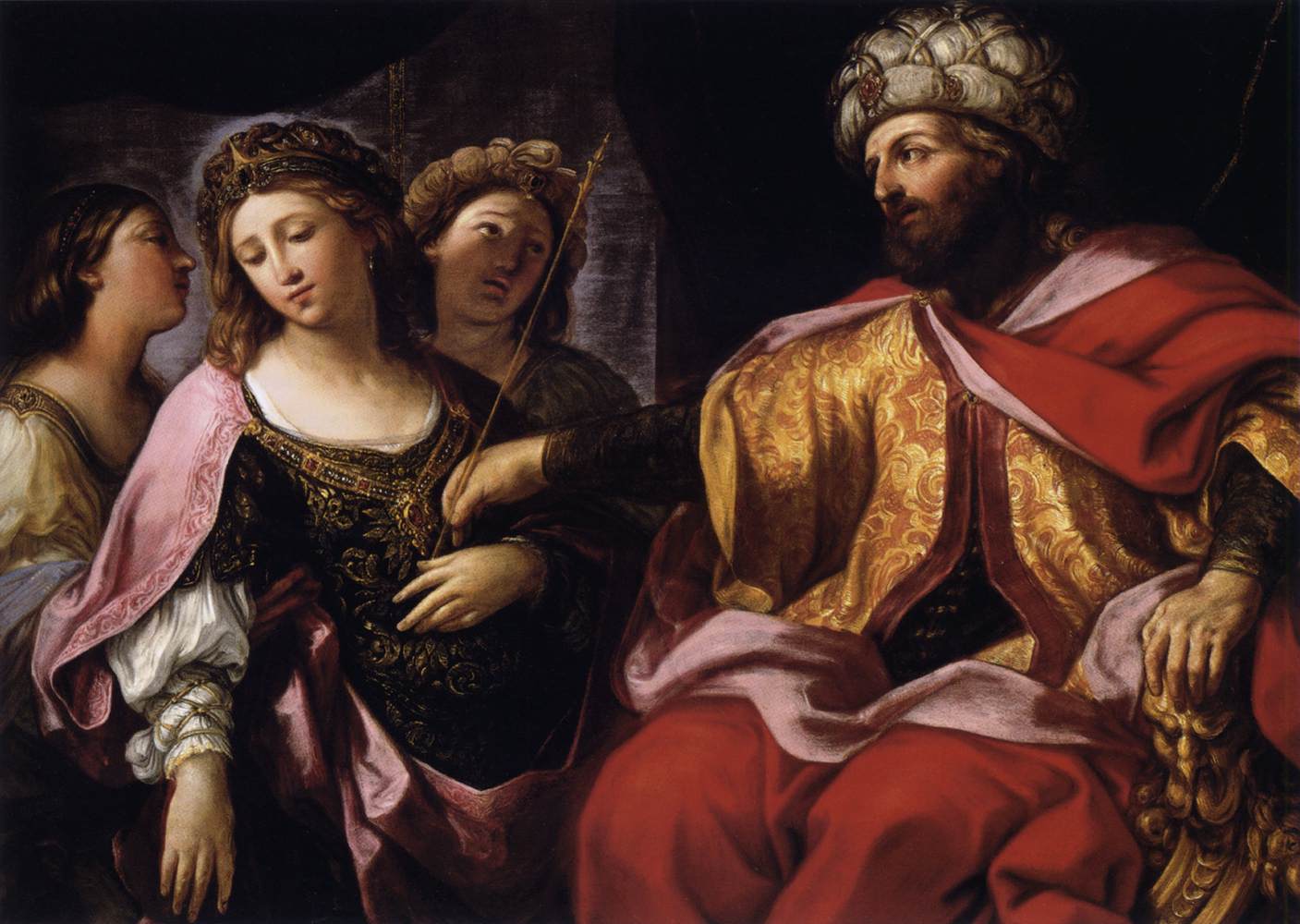
Why did Achashverosh pick Esther? Why did the most powerful man in the world choose a queen of unknown origin, who refused to divulge her nationality and family connections?

Last night, I was studying the Megilah with my daughter at wonderful father-daughter program at אולפנת בני עקיבא אבן שמואל, and a thought came to mind: Perhaps he chose Esther specifically because she came without any baggage. Throughout history, monarchs married to create political alliances. Yet, while Achashverosh might have understood the need for a queen, he saw no need for any new political connections that would obligate him in the future. So, when he finally came upon a girl with no past, that would tell him nothing about herself (and would presumably have no father-brother-uncle making political demands), he chose her immediately.

Ironically (and isn't irony the key the Megillah?), the Persian King would soon discover that Esther, like all of us, did come from somewhere, and would one day make demands on behalf of her people.

Thursday, March 9, 2017

Audio Shiur: Megillat Esther Chapter 7 - The Crazy High Point of the Story

Audio Shiur:
Megillat Esther Chapter 7 - The Crazy High Point of the Story

What is Esther's plan as she enters the king's chamber for the fateful party with Haman? How does she think that things will go? Whatever she thinks, things clearly do not go as planned. With the help of some truly sensational Midrashim, we learn just how unlikely the outcome of the Purim story really was.

Click here to navigate to the shiur on YUTorah.org.

Click on the player below to play the Shiur or right click here to download)


Did you know that this shiur is available as a free podcast on iTunes? Click here to subscribe - and leave a comment and rating so more people will find the shiur! Thanks!

Wednesday, March 1, 2017

Audio Shiur: Megillat Esther - Who is Achashveirosh?

Audio Shiur:
Megillat Esther - Who is Achashveirosh?

Achashveirosh is probably the most overlooked major player in the story of Purim. Who is he? Where did he come from? Even more importantly, what was he like? What important lessons can we learn from the answers to these questions?

Click here to navigate to the shiur on YUTorah.org.

Click on the player below to play the Shiur or right click here to download)


Did you know that this shiur is available as a free podcast on iTunes? Click here to subscribe - and leave a comment and rating so more people will find the shiur! Thanks!

Monday, March 10, 2014

Purim and Panem


At the Presidential Palace in Shushan (Panem)
I recently saw Catching Fire, the second Hunger Games film, which depicts a world in which a vibrant, rich, ostentatious capitol survives by enslaving and oppressing surrounding regions which must support and supply its largesse. During the movie, the two main characters find themselves at a magnificent party at the President's palace. Encouraged to eat yet another treat, Peeta explains that he cannot eat another bite. To this he is offered a glass of liquid in a fancy goblet. When he asks about the liquid he is told that the liquid makes you throw up, so you can then continue eating. "How else can you taste everything here?"
That's the world of the Capitol: A life of fancy television programs; of fantasy and fashion on the surface, firmly rooted in and dependant on oppression, torture and murder. Beauty in the Capitol literally is only skin deep, as an entire society justifies the systematic murder of children as ultimately in the long-term best interest of society.

Then it came to me. Panem is Shushan. Where else would a king demand that his queen appear "in all her glory" for everyone to see, but a place that values externality and excess over substance. Where else would you find a "feast for all his princes and his servants; the army of Persia and Media, the nobles and princes of the provinces, being before him; when he showed the riches of his glorious kingdom and the honour of his excellent majesty, many days, even a hundred and fourscore days"? (1,3-4) The Megillah takes pains to describe, in painful detail, the emphasis on the external, the beautiful, the magnificent.
There were hangings of white, fine cotton, and blue, bordered with cords of fine linen and purple, upon silver rods and pillars of marble; the couches were of gold and silver, upon a pavement of green, and white, and shell, and onyx marble.  And they gave them drink in vessels of gold--the vessels being diverse one from another--and royal wine in abundance, according to the bounty of the king. (1,6-7)

Before the maidens could be brought before the king for their night-long "examination", they had to undergo extensive preparations:
Now when the turn of every maiden was come to go in to king Ahasuerus, after that it had been done to her according to the law for the women, twelve months--for so were the days of their anointing accomplished, to wit, six months with oil of myrrh, and six month with sweet odours, and with other ointments of the women... (Esther 2,12)
And when the king wishes to give honor to an unnamed favorite, what advice does Haman give? 
Let royal apparel be brought which the king useth to wear, and the horse that the king rideth upon, and on whose head a crown royal is set; and let the apparel and the horse be delivered to the hand of one of the king's most noble princes, that they may array the man therewith whom the king delighteth to honour, and cause him to ride on horseback through the street of the city, and proclaim before him: Thus shall it be done to the man whom the king delighteth to honour.' (Esther 6,8-9)

How about a better job? A raise? Greater responsibility? Nope. Those things don't seem to cross Haman's mind. All that matters is external glory: to be "seen" in the king's garb, riding the king's horse. Haman is totally tapped into the Shushan vibe: You want to honor me? I want to look even better than I already do. What can the king give a man who spent his days and nights with the king himself? What better than to dress like the king?

The facts themselves aren't that interesting. Rather, more interesting is the external emphasis as described in such numbing detail in the Megillah. Who cares that each maiden spent six months sitting in myrrh oil and six months sitting in other sweet scents? But that's precisely the point. They cared. In Shushan, not only were these details important. They were the most important details. A girl wouldn't dream of appearing before the king without the "right" clothes, having the "right" stylist.

This, the Megillah teaches us, is how we recognize that a society has rotted to its core. When style trumps substance, and success is measured in terms of popularity and style - to the exclusion of any other consideration. It is at this point that society is primed for moral indifference. Genocide is fine, as long as it puts on a pretty face.

Purim is all about opposites. ונהפוך הוא. Left is right, up is down. Ahashveirosh rules the world, yet he cannot even remove a law he dislikes. Haman, armed with the signet of the king is all-powerful, until the moment of truth arrives, and he finds himself groveling on the ground for his life. Esther is the meek, moldable queen, until she reveals that she has been masterminding the story all-along. Finally, Mordechai, the lowly and degraded Jew, shows the world what happens when a Jew refuses to prostrate himself, and stands up for his pride and his people.
Our celebration of Purim reflects this inverted reality.
On Purim, we "dress up", wear masks and pretend to be someone other than ourselves, until we drink enough that we can no longer conceal our inner secrets. נכנס יין, יצא סוד. – "When wine enters, secrets emerge."
Purim is about peeling back the layers of the onion; peeling off the rotten external shell, to find vibrant, sharp and powerful layers lying deep beneath the surface. Purim forces us to confront stark truths and to wonder whether we aren't just fooling everyone else, but ourselves as well.

Where do we live? Do our lives revolve around internal truths, guided and grounded by firm moral and spiritual principles? Or do we live in the Capitol of Panem/Shushan, where externalism, fashion and show matter most, and carry the day? Purim isn't just a day of costumes and revelry. Rather, on the day that we put on our play masks, we take off our real masks as well.

Wednesday, March 5, 2014

Unraveling the Puzzle of Megillat Esther

Megillat Esther is a brilliant work.

On the one hand, it masterfully and suspensefully relates the Purim story - a story we all know. Yet, like all great books, each re-reading offers a new and unexpected pleasure. I still get a kick out of how the Megillah refers to "all the people who loved [Haman], and Zeresh, his wife." (5,10)

But, as we know, the Megillah is much more than that. Woven into the fabric of the work - hidden beneath the surface - like Esther's Jewish identity, is a core of religious identity and belief essential to our identity as Jews.

Therein lay the brilliance of Mordechai and Esther: On one hand, they wrote an entirely secular story which they spread across the known world. But, read with the proper perspective, that very same work represents a core religious Jewish text.


I'd like to give one, very simple example of how Chazal read the book of Esther.

A very famous gemara in Shabbat (88a) relates that the Revelation on Har Sinai was a bit more dangerous than we might have considered:

ויתיצבו בתחתית ההר (שמות, י"ט, יז). אמר רב אבדימי בר חמא בר חסא: מלמד שכפה הקדוש ברוך הוא עליהם את ההר כגיגית, ואמר להם: אם אתם מקבלים התורה - מוטב, ואם לאו - שם תהא קבורתכם
אמר רב אחא בר יעקב: מכאן מודעא רבה לאורייתא
אמר רבא: אף על פי כן, הדור קבלוה בימי אחשורוש; דכתיב (אסתר, ט', כז) "קיימו וקבלו היהודים" - קיימו מה שקיבלו כבר
"And they stood at the foot of the mountain" (Shemot 19,17) Said Rav Avdimi bar Chama bar Chasa: This [verse] teaches us that God held the mountain over them like a barrel and said to them, 'If you accept the Torah - very well; But if not - here is where you will be buried!"

Said Rav Acha bar Yaakov: From this [statement] there is a great criticism against the Torah (Rashi - because the Jewish people were forced to accept the Torah).

Said Rava: Nonetheless, they later accepted [the Torah] during the times of Achashveirosh, as it is written, "The Jews fullfilled and accepted" - [this means that] they fulfilled what they had already accepted.

This short piece of Aggadah is rich with meaning, and raises many important questions. Yet, I'd like to focus on the final statement of Rava who derives the fact that the Jews willingly accepted the Torah during the times of Mordechai and Esther from the words קימו וקבלו היהודים - "the Jews fulfilled and accepted."

How does Rava arrive at his conclusion? Where does he see this deeper meaning hidden in the text? The answer is, in fact, right before our eyes, if we know how to properly piece the puzzle together.


In the text of the Megillah, the verse cited seems to have nothing to do with the Torah at all, but instead seems to be about the acceptance of Purim.

;קִיְּמוּ וקבל (וְקִבְּלוּ) הַיְּהוּדִים עֲלֵיהֶם וְעַל-זַרְעָם וְעַל
כָּל-הַנִּלְוִים עֲלֵיהֶם, וְלֹא יַעֲבוֹר--לִהְיוֹת עֹשִׂים אֵת שְׁנֵי
הַיָּמִים הָאֵלֶּה, כִּכְתָבָם וְכִזְמַנָּם:  בְּכָל-שָׁנָה, וְשָׁנָה.
The Jews fulfilled, and took upon them, and upon their descendants, and upon all
such as joined themselves unto them, so as it should not fail, that
they would keep these two days according to the writing thereof, and
according to the appointed time thereof, every year; 

Yet, when we consider the verse (and the phrase at hand) one of the words seems unnecessary and unusual. Why does the verse say that קימו וקבלו - "they fulfilled and took upon themselves" when it could have simply said, קבלו היהודים עליהם ועל זרעם - "the Jews accepted upon themselves and upon their descendants". What is the extra word telling us? How can one fulfill something before he even accepts it?

Yet, this very paradox reminds us of another, similar phrase found in the Torah:

 וַיִּקַּח סֵפֶר הַבְּרִית וַיִּקְרָא בְּאָזְנֵי הָעָם וַיֹּאמְרוּ כֹּל אֲשֶׁר דִּבֶּר ד' נַעֲשֶׂה וְנִשְׁמָע
And [Moshe] took the Book of the Covenant and read it in the ears of the nation, and they said, 'Everything that God said we will do and we will hear."

It's precisely the same progression:


קיימו -- קבלו
נעשה  -- נשמע

This, I believe, is exactly what the authors of the Megillah were hinting to at the conclusion of the Purim story.

The Jews living at that time didn't just commit themselves to keeping the holiday of Purim in the future. Rather, what precipitated the tragedy of Purim was the wholesale abandonment of the Torah after the exile from Jerusalem. The tragedy of Purim forced the Jews to make a choice: do we want to just die like Jews, or do we want to live like Jews as well.
קיימו וקבלו היהודים.

They rechose, yet again, after the events of Achashveirosh. If we're going to suffer the hatred against the Jews, ought we not live by the values that God gave us as well?
Yet another piece to the Purim puzzle.

Saturday, February 23, 2013

A Little Patience

I've been trying to work on my patience recently, to little avail. Still working. Tonight I noticed that Haman's lack of patience brought about his downfall.
During the Purim story, when Haman, filled with anger at the fact that Mordechai refuses to bow down to him, even after being invited to the queen's private party, receives the following advice from his wife (who is specifically not listed as one of his "friends"):
וַתֹּאמֶר לוֹ זֶרֶשׁ אִשְׁתּוֹ וְכָל-אֹהֲבָיו, יַעֲשׂוּ-עֵץ גָּבֹהַּ חֲמִשִּׁים אַמָּה, וּבַבֹּקֶר אֱמֹר לַמֶּלֶךְ וְיִתְלוּ אֶת-מָרְדֳּכַי עָלָיו, וּבֹא-עִם-הַמֶּלֶךְ אֶל-הַמִּשְׁתֶּה שָׂמֵחַ; וַיִּיטַב הַדָּבָר לִפְנֵי הָמָן, וַיַּעַשׂ הָעֵץ.
Then said Zeresh his wife and all his friends unto him: 'Let a gallows be made of fifty cubits high, and in the morning speak thou unto the king that Mordechai may be hanged thereon; then go thou in merrily with the king unto the banquet.' And the thing pleased Haman; and he caused the gallows to be made. 

Yet, Haman couldn't wait until the morning. No, he had to speak to the king right away. So, that night, he made his way to the palace to receive the king's blessing to execute Mordechai.
Wouldn't you know it; he just happened to pick the absolute worst night for his request; the very same night that the king was wondering how to reward Mordechai for saving his life. Imagine if he had waited until morning. I can see the king pondering how to reward Mordechai for a while, then tabling the issue as sleep overcame him, and in the morning, forgetting about the matter entirely.
Yet, Haman couldn't wait. And his inability to act with even a modicum of patience contributed to his downfall.
Esther, on the other hand, represents a model of patience. When she finally agrees to pay an unplanned visit to the king, she sensibly instructs the people to fast together with her for three days. But then, instead of bringing her request directly to the king, she...invites him to another party. Even the way she invites him strings him along, making him wait, and wait...just to find out what it is that she wants.
וַתַּעַן אֶסְתֵּר, וַתֹּאמַר:  שְׁאֵלָתִי, וּבַקָּשָׁתִי.  אִם-מָצָאתִי חֵן בְּעֵינֵי הַמֶּלֶךְ, וְאִם-עַל-הַמֶּלֶךְ טוֹב, לָתֵת אֶת-שְׁאֵלָתִי, וְלַעֲשׂוֹת אֶת-בַּקָּשָׁתִי--יָבוֹא הַמֶּלֶךְ וְהָמָן, אֶל-הַמִּשְׁתֶּה אֲשֶׁר אֶעֱשֶׂה לָהֶם, וּמָחָר אֶעֱשֶׂה, כִּדְבַר הַמֶּלֶךְ.
Then answered Esther, and said: 'My petition and my request is-- if I have found favor in the sight of the king, and if it please the king to grant my petition, and to perform my request--let the king and Haman come to the banquet that I shall prepare for them, and I will do to-morrow as the king hath said

"Sure," she says to the king, "I'll tell you what I want, and what I risked my life to ask you...tomorrow."
It cannot be a coincidence that the king had trouble sleeping that night. Too many questions swirled around in his head to allow him to sleep, all because Esther, instead of rushing head on, took her time, and let him stew over one simple question: What does she want?
A little patience destroyed Haman, and saved the Jewish people.

Tuesday, March 6, 2012

Shades of Grey in the Purim Story


When we were young, we viewed the events surrounding us in black and white. Looking to categorize the confusion surrounding us, we searched for some level of simplicity in order to make some sense of the world. Our children are no different.
And yet, as we grow older we recognize that life is not always (actually almost never) black and white. We are often forced to decide between two competing values, both of which are good, or bad.
To my mind, Megillat Esther represents a perfect example of this phenomenon. At first glance, when we read the story of the Megillah, everything seems straightforward. There are heroes (Mordechai and Esther) and a villain (Haman). The "good" people do the right things, while the evil ones come dangerously close to genocide. Yet, when we take a deeper look at the Purim story with the assistance of the Midrash, we find that often the choices our heroes made were not at all clear at the time, and that they were forced to make difficult and agonizing decisions. I'd like to one example from the Megillah that I believe represents a good springboard for a broader discussion with our children about the choices that Mordechai and Esther face, and how not everything is as black and white as it seems.

Esther's Challenge
When Mordechai learns of Haman's plot to destroy the Jewish people, he rushes to the palace instructing Esther to approach the king and beg him to save the Jewish people. Esther demurs, suggesting that she wait until Achashverosh calls her himself. After all, everyone knows that anyone who appears before the king uninvited is subject to immediate execution. Mordechai insists that she not delay at all, telling her,
אַל-תְּדַמִּי בְנַפְשֵׁךְ, לְהִמָּלֵט בֵּית-הַמֶּלֶךְ מִכָּל-הַיְּהוּדִים. כִּי אִם-הַחֲרֵשׁ תַּחֲרִישִׁי, בָּעֵת הַזֹּאת--רֶוַח וְהַצָּלָה יַעֲמוֹד לַיְּהוּדִים מִמָּקוֹם אַחֵר, וְאַתְּ וּבֵית-אָבִיךְ תֹּאבֵדוּ; וּמִי יוֹדֵעַ--אִם-לְעֵת כָּזֹאת, הִגַּעַתְּ לַמַּלְכוּת.
Think not that you shall escape in the king's house, more than all the Jews. For if you remain silent at this time, then will relief and deliverance arise to the Jews from another place, but you and your father's house will perish; and who knows whether you did not come to royal estate for such a time as this?
In other words, "Go now. Don't delay, even for a moment."
And yet, was Esther's request so strange? Why indeed should she risk her life if the king was scheduled to call her soon? After all, Haman's plan was scheduled for almost a year later (it was Nissan, and the slaughter was scheduled for the following Adar). What's the rush? Moreover, the question grows even more complicated when we consider the relationship between Mordechai and Esther. Megillat Esther describes the relationship between Mordechai and Esther as אשר לקח לו לבת – "whom he took as a daughter". In essence, he adopted her. Yet, the Gemara (Megillah 13a) famously notes that, אל תקרי "לבת" אלא "לבית" – "Don't read it [that he took her as] 'a daughter'; rather [he took her as] 'a home'". According to the Gemara, Mordechai didn't just adopt Esther; he married her.
Until this point, every interaction that she had with the king was involuntary. Halachically, she was not responsible for the events that were beyond her control. If so, to approach the king on her own meant that she was voluntarily breaking the strictest laws of Judaism against immorality and adultery.
Considered from this angle, what indeed was the rush? Would it be so bad for her to wait a few more days? Even if we agreed that it was proper and appropriate to commit the worst types of sinful behavior to save the entire Jewish people, would that still be true if it was just a question of scheduling? After all, Esther would have eventually met with the king. Was it so important that she do so immediately?
Mordechai certainly thought so, and pressured her to act without delay, despite the halachic ramifications. I wonder whether a modern-day Esther, had she sent a quick hidden text message to a Gadol today, would have gotten the same message.

Modern Day Ramifications
The issue isn't that foreign to us, even today. The State of Israel faces adversaries and enemies who harbor the same desires as Haman to end the existence of the Jewish people. While we don't often think about it, our country asks young men and women to hide their true identities and commit sinful acts to protect and defend the Jewish people. Would we agree with Mordechai's psak today if it meant preventing a terrorist attack?
And, on a far more personal level, what if the Mossad knocked on our door, claiming that our daughter was the perfect candidate for a dangerous covert operation. Would we, as Mordechai did, agree to allow our beloved children – or even our wives – to engage in such behavior?
Things really are not as black and white as they often seem.

Wednesday, March 23, 2011

Old Spice Times Three: Purim Torah Edition

We start with the original Old Spice guy. If you haven't seen it, here you go.


We then proceed to the Grover version, an instant classic.


Finally, the Orthodox version, featuring former Detroiter Dani Ungar. Go Dani!

Monday, March 21, 2011

Purim: A Man's Holiday

Notwithstanding the yearly brouhaha about whether women should read the megillah for women (these issues never do seem to simmer down), it recently dawned on me: Purim is much better if you're a guy.
Sure, we had a joint Purim party in our community that was gender-neutral (although all the skits were performed by men). Women are required to hear the megillah and participate in the mitzvot of the day. But, to the best of my knowledge, most women I know don't get drunk. And that, by far, is the very best part of Purim.
I get drunk once a year. And, being a halachic person (I try to be, at least), despite the desperate pleadings of the OU, I think that there is a mitzvah to get drunk. And if you get drunk in the company of similar, like-minded spiritual people, it's a heck of a lot of fun. Yesterday I had the privilege to participate in just such a seudah. There was much singing, dancing, accordion and guitar playing, drum beating, divrei Torah, stories, revelry and much laughing. (The jokes are much, much funnier with the benefit of inebriation.) No one threw up, thankfully. The was no wild craziness, nothing inappropriate to my mind. We just had a great time.
And the women watched.
Sure, they might have enjoyed it, but for them, it was a spectator sport. And my daughter was justifiably bored.
I'm not sure if there is a solution to this problem. I don't know if I'd recommend a separate seudah with drinking for the ladies. Somehow, I don't seem them getting plastered together. And the halachah does say, חייב איניש לבשומי - "a man must get drunk." I'm not an aramaic specialist, so I can't say for sure whether איניש is a gender-neutral term, but I don't see chazal admonishing Jewish women to drink of Purim.
One could argue that women don't need the benefit of alcohol to allow their spirituality to express itself. One could say that it's kind of sad that men need to drink to let go, and express their religious joy. One might be correct.
But that in no way diminishes the fact that getting drunk on Purim -if done correctly and appropriately - is really, really fun. And, for men only.

Tuesday, March 2, 2010

Purim Costume Customs and A Philosophical Query

Come Purim, each person finds his niche. Some are great at Purim Torah, churning out a witty, thoughtful parody that makes its way around the interwebs. Others come up with clever themes for their mishloach manot, sending out lovely, tasty and inspiring treats dressed up as something else. (My favorite this year: we got a "plant theme", complete with chocolate mud cake, grass, a candied strawberry and even gummy worms.) Still others expends tremendous thought and energy designing, creating and even sewing clever costumes - especially here in Israel. It's not uncommon to see kids dressed in costumes created from scratch by their parents, er - mothers.
Not us. We now have our own costume custom: pull down the costume box from the attic, and see what we can pull out.
It's worked for the past couple of years, so why not this year.
Our son, Petachya, is almost five, which means that he's the perfect size for our Robin costume. First of all, this brought up a tricky problem. I took him to gan in costume on Friday, and they asked me what he was dressed up as. I said "Robin." In the States, I would have gotten a knowing look, an "Oh, how cute," and moved on. Not here. The gannenet gave me this puzzled look, as in, "What's a robin? Isn't that a kind of bird?", kind of shrugged, and we moved on.
In any case, when putting on his costume Petachya wanted the whole getup, including the belt and cape. When he started "flying around", we had to, of course, explain to him that Robin could not actually fly.
Which only made us wonder: if Robin couldn't fly, why did he wear a cape?
Why indeed?

Friday, March 21, 2008

2008 Purim Torah - For Real!

You can download my 2008 Pre-Purim Primer PDF by clicking here.
You can listen to a shiur by Mrs. Rena Spolter on the Hidden Character of Megillat Esther (in mp3 format) by clicking here. Source page download (pdf) is here.
You can listen to a shiur that I gave on "The True Nature of Purim" by clicking here.
If you want audio on the entire megillah, check out this link.
Chag Sameach!

Monday, February 21, 2005

Taking A New Look at Shalach Manos

Slogans have a great way of influencing our decisions in life. Hallmark, for example, has ridden the slogan, “When You Care Enough to Send the Very Best” all the way to the bank for more than six decades. Simply put, it tells us, “Sure, get the cheaper card. That’s OK. It’s only your anniversary, and your wife really isn’t worth the extra 75 cents for the good paper.” So we give in and get the Hallmark card because, after all, isn’t our loved one worth it?

The same should be said for Shalach Manos. Yes, with Purim right around the corner, our minds turn to baskets of food, piled on the dining room table, awaiting delivery. Why do we put ourselves through this ordeal each year? Quite simply, it’s a mitzvah. The megillah tells us that following the Jews’ miraculous salvation, they designated the fourteenth day of Adar as a day of “holiday and celebration.” To that end, the people took upon themselves the obligation of mishloach manos -- sending portions [of food],” ish l're'ehu — “each man to his fellow man.”

As one of the mitzvos of Purim, we send “portions of food to our fellow man.” It’s a wonderful, fun, enjoyable mitzvah. That being said, what’s a portion? How much should I give? How many people should I give to? Should I give anything in particular? Finally, what’s the underlying reason for the mitzvah of giving food to my fellow man on Purim?


Understanding the Mitzvah

Rabbi Yosef Caro answers several of these questions in the Shulchan Aruch, writing (Orech Chayim 695:4) “One is obligated to send to his friend two portions of meat, or of two types of food … and the more one sends to acquaintances, the better.” So, at a bare minimum, one must send two foods to at least one friend. Should I wish to give more food to more people, more power to me! In addition, Rabbi Moshe Isserles (the Rama) adds that we should be careful to give the food during the day of Purim, and not at night or on any other day.

But what about our last question? Why do we give shalach manos? What’s the purpose of giving food to my friends on Purim? The sources give us two possible answers that have important ramifications for the way we keep this mitzvah. The author of the Terumat Hadeshen (Rav Yisrael Isserlin – who lived in 15th century Germany) writes that we give food to our friends to ensure that every Jewish family has sufficient supplies to prepare an abundant, joyous and appropriate Purim meal. On the other hand, the author of the work Manos Halevi writes that we give shalach manos to increase peace and friendship on Purim. On the very day that Haman tried to destroy us because in his words we were a “scattered and divided nation,” we do what we can to unite together in friendship and brotherhood.

I know what you’re thinking. “Very nice, rabbi – a wonderful halachic discussion. But what does that have to do with the real world? Who cares why we give shalach manos? According to both, we still have to give food to our friends?” While that’s true, there’s also a great difference between the two opinions that has great, practical ramifications in the real world. Let me give you one small example:


Practical Applications

Imagine that I have a friend, “Bill Gates.” Sadly, “Bill” hasn’t found much success in the business world, and truly lives from hand to mouth. When he sends me a beautiful shalach manos basket with a wonderful bucket of fried chicken, I can’t help but think, “What does he have to eat at his own Purim suedah?” I just cannot accept such an expensive basket from a person who can ill-afford it. So I send his children back home with their basket and my good wishes. Has “Bill” fulfilled his obligation to send Shalach manos? While he did send them to me, I never accepted or used them. The Rema, following the logic of the “Manos Halevi” writes that “Bill,” in extended himself to me in friendship, has indeed fulfilled the mitzvah, and does not need to send food to someone else. The Chasam Sofer, following the position of the Terumas Hadeshen, disagrees. While “Bill” sent the package, because I did not accept it and could never have used it for my Purim meal, “Bill” never fulfilled his obligation of shalach manos.

Let’s get slightly more practical. (I have no plans to send a Purim Parcel to “Bill Gates.”) What about the types of food we send on Purim? If we follow the logic of the Terumas Hadeshen and we give shalach manos in order to provide food for the Purim meal, what about the type of food that we give? What kind of food should we give as shalach manos?


The Problem

Logically, our list would comprise foods that one could eat at a Purim meal, and would include: meat, kugel, salads, bread, challah, and even cake. (Just look at the Shulchan Aruch’s first suggestion: two pieces of meat -- yum!) It would not include gummy bears, fruit rollups, candy corns, popcorn, potato chips, peanut butter cups, etc. Clearly, our minhag of giving junk food on Purim fulfills only the second reason for shalach manos – to establish friendship and goodwill – and not the first reason, to give food for the Purim meal.

Why do we do it? I think that we send packaged food for a combination of two logical reasons: first and foremost, everyone is busy, running from shul to carpool to work to a shiur. We can barely breathe, much less cook and bake for shalach manos. In addition, we give to too many people. How many of us have thirty, forty, fifty or more Purim baskets to give out? There’s no way to give a meaningful package to that many people. So, forced to choose between quality and quantity, we choose quantity, sending an enormous amount of junk food to a great number of people.

Let’s look at this issue from a different, perhaps even more important perspective. The Center for Disease Control and Prevention recently published statistics of child obesity in America, and the results should scare us all. In 1965, approximately 4.2 percent of all American children between the ages of six and eleven were obese. That number dropped to 4 percent in 1974 and rose moderately by 1980 to 6.5 percent. Yet, by the year 2000, the percentage of obese children skyrocketed to 16.5 percent. Let us not think that as Orthodox Jews we’re immune. Our children, saddled with a dual curriculum, spend more time in class, and less time in physical education than the average American child. We teach them at an early age to expect candy during shul and cake at the end. One look at our children reveals the painfully obvious: they’re not immune. Are they’re not the only ones eating all that junk food.

After Purim, what does your dining room table look like? Last year we ended up sorting our loot into “baked goods,” “snack food,” “milchig candy” and “pareve candy.” Moreover, with Pesach only a month after Purim, we race to finish what should last several months in two weeks! It’s not healthy for us, our children or our community.


A Modest Proposal

What’s the solution? Give real food! Every Purim, my brother used to make a well-stacked deli sandwich and Buffalo wings, and give shalach manos to two people. (His friends competed vigorously to get onto his very short shalach manos list.) Every household has a family specialty – a food that it’s known for, be it a kugel, a soup or a challah. So make two of your specialty foods, and give a nice portion of each to a few close friends.

What about everyone else? How do I send Purim wishes to my circle of friends, which can be a large number of people? I can’t make my lentil salad for that many people? Don’t. Yad Ezra sells Purim cards. The WOL has a wonderful Purim basket. Hadassah sells tribute cards. Instead of reaching out to friends on Purim by spending money on junk food that no one really needs, use that money to buy a shalach manos cards from Yad Ezra for your friends, and give real food to people who really do need it.

This year, when making up your Shalach Manos, make it a gift fit for the Purim meal. Try and stay away from the junk food, because on Purim, just like greeting cards, “when you care enough – give the very best.”

And, have a happy, healthy, safe and joyous Purim!