Showing posts with label Table Talk. Show all posts

Tuesday, July 24, 2012

Table Talk for Devarim: The Kindness of Og

Originally published in the YIOP Bulletin in 5763

Chesed – acts of kindness – have a funny way of sticking around. In fact, you never know when an act of Chesed might get you out of a bind.
Moshe tells the Jewish people that when they attacked עוג מלך הבשן – Og the King of Bashan – God told him, “Don’t fear him, because I have placed him into your hands.” Why does Moshe suddenly become fearful now? What about the other enemies the Jewish people vanquished? While Og might have been a formidable enemy, why does Moshe fear him more than anyone else?
Not surprisingly, Rashi asks this question, and gives a terse answer. Quoting the Midrash, Rashi tells us that Moshe fears that perhaps, against this enemy, his זכות אבות – merit of the fathers – would not protect him against Og, because Og had, a long time before, served Avraham, as it is written, ויבא הפליט – “the messenger came” [and told Avraham of his nephew Lot’s capture]. Yet, Rashi isn’t giving us the whole story. There, the Midrash tells us that Og wanted to marry Sarah. So, he came and told Avraham about his nephew in the hopes that Avraham would rush into battle and be killed. Some chesed.
Yet, because of that one kindness, Moshe feared that the merit of that act would protect Og against the Jewish people. So go do an act of kindness. You never know when it may come in handy.

Table Talk Teaser: How old was Og at his death? How do you know?

Wednesday, March 18, 2009

The Missing Piece - Table Talk for Vayakhel-Pekudei 5769

Thoughts on the Kohen Gadol and Gilad Schalit

Here in Israel, the government and public finds itself caught in the gut-wrenching debate over just how far to go to secure the release of captured soldier Cpl. Gilad Schalit. The two sides of the argument present clear but compelling contrasting arguments. On one side sit Gilad's family; his parents and brother, literally camping in a tent outside the Prime Minister's office hoping to compel the government to reach an agreement with Hamas and secure Gilad's release. On the other side sit the families of terror victims who, despite their sympathy for the Schalit family, feel that the price to be paid for Gilad's release is simply too high, and that bartering his life for the freedom of hundreds of terrorists and criminals will only further endanger the people of Israel.
They both right. It's a terrible decision to have to make, and it only makes me yearn for the days when we didn't have to make such decisions ourselves. Once upon a time Hashem Himself would answer these impossible questions for us – through the garments of the Kohen Gadol.
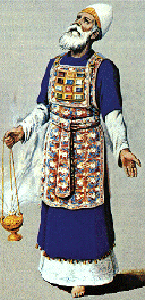
Among the different garments of the Kohen Gadol for his service in the Mishkah, he wore the Choshen – a breastplate. We all know what it looked like: four rows of three different types of stones. On these stones Bezalel carves the names of the tribes of Israel. But the Choshen carried an addition, critical element. Hashem instructs Moshe,
וְנָתַתָּ אֶל-חשֶׁן הַמִּשְׁפָּט אֶת-הָאוּרִים וְאֶת-הַתֻּמִּים וְהָיוּ עַל-לֵב אַהֲרֹן בְּבֹאוֹ לִפְנֵי ה' וְנָשָׂא אַהֲרֹן אֶת-מִשְׁפַּט בְּנֵי-יִשְׂרָאֵל עַל-לִבּוֹ לִפְנֵי ה' תָּמִיד:
And you shall place to the Choshen the Urim and the Tumim, and they shall be on the heart of Aharon when he enters before Hashem; and Aharon shall carry the judgment of the Children of Israel on his heart before Hashem always.
The famous Urim V'tumim raises all kinds of questions. First and foremost, what exactly was it? What does the Torah mean by telling us that through it Aharon would carry the "judgment" of the Jewish people on his heart? Finally, when we look at Parshat Pekudei and the final construction of the Choshen we learn that while Bezalel and his workers followed Moshe's instructions to a tee, they seem to have omitted one critical detail: there's no mention of the Urim V'tumim at all. (see Shemot 39:8-21) The stones were there. They weaved the garment properly. But where was the Urim V'tumim so seemingly critical to its proper function?
What was the Urim V'Tumim? Rashi (on Shemot 28:30) tells us:
הוא כתב שם המפורש, שהיה נותנו בתוך כפלי החשן, שעל ידו הוא מאיר דבריו ומתמם את דבריו. ובמקדש שני היה החשן, שאי אפשר לכהן גדול להיות מחוסר בגדים, אבל אותו השם לא היה בתוכו, ועל שם אותו הכתב הוא קרוי משפט...
This is a writing of the Holy Name which [Moshe] placed in the folds of the Choshen, through which it would light up (from Urim) his words and purify (from Tumim) his words. In the Second Temple there was a Choshen – for the Cohen Gadol could not serve with [the proper number of] garments. But that Name was not inside it, and through that name it was called "Mishpat"…
Rashi explains that the while the Urim V'tumim served as the spiritual "battery" of the Choshen, it was not a critical aspect of its construction. Perhaps this explains why the Torah considers the Choshen complete even without the Urim V'Tumin. Ramban, agreeing with Rashi adds that,
הם סוד מסור למשה מפי הגבורה, והוא כתבם בקדושה, או היו מעשה שמים
They were a secret given to Moshe from the mouth of Hashem, and [Moshe] wrote them in Holiness, or they were a creation of heaven.
Ramban points out that Moshe himself eventually placed the Urim V'Tumim inside the Choshen when he dressed Aharon for service in the Mishkan. (see Vayikra 8:8) So, while the Urim V'Tumim were not considered part of the Choshen itself, Moshe placed this mystical scroll (or whatever "they" were) crafted by Hashem Himself into the Choshen later on. What was did Aharon use it for? Why was it so important? Rashi explains:
דבר שהם נשפטים ונוכחים על ידו אם לעשות דבר או לא לעשות.
A matter that they would judge and decide based on [the Urim V'Tumim] whether to do something or not.
The Jewish people used the Urim V'Tumim to ask the impossible questions that no one person could legitimately answer himself. Should we go to war now or not? Whose sin caused the terrible suffering among the Jewish people? Is now the time to conquer new territory or remain on the sidelines? Is it better to trade terrorists for Gilad Schalit or suffer the painful price of refusing to negotiate?

Except today, we live without a direct connection. No Urim V'Tumim lights up the way. So we stumble along, groping around in the darkness, hoping that we don't make the wrong decision. All the while we must continue to pray not only for our country and her leaders, forced to make these difficult decisions, but also that Hashem bring a level of comfort and well-being to Gilad, held captive now for over one thousand days.

Friday, March 13, 2009

Crime and Punishment - A Drashah for Ki Tisa 5769

This past Thursday night, I got my first Israeli traffic ticket. Did I get a ticket for I speeding down the 6 at near sonic speed? Do that all the time, but that wasn’t it. No, I got a ticket for stopping to pick up a hitchhiker. One minute my neighbor from down the block is trying to get into my car, and then next minute he’s slamming the door shut, and I hear a knock on my passenger window. See what happens when you try and do a mitzvah?

Actually, it wasn’t so cut and dry. Yes, I did stop to pick up a tremp – a wonderful act. But I also did so smack in the middle of the road. Apparently, that’s not only illegal. It’s also dangerous.
I begged. I pleaded. I tried the עולה tactic. I spoke in English. Nothing worked. The policewoman was adamant. You’re going to have to pay. לא נורא she kept saying. Just pay the fine and move on.
The sad part is that I’m not sure that I disagree with her. After all, I did stop in the middle of traffic – even for a good reason. I did something rather dangerous; I was lucky someone wasn’t directly behind me. And as much as I wanted her to let me off with a warning, for the past 24 hours, I’ve been a more careful driver. I won’t do that again. I’ll be sure to pull over to the side of the road. And I wonder to myself, had she let me off with a warning, would I be as careful next time? In essence what I’m asking is: was she right? Did she really have to punish me?

This theme of Crime and Punishment occupies my mind precisely as we read about חטא העגל. When the Jewish people build the עגל, we know what they really deserve:
וְעַתָּה הַנִּיחָה לִּי, וְיִחַר-אַפִּי בָהֶם וַאֲכַלֵּם; וְאֶעֱשֶׂה אוֹתְךָ, לְגוֹי גָּדוֹל.
And now leave me and I my anger will grow, and I will destroy them, and I will make you into a great nation.
The punishment the people deserve is total annihilation. It’s over. Yet Moshe, with his quick thinking and passionate pleas saves the people from certain death. He descends down the mountain, deals with the Golden calf, and then returns to God to plead for mercy.
וַיָּשָׁב מֹשֶׁה אֶל-ה', וַיֹּאמַר: אָנָּא, חָטָא הָעָם הַזֶּה חֲטָאָה גְדֹלָה, וַיַּעֲשׂוּ לָהֶם, אֱלֹהֵי זָהָב. וְעַתָּה, אִם-תִּשָּׂא חַטָּאתָם; וְאִם-אַיִן--מְחֵנִי נָא, מִסִּפְרְךָ אֲשֶׁר כָּתָבְתָּ.
Moshe returned to God and he said, Please - this nation has committed a grave sin and they made an god of gold. And now, if you carry their sin -- and if not, erase from the book which You have written.
“Look God,” he tells him. “While they might deserve to be destroyed, I can’t let you do it. In fact, I insist that you forgive them. Because if you don’t, I don’t want to have any part of this entire endeavor. If you cut them out, you cut me out too.”
God’s answer is more subtle and circumspect:
וַיֹּאמֶר ה' אֶל-מֹשֶׁה: מִי אֲשֶׁר חָטָא-לִי, אֶמְחֶנּוּ מִסִּפְרִי..
And God said to Moshe: He who sinned against me I will erase him from My book.
And we then immediately read:
וַיִּגֹּף יְהוָה, אֶת-הָעָם, עַל אֲשֶׁר עָשׂוּ אֶת-הָעֵגֶל, אֲשֶׁר עָשָׂה אַהֲרֹן
And God smote the nation on the fact that they made a calf that Aharon made.
What was the plague? Rashi says that it was מיתה בידי שמים – the divine death penalty. Ramban points out that we don’t even know how many were killed. I think I know why we don’t know who they are: because, as part of their punishment God erased them from the Torah. They no longer exist, not even as a number to be counted. That’s some punishment.
But I’d like to ask the question a different way: why did God need to punish the nation? After all, if He’s really the ה' ה' אל רחום וחנון, do we think for a moment that He gets any pleasure out of punishing the Jewish people? You know that phrase, “This hurts me more than it hurts you”? With God, it’s really true. It does hurt Him more than it hurts us. And yet punish us He does.
In fact, we mention the specter of punishment each and every day. Where? In the קריאת שמע. After we declare our faith in God and accept the yoke of Mitzvot upon ourselves, we turn in the second chapter to the theme of reward and punishment. והיה אם שמוע תשמעו אל מצוותי – if you listen to God’s commandments – then ונתתי מטר ארצכם בעתו – you get rain, and food and plenty and prosperity. But, השמרו לכם פן יפתה לבבכם – don’t slip up and slide down that terrible path towards idolatry, because if you do – ועצר את השמים ולא יהיה מטר – no rain, no food, much death and loss of ארץ ישראל. We say it twice a day, morning and night.
No one wants punishment. I am often struck on Yom Kippur by the very end of the וידוי, when we ask God for compassion and forgiveness. We say,
יהי רצון מלפניך ה' אלקי ואלקי אבותי, שלא אחטא עוד. ומה שחטאתי לפניך מרק ברחמיך הרבים, אבל לא על ידי יסורים וחלים רעים.
Let it be your will, my God and the God of my fathers, that I will not sin any more. And that which I have sinned before You cleanse in Your great compassion, but not through affliction or difficult sickness.
Who wants יסורים? No one. But sometime, perversely, we need them, because while we all like positive reinforcement, somehow punishment is so much stronger and more pronounced, that it serves as a more effective method of education and reinforcement.
This is actually a topic of great debate is today’s current political and economic crisis, especially regarding the financial bailout not only of banks, but also of homeowners who bit off bigger mortgages than they could handle, often recklessly. Commentators call this moral hazard, which Wikipedia defines as,
The prospect that a party insulated from risk may behave differently from the way it would behave if it were fully exposed to the risk. Moral hazard arises because an individual or institution does not bear the full consequences of its actions, and therefore has a tendency to act less carefully than it otherwise would, leaving another party to bear some responsibility for the consequences of those actions.
Put simply, if you don’t suffer from mistakes – or sins – the chances increase that you’ll simply repeat the same mistake (or sin) again.
Reward an punishment become especially important when we tackle the job of parenting. Let’s be honest: no parent likes punishing their children. It’s almost always easier to capitulate, forgive and forget, and hope that the behavior doesn’t happen again. But without the punishment, it always, always does happen again, usually in a more pronounced and severe manner.
No parent likes denying their children the things that they want. Who needs it? They’ll only whine, complain, and make our lives miserable. “Why can’t I have that ipod, cellphone, dboard, wii”? It doesn’t matter what it is. It often feels cruel to say “No, you can’t have it.” If you can’t afford it, that’s one matter. But many of us can, and we still say no. Why do we fight and argue and refuse when the path of least resistance a simple “yes”?
We say no because of a Rashi in the parshah. When Moshe climbs up הר סיני and tells God that, , חָטָא הָעָם הַזֶּה חֲטָאָה גְדֹלָה, וַיַּעֲשׂוּ לָהֶם, אֱלֹהֵי זָהָב, Rashi says that he actually said much, much more.
אתה הוא שגרמת להם, שהשפעת להם זהב וכל חפצם, מה יעשו שלא יחטאו. משל למלך שהיה מאכיל ומשקה את בנו ומקשטו ותולה לו כיס בצוארו ומעמידו בפתח בית זונות, מה יעשה הבן שלא יחטא
It is You who caused them [to sin], that you gave them as much gold as they wished; what should they do so as not to sin? This can be compared to a king that fed and gave drink to his son, adorned him, hung a wallet full of money around his neck and stood him before a house of harlots. What should he do so as not to sin?
When our children hear a “no,” as much as they don’t like it and don’t want it, often it’s the very thing they need the most.

Thursday, March 5, 2009

Knock Knock. Table Talk for Tetzaveh 5769

By Rabbi Reuven Spolter, Director of Recruitment and Special Projects, Orot College of Education

To download a printable version of this Devar Torah, click here.

My son, who attends a weekly chug that concentrates on logic and thinking games, came home with the following brain-teaser:
A certain thief was terrorizing a neighborhood. Yet, despite repeated attempts to catch the thief, he always managed to elude them. One day he heard the police knocking on his front door. He quickly jumped out the window and checked himself into the most upscale hotel in town, where he went back to work. Again our thief, a master of disguise, avoided hotel security and soon terrorized most of wealthiest hotel guests. Before long, the wealthy clientele, tired to being robbed blind, began to leave the hotel.
One woman, Mrs. Thompson, refused to leave. "I am not afraid of thieves," she said, remaining at the hotel. One morning she heard a knock at her door, and when she answered, a well-dressed businessman stood in the threshold. "Oh, so sorry," he told her, "I thought this was my room."
As soon as he closed the door, Mrs. Thompson called hotel security. "The thief," she said, "just came to my door. He's riding the elevator down to the lobby as we speak."
Security caught the man and after a short interrogation, he confessed to his crimes. The hotel manager, relieved to finally catch the thief, visited Mrs. Thompson in her room with a token of appreciation from the hotel for her quick thinking.
"I have to ask you," he said to her, "how did you know that he was the thief?"
How did she know? And more importantly for our purposes, if the people in our story followed parshat hashavua (and specifically Parshat Tetzaveh), she would never have known. Why not?

Among the eight vestments (that's a fancy word for clothes) that the Kohen Gadol wore during his avodah in the Mishkan, the me'il – the coat of blue, served at least two distinct purposes. First and foremost, the techelet of the coat contrasted the Kohen Gadol from the distinct white garments of the other kohanim. But the coat had an auditory feature as well. The Torah tells us:

וּפַעֲמֹנֵי זָהָב בְּתוֹכָם, סָבִיב. פַּעֲמֹן זָהָב וְרִמּוֹן, פַּעֲמֹן זָהָב וְרִמּוֹן, עַל-שׁוּלֵי הַמְּעִיל, סָבִיב. וְהָיָה עַל-אַהֲרֹן, לְשָׁרֵת; וְנִשְׁמַע קוֹלוֹ בְּבֹאוֹ אֶל-הַקֹּדֶשׁ לִפְנֵי ה' וּבְצֵאתוֹ--וְלֹא יָמוּת).שמות לב:לג-לה)
And bells of gold between them round about: a golden bell and a pomegranate, a golden bell and a pomegranate, upon the skirts of the robe round about. And it shall be upon Aaron to minister; and the sound shall be heard when he goes into the holy place before Hashem, and when he comes out, that he die not.
Why did the coat have bells? Why were the bells so important that their sound prevented the death of the Kohen Gadol? Commentators offer different explanations.
Rashi interprets the "lifesaving" quality not on the me'il, but on all of the bigdei kehunah. Indeed, a Kohen may not serve in the Beit Hamikdash missing any of the bigdei kehunah under the threat of the death penalty. (And you thought that the dress code at your place of work was harsh.) Yet, most commentators apply the threat specifically to the sounds of the me'il.
Rashbam explains that on Yom Kippur, the Kohen Gadol had to be the only person in the Beit Hamikdash during the avodah. The bells on the lip of his coat would warn any kohanim present of the approaching Kohen Gadol, giving them sufficient time to stay away. Thus, the bells served as a kind of protective warning system to keep danger at bay. Ibn Ezra suggests that the chimes of the bells formed a part of the Kohen Gadol's prayer, providing a "background" music track to augment his personal tefillah to Hashem. Chizkuni raises the possibility that the bells alerted those around him to the presence of the Kohen Gadol, not as a warning, but to allow them to know when he performed the service in the Beit Hamikdash, so that they could focus together with him. Rashbam also allows that the bells served simply as another way to distinguish between the Kohen Gadol and the other kohanim.
Each of these explanations gives us a different understanding of the purpose of the bells. But the gemara in Pesachim (112a) provides a different interpretation that offers a practical lesson for each of us that we can and should implement in our daily lives. The Gemara lists seven lessons that Rabbi Akiva taught his son, Rabbi Yehushua. Among them,
ואל תכנס לביתך פתאום, כל שכן לבית חבירך
And you should not suddenly enter you own home, and certainly your friend's home.
Why not? Rashbam explains,
השמע את קולך להם דילמא עבדי מילתא דצניעותא. [בויקרא רבה] ר' יוחנן כי הוה עייל לביתא מנענע משום שנאמר "ונשמע קולו בבואו אל הקדש".
You should make your voice known to them, for perhaps they are engaged in a private matter. [In Vayikra Rabbah we learn that] Rabbi Yochanan, when he would enter his home, would shake [and make a noise], because it is written, " and the sound shall be heard when he goes into the holy place."
According to the Gemara, the bells of the Kohen Gadol also served as a means to protect privacy – not of the Kohel Gadol himself, but of anyone he might encounter. We can readily imagine not wanting to bump into the Kohel Gadol while performing some innocuous activity. Imagine yourself after a nice lunch, checking your teeth in the mirror for that small poppy seed stuck between your teeth. Suddenly you realize that someone important – your boss/a potential client/the Kohen Gadol is standing right behind you. Were you doing anything wrong? Of course not. But it's embarrassing nonetheless. For this reason, the Torah ensures that while your boss or client might silently walk up behind you, the Kohen Gadol never would. His bells would give him away, and protect you from the slightest sense of shame.
What a wonderful lesson! Every person deserves a sense of privacy and protection from embarrassment. Moreover, Chazal extend this protection even to our own homes. No one likes to be surprised suddenly, even by the closest family member, even when they're standing in their own kitchen.
So get in the habit of knocking when you walk into your own house or your own bedroom (assuming that you share it with someone). It will make you a more sensitive person – and transform your house into an even holier home – one the kohen gadol would be happy to enter.

That, of course, is the answer to the riddle: The woman knew it was the thief because no one would knock on his own door. When the man apologized and said, "So sorry, I thought this was my room," that's when Mrs. Thompson knew that she had her man.
Unless he read this week's parshah.

Thursday, February 26, 2009

Kedushah and Candy Bags - Table Talk for Terumah 5769

By Rabbi Reuven Spolter

Back when I lived in Michigan, one of my sons to studied Kung Fu in a local dojo. One way that they projected the seriousness of martial arts was in the established "sanctity of space" surrounding the dojo. Administrators politely but firmly discouraged cell phone use anywhere in the building. Neither students nor visitors were permitted to wear shoes on the workout mat. These and other minor but firmly enforced rules conveyed the tangible message to students that this dojo was a serious place for serious personal growth. Not surprisingly, this was the most successful martial arts center in Southeastern Michigan. Because the sifu (master) took his craft seriously, his students followed suit and grew both physically and spiritually during their time in the dojo.
After a while, I realized just how similar the dojo's rules are to the halachot related to kedushat beit hakenesset (sanctity of the shul). Halachah establishes very clear and firm rules about the sanctity of the Beit Hakeneset. The Shulchan Aruch (see אורח חיים סימן קנ"א) writes that in a Beit Kenesset:
1. One may not act with frivolity or light-headedness.
2. One may not discuss mundane or trivial matters, like business or world events.
3. One may not eat or drink.
4. One may not kiss his young children – really. (See רמ"א אורח חיים סי' צ"א סעיף א')
Chazal instituted these rules for a very specific reason: the way that we treat and relate to our Beit Hakeneset directly influences not only how we behave there, but how we use that space to relate to Hashem.
I raise this issue because the words of the Sefer Hachinuch on Parshat Terumah caught my attention. Terumah (and Tetzaveh, Vayakhel and Pekudei) relate the blueprints for and construction of the mishkan. But even before they delve into any of the details of the mishkan, Chazal confront a critical introductory question addressed by Shlomo Hamelech at the dedication of the first Beit Hamikdash in Yerushalayim. Why does Hashem command the construction of the Mishkan at all? After all,
כִּי, הַאֻמְנָם, יֵשֵׁב אֱלֹהִים, עַל-הָאָרֶץ; הִנֵּה הַשָּׁמַיִם וּשְׁמֵי הַשָּׁמַיִם, לֹא יְכַלְכְּלוּךָ--אַף, כִּי-הַבַּיִת הַזֶּה אֲשֶׁר בָּנִיתִי
But will God in very truth dwell on the earth? Behold, heaven and the heaven of heavens cannot contain You; how much less this house that I have built!
Sefer Hachinuch, (see Mitzvah 95) in a long and powerful essay worth reading, explains that while Hashem doesn't need a Beit Hamikdash, we certainly do.
הלא ידועים הדברים וברורים שהכל להכשר גופותינו, כי הגופות יוכשרו על ידי הפעולות, וברבות הפעולות הטובות ורוב התמדתן מחשבות הלב מטהרות מתלבנות מזדקקות. והשם חפץ בטובתן של בריות כמו שאמרנו, ועל כן ציונו לקבוע מקום שיהיה טהור ונקי בתכלית הנקיות, לטהר שם מחשבות בני איש ולתקן לבבם אליו בו...ומתוך הכשר המעשה וטהרת המחשבה שיהיה לנו שם יעלה שכלינו אל הדבקות עם השכל העליוני
Behold these ideas are well-known and clear, that all of this is for the preparation and perfection of our bodies. For the body is prepared through action, and with these continued good acts and their continued steady practice, the thoughts of the heart are purified, clarified and refined. God desires the benefit of [His] creations, as we have said, and therefore He commanded us to set aside a place that will be pure and clean in the greatest possible cleanliness, to purify there the thoughts of man and to refine their hearts toward Him…And through this preparation of action and purification of thought we will have there, we will exalt our intellect to cling with the Exalted Intellect.
Hashem commands us to build a Mishkan and Beit Hamikdash to give us a place completely and totally devoted to our spiritual development. We treat that place with reverence, respect and purity because we need that purity to leads us towards Hashem.

The comments of the Chinuch resonate strongly with me this week. Last Shabbat in my shul in Yad Binyamin, we celebrated the Bar Mitzvah of the son of a neighbor. After the kriat hatorah came the compulsory candy-throwing and the literally dozens of children writhing on the ground, lunging for toffees. In one sense, it was a beautiful scene: a shul packed with children celebrating a young man's entrance into the ranks of Jewish men. But in the real world, pandemonium ensued. Kids ran everywhere, diving between benches at stray candies. Girls threw candy at the men. Men threw candy at men. The davening stopped completely, and even when prayer resumed, it would be hard to argue that many other than the chazzan were actually praying for a long while.
Commenting on the prohibition to kiss your children in shul the Mishnah Berurah writes,
בשל"ה קורא תגר על המביאים ילדים לבהכ"נ והיינו קטנים שעדיין לא הגיעו לחינוך מטעם כי הילדים משחקים ומרקדים בבהכ"נ ומחללים קדושת בהכ"נ וגם מבלבלים דעת המתפללים ועוד גם כי יזקינו לא יסוקו ממנהגם הרע אשר נתחנכו בילדותם להשתגע ולבזות קדושת בהכ"נ אבל כשהגיעו לחינוך אדרבה יביאנו אתו לבהכ"נ וילמדהו אורחות חיים לישב באימה וביראה
The Shelah strongly criticizes those who bring their children to shul – and this refers to those children who have yet to reach the age of education. This is because small children play and dance in shul and desecrate the holiness of the shul. They also disturb the concentration of those who are praying. Moreover, when they grow older they will not abandon the bad habits that they learned as children, to go crazy and denigrate the sanctity of the shul. But when they reach the age of education quite the opposite is true: one should bring [his children] to shul and teach them the way of life, to sit with awe and fear.
Reading the wise words of the Chafetz Chaim, I realize: I am one of those children. My entire generation grew up chasing candy in shul, wandering the aisles waiting for davening to end. True, at least we were in shul. But can we truly claim that we treat our shuls today with a level of sanctity that encourages an atmosphere of sanctity and seriousness that brings us closer to Hashem? Do we honestly refrain from frivolous talk in shul? Do we turn off our cell phones before we enter (that's mostly for men during the week) or do we text quick answers during chazarat hashatz?
And, perhaps even more importantly, are we raising our children in exactly the same way? Or will we prevent them from repeating our mistakes? Consider these questions the next time you (unwittingly) go to kiss your beautiful baby in shul on Shabbat morning.

Thursday, February 19, 2009

Small Steps - Table Talk for Mishpatim 5769

It's gotten so bad that I can't even listen to the news anymore.
If you thought that new elections in Israel would break the political gridlock and move the country forward, you thought wrong. We don't even know who won. Likud? Labor? Lieberman. Who knows? Even Shimon Peres said that he was wrong this week. I think moshiach really might be coming!
And if we thought that we could record some progress on our end, our enemies certainly aren't going anywhere. Gilad Shalit remains in the blood-stained hands of Hamas, who hold him to extort the release of still more murderers. Hizballah and Iran continue to mass weapons and technology. Arab citizens in Israel supported Hamas during our last war. It just doesn’t seem to end, leading to a sense of weariness – and despondency.
That's where a pasuk in this week's parshah can help. Describing the process of entering the Land of Israel, Hashem tells Moshe that,
אֶת-אֵימָתִי, אֲשַׁלַּח לְפָנֶיךָ, וְהַמֹּתִי אֶת-כָּל-הָעָם, אֲשֶׁר תָּבֹא בָּהֶם; וְנָתַתִּי אֶת-כָּל-אֹיְבֶיךָ אֵלֶיךָ, עֹרֶף. וְשָׁלַחְתִּי אֶת-הַצִּרְעָה, לְפָנֶיךָ; וְגֵרְשָׁה, אֶת-הַחִוִּי אֶת-הַכְּנַעֲנִי וְאֶת-הַחִתִּי--מִלְּפָנֶיךָ.
I will send My terror before you, and will confus all the people to whom you shall come, and I will make all your enemies turn their backs to you. And I will send the hornet before you, which shall drive out the Hivite, the Canaanite, and the Hittite, from before you. (Shemot 23:27-28)
Sounds good. I like the idea of my enemies, confused and dazed, running away from me chased by a swarm of hornets. If only. But then we read on:
לֹא אֲגָרְשֶׁנּוּ מִפָּנֶיךָ, בְּשָׁנָה אֶחָת: פֶּן-תִּהְיֶה הָאָרֶץ שְׁמָמָה, וְרַבָּה עָלֶיךָ חַיַּת הַשָּׂדֶה. מְעַט מְעַט אֲגָרְשֶׁנּוּ, מִפָּנֶיךָ, עַד אֲשֶׁר תִּפְרֶה, וְנָחַלְתָּ אֶת-הָאָרֶץ.
I will not drive them out from before you in one year, lest the land become desolate and the beasts of the field multiply against you. By little and little I will drive them out from before you, until you increase and inherit the land. (Shemot 23:29-30)
Why not? Why not just get rid of our enemies in one fell swoop, driving them out in an instant? Wouldn't it be easier for the Jewish people to enter an empty land, ready for them to settle and develop? Couldn't we actualize the Zionist Dream if we didn't have to keep fighting the Arabs all the time? Ironically, we could not. Commenting on these pesukim Abarbanel explains,
שלא יחשבו ישראל שפתע פתאום יהיו כל העממים מגורשים מן הארץ, וכאשר לא יהיה כן יאמרו כי מבלתי יכולת ה' לא גורשו משם. לכן אמר: "לא אגרשנו מפניך בשנה אחת", אך "מעט מעט אגרשנו מפני
So that Israel will not think that suddenly all of the nations will suddenly be driven out of the land – and when that did not happen they will say that they were not driven out because God was unable to do so. [For this reason it says] "I will not drive them out in one year" rather, "little by little I will drive them out."
While we would love the redemption and conquest of Israel to be an instantaneous and cataclysmic event, we also want it to be real and lasting. And you can't have both. Life just doesn't work that way. Your wedding day (if you're married) was amazing. Mine sure was terrific – what I remember of it. The chuppah, the dancing, the food. Actually, we didn't have a chance to eat any of the food, but no matter. If you ask yourself whether your wedding was the most significant event in your relationship with your spouse, I hope you'll say no. It's never one specific event, as great as each one may be. Rather, real relationships rise from daily life, from the ongoing joint struggle to succeed and flourish together. Flashy events, while exciting and powerful, don't create lasting impressions, nor do they create facts on the ground. Only the slow, difficult work of growth and inheritance can establish a presence that will endure.
What's true for each of us in our personal lives certainly holds true for the Jewish people as a nation. It won't happen in a day or a year, and not even in sixty. We need to "grow and inherit the land." We're not there yet – physically, spiritually or religiously. But every time I drive to work up a modern highway, dotted with flourishing companies, green farms and growing businesses, I feel that we've taken one step closer to that goal. Every day that we continue to take the small steps each and every day: to build another school, another community, another business, another home, another student and another teacher, we inch ever closer to Hashem's promise in the Torah:
וְשַׁתִּי אֶת-גְּבֻלְךָ, מִיַּם-סוּף וְעַד-יָם פְּלִשְׁתִּים, וּמִמִּדְבָּר, עַד-הַנָּהָר
And I will set your border from the Red Sea to the sea of the Philistines, and from the wilderness to the River.
אמן כן יהי רצון.

Wednesday, February 11, 2009

On the Wings of Eagles - Table Talk for Yitro

Having lived through the recent Gaza war, Israel has seen its share of miraculous events. The story of the "mysterious woman" who saved numerous soldiers in Gaza has made the rounds around the world. Even less overtly miraculous events surrounded the Gaza War. When describing the recovery of 2nd Lieutenant Aharon Karov, "Doctors at Beillinson Hospital in Petah Tikvah called the soldier's rapid recovery miraculous." Other miracles occurred as well that Parshat Yitro allude to.
When introducing the giving of the Torah to Moshe and the Jewish People Hashem tells him,
כֹּה תֹאמַר לְבֵית יַעֲקֹב, וְתַגֵּיד לִבְנֵי יִשְׂרָאֵל. אַתֶּם רְאִיתֶם, אֲשֶׁר עָשִׂיתִי לְמִצְרָיִם; וָאֶשָּׂא אֶתְכֶם עַל-כַּנְפֵי נְשָׁרִים, וָאָבִא אֶתְכֶם אֵלָי. (שמות י"ט:ד-ה)
"So you shall say to the house of Ya'akov and tell the Children of Israel: You saw that which I did to Egypt; and I carried you on the wings of eagles and I brought you to me." (Shemot 19:4-5)
Commentators wonder what Hashem means when he refers to carrying the people "On the wings of eagles." When did He carry the people at all? (Nowadays, as we fly to Israel in comfort on 777s, we have no trouble envisioning that image. But what did the Torah mean back then?) Different parshanim offer a number of possibilities, all of them figuratively.
Seforno explains the term in terms of uncharted territory: just as an eagle flies where no other bird can, so too did Hashem separate the Jewish people from the rest of the nations to bring them close to Him. Ibn Ezra sees the term as a symbol of strength - and of slow travel. The eagle cowers before no other bird, so he travels at his own deliberate pace without fear of attack. Similarly, Hashem could lead the Jewish people at a leisurely pace without fear of external attack.
Rashi also interprets the phrase symbolically, but in doing so offers us a new insight into the Divine protection that Hashem gives His people. Says Rashi,
כנשר הנושא גוזליו על כנפיו שכל שאר העופות נותנים את בניהם בין רגליהם לפי שמתיראין מעוף אחר שפורח על גביהם אבל הנשר הזה אינו מתירא אלא מן האדם שמא יזרוק בו חץ לפי שאין עוף אחר פורח על גביו לכך נותנו על כנפיו אומר מוטב יכנס החץ בי ולא בבני. אף אני עשיתי כן ויסע מלאך האלהים וגו' ויבא בין מחנה מצרים וגו' והיו מצרים זורקים חצים ואבני בליסטראות והענן מקבלם:
Like the eagle that carries his young on his wings; for all the other birds put their young between their feet, because they fear another bird flying above them. But this eagle only fears man, who may shoot an arrow (from below), for no other bird flies above her. For this reason she places her young on her wings saying, "It is better that the arrow should enter me than my child." So too – says God – did I do, (as it is written) "and the angel of God traveled…and he came between he camp of Egypt and the Jewish camp…" The Egyptians would shoot arrows and catapult stones – and the cloud would absorb them.
In other words, the "wings of eagles" formed a sort of shield, protecting the Jewish nation from external attack. No matter what the Egyptians fired at the people – whether weaker arrows or more powerful boulders – the projectiles continually missed their mark.
Does that sound familiar? To anyone living in Israel over the past few months, it's been a daily phenomenon. While we can never minimize the suffering of people who fell victim to Hamas attacks, time and time again the news would report multiple attacks and conclude the report by telling us that the rocket or mortar fell in an open area and end with the phrase, איש לא נפגע – "no injuries." Several times rockets fell in schools with no children in them. On days that school did meet the rockets fell out of range. Since 2005, Hamas has launched over 6,800 rockets and mortars into Israel. In 2008 3,278 rockets and mortar shells landed in Israeli territory. And while even one death is a tragedy, and Israelis have been injured and suffered from shock and trauma, the low, almost miniscule number of fatalities and injuries that we have suffered from such a withering attack is nothing short of miraculous.
It's almost like we're sitting "on the wings of eagles."

Tuesday, February 3, 2009

Fighting Our Fears - Devar Torah for Beshalach 5769

Why did the chicken cross the road? To get to the other side.
Why did the Jewish people cross the Yam Suf? You might think that they also crossed the sea to get to the other side, away from the charging Egyptian army. Chizkuni (on Shemot 14:22) didn't think so. In fact, he says that they didn't go to the other side at all.
לא שעברו בני ישראל את הים על דרך רוחבן, כי ידוע שאין הים מפסיק בין ארץ מצרים ובין ארץ כנען.
It is not that the Children of Israel crossed the sea at its length, for it is known that this sea does not divide between Egypt and Canaan.
Rabbi Aryeh Carmel, in a really interesting article that appears on the Da'at website, explains that this position in Rishonim emanates from a detailed Tosfot (ערכין ט"ו עמוד א' ד"ה כשם) that makes the same claim:
ואומר ר' בשם אביו רבי שמואל שישראל לא עברו הים לרחבו מצד זה לזה שא"כ היו ממהרים ללכת אל א"י אלא רצועה אחת עברו בים לאורך הים עד שפנו למדבר לצד אחד
And Rebbe said in the name of his father Rabbi Shmuel that the [Children of] Israel did not cross the sea lengthwise from one side to the other, for if so they would have hurried towards the Land of Israel. Rather, they passed through a single strip in the sea at its length, until they returned to the desert on the same side.
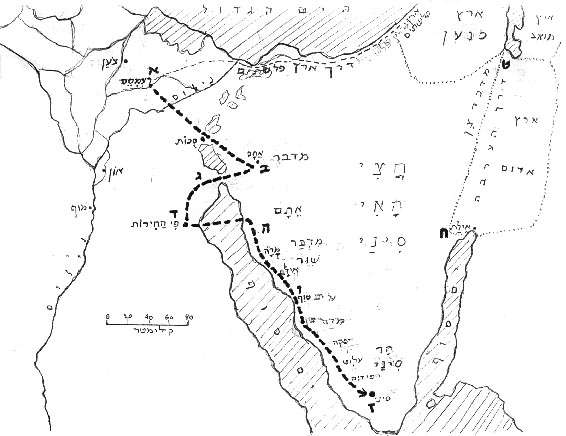
Rav Carmel suggests that Tosfot's view emanates from a misunderstanding of the geography of the terrain. (If you actually look up the Tosfot you'll see a really wild map of the Middle East – far stranger even than some of the maps you see from the U.N.) Using modern maps Rabbi Carmel suggests that the Jews did actually cross the sea lengthwise after having doubled back. See the dotted route on the map.
I'd like to ask a simple question: Even based on Rav Carmel's calculation of the route out of Egypt, the Jewish people really didn't have to cross through the Yam Suf. They could have easily continued through the Sinai Desert without crossing any body of water at all. Although amazing miracle and historical, what prompts Hashem to generate such a fantastic, yet unnecessary spectacle? Chizkuni answers:
אלא לא היה צורך שיכנסו בו, רק כדי שיכנס פרעה אחריהם ויטבע. ונכנסו בו חצי עגול, שהרי ממדבר איתם נכנסו לים וממדבר איתם חזרו מן הים.
Rather, there was no need for them to enter [the sea], except so that Par'oh would follow them and drown. And they entered in a half-circle – for they entered from the Eitam Desert, and returned to the Eitam Desert from the sea.
Why did we have to enter into the Yam Suf? The greatest miracle in the history of the Jewish people was a simple gimmick to lure the Egyptians to their watery deaths. The miraculous crossing was actually a massive military victory geared to inspire fear and awe across the globe.
But what about the Jews? Couldn't Hashem have spared them the agony and anguish of being chased through the desert? Why did Hashem put the Jewish Nation through such a difficult and challenging experience if the entire purpose was to decimate the Egyptians? To my mind, the crossing of the Yam Suf was not only about the Egyptians: rather, it served as a lesson for the Jewish nation – and for us as well.
The other day my family went on tiyyul to עיר דוד and took an amazing tour of many centuries of Jewish history through the newly discovered walls of ancient Yerushalayim. As we descended from the main level to the lower level, we ended up standing on a raised, grated metal platform. My mother, visiting from the United States, who's not a fan of heights, sat on the side. She just didn't like walking on a grate where she could see the depths. It made her uncomfortable and nervous. She got over it.
Imagine walking not on a solid metal grate, but on water. Yes, water. Commenting on the fact that ויבקעו המים – "the water split," Chizkuni states,
"ויבקעו המים" משמע עד קרקעיתו של הים וכתוב אחד אומר: קפאו תהומות בלב ים (ט"ו:ח) דמשמע שלא נבקעו לגמרי. אלא ים זה גדוש הוא, ואילו לא נבקעו המים כלל, הוצרכו ישראל לטרוח ולעלות למעלה, ואם נבקעו לגמרי הוצרכו לירד עד תהום. לפיכך נבקע הגודש דתילתא הוי ונעשה לישראל חומה מזה ומזה.
"And the waters split" implies [that they split] down to the floor of the sea. And another verse says "the depths froze in the heart of the sea," (15:8) which implies that they did not split completely. Rather, the waters were packed together [beneath the people]. Had they not split at all, the Jews would have had to expend energy to climb above [the waters], and had they split completely they would need to descend to the depths. Therefore the waters packed "until a third" and also gathered as walls for Israel on either side.
Imagine that you're a Jew living through יציאת מצרים. One minute you're walking along on dry land, and then the next minute someone tells you to literally walk on water - between two solid walls of water rising high into the air. And don't worry, it will hold you. And stay up. And not fall crashing down on you resulting in your horrible drowning.
We'd like to imagine that we'd have no problem taking that first step between those tall walls of water. But would we casually stroll out through the Yam Suf? Or would we think twice before inching out nervously, fearfully, carefully.
For this reason, the Torah twice repeats the phrase, ומים להם חומה מימינם ומשמאלם – "and the water was for them a wall – to their left and to their right." As much as the splitting of the sea served as a sign for the rest of the world of Hashem's might and power, the event also represented both a test and a rite of passage for the Jewish people. In order to be saved, they had to believe. They had to literally put their lives in the hand of Hashem, and have total faith that He would save them. And putting your life on the line – while simple and obvious in hindsight – could not have been easy at the time.
Life is full of similar rites of passage. No, the challenges of faith are not nearly so daunting and the stakes never so high – but still. Each of us faces decisions in life where we must make a choice: to follow the path lying before us, despite the dangers – despite the tall walls of water held in place by some unseen force; or to remain firmly rooted in place, paralyzed by our fears and doubts and unwillingness to take action based on the faith we so loudly profess.
As you listen to the Torah reading this week, as yourself this question: if I didn't have the Egyptian army at my back, would I have taken the leap of faith to walk into the Yam Suf? What about the Yam Suf of my life? Have I take that fateful step despite the dangers? Will I?
Why did the "chicken" cross the road? To get to the other side.

Thursday, January 29, 2009

Teaching and Creating, in Hashem's Image

By Rabbi Reuven Spolter, Orot College of Education

Click here to download a pdf version of this shiur.

I remember my first teaching moment, when I knew that computer programming would have to take a backseat to Torah. Studying at YU, a friend asked me whether I would participate in a women's learning program on Wednesday nights. Reluctantly, I agreed, driving out to Westchester County during the cold of winter. But a funny thing happened when I would sit down to teach my class. Almost as soon as I sat down to begin the class, it would be over. The clock seemed to skip the hour during which we learned. (I hope my students felt the same way, at least to some degree.) But even more than enjoying the teaching, the experience changed me even more. I found the ability to help someone grow in learning and help them grow closer to Hashem intoxicating. And that's a feeling that's still with me today.
While we most often associate Parashat Bo with makkat bechorot and korban Pesach, the honor of "most famous passages from this week's parashah" (you didn't know there was such an honor) clearly go to the sections at the very end. Both קדש לי כל בכור and והיה כי יביאך gain their renown from the fact that they appear in every pair of tefillin ever written. The fact that they're tightly sealed in the black boxes doesn't help them, though. Yet, when we juxtapose these two sections we find several issues which require explanation.
Read the following two sections as carefully as you can, noting that they appear consecutively in the Torah. See if you can see how many topics, words and phrases seem to repeat themselves in the two sections.
קדש לי כל בכור (שמות י"ג:א' – י')
וַיְדַבֵּר ה' אֶל משֶׁה לֵּאמֹר: קַדֶּשׁ לִי כָל בְּכוֹר פֶּטֶר כָּל רֶחֶם בִּבְנֵי יִשְׂרָאֵל בָּאָדָם וּבַבְּהֵמָה לִי הוּא: וַיֹּאמֶר משֶׁה אֶל הָעָם זָכוֹר אֶת הַיּוֹם הַזֶּה אֲשֶׁר יְצָאתֶם מִמִּצְרַיִם מִבֵּית עֲבָדִים כִּי בְּחֹזֶק יָד הוֹצִיא ה' אֶתְכֶם מִזֶּה וְלֹא יֵאָכֵל חָמֵץ: הַיּוֹם אַתֶּם יֹצְאִים בְּחֹדֶשׁ הָאָבִיב: וְהָיָה כִי יְבִיאֲךָ ה' אֶל אֶרֶץ הַכְּנַעֲנִי וְהַחִתִּי וְהָאֱמֹרִי וְהַחִוִּי וְהַיְבוּסִי אֲשֶׁר נִשְׁבַּע לַאֲבֹתֶיךָ לָתֶת לָךְ אֶרֶץ זָבַת חָלָב וּדְבָשׁ וְעָבַדְתָּ אֶת הָעֲבֹדָה הַזֹּאת בַּחֹדֶשׁ הַזֶּה: שִׁבְעַת יָמִים תֹּאכַל מַצֹּת וּבַיּוֹם הַשְּׁבִיעִי חַג לַה': מַצּוֹת יֵאָכֵל אֵת שִׁבְעַת הַיָּמִים וְלֹא יֵרָאֶה לְךָ חָמֵץ וְלֹא יֵרָאֶה לְךָ שְׂאֹר בְּכָל גְּבֻלֶךָ: וְהִגַּדְתָּ לְבִנְךָ בַּיּוֹם הַהוּא לֵאמֹר בַּעֲבוּר זֶה עָשָׂה ה' לִי בְּצֵאתִי מִמִּצְרָיִם: וְהָיָה לְךָ לְאוֹת עַל יָדְךָ וּלְזִכָּרוֹן בֵּין עֵינֶיךָ לְמַעַן תִּהְיֶה תּוֹרַת ה' בְּפִיךָ כִּי בְּיָד חֲזָקָה הוֹצִאֲךָ ה' מִמִּצְרָיִם: וְשָׁמַרְתָּ אֶת הַחֻקָּה הַזֹּאת לְמוֹעֲדָהּ מִיָּמִים יָמִימָה:
והיה כי יביאך (שמות י"ג:י"א-טז)
וְהָיָה כִּי יְבִאֲךָ ה' אֶל אֶרֶץ הַכְּנַעֲנִי כַּאֲשֶׁר נִשְׁבַּע לְךָ וְלַאֲבֹתֶיךָ וּנְתָנָהּ לָךְ: וְהַעֲבַרְתָּ כָל פֶּטֶר רֶחֶם לַה' וְכָל פֶּטֶר שֶׁגֶר בְּהֵמָה אֲשֶׁר יִהְיֶה לְךָ הַזְּכָרִים לַה': וְכָל פֶּטֶר חֲמֹר תִּפְדֶּה בְשֶׂה וְאִם לֹא תִפְדֶּה וַעֲרַפְתּוֹ וְכֹל בְּכוֹר אָדָם בְּבָנֶיךָ תִּפְדֶּה: וְהָיָה כִּי יִשְׁאָלְךָ בִנְךָ מָחָר לֵאמֹר מַה זֹּאת וְאָמַרְתָּ אֵלָיו בְּחֹזֶק יָד הוֹצִיאָנוּ ה' מִמִּצְרַיִם מִבֵּית עֲבָדִים: וַיְהִי כִּי הִקְשָׁה פַרְעֹה לְשַׁלְּחֵנוּ וַיַּהֲרֹג ה' כָּל בְּכוֹר בְּאֶרֶץ מִצְרַיִם מִבְּכֹר אָדָם וְעַד בְּכוֹר בְּהֵמָה עַל כֵּן אֲנִי זֹבֵחַ לַה' כָּל פֶּטֶר רֶחֶם הַזְּכָרִים וְכָל בְּכוֹר בָּנַי אֶפְדֶּה: וְהָיָה לְאוֹת עַל יָדְכָה וּלְטוֹטָפֹת בֵּין עֵינֶיךָ כִּי בְּחֹזֶק יָד הוֹצִיאָנוּ ה' מִמִּצְרָיִם
When you look at the last two sections of the parashah, you quickly begin to see a lot of repetition. The following short list appears in both parshiot:


While there are a number of differences between the two sections, what strikes me most is the fact that that Torah seems to say the same ideas twice in two consecutive sections. Both refer to redeeming a first-born child or animal, both speak about inheriting the Land of Israel, both refer to the relationship between parent and child and seem to include some sort of teaching moment, and both allude to the mitzvah of tefillin. I point out these amazing similarities because they help highlight the differences. Obviously, the Torah need not relate the same ideas twice consecutively. These two parshiot must convey different messages, and we'll find them by highlighting several important distinctions between the two parshiot. While there are a number of important distinctions, I'd like to focus on just a couple:


Clearly, these differences raise obvious questions: why does the parent give an explanation to a child who never even asked a question? What's the difference between להגיד – "to tell" and לומר – "to say"? Why does the Torah use two different words to describe the same religious article in subsequent sections?

Asking Questions at the Seder
We generally assume that people teach so that others can learn. That seems to make sense. Whether we teach professionally in the classroom, or just learn individually with our children, or simply are showing our children how to take challah from the dough on Thursday night, we teach so that they can learn. Otherwise, if no one is listening, why spend the time or energy to relate the information? What's the point?
But then we come to the night of the Seder. Sure, we're supposed to answer our children's questions. They ask and we answer. But what if no one's listening? What if I'm stuck alone on the night of the Seder? What if there's no one there to ask me a question, and for me to answer? Should I still answer the question, or since there's no one asking, what's the point? The Mishnah in Pesachim addresses this question clearly stating that, while it's preferable for a child to ask his father, ואם אינו חכם אשתו שואלתו ואם לאו הוא שואל לעצמו – "if the son is not wise, his wife asks him, and if not, he asks himself." If there's no one else to ask me the four questions during the Seder, I must ask myself the questions and answer them as well. This only begs the question: what's the point of asking and answering questions myself?

The Male in Female in Each of Us
God created us to emulate Him. While we use the male form (Him) to describe God, Chazal teach us that God has no true gender – He is both masculine and feminine at the same time. I'm not a kabbalist (and if I was I wouldn't tell you), but the seforim (not sure which ones) teach us that each individual, created in God's image, has both of these masculine and feminine tendencies. Rav Soloveitchik, in a beautiful essay reprinted in ימי זכרון, explains that the דוכרא - the male aspect of God (and of us) is the part that gives – that influences others. Conversely, the נוקבא – the female aspect of God relates to the receiver, the part of us that is influenced and shaped by others. Keeping this in mind, we can now examine teaching in a new way.

Two Types of Teaching At first blush, we look at teaching in a purely utilitarian way: we teach in order to impart information. My daughter needs to know how to tie her shoes; my son needs to know his vocabulary in order to finish his Navi homework. Even in the classroom, my students need to know this information to be better, more informed Jews. (Or if you ask them, they need the information to pass the test – but that's a separate issue entirely.) In any case, we see the act of teaching in its functional form – useful and important, but nothing more.
But the Torah tells us that Hashem wants us to teach not only because our children or students (be they child or adult) need and want to learn the information. Rather, Hashem wants us to teach because the act of teaching transforms the teacher from a passive person – a נוקבא – into an active shaper – a דוכרא. When we teach we come to emulate God in a powerful and profound way, by become creators ourselves – creating students, new people, and more educated children. Thus, when we teach others, we not only change our students. Perhaps even more profoundly, we change ourselves.
This is the fundamental difference between the two parshiot at the end of Bo. קדש לי כל בכור reflects inward and relates to the transformational power of יציאת מצרים not as a lesson for our children, but as a means to change ourselves. For this reason, I must teach my child about יציאת מצרים whether he asks me about it or not. I'm not speaking to him necessarily. I'm telling him – והגדת לבנך – whether he's listening or not, (it's far better if he is listening, of course), and whether he's even there or not. I wear my Tefillin not as an adornment for others, but as a reminder to myself that when Hashem redeemed us from Egypt, He granted each of us the opportunity to become like Him in some small way: to be the creators of worlds. In this context, Hashem didn't take us out of Egypt. He took me – as an individual, destined and commanded to emulate Him to the best of my ability. The Torah sums up this idea powerfully when it tells us that the reason why I wear Tefillin is, למען תהיה תורת ה' בפיך – so that the Torah of Hashem will be in your mouth. In my mouth, and mine alone. As I teach, I transform myself and become closer to and more like Hashem in the process.
But then there's the practical aspect of teaching. It's nice for me to emulate God, to become a mini-creator, but someone's got to teach the children. Someone has to answer their questions. When people need information – when they're the needy נוקבא – when they require shaping, we all must step up to the plate. As parents we must teach our children; we must "speak" with them, listening to their questions and answering to the best of our ability. Instead of wearing Tefillin to remind ourselves of how Hashem saved us, they now become a טוטפת – an adornment to be seen not by me, but as a symbol for others, most notably, my own children. In this context we all become parts of a greater unit: Hashem took us out of Egypt. Tefillin remind us that Hashem redeemed us all. In practical terms, we become responsible for each other, and for all Jewish children. Every Jew needs to learn and grow, every one of us needs to fulfill the aspect of נוקבא – to be shaped and molded into better people and better Jews. And that starts with teaching our children about who we are as a people. It starts with יציאת מצרים.
All too often, we fail to recognize the transformative power of teaching, and the significance that Judaism places in it. We see only the practical value of teaching – and our own shortcomings, so we don't do it. Sure, if you're a professional teacher you do it. But how many of us shirk the responsibility of teaching our children and studying with them because we feel inadequate. We don't know the information that well; we can't explain it well; we don't relate all that well – we all know the reasons.
Parshat Bo reminds us that Hashem doesn't just want us to send our kids to someone else to learn the material. He wants us to emulate Him – to be creators of worlds. He doesn't just want them to learn. He wants us to teach.
And that takes effort and energy. It takes thought and preparation. You can't just sit down at the Shabbat table and bemoan the fact that you don't have anything to relate on the parshah. You have to prepare something beforehand; a topic to discuss, an issue to relate. Write down a list of questions to ask your younger children. Take the time to prepare a meaningful discussion that will engage and enlighten.
Because when you do, you'll see that it's not only about your children learning. It's about emulating Hashem, and become creators ourselves.
Shabbat Shalom.

Tuesday, January 20, 2009

Seeing the Good. And the Bad - Devar Torah for Va'era 5769

Thank God, the war has ended. At least for now. By the time you read this, our sons will have returned to their bases, once again out of harm's way. Quiet has returned to the south of Israel, and we hope that the stability and normalcy most people take for granted can again become part of daily life citizens living in the south of Israel.
By all accounts, the war was an incredible success. At a shiva house this week (not related to the war), Rabbi Lazer Brody noted that if someone had said before the war that Israel would suffer only thirteen casualties (and each one is a terrible loss) in a full-fledged Gaza war, no one would have believed. We must see the fantastic hand of Hashem that heard our prayers, guided our soldiers, and protected our citizens.
Truthfully, seeing Hashem's hand isn't that hard. How many times did we hear on the radio or read in the news, "Twelve missiles fell today – no one was hurt." How can 900 missiles and rockets aimed at cities and population centers miss so often, if not for yad Hashem?
In truth though, it's always easier to feel God's guiding grasp on our shoulder when things go the way we'd like. But what about when they don’t? Do we feel a level of hashgachah when things don't go our way? Do we search for and see the Divine when we endure the distress of defeat – both nationally and personally?
Often you have to go back to the end of last week's parshah to understand the beginning of this week's Torah reading. This week is a good example. At the end of Parashat Shemot Moshe presents Hashem with a series of complaints. "It didn't work. I went to Par'oh, told him what you said, and not only aren't things better – but they've gotten worse. למה הרעתה לעם הזה – why have you damaged this poor people? למה זה שלחתני – why did you send me?" Hashem, concluding the parshah, answers Moshe's questions by insisting that He would indeed redeem the nation from slavery in Egypt. And that's where Parashat Va'era begins.
וארא אל אברהם אל יצחק ואל יעקב ושמי ה' לא נודעתי להם – "I appeared to Avraham, Yitzchak and Ya'akov, and never revealed my Divine Name to them." Why does Hashem refer specifically to the Avot here? How do they relate to Moshe's complaint and Hashem's response? Rashi (on verse 9) answers these questions by quoting a Gemara from Sanhedrin (111a).
Our rabbis learned out regarding the issue above, when Moshe said "Why have you done evil" the Holy One blessed be He said to him, "Woe to those that are lost and not forgotten. I have what to complain about the deaths of the avot. I revealed myself to them many times as el shakai, and they said to me, 'What's your name?' And you ask me, 'What's Your name – what should I tell them?' When Avraham went to bury his wife Sarah and couldn't find a suitable grave until he had to pay an exorbitant sum; and Yitzchak [struggled with the residents] who complained about the wells that he dug; and Ya'akov needed to buy the field where he pitched his tent – and they never complained against me. And you said, 'Why have you done evil?'"

In other words, when Moshe complains to Hashem, Hashem throws the complaints right back: "You know, things don't always go the way you think that they should. Why, when things don't see to go the way that you'd like do you immediately wonder where I've gone?
The Avot achieved greatness precisely for this reason: their faith transcended the difficulties they encountered in life. They could see yad Hashem not only in the good, but also in the bad. And while we're not Avot by any stretch, growing in our emunah means learning to see Godliness in every aspect of life, both good and bad.
The Mishnah in Berachot (Chapter 9) teaches us, חייב אדם לברך על הרעה כשם שמברך על הטובה – "a person is obligated to bless God on the bad that befalls him, just as he blesses God on the good." No, it's not easy to see yad Hashem either in personal or national setbacks. But our emunah demands that if we're going to believe that Hashem intervenes and guides our lives during our most joyous and happy moments, then He must also be there with us, crying alongside us, when we suffer and mourn.
It's hard to think about emunah when times are hard. Perhaps this Shabbat specifically, when we can sigh with a sense of relief; when we can give thanks for the good – for the safety and security that God blesses us with - we can best ponder this question.
Shabbat Shalom.

Wednesday, January 14, 2009

Appreciating Our Blessings - Devar Torah for Shemot

Yad Binyamin seemed like a perfect choice. A wonderful community with a nice mix of Israelis and “Anglos”, my wife and I felt it would be a great place to begin our lives as new immigrants to Israel. Indeed, we were right. The kids have made good friends, the schools have been terrific to work with, and the community members warm and welcoming. Yad Binayamin really has been great.
Except for our friends from the South. OK – not really our friends. I mean our enemies from Hamas in Gaza. Yad Binyamin lies 39.5 kilometers from the Gaza border, just inside the outer limits of Hamas rocket capability. The Military Civilian Authority decided (wisely) to keep all children home from school, mine included, and they have only returned to school this week. Life at home is the same, but different. Just a little more tense. The children don’t sleep as well. They don’t venture out like they used to.
But still, with the challenge of living in a real war zone, carrying my children into our protected room, listening to my wife lie on the ground during a rocket attack on my cell phone, things are wonderful. They truly are. Why do I say so? Because I learned lesson from the Ben Ish Chai that I saw in a terrific sefer called מעיין השבוע.
As we begin to read of שיעבוד מצרים, the subjugation of the Jewish people at the hands of the Egyptians, one primary question enters our minds: why? If God really wanted to ultimately give the Jewish people the Torah and return them to ארץ ישראל, who needs Egypt? Who needs hundreds of years of slavery, suffering and desperation? Why not just keep Ya’akov and his family in the Land of Cana’an, take them to Eilat for a weekend to give them the Torah and let them comfortably settle the land? Why did God deliberately create a situation that demanded suffering before the salvation?
The Ben Ish Chai answers this question through a parable.
There once lived a wealthy businessman who kindly took in an orphaned youth as his houseguest. He happily gave the youth a home to live in and the young man settled into his new life comfortably. Several years later, a poor man came to the house to ask for tzedakah. Like most beggars, he expected only a modest donation, perhaps only five or ten shekel. When the man pulled out two hundred shekel, the pauper rejoiced. He began to bless the g’vir, his wife, his children – his city, his home. It was all the businessman could do to get the man out the door, bowing and throwing blessings behind him as he left.
Watching the scene unfold, the businessman’s wife commented to him, “While it’s true that you gave that man a nice gift, it’s not that much in the grand scheme of things. We’ve given the young man living in our home far, far more than two hundred shekel, and while he’s a fine young man, he never thanks us the way that man did.”
The businessman agreed with his wife, and called the young man into his office.
“You have been living with us for several years,” he told him. “You’ve always been pleasant, but I want you out of my house now. Please leave everything we’ve given you, and go immediately.”
The young man, dumbfounded, didn’t know what to do. All he could do was quietly leave the house, wondering where to go next. Arriving in the center of town he soon grew hungry. With nothing to eat and nowhere to sleep, he found a hard bench in the park to spend the night. Forced to find work for food, he began hiring himself out to deliver groceries to harried housewives, earning just enough to get a bite to eat. On the third day the businessman told his assistant, “Go call the young man back to the house and return him to his room.”
That afternoon at lunch, the young man rushed into the kitchen to help set the table. He thanked his patron profusely for the food, and afterwards asked if he could help in any other way.
The Jewish nation, said the Ben Ish Chai, was that young orphan. If God had given us the Torah with ease and comfort; if He had allowed us to remain in ארץ ישראל without having to conquer it ourselves, we would never appreciate the value of those incredible gifts. This is why Hashem sent Ya’akov down to Egypt and the Jewish people suffered for so long. Only because we suffered to gain our freedom and only because we struggled to receive the Torah do those values mean so much to us today.
And, only because we fought – and continue to fight – to protect our right to ארץ ישראל do we truly appreciate the Land that Hashem has given us. There really is a relationship between the hardships we undergo and how much we value the blessings that we have. Thank God, I live in Yad Binyamin, not Sderot. I really don’t have things so hard. And the subtle changes to my daily life that the war has brought highlight just how much I appreciate my kids’ school, my community, the quiet of normal daily life, and the blessing that I merit to live in Eretz Yisrael.
Each of us deals with challenges and tribulations in our lives. Shemot reminds us that even while we address the hardships of life, those very struggles can help us appreciate the tremendous blessings that Hashem brings to our lives each and every day.
We hope and pray that with Hashem’s help, the IDF succeeds in its mission, life in Israel returns to normal, and our soldiers return safely to their families soon.

Thursday, January 8, 2009

Parenting by Example: A Devar Torah for Vayechi

The phone rings during the dead of the night. You grab the phone half-awake, barely registering the time on the clock. 4:35 am. Who could be calling at this hour? It's the hospital. "Your father is sick. Things don't look good. You'd better come quick."
Of course. You jump out of bed and quickly pull on some clothes. You grab your car key, your cell phone and wallet and head towards the front door.
But then you wonder: should I bring something else? What else am I missing? What about your kids?

Yosef received precisely that phone call: ויאמור ליוסף הנה אביך חולה – "And he said to Yosef, behold your father is sick." (48:1) The Torah doesn't even bother telling us that Yosef travels immediately to his father. But it does tell us what – or who -- he brought with him. ויקח את שני בנוי עמו – "and he took his two sons with him. "Yosef took his children. Yosef took Menashe and Ephraim.

Why did he bring them? Rashi says that he brought them to receive a brachah. Yet, nowhere do we find Yosef asking his father to bless his sons. Rather, the initiative for the brachot comes from Ya'akov himself. "Take them to me and I will bless them."

We can find a different reason for Ya'akov to bring his sons by asking the question from the other direction: why wouldn't he bring his sons? After all, if you found out that your aging father had fallen ill and you feared that he was nearing death, would you come alone or would you bring your children? I imagine that all of us would bring our kids, especially if they were not too young – which Menashe and Ephraim were not.

Or would we? After all, hospitals are nasty places. I've heard parents tell me more than once that they didn't want to "expose" their children to the difficult sight of seeing Bubby or Saba hooked up to all those tubes. After all, is that the lasting image that we want them to have of their beloved grandparent?

Of course it's not. But hopefully, our children have many more images and memories than the final stay at the hospital. More importantly, the lasting image they must have is of their father or mother lovingly sitting at the side of the bed, jumping for every need – from an extra blanket or a sip of water, to the recitation of yet another chapter of Tehillim. They must learn from us how to be people of chesed, mitzvot and yirat shamayim. For if they don't learn it from us, where will they learn it?

Yosef brought his sons with him to see Ya'akov because Yosef made it a practice to include his children in all his positive endeavors and especially in the mitzvoth that he performed. He was about to fulfill the mitzvah of kibbud av v'em. It made perfect sense for him to bring his sons along with him. So why does the Torah tell us this seemingly unimportant fact? Both in language and in fact, Yosef's parenting practice of including his children pays great dividends. Precisely because Yosef brings Menashe and Ephraim does Ya'akov bless them; their presence that accords them the honor of being the models of Jewish blessing for all time.

When Yosef hears about Ya'akov’s illness, the Torah tells us that ויקח את שני בניו אתו - "and he took his two sons with him. "Yet, when Ya'akov learns of their presence and wishes to bless them he uses the exact same language: ויאמר קחם נא אלי ואברכם- "and he said, take them to me and I will bless them. "In using the same word – לקחת, in an unusual way, the Torah connects Yosef's "taking" with Ya'akov’s. Only because Yosef had the foresight and parental instincts to bring his sons with him on this visit do his sons merit the blessing that they receive.

As parents, we all struggle with the same issues. We push our children to grow and achieve – but we don't want to push them too much for fear of alienating them. We want them to take initiative and act on their own. So we bug them about it. Yet, all too often we forget that one of the best forms of encouragement is teaching by example. How many mothers attend a Tehillim group but don't invite their daughters along? How many meals have we cooked for a neighbor but neglected to include our children in the project? How many times have we visited a friend who was sick, but left our kids at home?

If the power of chesed can transform us, we must also use it as an educational tool to share our good work – the very best part of us – with our children. They must see the tzedakah that we give. They can participate in the chesed we perform. And just like Yosef, when we "take" our children with us and expose them to the best parts of who we are and what they can be, we give them the greatest blessing of all: inspiration by example.

Wednesday, January 7, 2009

Table Talk for Shemot - From Last Year. Scary.

I wrote this Table Talk for the YIOP bulletin last year. It's amazing how true it was, especially in light of the cynical and sick Hamas practice of using their own children as human shields. (see the second story)

On average, each and every day three shells, mortars or Katyusha rockets land somewhere in Israel, lobbed from Gaza by some faction affiliated with Hamas. In response, Israel has placed a virtual economic stranglehold on Gaza, causing a great deal of suffering for the average Gaza resident. Why doesn’t the controlling Hamas leadership put an end to the shooting, and alleviate the suffering of its people? Because it’s better politically for Hamas to continue to resist, no matter the consequence.
In putting the suffering of their enemies ahead of their own citizens’ well-being, the leaders of Hamas follow a long pattern of this type of behavior, beginning with Par’oh in Egypt.
As we all know, Par’oh initially attempts to force the Jewish midwives to murder Jewish infants during childbirth. When the midwives refuse, Par’oh issues an all-encompassing decree: ויצו פרעה לכל עמו לאמר כל הבן היאורה תשליכהו וכל הבת תחיון – “And Par’oh commanded his entire nation saying, every male shall be thrown in the Nile and every female may shall be left alive.” Rashi notes that Par’oh never distinguishes between Jewish and Egyptian babies. Rather, אף עליהם גזר – “he even decreed on [their own children].” Par’oh, warned by his astrologers of the impending birth of a child that would ultimately cause his downfall, doesn’t care whether he’s throwing Jewish or Egyptian babies into the river. As long as he remains in power, that’s all that matters to him. If a few – or thousands -- of his own people suffer in the process, that’s of no concern to him.
It’s amazing how often history repeats itself.

Wednesday, December 31, 2008

Making the Hard Choices - Table Talk for Parshat Vayigash

Why is it that at times, the thing that we want is probably not very good for us? Like that pint of Ben and Jerry’s? Or Facebook? (After all, do we really need to know what every person we know is doing at every moment of the day? When do “friends” become a distraction?) Yaakov’s fears in Vayigash remind us that sometimes the path towards growth involves traveling the road that we fear the most.

After Yosef reveals himself to his brothers, he insists that they return to Canaan to collect Ya’akov and move the family down to Egypt. Ya’akov, while excited about his reunion with Yosef, reacts with fear. What will happen to him and his family and to the promise of Eretz Yisrael? If you think about it, his fears make sense. He knows what’s available to his grandchildren in Egypt: the Internet, that crazy Egyptian music, and the clothing and culture. Sound familiar? (OK – maybe they didn’t have email back then.)

His fears are so well-founded that Hashem must address them, telling Ya’akov:

אל תירא מרדה מצרימה, כי לגוי גדול אשימך שם
“Don’t be afraid to go down to Egypt, for I will make you a great nation there.” (Bereishit 46:3)

Yet, Yaakov’s questions make sense. Why should he bring his entire family down to Egypt? Couldn’t Yosef send them food and let them stay in the Promised Land? Why does Hashem want the entire family to move to Egypt?

S’forno explains that staying in Canaan would have actually been more dangerous and detrimental than moving to Egypt. He says that Hashem tells Ya’akov, “If your children stay here, they would marry the nations of the land and become intermingled with them. But in Egypt that won’t happen, ‘because the Egyptians will not eat bread with the Hebrews (43:32). In this way, they will become a great nation.” S’forno says that Hashem wanted Ya’akov to move his family to Egypt precisely because life would be harder for them there. They would be rejected as outsiders, never accepted or integrated into Egyptian society. But in that way they would grow to be a great nation – and a Jewish nation.

Sure, it would have been easier to stay in Canaan. But taking the easier path would have undoubtedly led to assimilation, intermarriage, and the slow but definitely decline of Yaakov’s family and legacy.

Thank God, none of us (I hope) face this challenge of intermarriage and assimilation directly. We understand the importance of maintaining a sense of identity and individuality as Jews, no matter where we may live. But we do face the larger question each and every day: do we take the easy path which we want or the harder path that we need? Do we sit down to the computer to check our email (yet again), or use that half-hour to learn about the parshah? Do we choose the ice cream (easy and good) or make that salad (hard, but also good in a different way?

These choices are really up to us.

Thursday, December 18, 2008

Lying Liars and Parashat Vayeshev

Fraud and theft have been at the top of the news these past few weeks. Sadly, Orthodox Jews committed these crimes, causing unimaginable chillul hashem and unthinkable monetary losses. Every one of us either has or will be personally affected by the money that was acknowledged to have been stolen this past week. We all benefit from Jewish organizations: from Orot to your local Jewish Day School to the Jewish Federation in your city. No – Orot didn’t have money in the Madoff fund (not even close), but the trickle-down effect of a loss so massive will eventually affect the entire Jewish world.

We need to start to talk about honesty. And integrity. And we need to start reminding ourselves regularly that Orthodoxy isn’t only about מצוות בין אדם למקום – but equally about מצוות בין אדם לחברו – being honest in business, truthful with our friends and customers, and ethical in our daily lives.

Dishonesty rears its ugly head in many ways in Vayeshev. The brothers steal Yosef’s coat and sell him into slavery. Bad enough. But then, instead of owning up to their crime before their father, they lie to him and pretend that Yosef had been killed, causing him decades of anguish. Yosef isn’t entirely innocent either. The Torah tells that Yosef would bring דבתם רעה – “evil tales” about his brothers to Ya’akov. While Rashi says that Yosef reported every negative thing he could find about his brothers to Ya’akov, Ramban disagrees, saying, אבל מוציא דבה כסיל האומר שקר – “one who brings out dibbah is the fool who says falsehoods.” Put simply, according to Ramban Yosef lied too. He made up evil stories about his brothers to denigrate them in Ya’akov’s eyes.

Fraud finds its way into Yehudah’s life as well. In the famous story with Tamar, following the tragic deaths of his first two sons Er and Onan, Yehudah sends Tamar home telling her, “Go home to your father’s house and wait for Shelah to grow up. But don’t call me. I’ll call you.” Rashi (38:11) tells us clearly that Yehudah has no intention of calling her. In other words, he lies to her. Not to be outdone, Tamar gets back at him by dressing as a prostitute and seducing him by the side of the road. When the world discovers her pregnancy and sentences her to death for violating her marriage, she doesn’t rat him out. Rather, she leaves everything up to him. “Do you recognize this seal? Do you know whose ring this is? The owner of these items is the father of my child.”

Yehudah can easily say nothing. If he only chooses this option, all of his problems will disappear. Tamar will be dead leaving his son Shelah free from marry anyone but this black widow. Best of all, no one would know about his little dalliance at the roadside inn a few months back. What could be simpler than simply saying nothing? But it’s not so simple. Yehudah finally admits his lie in two words: צדקה ממני – “she is more righteous than I.”

What does he mean? Why doesn’t he just say צדקה – “she’s right”? How is she more right than he? And most importantly, why does he finally admit to his fraud?

Sforno explains that both Yehudah and Tamar lied. Yehudah realized that her lie wasn’t for her own benefit. Rather, she masqueraded as a prostitute to bring a child into the world. But he lied for his own personal benefit – to increase his own honor and achieve greater personal leverage. That’s why he said צדקה ממני. Her lie is better than mine. At least she didn’t lie for herself.

Even more importantly, Yehudah finally realized that the lying must end. The deceit and fraud that had become hallmarks of his family now threatened to destroy him – and all of them as well. The time had come to own up to his behavior – to tell the truth and accept the consequences. From this point forward Yehudah can becomes the de-facto leader of the family and takes his place in leading the family through the dangers of Egypt.

Fraud, lying, theft – sometimes they seem so easy. If you forgot to study for an important test, it’s so much easier to copy your neighbor’s paper than own up to the failing grade. Apparently, it’s much easier to take people’s money and give it to new investors as dividends than it is to actually find ways to make real money. But sooner or later it all catches up to us. Someone catches on. The cheating becomes obvious. Your investors ask for their money back. And then cleaning up the mess, dealing with the consequences, saying צדקה ממני – becomes that much harder to do.

Shabbat Shalom.

Tuesday, December 9, 2008

What's In a Name? Everything.

The Jewish people are called the B’nei Yisrael – the Children of Israel. Where did we get this name from? From this week’s parshah.
After Ya’akov spends an entire night wrestling with the angel of Eisav, the angel decides that it’s time to go. Only Ya’akov doesn’t want to let him: “I won’t let you go until you bless me,” he tells the angel.

“What’s your name,” the angel asks him.

“What’s my name? You don’t even know who I am? Don’t you think you should have asked me that before we had this whole fight?”

“What’s your name?”

Sigh. “Ya’akov.”

The angel replied: “No it’s not – at least not anymore. From now on, your name will be Yisrael, ki sarita im elokim v’im anashim va’tuchal, “for you have striven with God and with man and have prevailed.” The word sarita is the root of the word Yisrael that identifies us as a people. What does it really mean? What does the word say about us?

Let’s look at two interpretations and see what we can learn from them. Rashi teaches that the word sarita comes from the word serarah, ruling and leading. Ya’akov’s old name implied sense of weakness, shame and deceit. Yisrael implies a sense of power, strength and pride. Radak explains the word in terms of struggle. Yisrael is a person who is willing to struggle – to work hard to overcome obstacles to accomplish his goals.

Both of these explanations tell us a great deal about the Jewish people and especially the State of Israel. We are a people who are willing to work hard and overcome challenges to build a land and recreate the Jewish people. At the same time, we stand before the world with a sense of pride. Israel has made tremendous strides during the past sixty years, and for all our faults, we have a lot to be proud of.

This asks a lot of each of us as members of the Children of Israel. Do you face challenges or run away from them? Do you stand up as a Jew with a sense of pride and accomplishment? Or do you hide your Jewish identity from the people around you?

Only you can answer those questions.

Wednesday, December 3, 2008

Lavan's Motto - Parshat Vayetze and the Mumbai Attacks

Enraged at Ya’akov’s midnight flight from Haran, Lavan gathered his brothers and chased after his son-in-law, daughters and grandchildren. The Midrash (Mishnat Rabbi Eliezer 9a) explains that Lavan decided that rather than lose his extended family, he would destroy them. In fact, we take note of his evil intentions at the Passover Seder when we recite, Arami oved avi, “an Aramite (Lavan) intended to destroy my father.” Lavan only desisted from murdering his family because God appeared to him in a dream, warning him to refrain from harming Ya’akov.

When Lavan finally reached Ya’akov and confronted him, he threatened him using curious language: Yesh l’el yadi - “it is in the power of my hand” to harm you. I wanted to kill you all, but I won’t because your father’s God warned me not to. (verse 29) The term el yadi – the power of my hand, carries a double implication. Rashi explains that the word el means “power” or “ability.” Yet, the word el clearly carries a deistic connotation as well, often used to refer to God. In fact, Chizkuni explains the phrase to mean, “Even your God knows my power, and fears that I will take vengeance against you.” Why does Lavan strangely infuse God in his threat against Ya’akov?

Lavan invokes God because tyrants and terrorists must always invoke God to justify their heinous crimes. How can Lavan - a father and grandfather - even contemplate the cold-blooded murder of his entire family? Yesh l’el yadi. He invoked the name of his god. After all, Lavan asks Ya’akov, “Why have you stolen my gods?” (verse 30) In the battle for religious supremacy, Lavan foreshadows a world devoid of morality, whose only goal of religious domination justifies any act, no matter how barbaric and repugnant.

The world witnessed yet another example of Lavan’s fanaticism in the vile terrorist attacks in Mumbai this past week. In addition to the senseless murder of over 174 civilians and countless more injuries, the attackers also specifically “were sent specifically to kill Israelis to avenge “atrocities” against the Palestinians,” the Times of India reported. They accomplished their goal, killing six Israelis among nine Jews, including the local Chabad emissary Gavriel Holtzberg, 29, and his wife Rivka, 28 – both American citizens. Moreover, we this week learned that they were not only murdered. Debka reported that, “Mumbai hospital doctors were horrified by the condition of the six Israeli bodies recovered from the smashed, blood-spattered rooms of Chabad Center Monday. Local and Israeli pathologists confirmed they were tortured by their Islamist terrorist captors before being bound together and killed in cold blood.”

Israelis and Jews have always served as a target for religious extremists. After all, Arami Oved Avi is the continuation of vehi she’amdah – “in every generation they stand up against us to destroy us.” The entire world last week painfully discovered Lavan’s motto: yesh l’el yadi. In the name of God, one can justify any act. Even the brutal murder of a father and pregnant mother in front of their two-year-old son.
The hagaddah offers only one consolation: ve’hakadosh baruch hu, matzileinu m’yadam; in the end, we believe – we know that “the Holy One blessed be He, saves us – and will continue to save us, from their evil, violent and brutal hands.”

Wednesday, November 26, 2008

Shades of Grey

We like it when things fall into clear categories: black and white, right and wrong. I either add someone to as a “friend” on Facebook or I don’t. There’s no in-between category for “sort-of-a-friend-but-not-really-and-I’d-like-to-say-hi-but-not-have to-stay-in-touch-forever.” Yes or no. Friend or not. In or out. Life’s easier that way – simpler too. We want everything to fit into categories we can deal with.


But life isn’t that way. Things aren’t as simple as they seem. We don’t fit into simple boxes. Each of us has qualities that make us different, special and unique – qualities we can’t label as “good” or “bad.” And what’s true for each of us also applies to every child – especially in the eyes of their parents. Even if that parent’s name is Rivkah, and her son’s name is Eisav.


We generally like to fit Ya’akov and Eisav into those same simple categories. Ya’akov - dweller of tents, learner of Torah, cooker of soup: Good Son. Eisav - hairy hunter, sells his birthright for a bowl of stew, marries Cana’ani women: Bad Son. And then everything fits. Ya’akov gets the brachah, Eisav loses out. Ya’akov becomes the father of the Jewish people, Eisav’s children hate us. It’s simple – or at least seems simple.


But what about the fact that Ya’akov loved Eisav? The Torah tells us that ויאהב יצחק את עשו כי ציד בפיו – “Yitzchak loved Eisav because he put food in his mouth.” (see Bereishit 25:28) Sure, Rashi says that Eisav “tricked” his father with silly questions, like “Do you have to take Ma’aser on salt?” But, at the very least Eisav shows a great deal of respect for his father. When Yitzchak tells him to hunt some food to make him a tasty meal, Eisav doesn’t walk. He runs to fulfill his father’s wishes. (When’s the last time any of us ran to do what our parents asked us to do?) Also, is Ya’akov really the angel that we always think he is? Sure, he doesn’t want to trick his father into giving him the brachah. But why not? Not because it’s wrong – but because he’s afraid that he’ll get caught. Why doesn’t he tell his mother that tricking your blind father is wrong? Would Eisav have stolen the brachah had the shoe been on the other foot?


Nechama Leibowitz makes an interesting point about a strange phrase at the end of the parshah. When Yitzchak and Rivkah send Ya’akov away to hide from Eisav, the Torah tells us that,וַיִּשְׁלַח יִצְחָק אֶת-יַעֲקֹב, וַיֵּלֶךְ פַּדֶּנָה אֲרָם--אֶל-לָבָן בֶּן-בְּתוּאֵל, הָאֲרַמִּי, אֲחִי רִבְקָה, אֵם יַעֲקֹב וְעֵשָׂו“And Yitzchak sent Ya’akov, and he went to Padan Aram, to Lavan the son of Betuel the Arami, the brother of Rivkah, the mother of Ya’akov and Eisav.” (28:5)Why does the Torah tell us that Rivkah is “the mother of Ya’akov and Eisav”? Don’t we already know that from the story? In fact, this is such a good question that Rashi actually says, אינני יודע מה מלמדנו – “I don’t know what this teaches us.” (Note that Rashi wasn’t afraid to admit that he didn’t know the answer to a question. Sure, he could have given us an answer. But he didn’t like any of the answers he thought of – and he’s honest enough to tell us so.)


Nechama answers this question by looking at what Rivkah tells Ya’akov when she first wants to send him into hiding: לָמָה אֶשְׁכַּל גַּם-שְׁנֵיכֶם, יוֹם אֶחָד – “why should I lose you both in one day?” Her question seems strange. If Eisav killed Ya’akov, she’d only lose one son that day. What does she mean by saying that she’d lose “both”? Nechama quotes the explanation of the Italian commentator Ben-Amozag, in his Eim Lamikra.


“Rivkah said: whichever of you kills the other, I will mourn for you both
on the same day. The murdered will be dead, and the one who kills will be hated
in my eyes like a stranger and an enemy, and it will be as if he is gone. So in
any case I will mourn for both of my sons.”

Nechama suggests that by calling Rivkah “the mother of Ya’akov and Eisav,” the Torah teaches us that Rivkah sent Ya’akov away not just to save Ya’akov from Eisav, but to save Eisav from killing Ya’akov. She understood his anger, and instead of allowing him to kill Ya’akov, she sent Ya’akov away to give Eisav time to calm down.Rivkah knew both of her sons. Just as she realized that Ya’akov needed the brachah from his father, she realized that the very same brachah would be disastrous for Eisav. He could never be the father of the Jewish people. He was special and unique and strong and had many amazing talents; but that brachah was just not for him. We should never think that Rivkah did not love Eisav as her son. Just because he wasn’t Ya’akov does not mean that his mother wasn’t looking out for his best interests, making sure that he got what he needed to grow and succeed in life.


Like Rivkah, every parent loves his or her children both for their strengths, and for their weaknesses. Children aren’t robots. They’re good at some things, and not so good at others. But that’s what makes them unique and individual; it’s what gives them their own original perspective on life, and their own insights to offer to others.


And, what’s true for parents must also be good for educators. Good teachers can see the qualities that make each individual child shine – even if she might not be the “best” student. And sometimes the very best students – the strongest, most studious – the ones who get the best grades – sometimes need to learn how to see beyond the books; how to apply knowledge or even just connect to others.

No, not everyone should be our Facebook friend. And how many of your “friends” do you really know that well? But every person does have something to add to your life and something to teach each of us.We can even learn from an Eisav. Just ask his mother.