How do we have hope in such a challenging time? We must follow the example of the righteous women of Israel who demonstrated their faith in the future through their actions.
Showing posts with label Beshalach. Show all posts
Showing posts with label Beshalach. Show all posts
Thursday, January 28, 2021


Wednesday, January 20, 2016
Audio Shiur: Beshalach - The Sting of the Needle
Audio Shiur:
Beshalach - The Sting of the Needle
 The murder of Dapna Meir hy"d this week left us all reeling. In this shiur we discussed some of the different messages relating to how the Jewish people dealt with the pain and trauma of loss; the desire for revenge, the overarching need for faith in times of distress, and the recurring theme of suffering and its connection to growth.
Click here to navigate to the shiur on YUTorah.org.
Click on the player below to play the Shiur or right click here to download)
 Did you know that this shiur is available as a free podcast on iTunes? Click here to subscribe - and leave a comment and rating so more people will find the shiur! Thanks!
Beshalach - The Sting of the Needle

Click here to navigate to the shiur on YUTorah.org.
Click on the player below to play the Shiur or right click here to download)
 Did you know that this shiur is available as a free podcast on iTunes? Click here to subscribe - and leave a comment and rating so more people will find the shiur! Thanks!
Friday, January 30, 2015
Rav Soloveitchik on Amalek
 In light of this morning's Washington Post article on Hamas terror day camps quoting children training to kill Jews, and with the reading about the war with Amalek in shul tomorrow, I thought it appropriate to share the powerful, chilling words of Rav Soloveitchik on the topic of the identity of Amalek today. He said these words in an address over fifty years ago which was then published in his monumental work, Kol Dodi Dofek. His thoughts ring especially true today.
In the crisis that the Land of Israel is [at present] passing through, Providence is again testing us. Iti is fitting that we openly state that this matter does not just involve Israel's political future. The evil intentions of the Arabs are not only directed against our national independence but against the continued existence of the Jewihs presence in Israel. They aspire to exterminate (God forbid) the Yishuv [i.e. the Jewish community in the Land of Israel] – men, women, children, infants, sheep and cattle (see I Samuel 15:3). At a meeting of the Mizrachi…I repeated, in the name of my father (of blessed memory) that the notion of “the Lord will have war against Amalek from generation to generation” is not confined to a certain race, but includes a necessary attack against any nation or group infused with mad hatred that directs its enmity against the community of Israel. When a nation emblazons on its standard ‘Come, let us cut them off from being a nation so that the name of Israel shall no longer be remembered’ (Psalms 83:5), it becomes Amalek. In the 1930’s and 1940’s the Nazis, with Hitler at their helm, filled this role. In this most recent period they were the Amaleikites, the representatives of insane hate. Today, the throngs of Nasser and the Mufti have taken their place. If we are silent, I do not know how we will be judged before God. Do not rely on the justice of the "liberal world". Those pious liberals were alive fifteen years ago and witnessed the destruction of millions of people with equanimity and did not lift a finger. They are liable to observe, God forbid, the repetition of the bloodbath and not lose a night's sleep. (Kol Dodi Dofek, Chapter 11 - pp. 78-79)
Wednesday, January 28, 2015
Audio Shiur: Parshat Beshalach - The God of War
Audio Shiur:
Parshat Beshalach - The God of War
 In Az Yashir, the Jewish people characterize God as "Ish Milchamah" - literally translated as a "Man of War". Really? God is a warrior? God is a man? How do we reconcile this image with our understand of God as a God of peace and harmony? After looking carefully at the text, Midrashim and a number of commentaries, we study a section of Orot from Rav Kook that addresses this fundamental question in a surprising manner.
There is a source sheet for this shiur, which can be accessed here. Also, you can find Professor Chanah Kasher's article on this topic here.
Click here to navigate to the shiur on YUTorah.org.
Click to play the Shiur (or right-click to download)
Parshat Beshalach - The God of War

There is a source sheet for this shiur, which can be accessed here. Also, you can find Professor Chanah Kasher's article on this topic here.
Click here to navigate to the shiur on YUTorah.org.
Click to play the Shiur (or right-click to download)
Thursday, January 9, 2014
Audio Shiur: Parshat Beshalach - The Staff or the Hand?
Audio Shiur:
Parshat Beshalach - The Staff or the Hand?
 What did Moshe use to split the Reed Sea? What did he use to beat Amalek? What did he use to produce water? Most importantly, does it matter? (Of course it does!)
Click here to navigate to the shiur on YUTorah.org.
Click to play the Shiur (or right-click to download)
Parshat Beshalach - The Staff or the Hand?
Click here to navigate to the shiur on YUTorah.org.
Click to play the Shiur (or right-click to download)
Friday, January 25, 2013
The Bitter Tree of Life - Why Torah Study is Hard
In the end, teaching Gemara boils down to a simple question: how do you teach a difficult, complicated, confusion subject that students generally don't like?
The answer, I believe, is that you force them to study Gemara, just like you force them to study grammar, math, history, English - and every other subject whether they like it or not. And you force them to do it because you believe that's it's good for them, and that the struggle and hard work will ultimately prove worthwhile.
Torah study was never designed to be easy. The Mishnah in Pirkei Avot (6:4) succinctly states:
כך היא דרכה של תורה, פת במלח תאכל ומים במשורה תשתה ועל הארץ תישן וחיי צער תחיה ובתורה אתה עמל, אם אתה עושה כן, (תהלים קכח ב): "אשריך וטוב לך". אשריך בעולם הזה וטוב לך לעולם הבא.This is the way of the Torah: Bread and salt you shall eat, and drink water in small measure, and sleep on the ground and a life of pain you shall live as you toil in the Torah; if you do this, "Fortunate and good for you" - fortunate for you in this world, and good for you in the World to Come.
Sound enticing? It's interesting that we fail to highlight this point as we educate our children. You're not supposed to enjoy it; Torah study is toil; bread, salt and water. Sleeping on the ground. Truth be told, it doesn't really play that well in today's world. Suffering just doesn't sell today.
But that's the way it works - and has worked - from the very beginning, even before we received the Torah.
Following the euphoria of Kriat Yam Suf, the Jewish people immediately encounter the first of many existential challenges. There's no water, for a very simple reason. God didn't give them any. After traveling for three days without water, they finally locate a spring of water but find the water too bitter for consumption.
כג וַיָּבֹאוּ מָרָתָה--וְלֹא יָכְלוּ לִשְׁתֹּת מַיִם מִמָּרָה, כִּי מָרִים הֵם; עַל-כֵּן קָרָא-שְׁמָהּ, מָרָה. כד וַיִּלֹּנוּ הָעָם עַל-מֹשֶׁה לֵּאמֹר, מַה-נִּשְׁתֶּה. כה וַיִּצְעַק ה' וַיּוֹרֵהוּ ה' עֵץ, וַיַּשְׁלֵךְ אֶל-הַמַּיִם, וַיִּמְתְּקוּ הַמָּיִם; שָׁם שָׂם לוֹ חֹק וּמִשְׁפָּט, וְשָׁם נִסָּהוּ. כו וַיֹּאמֶר אִם-שָׁמוֹעַ תִּשְׁמַע לְקוֹל ה' אֱלֹקיךָ, וְהַיָּשָׁר בְּעֵינָיו תַּעֲשֶׂה, וְהַאֲזַנְתָּ לְמִצְוֹתָיו, וְשָׁמַרְתָּ כָּל-חֻקָּיו--כָּל-הַמַּחֲלָה אֲשֶׁר-שַׂמְתִּי בְמִצְרַיִם, לֹא-אָשִׂים עָלֶיךָ, כִּי אֲנִי ה' רֹפְאֶךָ.23 And when they came to Marah, they could not drink of the waters of Marah, for they were bitter. Therefore the name of it was called Marah. 24 And the people murmured against Moses, saying: 'What shall we drink?' 25 And he cried unto the LORD; and the LORD showed him a tree, and he cast it into the waters, and the waters were made sweet. There He made for them a statute and an ordinance, and there He proved them; 26 and He said: 'If you will diligently hearken to the voice of the LORD your God, and will do that which is right in His eyes, and will give ear to His commandments, and keep all His statutes, I will put none of the diseases upon you which I have put upon the Egyptians; for I am the LORD that heals you.'
This strange story raises a number of fascinating questions: why did God bring them to a bitter well? What was the test, and did the Jewish people pass it? Chazal note that this sojourn at Marah serve as the opportunity for a mini-revelation. Rashi (on verse 25) comments that at Marah God transmitted three mitzvot: Shabbat, the laws of the Red Heifer, and tort law (dinim). The events at Marah were far more than a simple rest stop. Rather, the experience there was meant to set the stage for the Revelation that was soon to come.
Kli Yakkar asks a different, fascinating question: What kind of tree did God show Moshe? Logic would dictate that it was a sweet tree. After all, the best way to sweeten bitter water is with a lot of sugar. Yet, Kli Yakkar notes that the Midrash offers three suggestions for the identity of the tree. Some say that it was an olive tree, some say it was a willow, and Rabbi Shimon bar Yochai said that God showed Moshe a concept from the Torah - the Tree of Life. According to the first two opinions (leaving Rabbi Shimon aside for now), how did the tree sweeten the water? Why would God specifically tell Moshe to use a bitter tree to make the water sweeter? Kli Yakkar explains that in the identity of the tree lies an essential message about the nature of Torah study.
וביאור הענין שהתורה תחילתה מרה ונקראת תושיה שמתשת כוחו של אדם, וחז"ל אמרו (דברים רבה ז ג) למה נמשלה התורה לזית מה זית זה תחילתו מר וסופו מתוק אף דברי תורה כן, והמצוות גם כן לאו ליהנות ניתנו, וכמו שנאמר (שמות יט ג) ותגיד לבני ישראל דברים קשים כגידין, כי חולי הנפש כמו חולי הגוף כי כמו שרוב חולי הגוף דרכם להתרפאות על ידי לקיחת עשבים מרים ואם אין החולה מאמין אל הרופא ימאן לקבלם, כך בחולי הנפשות שהיו חולים על ידי קניית אמונות רעות שקנו במצרים, רצה הקב"ה לרפאותם על ידי קבלת התורה שנמשלה לזית כי ראשיתה מרה כזיתThe explanation of this matter lies in the fact that the Torah begins in a bitter fashion, and it is called "weakening", for it weakens the strength of a person. And our Sages said, 'Why is the Torah compared to an olive [tree]? Just as an olive is initially bitter and ultimately sweet, so too are the words of Torah. And the commandments were also not given [to us] for our pleasure, as it is written, "And you shall say to the Children of Israel" - 'words that are hard like sinews'. For sickness of the spirit is like sickness of the body. And just like most physical illnesses are healed by taking bitter herbs - and if the patient has no faith in the doctor, he will refuse to take the medicine - similarly, regarding the sickness of the soul which infected the people through their acquisition of destructive beliefs in Egypt - God wished to heal them through their acceptance of the Torah which is compared to an olive - for [Torah] too is initially bitter like the olive...
When the people saw how a bitter tree could make the water sweet, they would also understand that Torah study and observance - which is hard - quite hard, in fact, is in fact very sweet as well.
Sometimes I feel like we ignore this truth - especially related to the manner in which we raise our children - at our own peril. We try and make life sweet, almost nauseatingly so, and then when they encounter bitterness, in a strict teacher, or a challenging or difficult assignment, or a failing grade - instead of allowing them to taste the bitterness of that water, we sweeten it; by taking their side, or minimizing the suffering, or propping them up artificially.
This is especially true with regard to the study of Torah. It was never meant to be easy, and the easy kind of Torah study is usually the least fulfilling as well. Torah is like a good olive: bitter at first, but sweet in the end, if you're willing to put in the time, toil and sweat necessary to appreciate its unique sweetness.
Wednesday, January 23, 2013
Seeing the Daily Miracles

With the elections here in Israel now behind us and the political wrangling just beginning, it's a good time to take a step back and look at the larger picture.
Yesterday, Election Day, was for me (and so many others that I know) just glorious. Aside from the day off and the great honor many olim feel at the opportunity to vote in a Jewish homeland, the incredible weather presented a perfect opportunity for the family to take a long hike in a local forest, to marvel at the beauty of our Homeland.
Just the drive itself to the hike took my breath away, as we were surrounded on all sides by the lush green wheat fields. (I also love running in the daylight during this time of year, especially in the fields around Yad Binyamin.) Even after almost five years in Israel, I continue to marvel at the amazing beauty of our country and its amazing accomplishments in its relatively short history.Yesterday, Election Day, was for me (and so many others that I know) just glorious. Aside from the day off and the great honor many olim feel at the opportunity to vote in a Jewish homeland, the incredible weather presented a perfect opportunity for the family to take a long hike in a local forest, to marvel at the beauty of our Homeland.
In his work Tosefet Brachah (which you can actually download here - highly recommended!), Rabbi Baruch Halevi Epstein (author of the Torah Temima), asks a very simple question about the opening line of Az Yashir:
Wonders Rav Epstein: Is that really such a big deal? After all, if you throw a horse and chariot into the sea, you'd expect them to sink to the bottom. How is that miraculous? Moreover, Moshe fails to mention the true miracle of Kriat Yam Suf until the very end of the song.אשירה לה' כי גאה גאה, סוס ורכבו רמה ויםI will sing to the Lord, for He is highly exalted; the horse and his rider has He thrown into the sea
כי בא סוס פרעה ופרשיו בים, וישב ה' עליהם את מי הים, ובני ישראל הלכו ביבשה בתוך היםFor the horses of Pharaoh went in with his chariots and with his horsemen into the sea, and the Lord brought back the waters of the sea upon them; but the children of Israel walked on dry land in the midst of the sea.
The Jews walked on dry land while the Egyptians drowned? That's an impressive miracle! Why then did Moshe not mention it at the beginning of the song, and instead leave it for the very end? Rav Epstein suggests an answer that contains a critical message for each of us, especially today.
The Midrash notes that the song begins in the future tense - אז ישיר - literally meaning that, "Then he will sing." Writes Rav Epstein,
This hints to future generations, that they will sign songs of praise to God for the miracles that He performs for Israel. For this reason it is written, אז ישיר (in the future tense).This is what Moshe wished to convey to us when he began the great Song of Praise on the Yam Suf. While true that the Jewish people saw great miracles at the Reed Sea, the events that they would witness in the future would be no less miraculous. Even the seemingly natural drowning of a horse and its rider in deep waters also depends on the watchful providence of God. The Jewish people would, in the future, witness miracles dressed in the cloak of nature, but with the proper perspective we would be able to see God's guiding hand in those natural events as well.
Behold, it is known that in future generations during the exile of Israel, explicit overt miracles ceased, and we only [see] miracles like those that emanate from natural events, as if they are clothed in natural clothes. Miracles such as these never ceased and will never cease from Israel, and the person with a discerning eye and understanding heart - he will see and feel through the natural pathways of the lives of Israel among the nations, individually and communally, the shining beams of heavenly guidance.
Who cannot marvel at the hidden miracles that have guided the building of the Jewish State today? It's easier to see when literally hundreds of rockets and missiles fall on our cities and we suffer (relatively) few casualties. But even the green fields, the incredible growth, Israel's thriving economy in difficult times - all of those are miracles as well.
These are the miracles Moshe alluded to so many centuries ago; the miracles that I think about when I run in the fields around my home. These are the miracles that I saw from the hilltop overlooking the Lachish region yesterday.
They might be cloaked in the garments of nature. Wheat does grow in many places around the world. But here, in the Land of Israel, we must use our discerning eyes and knowing hearts to see the guiding hand of the Holy One, making the fields blossom once again.
Wednesday, February 1, 2012
Audio Shiur: Parshat Beshalach - Taking the Leap of Faith
Audio Shiur:
Parshat Beshalach - Taking the Leap of Faith
 In hindsight, the Exodus seems so simple, and so obvious. And yet, when
we look at the words of the Torah, it's clear that it was anything but
for many, if not most of the Jewish people. The question for us is, are
we talking about Egypt of old, or about today? Listen to find out.
In hindsight, the Exodus seems so simple, and so obvious. And yet, when
we look at the words of the Torah, it's clear that it was anything but
for many, if not most of the Jewish people. The question for us is, are
we talking about Egypt of old, or about today? Listen to find out.
Click here to download the shiur, or here to navigate to the shiur on YUTorah.org.

Now you can subscribe to this shiur as a podcast, directly from iTunes! To subscribe, click here.
Parshat Beshalach - Taking the Leap of Faith
Click here to download the shiur, or here to navigate to the shiur on YUTorah.org.
Now you can subscribe to this shiur as a podcast, directly from iTunes! To subscribe, click here.
Thursday, January 13, 2011
Audio Shiur: Parshat Beshalach - Thirst for Torah
Audio Shiur:
Audio Shiur: Parshat Beshalach - Thirst for Torah
 After the Jews ran out of water in the desert, God showed them a tree which turned the water sweet. This story carries a great deal of depth and meaning, and represents our first national introduction to Torah life. Then, and now, the water isn't as sweet as we might expect.
Click here to download the shiur, or here to navigate to the shiur on YUTorah.org.
Audio Shiur: Parshat Beshalach - Thirst for Torah
 After the Jews ran out of water in the desert, God showed them a tree which turned the water sweet. This story carries a great deal of depth and meaning, and represents our first national introduction to Torah life. Then, and now, the water isn't as sweet as we might expect.
 Click here to download the shiur, or here to navigate to the shiur on YUTorah.org.
Friday, January 29, 2010
What Did Your Kids Eat for Breakfast? Thoughts on the Mon for Beshalach
 Teaching seventh grade Gemara first thing in the morning at the Akiva Hebrew Day School back in Michigan, what was the greatest factor which would determine my success or failure in the classroom? Was it my ability as a teacher? Sure. But along with my ability to teach and control the classroom, it was also clear that the kids would need to be alert, attentive and ready to learn. And often they were not, even first thing in the morning. I would often find my pubescent, pre-teen charges vacillating between hyperactivity and listlessness, overdrive and lethargy. What caused these wild energy swings? Was it their moodiness and the challenging age-level? Partly. But I believe that it also had a lot to do with what they ate for breakfast.
Parshat Beshalach relates the story of the mythical Mon (מן - I never know how to transliterate that word into English), the mystical every-food that rained down on the Children of Israel in the desert. The Midrash relates that among the mystical Mon's magical qualities was its ability to taste like whatever the eater wished. Pizza? Sure. Roast beef? Why not. Roast beef on pizza. Why not - it's all pareve. (Kind of makes you think that the Mon had a lot in common with soy.) Yet, Kli Yakkar adds that the Mon allowed the Jewish people to focus on spiritual growth during their time in the desert, because the Mon alleviated two critical problems that detract from one's ability to grow closer to God.
The first problem with "normal" food is external: you have to work to produce it, whether you produce the food yourself or work to earn money to pay for that food. That time expended working for our "daily bread" detracts from the time we spend in spiritual pursuits. The Mon easily resolved this issue, as the Jews expended no time working to produce the food they needed to live. It arrived almost on their doorstep, neatly wrapped in a protective dew-like wrapping.
But food itself carries Kli Yakkar calls an "internal" aspect that prevent growth.
מבית הוא מצד מאכלים גסים המפסידים זכות וברירות השכל, עד אשר כח שכלו עובר בעמק עכור ואינו זך לעסוק במושכלות...והמן היה אוכל רוחני כל אוכליו ניצולו מן שני המונעים אלו...הן מבפנים כי היה מאכל זך ונקי מכל פסולתInternally, this due to the fact that heavy foods detract from the clarity and purity of the intellect, until a person's intellectual ability passes through a valley of fog, lacking the [required] purity to engage in intellectual matters...and the Mon was spiritual food, so that those who ate it were saved from these two detractions...including the internal [detraction] for it was a pure food, clean from all impurities.
Kli Yakkar notes that the Mon's miraculousness emanated not only from its origin and its simple presence each and every day. God also created the Mon as the ideal food for spiritual growth. It didn't give you a sugar high, only to have you fall crashing down to exhaustion in the middle of your first-period Gemara class. It wasn't full of fat and refined grains, leaving you feeling bloated and unable to learn.
It was healthy, tasty, filling and lean, leaving you energized and ready for a long period of spiritual growth.
True, we can't give ourselves or our children Mon for breakfast. But if you wonder why you (or they) are so tired in the middle of the morning, ask yourself this: what did they have for breakfast? If the answer is either (a) Nothing (b) Sugar cereal - or most any breakfast cereal for that matter or (c) snack food - very common among kids - stop wondering.
And start eating - and feeding your children - a healthier, and more spiritually encouraging breakfast.
It was healthy, tasty, filling and lean, leaving you energized and ready for a long period of spiritual growth.
True, we can't give ourselves or our children Mon for breakfast. But if you wonder why you (or they) are so tired in the middle of the morning, ask yourself this: what did they have for breakfast? If the answer is either (a) Nothing (b) Sugar cereal - or most any breakfast cereal for that matter or (c) snack food - very common among kids - stop wondering.
And start eating - and feeding your children - a healthier, and more spiritually encouraging breakfast.
Thursday, January 28, 2010
Parshat Beshalach - Mon, Faith and the Choices We Make
 Audio Shiur:
Parshat Beshalach - Mon, Faith and the Choices We Make
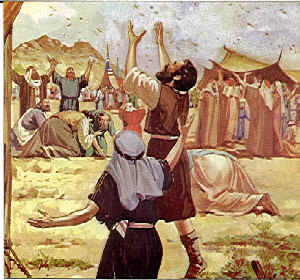
The description of the mon and the reaction of the people raises critical questions not only about them, but about us. How much faith must we have when we approach the issue of parnassah? And what are we supposed to give our kids for breakfast? Really.
Click here for the audio link, or listen in the handy audio player supplied below.
Tuesday, February 3, 2009
Fighting Our Fears - Devar Torah for Beshalach 5769
Why did the chicken cross the road? To get to the other side.
Why did the Jewish people cross the Yam Suf? You might think that they also crossed the sea to get to the other side, away from the charging Egyptian army. Chizkuni (on Shemot 14:22) didn't think so. In fact, he says that they didn't go to the other side at all.
 Rav Carmel suggests that Tosfot's view emanates from a misunderstanding of the geography of the terrain. (If you actually look up the Tosfot you'll see a really wild map of the Middle East – far stranger even than some of the maps you see from the U.N.) Using modern maps Rabbi Carmel suggests that the Jews did actually cross the sea lengthwise after having doubled back. See the dotted route on the map.
I'd like to ask a simple question: Even based on Rav Carmel's calculation of the route out of Egypt, the Jewish people really didn't have to cross through the Yam Suf. They could have easily continued through the Sinai Desert without crossing any body of water at all. Although amazing miracle and historical, what prompts Hashem to generate such a fantastic, yet unnecessary spectacle? Chizkuni answers:
But what about the Jews? Couldn't Hashem have spared them the agony and anguish of being chased through the desert? Why did Hashem put the Jewish Nation through such a difficult and challenging experience if the entire purpose was to decimate the Egyptians? To my mind, the crossing of the Yam Suf was not only about the Egyptians: rather, it served as a lesson for the Jewish nation – and for us as well.
The other day my family went on tiyyul to עיר דוד and took an amazing tour of many centuries of Jewish history through the newly discovered walls of ancient Yerushalayim. As we descended from the main level to the lower level, we ended up standing on a raised, grated metal platform. My mother, visiting from the United States, who's not a fan of heights, sat on the side. She just didn't like walking on a grate where she could see the depths. It made her uncomfortable and nervous. She got over it.
Imagine walking not on a solid metal grate, but on water. Yes, water. Commenting on the fact that ויבקעו המים – "the water split," Chizkuni states,
We'd like to imagine that we'd have no problem taking that first step between those tall walls of water. But would we casually stroll out through the Yam Suf? Or would we think twice before inching out nervously, fearfully, carefully.
For this reason, the Torah twice repeats the phrase, ומים להם חומה מימינם ומשמאלם – "and the water was for them a wall – to their left and to their right." As much as the splitting of the sea served as a sign for the rest of the world of Hashem's might and power, the event also represented both a test and a rite of passage for the Jewish people. In order to be saved, they had to believe. They had to literally put their lives in the hand of Hashem, and have total faith that He would save them. And putting your life on the line – while simple and obvious in hindsight – could not have been easy at the time.
Life is full of similar rites of passage. No, the challenges of faith are not nearly so daunting and the stakes never so high – but still. Each of us faces decisions in life where we must make a choice: to follow the path lying before us, despite the dangers – despite the tall walls of water held in place by some unseen force; or to remain firmly rooted in place, paralyzed by our fears and doubts and unwillingness to take action based on the faith we so loudly profess.
As you listen to the Torah reading this week, as yourself this question: if I didn't have the Egyptian army at my back, would I have taken the leap of faith to walk into the Yam Suf? What about the Yam Suf of my life? Have I take that fateful step despite the dangers? Will I?
Why did the "chicken" cross the road? To get to the other side.
Why did the Jewish people cross the Yam Suf? You might think that they also crossed the sea to get to the other side, away from the charging Egyptian army. Chizkuni (on Shemot 14:22) didn't think so. In fact, he says that they didn't go to the other side at all.
Rabbi Aryeh Carmel, in a really interesting article that appears on the Da'at website, explains that this position in Rishonim emanates from a detailed Tosfot (ערכין ט"ו עמוד א' ד"ה כשם) that makes the same claim:לא שעברו בני ישראל את הים על דרך רוחבן, כי ידוע שאין הים מפסיק בין ארץ מצרים ובין ארץ כנען.It is not that the Children of Israel crossed the sea at its length, for it is known that this sea does not divide between Egypt and Canaan.
ואומר ר' בשם אביו רבי שמואל שישראל לא עברו הים לרחבו מצד זה לזה שא"כ היו ממהרים ללכת אל א"י אלא רצועה אחת עברו בים לאורך הים עד שפנו למדבר לצד אחדAnd Rebbe said in the name of his father Rabbi Shmuel that the [Children of] Israel did not cross the sea lengthwise from one side to the other, for if so they would have hurried towards the Land of Israel. Rather, they passed through a single strip in the sea at its length, until they returned to the desert on the same side.
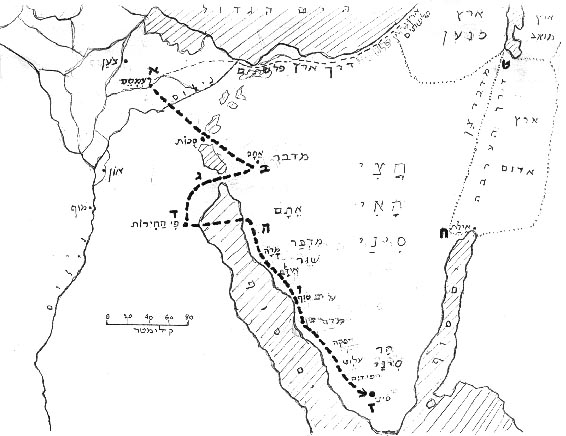 Rav Carmel suggests that Tosfot's view emanates from a misunderstanding of the geography of the terrain. (If you actually look up the Tosfot you'll see a really wild map of the Middle East – far stranger even than some of the maps you see from the U.N.) Using modern maps Rabbi Carmel suggests that the Jews did actually cross the sea lengthwise after having doubled back. See the dotted route on the map.
I'd like to ask a simple question: Even based on Rav Carmel's calculation of the route out of Egypt, the Jewish people really didn't have to cross through the Yam Suf. They could have easily continued through the Sinai Desert without crossing any body of water at all. Although amazing miracle and historical, what prompts Hashem to generate such a fantastic, yet unnecessary spectacle? Chizkuni answers:
Why did we have to enter into the Yam Suf? The greatest miracle in the history of the Jewish people was a simple gimmick to lure the Egyptians to their watery deaths. The miraculous crossing was actually a massive military victory geared to inspire fear and awe across the globe.אלא לא היה צורך שיכנסו בו, רק כדי שיכנס פרעה אחריהם ויטבע. ונכנסו בו חצי עגול, שהרי ממדבר איתם נכנסו לים וממדבר איתם חזרו מן הים.Rather, there was no need for them to enter [the sea], except so that Par'oh would follow them and drown. And they entered in a half-circle – for they entered from the Eitam Desert, and returned to the Eitam Desert from the sea.
But what about the Jews? Couldn't Hashem have spared them the agony and anguish of being chased through the desert? Why did Hashem put the Jewish Nation through such a difficult and challenging experience if the entire purpose was to decimate the Egyptians? To my mind, the crossing of the Yam Suf was not only about the Egyptians: rather, it served as a lesson for the Jewish nation – and for us as well.
The other day my family went on tiyyul to עיר דוד and took an amazing tour of many centuries of Jewish history through the newly discovered walls of ancient Yerushalayim. As we descended from the main level to the lower level, we ended up standing on a raised, grated metal platform. My mother, visiting from the United States, who's not a fan of heights, sat on the side. She just didn't like walking on a grate where she could see the depths. It made her uncomfortable and nervous. She got over it.
Imagine walking not on a solid metal grate, but on water. Yes, water. Commenting on the fact that ויבקעו המים – "the water split," Chizkuni states,
Imagine that you're a Jew living through יציאת מצרים. One minute you're walking along on dry land, and then the next minute someone tells you to literally walk on water - between two solid walls of water rising high into the air. And don't worry, it will hold you. And stay up. And not fall crashing down on you resulting in your horrible drowning."ויבקעו המים" משמע עד קרקעיתו של הים וכתוב אחד אומר: קפאו תהומות בלב ים (ט"ו:ח) דמשמע שלא נבקעו לגמרי. אלא ים זה גדוש הוא, ואילו לא נבקעו המים כלל, הוצרכו ישראל לטרוח ולעלות למעלה, ואם נבקעו לגמרי הוצרכו לירד עד תהום. לפיכך נבקע הגודש דתילתא הוי ונעשה לישראל חומה מזה ומזה."And the waters split" implies [that they split] down to the floor of the sea. And another verse says "the depths froze in the heart of the sea," (15:8) which implies that they did not split completely. Rather, the waters were packed together [beneath the people]. Had they not split at all, the Jews would have had to expend energy to climb above [the waters], and had they split completely they would need to descend to the depths. Therefore the waters packed "until a third" and also gathered as walls for Israel on either side.
We'd like to imagine that we'd have no problem taking that first step between those tall walls of water. But would we casually stroll out through the Yam Suf? Or would we think twice before inching out nervously, fearfully, carefully.
For this reason, the Torah twice repeats the phrase, ומים להם חומה מימינם ומשמאלם – "and the water was for them a wall – to their left and to their right." As much as the splitting of the sea served as a sign for the rest of the world of Hashem's might and power, the event also represented both a test and a rite of passage for the Jewish people. In order to be saved, they had to believe. They had to literally put their lives in the hand of Hashem, and have total faith that He would save them. And putting your life on the line – while simple and obvious in hindsight – could not have been easy at the time.
Life is full of similar rites of passage. No, the challenges of faith are not nearly so daunting and the stakes never so high – but still. Each of us faces decisions in life where we must make a choice: to follow the path lying before us, despite the dangers – despite the tall walls of water held in place by some unseen force; or to remain firmly rooted in place, paralyzed by our fears and doubts and unwillingness to take action based on the faith we so loudly profess.
As you listen to the Torah reading this week, as yourself this question: if I didn't have the Egyptian army at my back, would I have taken the leap of faith to walk into the Yam Suf? What about the Yam Suf of my life? Have I take that fateful step despite the dangers? Will I?
Why did the "chicken" cross the road? To get to the other side.
Subscribe to:
Posts (Atom)