Audio Shiur:
Parshat Vayera - Tzedakah and Mishpat
Avraham is included in the decision to destroy Sodom because he will instruct his descendants to be people of Tzedaka and Mishpat. Yet, these two values can often contradict, especially in the lives of Avraham and the people of Sodom - and in our lives as well.
Click here to navigate to the shiur on YUTorah.org.
Click on the player below to play the Shiur or right click here to download)

Showing posts with label Vayera. Show all posts
Showing posts with label Vayera. Show all posts
Thursday, October 29, 2015


Wednesday, November 5, 2014
Audio Shiur: Parshat Vayera - the Mystic Mount Moriyah
Audio Shiur:
Audio Shiur: Parshat Noach - Unraveling the Mystery of Avram's Origin
 Why is the mountain called Mount Moriyah? We give you seven - and maybe eight - different reasons. Also, did Avraham fulfill the commandment to sacrifice Yitzchak with alacrity, or did he drag his feet? Evidence is mixed.
Click here to navigate to the shiur on YUTorah.org.
Click to play the Shiur (or right-click to download)
Audio Shiur: Parshat Noach - Unraveling the Mystery of Avram's Origin

Click here to navigate to the shiur on YUTorah.org.
Click to play the Shiur (or right-click to download)
Thursday, October 17, 2013
Audio Shiur: Parshat Vayera - Avraham and Sodom - Living Apart or Living Within?
Audio Shiur:
Parshat Vayera - Avraham and Sodom - Living Apart or Living Within?
 Why didn't Avraham choose to live in Sodom, and try and save the city with his chesed? Should we live apart, or try to live together and influence from within?
Click here to navigate to the shiur on YUTorah.org.
Click to play the Shiur (or right-click to download)
Parshat Vayera - Avraham and Sodom - Living Apart or Living Within?
Click here to navigate to the shiur on YUTorah.org.
Click to play the Shiur (or right-click to download)
Wednesday, October 31, 2012
Audio Shiur: Parshat Vayera - Why Waste Good Meat on Angels Who Don't Eat?
Audio Shiur:
Parshat Vayera - Why Waste Good Meat on Angels Who Don't Eat?
 We're all familiar with Avraham's famous hachnasat orchim. Yet, we
probably don't realize that the many midrashim which describe Avraham's
kindness are firmly based in the text of the Torah. After studying some
of these Midrashim, we also turn the obvious question of why God would
send angels disguised as people to Avraham to perform acts of kindness,
if they're not actually real people?
We're all familiar with Avraham's famous hachnasat orchim. Yet, we
probably don't realize that the many midrashim which describe Avraham's
kindness are firmly based in the text of the Torah. After studying some
of these Midrashim, we also turn the obvious question of why God would
send angels disguised as people to Avraham to perform acts of kindness,
if they're not actually real people?
Click here to navigate to the shiur on YUTorah.org.
Click to play the Shiur (or right-click to download)

Now you can subscribe to this shiur as a podcast, directly from iTunes! To subscribe, click here.
Parshat Vayera - Why Waste Good Meat on Angels Who Don't Eat?

Click here to navigate to the shiur on YUTorah.org.
Click to play the Shiur (or right-click to download)
Now you can subscribe to this shiur as a podcast, directly from iTunes! To subscribe, click here.
Wednesday, November 9, 2011
Audio Shiur: Parshat Vayera - Occupy Wall Street and the People of Sodom
Audio Shiur:
Parshat Vayera - Occupy Wall Street and the People of Sodom
Recent worldwide protests calling for social justice raise
critical questions about how we view our money - and that of others. (See the great Colbert interview to get a sense of the true nuttiness of the Occupy Wall Street youth.)
What does the Torah tell us about capitalism? The text - and Midrashim -
about Sodom have a lot to teach us.
Click here to download the shiur, or here to navigate to the shiur on YUTorah.org.
Now you can subscribe to this shiur as a podcast, directly from iTunes! To subscribe, click here.
Parshat Vayera - Occupy Wall Street and the People of Sodom
| The Colbert Report | Mon - Thurs 11:30pm / 10:30c | |||
| Colbert Super PAC - Stephen Colbert Occupies Occupy Wall Street Pt. 1 | ||||
| ||||
Click here to download the shiur, or here to navigate to the shiur on YUTorah.org.
Now you can subscribe to this shiur as a podcast, directly from iTunes! To subscribe, click here.
Sunday, October 24, 2010
Procrastination
 I consider myself a master procrastinator. (I feel somewhat confident that I'm not alone in this feeling.) One could even argue that this entire blog is one large effort to waste time. After all, there are a number of other things that I should and could be doing instead of writing this post, right now. And depending on where and when you’re reading this post, you may very well be procrastinating as well. (Of course, justifying such procrastination isn’t hard. At least you’re not wasting your time with other, more inane, time-wasting sites. When it comes down to it, one could view the entire Internet as one huge procrastination machine?)
With procrastination on my mind, I noticed an interesting detail in the Torah reading this week.After the angels arrive in Sodom to tell Lot to get the heck out of Dodge, as pretty soon there won’t be any Dodge, we find that after Lot fails to convince his sons-in-law of the impending doom, he dawdles. ויתמהמה – “and he delayed.” (see Beraishit 19:16) In fact, the trop on this word is the unusual shalshelet, so the whole word is read in a lazy, time-wasting way. Why did he dawdle? Rashi explains that he spent the night working, “to save all his money.” Ironically, for all his effort, he left Sodom empty-handed. Radak offers a slightly different take on the same theme, writing that Lot, “continued to delay as if he was worried about the money he was leaving. For this reason they were delayed until the morning and they could not allow him to take anything with him.”
Why did Lot delay the entire night? Why, if he truly believed that the city faced destruction, did he not immediately collect what he could and leave? If we think about it ourselves, would we be that different? Something inside him found it hard to leave. Although he knew that Sodom was doomed, he hoped that it wasn’t. He put off his departure until the final possible moment – and in doing so lost the possibility of saving any of his beloved property.
Lot’s actions don’t make any sense. But they are quite human.
Time-wasting occupies my thoughts after reading an interesting and thought-provoking article on the subject in a recent issue of the New Yorker. (I’m almost caught up from my summer vacation.) The article, which tries to answer the time-tested question of why we push things off without any sense or reason, makes a number of different suggestions. Some theorize that we put short-term needs ahead of long-term goals (I want to watch The Office now; I don’t want to finish designing the course for which I need to get paid). Others suggest that our propensity to delay reflects inner dual-personalities in which the two parts of me (“The Office”-watcher vs. educator) battle for control.
But when I think about myself, I’ve always considered my personal propensity for procrastination to be rooted in something a bit darker: an inner fear of failure. I don’t always watch TV to procrastinate. I often write on this blog, which isn’t always “easy.” Writing takes effort, thought, energy, wittiness, skill, literary prowess – you get the point. I actually like writing. But why then don’t I write the book that I’ve got in the back of my head instead of this quick piece? Sure, there’s the instant gratification from checking the Feed Stats of this blog. But, if I probe a little deeper, maybe I haven’t really started writing the book as I’m afraid that I won’t finish; or it won’t come out well; or no one will really like it. If you don’t like this post, no big deal. You were about to check the NFL highlights anyway. But if you don’t like a book that I worked on for a year or more – that’s painful. I’ve wasted a heck of a lot of time. I’ve invested a lot of myself – all for nothing.
And yet intellectually I know that it’s going to be a great book. And I’ve really got to finish writing that course. Time to get back to work and stop procrastinating.
Thursday, October 21, 2010
The Rabbi Ride-Around - A Thought for Vayera
 On a rabbinic list that I receive, I learned about a program run by Rabbi Ze'ev Smason, popular rabbi of Congregation Nusach Hari B'nai Zion of St. Louis called the "Rabbi Ride-Around."
Basically, Rabbi Smason agreed to ride around in a local park for fifty miles, after of course accruing a significant amount of sponsorship which benefits the shul.
Let me say from the outset that this post is not meant as a criticism of Rabbi Smason, who I don't know personally. Each rabbi must find his own comfort zone in his congregation and community, and find the proper balance between the need for stature and a casual closeness to the membership of the shul. That being said, I'm trying to decide how I feel about the Rabbi Ride-Around.
On one hand, it's a great program. It promotes the values of health and well-being, and raises badly needed money for a good cause. (It seems that the shul is putting up a new building.) Yet, on some level, it seems to me to diminish the kavod of the rav, and therefore the shul and Torah that he represents. This program brings to mind the dunking machine we used to throw sponges at during carnivals for the chance to dunk a favorite teacher. It's fun and good-natured. But is it appropriate? Maybe if other people ran together with the rabbi. I'm not sure. But the rabbi riding alone? Something about it rubs me wrong.
And then I thought about the parshah. The Torah tells us that when the three guests arrived at Avraham's door, he rushed to greet them, and then personally served them a lavish meal. The kicker is the description of how they ate:
You have to wonder: was it really appropriate for Avraham Avinu, the representative of monotheism in the world, to stand over a group of ragged strangers waiting over them hand over fist? Could he not have brought a servant - which he surely had - to wait on them all, and eat with the guests together? Was Avraham's behavior also not, in some way, a diminution not only of his personal honor, but the God that Avraham so publicly proclaimed? Clearly according to the gemara (Kiddushin 32b), the answer is no.וַיִּקַּח חֶמְאָה וְחָלָב וּבֶן הַבָּקָר אֲשֶׁר עָשָׂה וַיִּתֵּן לִפְנֵיהֶם וְהוּא עֹמֵד עֲלֵיהֶם תַּחַת הָעֵץ וַיֹּאכֵלוּAnd he took butter and milk and the cattle that he had made for them and placed it before them, and he stood over them under the tree, and they ate
Clearly, the thought of the great leader and teacher Rabban Gamliel, standing at the bar at his son's wedding serving drinks disturbed Rabbi Eliezer. It bothered him so much that he could not bring himself to accept a drink. So this debate goes back a long way. But Rabbi Eliezer loses the argument. A rabbi is permitted to forgive his honor - רב שמחל על כבודו, כבודו מחל.מעשה ברבי אליעזר ורבי יהושע ורבי צדוק שהיו מסובין בבית המשתה בנו של רבן גמליאל, והיה רבן גמליאל עומד ומשקה עליהם, נתן הכוס לר' אליעזר ולא נטלו, נתנו לר' יהושע וקיבלו; אמר לו רבי אליעזר: מה זה, יהושע, אנו יושבין ורבן גמליאל (ברבי) +מסורת הש"ס: [דרבי]+ עומד ומשקה עלינו? אמר ליה: מצינו גדול ממנו ששמש, (אברהם גדול ממנו ושמש) אברהם גדול הדור היה, וכתוב בו: +בראשית יח+ והוא עומד עליהם! ושמא תאמרו, כמלאכי השרת נדמו לו? לא נדמו לו אלא לערביים, ואנו לא יהא רבן גמליאל ברבי עומד ומשקה עלינו? אמר להם רבי צדוק: עד מתי אתם מניחים כבודו של מקום ואתם עוסקים בכבוד הבריות? הקב"ה משיב רוחות ומעלה נשיאים ומוריד מטר ומצמיח אדמה, ועורך שולחן לפני כל אחד ואחד, ואנו לא יהא רבן גמליאל ברבי עומד ומשקה עלינו?It happened that Rabbi Eliezer, Rabbi Yehoshua and Rabbi Tzaddok were celebrating at the wedding of the son of Rabban Gamliel, and Rabban Gamliel stood and served them drinks. He gave the cup to Rabbi Eliezer, who refused to take it, and then gave it to Rabbi Yehoshua, who took it. Rabbi Eliezer said to him, "What is this, Yehoshua? We sit and Rabban Gamliel (the Nasi at the time) stands and serves us drinks?" He said, we find [in scripture] someone even greater who served [others]. Avraham was the leader of his generation, and it is written about him, "and he stood over them." And perhaps you might say that they appeared to him as angels? No, they appeared to him as Arabs. And we should not allow Rabban Gamiel the son of Rebbe to stand over us and serve drinks? Said to them Rabbi Tzadok: How long will you all leave the honor of God, and engage in the honor of men? God Himself blows the wind...sends the dew and grows the earth; He sets the table of each and every individual. And we should not allow Rabban Gamliel the son of Rebbe to stand over us and serve us drink?
Yet, the conclusion does not come easily. Before telling us the story the Gemara wonders about my issue: "Is the Torah his (the rabbi's), that he may forgive his honor?" God wrote the Torah - so he can forgive his honor. But what right does a rabbi, whose honor stems from the Torah, have to forgive his - and the Torah's - right to the proper level of respect and reverence?
Rava provides a startling answer: אין, תורה דיליה הוא דכתיב ובתורתו יהגה יומם ולילה - "Yes, it is his Torah, as it is written, 'And in his Torah he will delve day and night." In essence, the rabbi who represents God's Torah has the right to decide when his honor must be insisted upon, and when to take a different tact and take a more casual approach.
Rabban Gamliel wanted to serve drinks to his students at his son's wedding. For whatever reason, on that evening he didn't want the reverence. He wanted to tend bar, relax and enjoy together with people whom he cherished. Avraham understood that serving the strangers was perhaps the very best way to bring Godliness to them. The very spectacle of such an honored leader serving them might force them to rethink some of their most deeply held beliefs.
And if Rabbi Smason wants to ride a bike to raise money for his shul, that's great too. I can't say that I would have done it myself. But I'm pretty sure that I couldn't bike fifty miles in one day no matter how much money was on the line.
Friday, November 6, 2009
Did He Tell Her?
 We all know the famous Rashi about Shalom Bayit in this week's parshah:
When Sarah heard the angel bless the new couple with a child, she laughed saying,
And Sarah laughed within herself, saying: 'After I am waxed old shall I have pleasure, my lord being old also?' (Bereishit 18:12)God confronts Avraham with a challenge:
And the LORD said unto Abraham: 'Wherefore did Sarah laugh, saying: Shall I of a surety bear a child, who am old? (verse 13)Rashi, notes that God changes some of the details of the story. Instead of saying that Sarah thought that Avraham was too old, God only tells Avraham that she considered herself too old. Why did God change the facts? In order to maintain peace within the family. From this Rashi we learn that one may actually change facts in order to maintain peace - mipnei hashalom.
Sounds great. I have one simple question: If Hashem really wanted to keep the peace, why did He say anything at all? Isn't that kind of like picking a scab? Why does God need to interject and rebuke anyone? Why not leave well enough alone, and Avraham and Sarah avoid a fight entirely?
It's really late before Shabbat, so I can't answer the question now. But I have a suggestion based upon the comments of Ramban on this section - which I'll share after Shabbat. Still, it's a good question to discuss over the chicken soup.
Thursday, November 5, 2009
Parshat Vayera - When Spouses Fight
 Audio Shiur:
Parshat Vayera - When Spouses Fight
Vayera chronicles not one, but two of the three arguments between Avraham and Sarah found in the Chumash. The way they fight, and what they fight about, teaches us a great deal about how we should (or should not) argue with our own spouses.
Click here for the audio link, or listen in the handy audio player supplied below. And if you're wondering where the cool Lego picture is from, check out this site.
Thursday, September 17, 2009
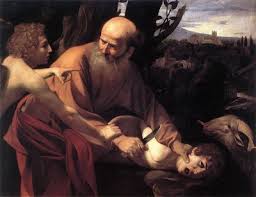
Audio Shiur: Akeidat Yitchak - Doing Teshuvah as Parents for Rosh Hashanah
 Audio Shiur:
Akeidat Yitzchak - Doing Teshuvah as Parents
Using this article about parenting as a springboard for our shiur, we study the story of Akeidat Yitzchak. This powerful tale, which we read on the second day of Rosh Hashanah, evokes strong emotions, both for the questions that it forces us to confront, and the ethical challenges it presents. But when we look at the story carefully, with a focus on the language that the Torah employs, we find some powerful lessons for parents to consider.
Click here for the audio link, or listen in the handy audio player supplied below.
Thursday, November 13, 2008
Parshah Questions for Kids - Vayera 5769
 Sorry that I haven't updated in a while. I've been traveling the world recruiting for Orot. If you know of a high school girl looking for a great seminary experience, please have her contact me. I'm really excited about our program at Orot, and looking forward to building an amazing program.
Meanwhile, enjoy the Parshah Questions at the Shabbos Table.
If you have any comments or questions, let me know.
Wednesday, October 24, 2007
Table Talk - Vayera 5768
 How long should it take an angel to travel from Be'er Sheva to Sodom? Well, since you're immune to the laws of physics, it really should take no time at all. Yet, we find that while the three angels seem to take their leave of Avraham sometime during the day (they started eating during "the heat of the day"), וַיָּבֹאוּ שְׁנֵי הַמַּלְאָכִים סְדֹמָה, בָּעֶרֶב - "the two angels came to Sodom in the evening. (19:1) What took so long?
Rashi explains that the angels intentionally wait to arrive in Sodom in order to give Avraham a chance to argue with God and save the city. Only when Avraham's appeal fails do the angels proceed to fulfill their fateful mission. The Netziv (Rabbi Naftali Zvi Yehuda Berlin, Lithuania, 1818-1890) writes in his commentary to the Torah called Ha'amek Davar, that while the angels themselves can travel instantaneously, Avraham accompanies them a distance of three parsaot -- a considerable way. Only when they take their leave of him can they "transport" to Sodom. They arrive in Sodom so late in the day due to Avraham's insistence on considering them his guests long after they leave his home.
In fact, Rambam (Laws of Mourning 14:2) explains that the rabbis decreed that accompanying guests out of one's home to be a rabbinic commandment based on Avraham's behavior. Rambam writes, "The reward for accompanying [a guest] is greater than all [other reward]. And this is the law that Avraham established and the custom of kindness that he practiced: he fed travelers and gave them drink and accompanied them...and accompanying them on their way is greater than welcoming them...Even if one only accompanied his friend four amot, his reward is great indeed!"
Subscribe to:
Posts (Atom)