Showing posts with label Chukat. Show all posts

Thursday, June 29, 2017

Audio Shiur: Parshat Chukat - The Death of Aharon

Audio Shiur:
Parshat Chukat - The Death of Aharon

Chazal convey the pain and beauty in the process of Aharon's death. Why was he punished? And what can we learn from his death about the way that we handle death today? (Trigger warning: Shiur is a bit heavy. It's about death.)

Click here to navigate to the shiur on YUTorah.org.

Click on the player below to play the Shiur or right click here to download)


Did you know that this shiur is available as a free podcast on iTunes? Click here to subscribe - and leave a comment and rating so more people will find the shiur! Thanks!

Thursday, June 13, 2013

Audio Shiur: Parshat Chukat - The Value of Peace

Audio Shiur:
Parshat Chukat - The Value of Peace

Moshe's message of peace to Sichon seems to fly in the face of a direct commandment to wage war and conquer the country. How do we account for the different versions of the same story? How important is peace anyway?

Click here to navigate to the shiur on YUTorah.org.

Click to play the Shiur (or right-click to download)

Wednesday, June 27, 2012

Audio Shiur: Parshat Chukat - Death with Dignity

Audio Shiur:
Parshat Chukat - Death with Dignity

The powerful and beautiful details found in the story, and the Midrashim describing the death of Aharon convey critical messages for us today.
Click here to download the shiur, or here to navigate to the shiur on YUTorah.org.


Now you can subscribe to this shiur as a podcast, directly from iTunes! To subscribe, click here.

Tuesday, June 28, 2011

Audio Shiur: Parshat Chukat - the Rock of Og

Audio Shiur:
Parshat Chukat - the Rock of Og

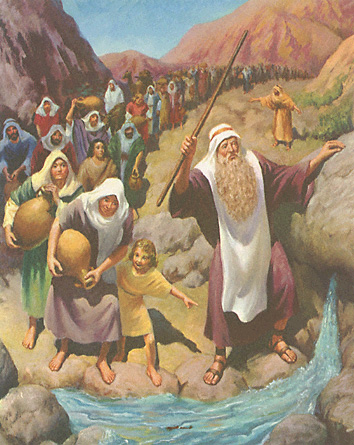
The end of Chukat tells the cryptic story of the Battle with Og, the King of Bashan. Rashi, the Little Midrash Says and the Gemara in Brachot tell the fantastic story of Og's rock (more like mountain), his amazing height, and his Achilles' Heel. What do we do with such a story? And why does it appear in the Shulchan Aruch? Listen and find out. You can also see the picture from the Little Midrash Says on the Left - click on it to see it full size. Thanks to digital assistant Simcha Spolter for his help in scanning the picture.

Click here to download the shiur, or here to navigate to the shiur on YUTorah.org.


Now you can subscribe to this shiur as a podcast, directly from iTunes! To subscribe, click here.

Friday, June 18, 2010

Audio Shiur: Parshat Chukat 5770 - Unrealized Expectations

Audio Shiur:
Parshat Chukat 5770 - Unrealized Expectations

Unrealized expectations always lead to disappointment - both in our private lives, and in communal life as well. Moreover, how we deal with that disappointment has a great impact on us, on how we fight with each other, and the relationships that we have. Why did the Jewish people complain to Moshe about circumventing Edom? Why did Moshe build a copper snake? How did it help?

Click here to download the shiur, or here to navigate to the shiur on YUTorah.org.

Thursday, June 25, 2009

What Hashem Wants From Us - Devar Torah for Parshat Chukat

If you'd prefer to download a pdf copy of this dvar Torah and add it to your Shabbat reading list, click here.

For the last couple of weeks, people in Israel have been feeling a little more tense than usual. Many of us are worried about the direction that the US government has been moving – more towards Arab appeasement, more pressure on Israel. Working at a school in the beautiful city of Elkana, looking out over the hills at the city of Tel Aviv below, you wonder how anyone could even think of abandoning not just beautiful land, but strategically critical areas. And yet America's President keeps insisting on "no more building the in settlements." Where I work. On the wrong side of an arbitrary line. So we're a little more nervous than normal.
When I brought up the topic with a relative living in the States, she told me that of a conversation she had with someone who said, "Whatever Hakadosh baruch Hu wants – that's what's going to happen." Clearly, that's true. But it also implies that what we do really doesn't matter in the end and that everything is in Hashem's hands only. I couldn't disagree more.
Chukat relates the strange story of the Nachash Hanechoshet – the copper serpent that Moshe made to save the people from death. At the conclusion of the forty years of wandering in the desert, the reborn nation is now ready to enter the Land of Israel. Yet, as their travels begin to drag on and they travel around Edom (instead of attacking and going right through it), the young nation grows impatient and begins to complain.
לָמָה הֶעֱלִיתֻנוּ מִמִּצְרַיִם, לָמוּת בַּמִּדְבָּר: כִּי אֵין לֶחֶם, וְאֵין מַיִם, וְנַפְשֵׁנוּ קָצָה, בַּלֶּחֶם הַקְּלֹקֵל
Why have you brought us up out of Egypt to die in the wilderness? There is no bread, and there is no water; and our soul hates this light bread.
They don't complain about the issue at hand – their desire to enter the Land. Moreover, they don't actually tell the truth: there is water, and they're not dying in the desert. In short, they're simply kvetching. Hashem punishes them swiftly and severely: serpents emerge in the desert and begin fatally biting the people. They immediately repent and beg Moshe to pray for the removal of the snakes and their salvation, which he does. Hashem, instead of immediately eliminating the snakes, instructs Moshe to construct a serpent and hang it on a pole, וְהָיָה, כָּל-הַנָּשׁוּךְ וְרָאָה אֹתוֹ, וָחָי, "Whoever is bitten, when he sees [the serpent] will live".
Yet, Rashi notes that when the Torah tells us what actually happens, the people don't just "see" the serpent. Rather, וְהָיָה, אִם-נָשַׁךְ הַנָּחָשׁ אֶת-אִישׁ--וְהִבִּיט אֶל-נְחַשׁ הַנְּחשֶׁת, וָחָי, "if a serpent had bitten any man, when he looked at the serpent of brass he lived." Why, Rashi asks, if Hashem tells Moshe that the people only need to see the serpent do they specifically look at it? Rashi explains,
שלא היה ממהר נשוך הנחש להתרפאות אלא אם כן מביט בו בכוונה
It would not heal a bitten person quickly unless he intentionally looked at it.
Chazal derive an important and well-known principle from this story (in Gemara Rosh Hashanah 29a):
Does the serpent kill or give life? Rather, when Israel looked towards the heavens and subjugated their hearts to their Father in Heaven they would be saved, and if not they would wither.
From Rashi we can derive three levels of activity and salvation among the people: Someone who was bitten but for some reason never saw the serpent tragically died. A snakebite victim who happened to see the copper snake would heal, but slowly. Finally, the person who stared intently at the serpent enjoyed a speedy recovery. All of this makes me wonder: If Hashem had already forgiven them and if the matter truly hinged on an individual's personal level of Teshuvah, why create the copper snake in the first place? Why should the speed of someone's recovery depend on whether he saw the snake peripherally or stared at in intentionally? What difference does that make?
It makes a great deal of difference. While it's true that "everything is in Hashem's hands and whatever He wants will happen in the end," I believe that Hashem wants most for us to take an active role in our own lives. Sure, He could have healed the sick without any input from us whatsoever. But Hashem doesn't want us to lead miraculous lives. He wants us to live in the real world and appreciate that what we do truly makes a difference, both spiritually and physically. He wants us to have faith; but also to believe that our efforts can and must effect change in the real world.

That's precisely what I said in response to the person who said about the "settlements" that, "Whatever Hakadosh baruch Hu wants – that's what's going to happen."

I couldn't agree more. But what He wants is for us to stand up, be counted, and do our utmost to ensure that His Land remains firmly in the hands of His nation.

Wednesday, June 24, 2009

Audio Shiur: Chukat - Dealing with Tragedy in Jewish Life

Audio Shiur:

Parshat Chukat - Dealing with Tragedy in Jewish Life
This shiur begins with a discussion of the phenomenon of Israeli religious widows who marry but do not register their marriage in order to continue receiving their pensions. This issue frames the story of Mei Merivah - the episode which results in Moshe's punishment and his banishment from the Land of Israel.

Click here for the audio link, or listen in the handy audio player supplied below.

Sunday, July 6, 2008

My Final YIOP Drashah - The Power of Optimism

I’ve mentioned a couple of times that I’m on a Steven Ambrose kick; I finished “Band of Brothers,” so I now moved on to "D-Day". Towards the beginning of the book, he describes the difference in mentality between the Supreme Commander of the Allied Expeditionary Force, Dwight D. Eisenhower, and the commander of the German Army in the Western theater of France, Erwin Rommel. While Romell was a realist, cognizant of the difficulty of holding off an Allied landing in France, Eisenhower was an unrelenting optimist. An official US Army biography on Ike writes,


Through D-Day, Eisenhower's most marked characteristics were his unfailing
optimism about the success of the invasion and his determination to overcome all
obstacles that stood in its way.


That type of attitude filters down. When a leader exhibits optimism, positive energy and a can-do attitude, that attitude permeates his or her entire structure. Subordinates feed of that energy, and find ways to accomplish things they thought that they could not. Just think about the power of a simple word of encouragement. Just when you’re ready to give up – at a job, an assignment, a task – it doesn’t matter what. And then someone comes over and says, “You know, I know this is difficult, but I’m sure that you can do it.” How powerful such a simple expression can be! And how easy. And if optimism can bring energy enthusiasm, pessimism can destroy it. And that pessimism can be so dangerous, that it must be rooted out even at great cost.
Today we read about Moshe’s seemingly small mistake – the sin of מי מריבה – the waters of מריבה. The Torah describes a water shortage, and the complaints of the nation for water. God tells Moshe to approach the rock and speak to it – to ask it for water. Instead, Moshe gathers the people around the well, and instead of speaking to the rock says to the people, שמעו נא המורים, המן הסלע הזה נוציא לכם מים – “Listen please you bitter people. From this rock should we extract water from you?!” He then hits the rock twice, the rock gushes a torrent of water and everyone’s happy.
Except God. You see God had instructed Moshe to speak to the rock, not to hit it. God’s judgment is swift. יען לא האמנתם בי להקדישני לעיני ישראל – “Because you did not have faith in Me to sanctify Me in the eyes of the Jewish people,” לכן לא תביאו את הקהל הזה אל הארץ אשר נתתי להם – “therefore, you will not bring this congregation to the Land that I have given them.”
Virtually every פרשן is perplexed. OK – Moshe made a mistake. Yes, he hit the rock. But doesn’t it seem a little extreme? Doesn’t God seem a little harsh to take from Moshe his greatest single desire – to enter the Land of Israel – for such a seemingly small misstep?
Commentators offer scores of answers to this question – each one just a little different. I’d like to focus on one approach suggested in the Midrash. Quoting a פסוק in שיר השירים that refers to an orchard of almond trees, the Midrash compares leadership to climbing an almond tree.


האגוז הזה חלוק, מי שאינו אומן לעלות בו מיד הוא נופל, שצריך לשמור עצמו שלא
יפול הימנו, כך כל מי שמשרת את ישראל צריך לשמור עצמו שלא יטול את שלו מתחת ידיהם
כגון משה וישעיה ואליהו, משה אמר שמעו נא המורים (במדבר כ' י') ונאמר לא תביאו את
הקהל הזה (שם שם /במדבר כ'/ י"ב), ישעיה אמר ובתוך עם טמא שפתים אנכי יושב (ישעיה
ו' ה') מיד ובידו רצפה (שם /ישעיהו/ שם /ו'/ ו'), אליהו כי עזבו בריתך בית ישראל
(מלכים א' י"ט י' וי"ד) ונאמר ואת אלישע בן שפט [מאבל מחולה] תמשח לנביא תחתיך

Just as the almond tree is smooth and slippery, and one who does not know how to
climb it will fall immediately, so too anyone who serves the Jewish people must
guard himself not to take his hands out from under them, as did Moshe, Yishayah
and Eliyahu. Moshe said, “Hear please, you bitter ones,” and it says, “you will
not bring this congregation.” Yishayah said, “And I sit amongst a nation of
impure lips,” immediately [he was punished with] a burning stone. Eliyahu said,
“For the House of Israel has abandoned your covenant,” and it says, “and you
shall anoint Elisha ben Shafat as a prophet in your place.”

What’s the connection between these three examples? In what way do Moshe, Eliyahu and Yirmiyahu – three of our greatest prophets and teachers – fail? They don’t fail as much as they are no longer able to see only the positive. They have lost their rosy glasses. They cannot only see good in the Jewish people anymore. Moshe finally sees the people as, המורים – a bunch of bitter complainers. And that’s why he can no longer lead the Jewish people, because leaders must be eternal optimists. They must always be able to see the good in their people; their potential and beauty and energy, and see not their faults and shortcoming, but their potential to continue to build and grow.
Indeed, this sense of optimism has carried the Jewish people through the darkest imaginable times; through tiresome and tiring persecutions, pogroms and pillaging, hatred and Holocaust. And yet we persevere. Why? How? Because we’re eternal optimists. We have to be. It’s in our blood. Just look at the קדושה we said this morning.


ממקומך מלכנו תופיע – ותמלוך עלינו כי מחכים אנחנו לך
From Your exalted
place You will appear, and You will rule over us, for we are waiting for you.
Notice that we don’t say, מלוך עלינו, הופיע לנו – “please God, rule over us, reveal Yourself.” We don’t ask for that because we take we take it for granted. Of course God will redeem us. We just don’t know when. So why not now? Indeed, why not?
We don’t wonder whether the redemption will come. We know that it’s coming, in our sense of faith and belief and yes, eternal optimism. And we are commanded to know it as well – it’s the last of Rambam’s Priciples of Faith – אני מאמין באמונה שלמה – I believe with perfect faith. That’s not just faith. It’s optimism – the ability to overlook the darkness of the tunnel and see the light at the end.
Indeed, every great endeavor; every project or business or enterprise rests on a foundation of optimism. A good friend told me this week, “If you don’t ask, you get a ‘no’ one hundred percent of the time.” And he’s right. But to ask, I’ve got to think that the answer will be yes, because if I didn’t, I’d never ask in the first place. If I thought I’d fail, I’d never take that new job, or begin the new program, or move to Israel – because, “what’s the point if I’m only going to fail anyway”?
I am optimistic not just about the גאולה, but also about the power of community – and specifically this community, to achieve great things. Last week David Ungar spoke at סעודה שלישית, and he said that he loves coming to shul because here we witness the rebirth of Judaism before our eyes, and he’s right. But it’s only happening because the are, were and will be people who put their energies and efforts into the faith that our shul will continue to thrive and prosper.
Winston Churchill once said, “The pessimist sees difficulty in every opportunity. The optimist sees the opportunity in every difficulty.” These are difficult times in the US. A deflated stock market, and a terrible Michigan economy. It’s easy to see dark days ahead. But Churchill, who had a few things to worry about in his time, also said, “For myself I am an optimist - it does not seem to be much use being anything else.”
There will always be challenges and difficulties. The strength of this shul lies in the amazing ability of its members to see above them; to overcome them and continue to build and connect the Jewish people of this entire community to God. It has been an honor to lead this shul, to teach you and learn from you, and to speak from this pulpit week in and week out. And, as I leave you I can honestly say that the future of the Young Israel of Oak Park is very bright indeed.
It’s all up to you.
Thursday, July 3, 2008

The Salvation Serpent - Table Talk for Chukat 5768

In one of the most unusual sections in the Torah, God commands Moshe to form a molten copper snake and place it on a stand in order to save the Jewish people from the bites of the deadly serpents tormenting the people. Moshe of course follows God's instructions. The Torah tells us that whoever was bitten by a snake would look at the copper serpent and be healed.
This episode leaves us with the obvious question: why would God instruct the Jewish people to create a symbol so similar to the idolatry that the Torah expressly forbids? Could this not lead to confusion and sin?
Rashi quotes the famous Mishnah in Rosh Hashanah:
Does the serpent kill or give life? Rather, whenever the Jewish people focus their gaze towards the heavens and subjugate their hearts to their Father in Heaven, they would be healed. And if not, they would perish. (Rosh Hashanah 29a)
Yet, the message of the rabbis in Mishnah begs the question: why create confusion? Why not simply instruct the people to look to God without the need for the serpent?
To my mind, the symbol of the serpent most accurately represents the challenge of faith in the physical world. Modern medicine uses that very symbol to represent the medical profession, and the healing power of medicine in the world. Isn't it ironic that the symbol God wants to represent faith in Him and His ability to heal us, now represents the power of modern man to heal, without need for God. We could ask the very same question as the Mishnah:
Does the doctor kill or give life? Rather, the sick must focus on God and subjugate their hearts to their Father in Heaven.
The doctor must do his job. He must act as the agent of God. But in the real world, we sometimes confuse the agent with whom he represents, and put our faith not in God, but in the doctor.
This is the message of the serpent - the danger of confusion. It's up to us to see through that confusion, and maintain our faith in God throughout the trials and tribulations of life.

Wednesday, June 20, 2007

Table Talk -- Chukas 5767

חקת תשס"ז – Moshe the Marketing Maven

We all think of Moshe a as talented in many different areas. We consider him a good leader; a great motivator, teacher, rabbi, and educator. But did you know that he also dabbled in marketing?

You see, every product needs a good slogan – a catchy title, a great tagline, or a eye-catching logo. After all, without proper presentation, people wouldn’t purchase the product. While we might think that we can exempt religion from this rule, Moshe understands that even religious items (and institutions) must market themselves to the public.

A case in point is the copper serpent we find in our parshah. When the people complain (once again) about being forced to take the long route to Israel, instead of fighting their way through Edom, God sends snakes to attack the camp. The people relent and beg Moshe to pray for their forgiveness. When he does, God instructs Moshe to construct a serpent, stick it up on a pole, so that should a person be bitten by a serpent, he need only gaze at the snake and he would be healed.

Following God’s instructions, Moshe constructs a copper serpent, places it on the pole, and once again saves the day. Rashi notes that nowhere does God tell Moshe what material to use to construct the snake. Why then does Moshe use copper instead of another metal?

Rashi explains that had he used silver or gold, it just wouldn’t sound right. Sound it out yourself: נחש כסף (nachash kesef) and נחש זהב (nachash zahav). They don’t really flow off the tongue. Now sound out the Hebrew for copper snake: נחש נחשת (nachash nechoshet). In this words of Rashi, לשון נופל על לשון – it’s complementary language. It’s sounds nice. Feel right.

And it’s also great marketing.