Showing posts with label Pekudei. Show all posts

Wednesday, March 11, 2015

Audio Shiur: Parshat Vayakhel-Pekudei: Building a Mishkan, Building a State

Audio Shiur:
Parshat Vayakhel-Pekudei: Building a Mishkan, Building a State

The artisans who built the Mishkan didn't actually put it together, but brought it to Moshe in pieces, Ikea style. Why didn't they finish and bring him a finished building? According to Rashi, they couldn't. Yet, Rashi (and the Midrash) convey a message that related not only the to Mishkan, but to all of us, and to the building of the State of Israel. We conclude by reading a wonderful piece from Siach Shaul, based on talks of Rav Shaul Yisraeli.

Click here to navigate to the shiur on YUTorah.org.

Download the source sheet from the shiur here.

Click on the player below to play the Shiur or right click here to download)
Thursday, March 15, 2012

Audio Shiur: Parshat Vayakhel-Pekudei - Falling Rockets and the Presence of God

Audio Shiur:
Parshat Vayakhel-Pekudei: Falling Rockets and the Presence of God

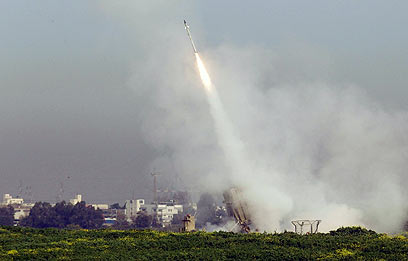
A Facebook status from my mom reminded me just how great a role Hakadosh Baruch Hu played in the recent rocket barrage which rained rockets and mortars on the south of Israel - and less than a mile from my home. And yet, it's easier to see an Iron Dome than the Hand of God. What are we missing when we fail to enjoy the Shechinah in our jmidst in a direct manner? And what would it take to get it back?

Click here to download the shiur, or here to navigate to the shiur on YUTorah.org.


Now you can subscribe to this shiur as a podcast, directly from iTunes! To subscribe, click here.

Wednesday, March 18, 2009

The Missing Piece - Table Talk for Vayakhel-Pekudei 5769

Thoughts on the Kohen Gadol and Gilad Schalit

Here in Israel, the government and public finds itself caught in the gut-wrenching debate over just how far to go to secure the release of captured soldier Cpl. Gilad Schalit. The two sides of the argument present clear but compelling contrasting arguments. On one side sit Gilad's family; his parents and brother, literally camping in a tent outside the Prime Minister's office hoping to compel the government to reach an agreement with Hamas and secure Gilad's release. On the other side sit the families of terror victims who, despite their sympathy for the Schalit family, feel that the price to be paid for Gilad's release is simply too high, and that bartering his life for the freedom of hundreds of terrorists and criminals will only further endanger the people of Israel.
They both right. It's a terrible decision to have to make, and it only makes me yearn for the days when we didn't have to make such decisions ourselves. Once upon a time Hashem Himself would answer these impossible questions for us – through the garments of the Kohen Gadol.
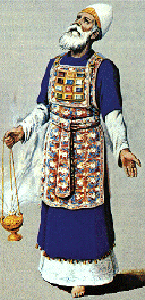
Among the different garments of the Kohen Gadol for his service in the Mishkah, he wore the Choshen – a breastplate. We all know what it looked like: four rows of three different types of stones. On these stones Bezalel carves the names of the tribes of Israel. But the Choshen carried an addition, critical element. Hashem instructs Moshe,
וְנָתַתָּ אֶל-חשֶׁן הַמִּשְׁפָּט אֶת-הָאוּרִים וְאֶת-הַתֻּמִּים וְהָיוּ עַל-לֵב אַהֲרֹן בְּבֹאוֹ לִפְנֵי ה' וְנָשָׂא אַהֲרֹן אֶת-מִשְׁפַּט בְּנֵי-יִשְׂרָאֵל עַל-לִבּוֹ לִפְנֵי ה' תָּמִיד:
And you shall place to the Choshen the Urim and the Tumim, and they shall be on the heart of Aharon when he enters before Hashem; and Aharon shall carry the judgment of the Children of Israel on his heart before Hashem always.
The famous Urim V'tumim raises all kinds of questions. First and foremost, what exactly was it? What does the Torah mean by telling us that through it Aharon would carry the "judgment" of the Jewish people on his heart? Finally, when we look at Parshat Pekudei and the final construction of the Choshen we learn that while Bezalel and his workers followed Moshe's instructions to a tee, they seem to have omitted one critical detail: there's no mention of the Urim V'tumim at all. (see Shemot 39:8-21) The stones were there. They weaved the garment properly. But where was the Urim V'tumim so seemingly critical to its proper function?
What was the Urim V'Tumim? Rashi (on Shemot 28:30) tells us:
הוא כתב שם המפורש, שהיה נותנו בתוך כפלי החשן, שעל ידו הוא מאיר דבריו ומתמם את דבריו. ובמקדש שני היה החשן, שאי אפשר לכהן גדול להיות מחוסר בגדים, אבל אותו השם לא היה בתוכו, ועל שם אותו הכתב הוא קרוי משפט...
This is a writing of the Holy Name which [Moshe] placed in the folds of the Choshen, through which it would light up (from Urim) his words and purify (from Tumim) his words. In the Second Temple there was a Choshen – for the Cohen Gadol could not serve with [the proper number of] garments. But that Name was not inside it, and through that name it was called "Mishpat"…
Rashi explains that the while the Urim V'tumim served as the spiritual "battery" of the Choshen, it was not a critical aspect of its construction. Perhaps this explains why the Torah considers the Choshen complete even without the Urim V'Tumin. Ramban, agreeing with Rashi adds that,
הם סוד מסור למשה מפי הגבורה, והוא כתבם בקדושה, או היו מעשה שמים
They were a secret given to Moshe from the mouth of Hashem, and [Moshe] wrote them in Holiness, or they were a creation of heaven.
Ramban points out that Moshe himself eventually placed the Urim V'Tumim inside the Choshen when he dressed Aharon for service in the Mishkan. (see Vayikra 8:8) So, while the Urim V'Tumim were not considered part of the Choshen itself, Moshe placed this mystical scroll (or whatever "they" were) crafted by Hashem Himself into the Choshen later on. What was did Aharon use it for? Why was it so important? Rashi explains:
דבר שהם נשפטים ונוכחים על ידו אם לעשות דבר או לא לעשות.
A matter that they would judge and decide based on [the Urim V'Tumim] whether to do something or not.
The Jewish people used the Urim V'Tumim to ask the impossible questions that no one person could legitimately answer himself. Should we go to war now or not? Whose sin caused the terrible suffering among the Jewish people? Is now the time to conquer new territory or remain on the sidelines? Is it better to trade terrorists for Gilad Schalit or suffer the painful price of refusing to negotiate?

Except today, we live without a direct connection. No Urim V'Tumim lights up the way. So we stumble along, groping around in the darkness, hoping that we don't make the wrong decision. All the while we must continue to pray not only for our country and her leaders, forced to make these difficult decisions, but also that Hashem bring a level of comfort and well-being to Gilad, held captive now for over one thousand days.

Sunday, March 9, 2008

Drashah in Memory of the Victims of the Mercaz Harav Massacre


Click here to read the drashah that I delivered at YIOP on the Shabbos after the terrible massacre at Yeshivat Mercaz Harav this past week.
ה' ינקום דמם.

Wednesday, March 5, 2008

Communal Service -- A Privelege or a Burden? Table Talk for Pekudei 5768

We all know the feeling: that heavy sensation we get when the phone rings, and it's the rabbi, or the school president - calling us to ask for our help. Yes, we'll help. But we somehow convey the attitude that we'd rather be doing something else, and that the opportunity to participate is more than a little bit of trouble.
Yet, some people feel precisely the opposite. I was speaking with someone this week about a ticket that I got (yes, I deserved it), and he told me that if I didn't call his wife for help, "she would genuinely be mad at me." Meaning, if I neglected to call her for assistance, she'd be angry that I didn't want to ask her for help. She sees participation and helping others not as a burden but as a privilege, which is just how Moshe wants us to see things.
When the Jewish people finally finish building the mishkan, they bring the completed work to Moshe for his inspection. The Torah tells us that when he sees their meticulous attention to instruction and their wonderful work, ויברך אותם משה -- "Moshe blessed them." What did he say to them?
Rashi tells us that he gave them a simple blessing: "May it be God's will that the Shechinah (presence of God) dwells in the actions of your hands." In other words, I hope God likes this mishkan as much as I do.
But the Seder Olam gives a different version of Moshe's blessing. According to this version Moshe told them, "You are fortunate, O' Israel, that you merited the work of the mishkan. And just as you merited this, so you should merit that you will be given the Temple, and the Shechinah will dwell in your midst."
First and foremost, Moshe tells us that they - and we - must see the ability to contribute to the construction of the mishkan not as a burden, but as a privilege. It's a merit to have the talent, ability or even wealth to contribute to God's dwelling place. And if we truly see our communal service as a gift and not an obligation, that very attitude will brings us the merit of the Temple and God's presence back into our midst.

Wednesday, March 14, 2007

Table Talk -- Vayakhel-Pekudei 5767

The Torah divides the 613 mitzvos into two types of commandments: 248 positive and 365 negative commandments. This number also corresponds to parts of the body. According to rabbinic count, the body consists of 248 limbs and 365 sinews. In fact, we mention this number during the prayer for the sick -- רמ"ח איברים ושס"ה גידים. And, this number also appears with regard to the mishkan in our parshah.
While both Vayakhel and Pekudei deal with the construction of the mishkan, Pekudei sums up the final construction and including a tally of the money and materials used in the process. In the parshah, the Torah tells us that they "made" and "built" and "created" numerous times in numerous ways, using some form of the word לעשות -- from the root ע.ש.ה. -- meaning "to do" or "to make."
Rabbi Yitzchak Karo, author of the work "Toldos Yitzchak" actually counted how many times that the root of the word appears in Pekudei. Not surprisingly, the number of times that the verb עשה appears in the parshah comes to 248. This numeric connection reminds us of the inherent connection between our bodies and the holiness that we can achieve with them. By following God's commandments, we have the power to transform our physical selves, quite literally, into a mishkan -- a sanctuary for God.