
Showing posts with label Ki Tetze. Show all posts
Showing posts with label Ki Tetze. Show all posts
Friday, September 16, 2016
My First Parshah Shiur on ITV - Three Themes in Ki Teitzei
Yesterday morning I was working in a coffee shop when I got a text asking me if I could make it to Tel Aviv to record a short interview on the parashah. It just so happened that I had a meeting in Ramat Gan (and I almost never have meetings in the Tel Aviv area) so I agreed to do it. Here's the clip. Enjoy!


Wednesday, September 14, 2016
Audio Shiur: Parshat Ki Teitzei - Watching our Words, Keeping our Commitments
Audio Shiur:
Parshat Ki Teitzei - Watching our Words, Keeping our Commitments
 The Torah commands us to take great care with the vows we make, and to keep our commitments. Yet, this raises the question of why vows have meaning at all. Why must we keep our promises? Why is a vow halachically binding? Are vows good or bad? How can something that propels us to spiritual growth be so dangerous?
Click here to navigate to the shiur on YUTorah.org.

Click on the player below to play the Shiur or right click here to download)
Did you know that this shiur is available as a free podcast on iTunes? Click here to subscribe - and leave a comment and rating so more people will find the shiur! Thanks!
Parshat Ki Teitzei - Watching our Words, Keeping our Commitments
 The Torah commands us to take great care with the vows we make, and to keep our commitments. Yet, this raises the question of why vows have meaning at all. Why must we keep our promises? Why is a vow halachically binding? Are vows good or bad? How can something that propels us to spiritual growth be so dangerous?
Click here to navigate to the shiur on YUTorah.org.
Click on the player below to play the Shiur or right click here to download)
Did you know that this shiur is available as a free podcast on iTunes? Click here to subscribe - and leave a comment and rating so more people will find the shiur! Thanks!
Thursday, September 4, 2014
Audio Shiur: Parshat Ki Teitzei - Rebellious Children
Audio Shiur:
Parshat Ki Teitzei - Rebellious Children
 The troubling section describing the treatment of the rebellious son causes many of us today to recoil: kill him? For what? For what indeed. Not to worry - we're not the first to ask these questions, and the answers that Chazal and the commentators offer have a lot to teach us about ourselves as individuals, as parents, and as we prepare for Rosh Hashanah.
Click here to navigate to the shiur on YUTorah.org.
Click to play the Shiur (or right-click to download)
Parshat Ki Teitzei - Rebellious Children

Click here to navigate to the shiur on YUTorah.org.
Click to play the Shiur (or right-click to download)
Wednesday, August 14, 2013
Audio Shiur: Parshat Ki Teitzei - Fighting the Good Fight
Audio Shiur:
Parshat Ki Teitzei - Fighting the Good Fight
 Chazal teach us that the allusions to war in this parshah and Parshat Shoftim allude to our never-ending battle with the yetzer hara. With this in mind, we glean a number of important lessons from the nuance of the text - and especially powerful lessons from Ohr Hachayim and Netivot (Nesivos) Shalom.
Click here to navigate to the shiur on YUTorah.org.
Click to play the Shiur (or right-click to download)
Parshat Ki Teitzei - Fighting the Good Fight

Click here to navigate to the shiur on YUTorah.org.
Click to play the Shiur (or right-click to download)
Tuesday, August 28, 2012
Audio Shiur: Parshat Ki Teitzei - Falling into God's Hands
Audio Shiur:
Parshat Ki Teitzei - Falling into God's Hands
 Why build a fence on my balcony, if everything that happens in the world is God's will?
Click here to navigate to the shiur on YUTorah.org.
Click to play the Shiur (or right-click to download)

Now you can subscribe to this shiur as a podcast, directly from iTunes! To subscribe, click here.
 Got an Android phone? Want to listen to the Parshah shiur on the go? Simply click here and let the phone do the work! You may also want to download a podcasting App like Podkicker.
Parshat Ki Teitzei - Falling into God's Hands

Click here to navigate to the shiur on YUTorah.org.
Click to play the Shiur (or right-click to download)
Now you can subscribe to this shiur as a podcast, directly from iTunes! To subscribe, click here.
Got an Android phone? Want to listen to the Parshah shiur on the go? Simply click here and let the phone do the work! You may also want to download a podcasting App like Podkicker.
Wednesday, September 7, 2011
Parshat Ki Teitzei - The Battle Within
Audio Shiur:
Parshat Ki Teitzei - The Battle Within
 The strange section of the Yefat To'ar raises numerous questions about both the text, and the subject matter. Why does the Torah allow a soldier to "succumb" to his urges? Three approaches to the section teach us about war, about the soul (and converts), and finally, about ourselves.
Click here to download the shiur, or here to navigate to the shiur on YUTorah.org.
Now you can subscribe to this shiur as a podcast, directly from iTunes! To subscribe, click here.
Parshat Ki Teitzei - The Battle Within

Click here to download the shiur, or here to navigate to the shiur on YUTorah.org.
Now you can subscribe to this shiur as a podcast, directly from iTunes! To subscribe, click here.
Sunday, September 4, 2011
Is a Divorce Ever Final?
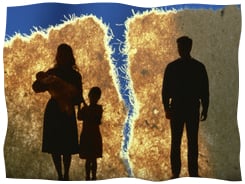
But is it?
If the marriage produced children, then it's obvious that while the partners have disconnected from each-other, they nonetheless continue to share in the responsibilities, burdens and joys of raising their children. This demands an ongoing interaction with the former spouse over an endless array of issues. From future Bar Mitzvah's to day school tuition to the naming of your grandchildren, a divorcee's former spouse will always be a part of his or her life.
But what if there were no children? At least then can we suppose that divorce represents a "final" separation between former husband and wife? Here again, a mitzvah in the Torah teaches us that while their bond may be small, even unnoticeable, a bond between husband and wife, even after divorce, remains nonetheless.
Among the many mitzvot listed in Ki Tetzei, we find the relatively obscured prohibition against מחזיר גרושתו – remarrying one's divorcee. Actually, that's not an accurate description of the prohibition. One can and should remarry his former wife, but only on the condition that she didn't marry someone else in the interim. If she did, then they may never marry each-other again. The Torah teaches us, )Devarim 24:1-4)
כִּי יִקַּח אִישׁ אִשָּׁה וּבְעָלָהּ וְהָיָה אִם לֹא תִמְצָא חֵן בְּעֵינָיו כִּי מָצָא בָהּ עֶרְוַת דָּבָר וְכָתַב לָהּ סֵפֶר כְּרִיתֻת וְנָתַן בְּיָדָהּ וְשִׁלְּחָהּ מִבֵּיתוֹ. וְיָצְאָה מִבֵּיתוֹ וְהָלְכָה וְהָיְתָה לְאִישׁ אַחֵר: וּשְׂנֵאָהּ הָאִישׁ הָאַחֲרוֹן וְכָתַב לָהּ סֵפֶר כְּרִיתֻת וְנָתַן בְּיָדָהּ וְשִׁלְּחָהּ מִבֵּיתוֹ אוֹ כִי יָמוּת הָאִישׁ הָאַחֲרוֹן אֲשֶׁר לְקָחָהּ לוֹ לְאִשָּׁה: לֹא יוּכַל בַּעְלָהּ הָרִאשׁוֹן אֲשֶׁר שִׁלְּחָהּ לָשׁוּב לְקַחְתָּהּ לִהְיוֹת לוֹ לְאִשָּׁה אַחֲרֵי אֲשֶׁר הֻטַּמָּאָה כִּי תוֹעֵבָה הִוא לִפְנֵי ה' וְלֹא תַחֲטִיא אֶת הָאָרֶץ אֲשֶׁר ה' אֱלֹקיךָ נֹתֵן לְךָ נַחֲלָה:
When a man taketh a wife, and marrieth her, then it cometh to pass, if she find no favour in his eyes, because he hath found some unseemly thing in her, that he writeth her a bill of divorcement, and giveth it in her hand, and sendeth her out of his house, and she departeth out of his house, and goeth and becometh another man's wife, and the latter husband hateth her, and writeth her a bill of divorcement, and giveth it in her hand, and sendeth her out of his house; or if the latter husband die, who took her to be his wife; her former husband, who sent her away, may not take her again to be his wife, after that she is defiled; for that is abomination before the LORD; and thou shalt not cause the land to sin, which the LORD thy God giveth thee for an inheritance
This commandment raises the obvious question: what's the difference whether she married someone else after she got divorced. Why can't her first husband decide to remarry his former wife after she divorces her second husband?
One of my jobs at Orot is editing the weekly sheet that we send out to our contacts (in Hebrew). Yes, there is some irony in the fact that I'm editing a Hebrew newsletter, but someone else checks the grammar after I'm done checking the content. In the d'var Torah for Ki Tetzei, Yishai Shavit, a student in Meretz Kollel in Mevaseret Zion raises this question, and arrives at a somewhat surprising conclusion.
The fact that halachah prohibits a couple from remarrying after the woman has married someone else in between indicates clearly that even after divorce, a couple remains connected in some way. In fact, the term used for the divorce itself represents a bond between husband and wife.
We know that when a couple divorces, the husband gives his wife a get. But the term get is a Mishnaic word that's really a generic word for "contract." The Torah tells us that the husband writes for his wife a "sefer" - which is the word we use for book. Shavit explains that the Hebrew root ס.פ.ר. always connotes a binding and connection. A Sefer - a book - is a binding of pages. לספור - to count - is to bring a group of items together into a single unit. סיפור - story - is a group of sentences bound together. A sefer, rather than separating, accomplishes precisely the opposite task. It binds. But this is a ספר כריתות - a book of divorce.
Moreover, the doesn't just give her the book. Rather, "he sends her from his house." He doesn't remove her from the house. In the words of the Torah, she is a שליחה - a messenger. She carries something of his, and like any שליח, she serves as his agent and representative in the world.
Shavit suggests that she takes with her "the root connection that they shared." In essence, once they married, he became a new person, someone different than he had been before they had joined together in matrimony. Now that they have decided to separate permanently, what is the man? Does he return to being the man he was before they married? That hardly seems plausible. But he can no longer be the man he was during the marriage either. He's not a husband, and now disconnected from his former wife, he undergoes yet another change. That chapter of his life lives on not in him - but in her, and in the "book" that he gives her representing the part of him that she will forever carry.
We know that when a couple divorces, the husband gives his wife a get. But the term get is a Mishnaic word that's really a generic word for "contract." The Torah tells us that the husband writes for his wife a "sefer" - which is the word we use for book. Shavit explains that the Hebrew root ס.פ.ר. always connotes a binding and connection. A Sefer - a book - is a binding of pages. לספור - to count - is to bring a group of items together into a single unit. סיפור - story - is a group of sentences bound together. A sefer, rather than separating, accomplishes precisely the opposite task. It binds. But this is a ספר כריתות - a book of divorce.
Moreover, the doesn't just give her the book. Rather, "he sends her from his house." He doesn't remove her from the house. In the words of the Torah, she is a שליחה - a messenger. She carries something of his, and like any שליח, she serves as his agent and representative in the world.
Shavit suggests that she takes with her "the root connection that they shared." In essence, once they married, he became a new person, someone different than he had been before they had joined together in matrimony. Now that they have decided to separate permanently, what is the man? Does he return to being the man he was before they married? That hardly seems plausible. But he can no longer be the man he was during the marriage either. He's not a husband, and now disconnected from his former wife, he undergoes yet another change. That chapter of his life lives on not in him - but in her, and in the "book" that he gives her representing the part of him that she will forever carry.
Friday, August 28, 2009
Parenting Lessons from the Wayward Son - Table Talk for Parshat Ki Tetze
 A couple I know had trouble getting their son to go to minyan in the morning, especially during the summer. The kid (naturally) wanted to sleep in, and the father could never coax his son to get up on time for davening. Truth be told, though, is that the father's biggest obstacle to getting his son to shul wasn't the child. It was his wife.
She feels that summer is a time to relax, and that she didn't want her son to grow up resenting being forced to go to shul. So the child knew that if he simply did not go, the father could never actually force his son because his wife would never back him up. So the boy didn't go.
Who's right? Is the father right - that it's important to strong-arm a child (not yet Bar Mitzvah) and strongly encourage him to daven with a minyan, even during vacation? Or is the mother right, and summer is a time to relax and not coerce children religiously? Actually, I think that in this case they're both wrong. I'll explain why.
The Gemara tells us that the ben sorer u'moreh - the wayward son, never actually existed. There never was a young man who stole from his parents, drank wine and raw meat, got turned over to the courts by his parents and then executed not for what he had done - but for what he would inevitably do in the future. It never happened, ever. If so, why does the Torah include an entire section describing a practical impossibility? The Gemara in Sanhedrin (70a) explains, דרוש וקבל שכר - "study and derive from it, and receive reward." Whether it happened of not, we have much to learn not just from the rebellious son, but from his parents.
The Torah tells us that when the "rebellious son" acts out in the prescribed manner,
Based on the inclusion of both the father and the mother in the verse, the Mishnah in Sanhedrin (Chapter 8) makes the following observation:וְתָפְשׂוּ בוֹ, אָבִיו וְאִמּוֹ; וְהוֹצִיאוּ אֹתוֹ אֶל-זִקְנֵי עִירוֹ, וְאֶל-שַׁעַר מְקֹמוֹthen shall his father and his mother lay hold on him, and bring him out unto the elders of his city, and unto the gate of his place (Devarim 21:19)
If the father wanted [to hand over his son] but the mother did not, or the mother wanted and the father did not, [the son] does not become a "rebellious son" until they both want. Rabbi Yehudah says, if the mother was not "worthy" to her husband, [the son] does not become a "rebellious son".The Gemara immediately jumps on Rabbi Yehudah's final comment. What does he mean when he says, "if the mother was not 'worthy' (in Hebrew the word is ראוייה - which I translate as "worthy" but can also mean "appropriate" or "suitable") to her husband"? The Gemara rejects a number of possibilities and concludes that Rabbi Yehudah's rule teaches us that she must physically resemble her husband. The Gemara quotes a Beraita that states,
Does he mean this phrase literally? Must they really look like each-other, sound identical and be the same height? Remember that this phenomenon never actually happened. Rabbi Yehudah surely did care about the technical details, but he also wanted to use those specifics to teach us critical lessons about parenting. This one is pretty clear: parents must be on the same page when raising their children.רבי יהודה אומר אם לא היתה אמו שוה לאביו בקול ובמראה ובקומה, אינו נעשה בן סורר ומורהRabbi Yehudah says, if she is not equal to her husband in [the sound of her] voice, in looks and in stature, [the son] does not become a "rebellious son".
Kids need the stability and safety of a unified message from their parents. They need to understand the ground rules - what's expected and what's not; what's over the line and what's acceptable. And they must present a unified front to their children, so that kids don't have a sense of confusion and lack of clarity.
Let's take it one step further. When parents disagree with each other in front of their children, they undermine their own authority. A child can reasonably conclude: well, my father doesn't agree with my mother, so why should I listen to her? My son is sitting here watching me write, and after reading this last sentence he said, "Actually, a kid thinks that if parents disagree with each other, why should I listen to either of them?" Smart words. The reason for this is that when one parent's authority is undermined, the other is automatically undermined as well.
So do parents have to agree on everything? Of course not. They should hopefully agree on most things, but each parents brings a different set of values to parenting their children, as they should. What then should they do when they disagree? Keep if to themselves.
This is where the couple went wrong: the father thinks his son should go to shul in the summer. The mother doesn't want to force him. Both have legitimate points of view. But they needed to discuss those points of view together first, come to a reasonable compromise, and present that compromise to their child.
That is not what they did. They openly talked about their disagreement to friends in front of their children. So their son did not attend minyan all summer long. After all, he knew that his mother wouldn't force him. But what his mother might not realize is that the next time she wants to parent, she too has lost her authority. In the end, her son won't listen to her either.
Tuesday, September 9, 2008

Monday, August 20, 2007
Table Talk -- Ki Tetze 5767
I recently saw an Internet poll that asked the following question: “Would you pay higher taxes in order to preserve a species from extinction?” To be honest, while I didn’t click on the poll (I hate those things), in my mind I answered “I doubt it.” After all, after being indoctrinated by right-wing talk radio for too long, environmentalism and environmental protectionism are creations of the liberal left-wing. Right? Not according to Rabbeinu Bechaya they’re not.
Among the numerous commandments we find in this week’s parshah, the Torah forbids us from taking both a bird and her eggs from the same nest. Rather, שַׁלֵּחַ תְּשַׁלַּח אֶת-הָאֵם, וְאֶת-הַבָּנִים תִּקַּח-לָךְ – “send away the mother and take for yourself the children.” Many commentators, especially Rambam, see an ethical imperative in this commandment. After all, it takes a special level of cruelty to wipe out an entire family of even birds in a single moment. But Rabbeinu Bechaya (a Medieval Spanish commentator), rather than seeing an ethical commandment, finds an environmental message.
“In its simple meaning, the scripture commands us to maintain the species and not uproot it, for even though the Torah permits the slaughter of animals for the benefit of man, it does not permit the destruction and uprooting of them. And if he takes the mother with the children together, it is as if he has destroyed that entire species.”
Perhaps then, the Torah cares more about the environment, and the way that we treat it, than we might have previously thought.
Among the numerous commandments we find in this week’s parshah, the Torah forbids us from taking both a bird and her eggs from the same nest. Rather, שַׁלֵּחַ תְּשַׁלַּח אֶת-הָאֵם, וְאֶת-הַבָּנִים תִּקַּח-לָךְ – “send away the mother and take for yourself the children.” Many commentators, especially Rambam, see an ethical imperative in this commandment. After all, it takes a special level of cruelty to wipe out an entire family of even birds in a single moment. But Rabbeinu Bechaya (a Medieval Spanish commentator), rather than seeing an ethical commandment, finds an environmental message.
“In its simple meaning, the scripture commands us to maintain the species and not uproot it, for even though the Torah permits the slaughter of animals for the benefit of man, it does not permit the destruction and uprooting of them. And if he takes the mother with the children together, it is as if he has destroyed that entire species.”
Perhaps then, the Torah cares more about the environment, and the way that we treat it, than we might have previously thought.
Subscribe to:
Posts (Atom)