Showing posts with label Shemot. Show all posts

Thursday, January 19, 2017

One of My Favorite Parshah Riddles: Elastigirl in the Torah

During my pulpit years in Oak Park, I would ask a Parshat Hashavua riddle before the Torah reading. While I have forgotten most of them, one that I remember well and is one of my favorites is the following: Which member of the Incredibles appears in Parashat Shemot? The answer of course: Elastigirl. Where does she appear? In Rashi's commentary.

The Torah tells us that when baby Moshe is placed into the Nile and found by the daughter of Par'oh, וַתִּשְׁלַח אֶת אֲמָתָהּ וַתִּקָּחֶהָ, which literally means that, "she sent her maidservant, and she took it." The word אמה here means "Maid." Rashi, after giving the plain meaning, adds another explanation based on the Midrash in the Gemara in Sotah.
Our Sages (Sotah 12b), however, interpreted it as an expression meaning a hand. [The joint from the elbow to the tip of the middle finger is known as אַמָּה, hence the cubit measure bearing the name, אַמָּה, which is the length of the arm from the elbow to the tip of the middle finger.] Following [the rules of] Hebrew grammar, however, it should have been vowelized אַמָּתָהּ, with a dagesh in the mem. They, however, interpreted אֶת אֲמָתָהּ to mean her hand, [that she stretched out her hand,] and her arm grew many cubits (אַמוֹת) [so that she could reach the basket].
Thus, Par'oh's daughter was the original Elastigirl - who stretched out her arm a great distance to bring the baby Moshe into her arms!

Audio Shiur: Parshat Shemot: From Elastigirl to Excalibur - Moshe's Origin Story

Audio Shiur:
Parshat Shemot: From Elastigirl to Excalibur - Moshe's Origin Stor

According to Ramban, in the span of one verse the Torah skips sixty years of Moshe's life. What happened during all that time?

Click here to navigate to the shiur on YUTorah.org.

Click on the player below to play the Shiur or right click here to download)


Did you know that this shiur is available as a free podcast on iTunes? Click here to subscribe - and leave a comment and rating so more people will find the shiur! Thanks!

Friday, January 1, 2016

Thought for Shemot: Paroh's Plan was Destroy the Jewish People through Intermarriage

Paroh's plan doesn't really make any sense: why kill the only the Jewish boys, and not every Jewish baby? Ohr Hachayyim (on Shemot 1:16) makes a startling suggestion: he was hoping to enslave the Jews through intermarriage:
והנה עצה חכמה יעץ פרעה בדבר זה, לבל יוכלו עלות מהארץ, והוא כי באמצעות שיהרגו כל זכר ויתרבו הנשים והן האשה טב למיתב טנדו ויתחברו נשי ישראל עם המצריים ויתחתנו בהם, ומעתה אין מציאות לעלות מן הארץ כשיהיו לעם אחד. גם יפגימו הנפשות הקדושות בערבוב הנפשות הטמאות ויהיו שם עד עולם ב''מ. And behold, Paroh offered sage advice in this matter which would prevent the Jews from leaving the land by killing all the males and increasing the [percentage] of females. Since it is known that "it is better for a woman to be married [than remain alone]", the women of Israel would associate with the Egyptians and marry them. From that point on, there is no possibility for them to leave the land as they would be one nation. Moreover, their holy souls would be blemished through the intermingling with the impure souls [of the Egyptians], and they would forever remain as a minority [in Egypt].

Thursday, December 31, 2015

Audio Shiur: Parshat Shemot - Bringing Children into a World of Misery

Audio Shiur:
Parshat Shemot - Bringing Children into a World of Misery

Perhaps the most amazing aspect of the slavery in Egypt is the fact that Jews continued to have children over the decades of slavery. Why did they continue to reproduce? According to the Midrash, they almost didn't want to, and we almost did our job for Paroh. Along the way, we also discuss how Paroh thought that his plan to kill Jewish boys would work, when things don't really seem to add up.

Click here to navigate to the shiur on YUTorah.org.

Click on the player below to play the Shiur or right click here to download)


Did you know that this shiur is available as a free podcast on iTunes? Click here to subscribe - and leave a comment and rating so more people will find the shiur! Thanks!

Wednesday, January 7, 2015

Audio Shiur: Parshat Shemot - The Paradox of Leadership

Audio Shiur:
Parshat Shemot - The Paradox of Leadership

What's the paradox? We study two specific pesukim in Shemot which describe the beginning of the conversation between God and Moshe at the burning bush.

Click here to navigate to the shiur on YUTorah.org.

Click to play the Shiur (or right-click to download)

Wednesday, January 11, 2012

Audio Shiur: Parshat Shemot - The Forgotten Dream

Audio Shiur:
Parshat Shemot - The Forgotten Dream

Warning! Hardcore Zionism here, in which we examine the beginning of the book of Shemot as a backdrop for some of the troubling nuance I detect in the American Orthodox community. Don't say that you weren't warned. 

Click here to download the shiur, or here to navigate to the shiur on YUTorah.org.


Now you can subscribe to this shiur as a podcast, directly from iTunes! To subscribe, click here.

Thursday, December 23, 2010

Audio Shiur: Parshat Shemot - Reluctant Leadership

Audio Shiur:
Parshat Shemot - Reluctant Leadership
Moshe's initial reluctance to take a lead role in the salvation of the Jews makes us wonder: Why don't we want to get involved? Should we seek out leadership roles when relevant, or avoid them as Moshe seems to do?

Click here to download the shiur, or here to navigate to the shiur on YUTorah.org.

Another Shemot Thought: The World's First Speech Therapist

Standing at the burning bush, commanded by God to return to Egypt and redeem the Jewish people, Moshe flatly refuses. "I'm not the guy. Find someone else."
Actually, my theoretical quote is inaccurate. According to many commentators, Moshe probably said something like, "I'm n-n-n-n-n-not the guy. S-s-s-s-s-s-s-s-send s-s-s-s-s-s-s-omebody else." No, I'm not mocking Moshe. Chazal explain that Moshe was a stutterer.
When told to go lead the nation Moshe tells God, (Shemot 4:10)
וַיֹּאמֶר מֹשֶׁה אֶל יְקֹוָק בִּי אֲדֹנָי לֹא אִישׁ דְּבָרִים אָנֹכִי גַּם מִתְּמוֹל גַּם מִשִּׁלְשֹׁם גַּם מֵאָז דַּבֶּרְךָ אֶל עַבְדֶּךָ כִּי כְבַד פֶּה וּכְבַד לָשׁוֹן אָנֹכִי:
And Moses said unto the LORD: 'Oh Lord, I am not a man of words, neither heretofore, nor since Thou hast spoken unto Thy servant; for I am slow of speech, and of a slow tongue.'
What does this unusual phrase, כבד פה - "of heavy mouth" mean? Rashi writes,
בכבידות אני מדבר, ובלשון לעז בלב"א [גמגמן]
"I speak with heaviness. In old French the word is "balba" - a stutterer
(Just as an aside, Rashbam completely rejects this Midrashic interpretation, insisting that Moshe did not in fact suffer from a physical disability, but rather lacked the power of verbal eloquence, especially in the Egyptian dialect. Rashbam wonders: "Is it possible that a prophet who spoke to God face-to-face and received the Torah from [God's] hands stuttered in his speech?")
In fact, the issue of Moshe's speech limitations comes up again and again in Moshe's communications with God. In addition to his complaint here, he raises the issue of being an ערל שפתיים - "of uncircumcised lips" twice after he had already returned to Egypt! (see 6:12 and 6:30). It's clearly an issue that continued to concern him.
Yet, back at the bush, God rejects Moshe's concern, telling him:
מִי שָׂם פֶּה לָאָדָם, אוֹ מִי-יָשׂוּם אִלֵּם, אוֹ חֵרֵשׁ אוֹ פִקֵּחַ אוֹ עִוֵּר--הֲלֹא אָנֹכִי, ה'. וְעַתָּה, לֵךְ; וְאָנֹכִי אֶהְיֶה עִם-פִּיךָ, וְהוֹרֵיתִיךָ אֲשֶׁר תְּדַבֵּר
'Who hath made man's mouth? or who maketh a man dumb, or deaf, or seeing, or blind? is it not I the LORD? Now therefore go, and I will be with thy mouth, and teach thee what thou shalt speak.'
How did God's answer address Moshe's issue? How would teaching Moshe what to say alleviate his concern over a physical speech impediment? Ibn Ezra explains:
וזהו טעם "אנכי אהיה עם פיך והוריתיך" - אמר שיורנו אשר ידבר מלות, שאין שם מאותיות הכבדות על פיו
And this is the meaning of "And I will be with your mouth and I will instruct you" (verse 12) - that [God] would instruct him which words to speak, which did not have the letters that weighed upon his mouth
In other words, God promised to instruct him in the most effective way to speak in order to avoid the crippling effects of his speech impairment. While God might not have given Moshe therapy to improve his speech (and I hear it's doubtful whether there even is any effective therapy for stuttering), in giving Moshe strategies to improve his verbal communication, God was clearly acting as the world's first recorded speech therapist.

Wednesday, December 22, 2010

A Shemot Parshah Riddle

Back at YIOP, I used to ask a parshah riddle before the Torah reading each Shabbat. This week's parshah motivated one of my favorites (or at least one that I remember). ]
The riddle is: Where is there an allusion to the Incredibles in this week's Parshah?

Answer: In Bat Par'oh. (Batya, Par'oh's daughter)
I'll explain. The Torah teaches us that as baby Moshe floated down the Nile, his little ark passed the party of Par'oh's daughter as she bathed in the river. Seeing the tiny floating lifeboat, she felt a pang of compassion and,
וַתִּשְׁלַח אֶת-אֲמָתָהּ וַתִּקָּחֶהָ
and sent her handmaid to fetch it
Yet, the word אמתה, which we translated as "her servant" is also the same word in Hebrew that means "forearm.". For this reason, the Midrash explains that an "incredible" event took place here.
ותשלח את אמתה - שנמשכה ידה ונתמתחה
"And she sent forth her arm" - that her arm stretched out and extended itself
Seeing the baby floating far away, she extended her arm towards him, and miraculously it kept extending and extending until it reached the girl.
I heard a nice thought about this miraculous Midrash today from Rav Gutel, the president of Orot. I Batya (the daughter of Par'oh) really was standing far away, why did she bother extending her arm? Did she really think that was indeed Elastigirl, capable of catching a ark floating far away?
Yet, the rabbis wished to convey to us the critical message that even when a task seems impossible, we still must make an effort. We must at least extend our arms, expressing a desire to make a difference. In truth, we might not be realistically able to expect a miracle, and most often it won't happen. But we must still make the effort, because we can never know when the Divine assistance may come to extend our reach and help us catch the next savior of the Jewish people.

Wednesday, January 6, 2010

Audio Shiur: Parshat Shemot - Moshe's Conflicted Identity

Audio Shiur:
Parshat Shemot - Moshe's Conflicted Identity

The description of Moshe's birth paints a picture of conflicted identity. What was he: Hebrew or Egyptian? As we read the story of his upbringing and the miraculous nature of his salvation, we come to appreciate his sacrifice to grow to become the person to save the Jewish nation.

Click here for the audio link, or listen in the handy audio player supplied below.

Monday, January 4, 2010

Growth Through Adversity - Thoughts for Parshat Shemot

Here in Israel, communities tend to segregate themselves voluntarily. Chareidim like to live with fellow Chareidim, Secular Jews live with other Secular Jews, and Religious Zionists build communities with like-minded RZ's. We don't mix very much. We tell ourselves that we do this for our children. After all, what could be bad about living in a community that meticulously adheres to the Shabbat? Why not choose to live in a place without the enticements of the outside world? What's wrong with insularity?

And yet - the facts don't seem to justify our choices. Speaking anecdotally, it's well-known here in Israel that many of the most religious yishuvim struggle with children who question and abandon their religiosity. So is our desire for uniformity and insularity necessarily a good thing? Or are we somehow doing more harm than good?

Click here to download a pdf version and read the full article.

Wednesday, January 14, 2009

Appreciating Our Blessings - Devar Torah for Shemot

Yad Binyamin seemed like a perfect choice. A wonderful community with a nice mix of Israelis and “Anglos”, my wife and I felt it would be a great place to begin our lives as new immigrants to Israel. Indeed, we were right. The kids have made good friends, the schools have been terrific to work with, and the community members warm and welcoming. Yad Binayamin really has been great.
Except for our friends from the South. OK – not really our friends. I mean our enemies from Hamas in Gaza. Yad Binyamin lies 39.5 kilometers from the Gaza border, just inside the outer limits of Hamas rocket capability. The Military Civilian Authority decided (wisely) to keep all children home from school, mine included, and they have only returned to school this week. Life at home is the same, but different. Just a little more tense. The children don’t sleep as well. They don’t venture out like they used to.
But still, with the challenge of living in a real war zone, carrying my children into our protected room, listening to my wife lie on the ground during a rocket attack on my cell phone, things are wonderful. They truly are. Why do I say so? Because I learned lesson from the Ben Ish Chai that I saw in a terrific sefer called מעיין השבוע.
As we begin to read of שיעבוד מצרים, the subjugation of the Jewish people at the hands of the Egyptians, one primary question enters our minds: why? If God really wanted to ultimately give the Jewish people the Torah and return them to ארץ ישראל, who needs Egypt? Who needs hundreds of years of slavery, suffering and desperation? Why not just keep Ya’akov and his family in the Land of Cana’an, take them to Eilat for a weekend to give them the Torah and let them comfortably settle the land? Why did God deliberately create a situation that demanded suffering before the salvation?
The Ben Ish Chai answers this question through a parable.
There once lived a wealthy businessman who kindly took in an orphaned youth as his houseguest. He happily gave the youth a home to live in and the young man settled into his new life comfortably. Several years later, a poor man came to the house to ask for tzedakah. Like most beggars, he expected only a modest donation, perhaps only five or ten shekel. When the man pulled out two hundred shekel, the pauper rejoiced. He began to bless the g’vir, his wife, his children – his city, his home. It was all the businessman could do to get the man out the door, bowing and throwing blessings behind him as he left.
Watching the scene unfold, the businessman’s wife commented to him, “While it’s true that you gave that man a nice gift, it’s not that much in the grand scheme of things. We’ve given the young man living in our home far, far more than two hundred shekel, and while he’s a fine young man, he never thanks us the way that man did.”
The businessman agreed with his wife, and called the young man into his office.
“You have been living with us for several years,” he told him. “You’ve always been pleasant, but I want you out of my house now. Please leave everything we’ve given you, and go immediately.”
The young man, dumbfounded, didn’t know what to do. All he could do was quietly leave the house, wondering where to go next. Arriving in the center of town he soon grew hungry. With nothing to eat and nowhere to sleep, he found a hard bench in the park to spend the night. Forced to find work for food, he began hiring himself out to deliver groceries to harried housewives, earning just enough to get a bite to eat. On the third day the businessman told his assistant, “Go call the young man back to the house and return him to his room.”
That afternoon at lunch, the young man rushed into the kitchen to help set the table. He thanked his patron profusely for the food, and afterwards asked if he could help in any other way.
The Jewish nation, said the Ben Ish Chai, was that young orphan. If God had given us the Torah with ease and comfort; if He had allowed us to remain in ארץ ישראל without having to conquer it ourselves, we would never appreciate the value of those incredible gifts. This is why Hashem sent Ya’akov down to Egypt and the Jewish people suffered for so long. Only because we suffered to gain our freedom and only because we struggled to receive the Torah do those values mean so much to us today.
And, only because we fought – and continue to fight – to protect our right to ארץ ישראל do we truly appreciate the Land that Hashem has given us. There really is a relationship between the hardships we undergo and how much we value the blessings that we have. Thank God, I live in Yad Binyamin, not Sderot. I really don’t have things so hard. And the subtle changes to my daily life that the war has brought highlight just how much I appreciate my kids’ school, my community, the quiet of normal daily life, and the blessing that I merit to live in Eretz Yisrael.
Each of us deals with challenges and tribulations in our lives. Shemot reminds us that even while we address the hardships of life, those very struggles can help us appreciate the tremendous blessings that Hashem brings to our lives each and every day.
We hope and pray that with Hashem’s help, the IDF succeeds in its mission, life in Israel returns to normal, and our soldiers return safely to their families soon.

Wednesday, January 7, 2009

Table Talk for Shemot - From Last Year. Scary.

I wrote this Table Talk for the YIOP bulletin last year. It's amazing how true it was, especially in light of the cynical and sick Hamas practice of using their own children as human shields. (see the second story)

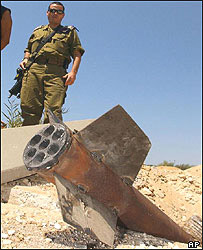
On average, each and every day three shells, mortars or Katyusha rockets land somewhere in Israel, lobbed from Gaza by some faction affiliated with Hamas. In response, Israel has placed a virtual economic stranglehold on Gaza, causing a great deal of suffering for the average Gaza resident. Why doesn’t the controlling Hamas leadership put an end to the shooting, and alleviate the suffering of its people? Because it’s better politically for Hamas to continue to resist, no matter the consequence.
In putting the suffering of their enemies ahead of their own citizens’ well-being, the leaders of Hamas follow a long pattern of this type of behavior, beginning with Par’oh in Egypt.
As we all know, Par’oh initially attempts to force the Jewish midwives to murder Jewish infants during childbirth. When the midwives refuse, Par’oh issues an all-encompassing decree: ויצו פרעה לכל עמו לאמר כל הבן היאורה תשליכהו וכל הבת תחיון – “And Par’oh commanded his entire nation saying, every male shall be thrown in the Nile and every female may shall be left alive.” Rashi notes that Par’oh never distinguishes between Jewish and Egyptian babies. Rather, אף עליהם גזר – “he even decreed on [their own children].” Par’oh, warned by his astrologers of the impending birth of a child that would ultimately cause his downfall, doesn’t care whether he’s throwing Jewish or Egyptian babies into the river. As long as he remains in power, that’s all that matters to him. If a few – or thousands -- of his own people suffer in the process, that’s of no concern to him.
It’s amazing how often history repeats itself.

Wednesday, December 26, 2007

Table Talk -- Shemot 5768

On average, each and every day three shells, mortars or Katyusha rockets land somewhere in Israel, lobbed from Gaza by some faction affiliated with Hamas. In response, Israel has placed a virtual economic stranglehold on Gaza, causing a great deal of suffering for the average Gaza resident. Why doesn’t the controlling Hamas leadership put an end to the shooting, and alleviate the suffering of its people? Because it’s better politically for Hamas to continue to resist, no matter the consequence.

In putting the suffering of their enemies ahead of their own citizens’ well-being, the leaders of Hamas follow a long pattern of this type of behavior, beginning with Par’oh in Egypt.

As we all know, Par’oh initially attempts to force the Jewish midwives to murder Jewish infants during childbirth. When the midwives refuse, Par’oh issues an all-encompassing decree: ויצו פרעה לכל עמו לאמר כל הבן היאורה תשליכהו וכל הבת תחיון – “And Par’oh commanded his entire nation saying, every male shall be thrown in the Nile and every female may shall be left alive.” Rashi notes that Par’oh never distinguishes between Jewish and Egyptian babies. Rather, אף עליהם גזר – “he even decreed on [their own children].” Par’oh, warned by his astrologers of the impending birth of a child that would ultimately cause his downfall, doesn’t care whether he’s throwing Jewish or Egyptian babies into the river. As long as he remains in power, that’s all that matters to him. If a few – or thousands -- of his own people suffer in the process, that’s of no concern to him.

It’s amazing how often history repeats itself.