The Connection Between Yosef and Chanukah
A Shiur by the Rav
I was looking for a file on my hard drive and found this article. I think that I listened to a shiur given by the Rav one year and was so blow away by it that I transcribed it as best I could. Any errors of transcription or explanation are mine, and mine alone. It also appears in Days of Deliverance. (Joseph and Hanukkah - p. 155) It's a truly powerful shiur - and remains relevant and timely today, perhaps even more so.
The story of Yosef is a paradoxical drama. On the one hand, it really should not happen, and yet it does. The entire episode is completely absurd – with too many crazy details and unanswered questions.
1. Doesn't Ya'akov understand the important rule: parents should not give one child preferential treatment to one child over another? It’s one thing to love one child more than another, but that doesn’t have to manifest itself in such a public display. Why does Ya'akov make the כתנת פסים for Yosef, especially when it creates such jealousy between the brothers?
2. How can the brothers sell their brother into slavery? Isn’t that a moral law that they know to be despicable?
3. How can Ya'akov send Yosef to שכם when he knows that the brothers hate Yosef? Clearly, he knows very well how the brothers feel about Yosef. Now, all of the sudden, why is he worried about שלום אחיך בשכם? It’s very unusual that he should all of the sudden be worried.
4. Where does ראובן go? After he intervenes, why does he suddenly disappear? חז"ל say that it was the day that he served his father, so he had to go. But, wouldn’t the best way to serve his father be to protect Yosef and save his father from distress. Why disappear if you know that your brothers want to commit murder?
5. Yehudah’s actions and explanations are also quite difficult. On the one hand, we find later that he’s brave enough to take on the entire nation of Egypt to protect Binyamin. Yet, he’s unwilling to kill Yosef, and gives a pretty weak explanation: מה בצע כי נהרג את אחינו וכסינו את דמו.
6. After Yosef rises to his highest level in Egypt (he always rises to the top) and becomes the manager of Egypt, he knows how much his father loves him. Can’t he send a letter or a messenger to his father to tell him that he’s alive? רמב"ן addresses this question.
The whole story appears incredible – it’s hard to believe that it happened, but it did. We cannot deal with each question separately. But, we can try and answer all of these questions using five words: וימצאהו איש והנה תעה בשדה – these words not only answer the story, but also give us insight into all of Jewish history.
Usually, the Torah never tells us about details, and unimportant facts. In fact, it should just have said, וילך יוסף לשכם. Who cares about the fact that he can’t find the right way and that he has to ask for directions on the road?
Who is the איש in this story? Who is this strange man? Who is the “certain man?” According to the Rav, he’s a peculiar man, a strange man, a mysterious man. Who is this strange, peculiar, mysterious man? Why is he eavesdropping on the brothers that he knows where they are going?
Rashi explains that he’s גבריאל. גבריאל is the executor of Jewish history. He is the executor of the Jewish destiny that is planned by God. The strange, unique Jewish destiny is controlled by this גבריאל.
והנה תעה בשדה – who was lost? יוסף. He was lost in the field. He hadn’t made a decision, and didn’t know where to go. So, he became an instrument in the hands of Jewish destiny – one that we have great difficulty understanding.
When אברהם entered into the covenantal agreement with הקב"ה, we know what אברהם gets out of the deal. But what does God get out of the deal? It seems that what God gets out of the deal is Jewish suffering: וענו אותם ארבע מאות שנה. While אברהם doesn’t have to pay, Ya'akov does have to pay the debt that’s owed, so Yosef is the first one to fall into the hands of the Jewish historical destiny. He is the first to realize the destiny of Jewish history. Look at Rashi on וישלחהו מעמק חברון – what does that mean? Rashi notes that חברון is in on a mountain, so what valley does the Torah refer to? אלא מעצה עמוקה של אותו צדיק הקבור בחברון לקיים מה שנאמר לאברהם בין הבתרים: כי גר יהיה זרעך. Yosef is the first one to pay up on this debt. Yosef doesn’t make the final decision – he places himself in the hands of the איש, he surrenders to the איש – the destiny of the Jewish people.
All the crazy, compulsory decisions and actions made by the different people in the story – not because they considered the actions sound and good, but rather because they were forced by the sheer impact of historical destiny and the historical realizations of Jewish destiny, to act in the way that God desired. Ya'akov and the brothers don’t make their decisions. Rather, the mysterious man made those decisions, and he tells them that the realization of Jewish historical destiny begins in דותן. Sometimes God acts all by himself. Sometimes he sends an איש to act on His behalf, with God supervising.
This brings us to a truth in Jewish historical philosophy: God uses man as the tool in order to realize His will. Yosef was the tool God elected, and once chosen, he is driven by this mysterious איש into history:
There are three possible ways of understanding the relationship between God and man in the realization of history:
1. God does not use man as the one who fulfills and executes His will. He does everything Himself. He makes decrees, and fulfills them himself. All man can do is to watch, admire, adore and accept God’s will. At times this happens. God makes the plan and man has no mission whatsoever. The מבול is an example: but we’re talking about good – God’s salvation of the world. Another example is when God saves חזקיהו even though he couldn’t muster an army together.
2. In this case, man’s role is not to execute the will of God, but to herald God’s greatness. One such example is בני ישראל in מצרים. Then, there was no role assigned to man. Man becomes a kind of announcer, he is the prophet, the messenger as far as God’s word is concerned, but not as far as God’s actions are concerned. This was Moshe’s role in Egypt. He is the representative of God, but not as far as bringing redemption to the people. He tells them what to do, what will happen, how to behave. But the drama of יציאת מצרים happens only at the hand of God. For this reason, Moshe isn’t mentioned during the הגדה – we say לא על ידי מלאך, לא על ידי שליח, etc.
3. Man engages in action that brings about the will of God. God wants man to participate in the process, to join God. But then God demands from man not just action, but sacrifice, as if the final outcome depended on man exclusively. Man allegedly becomes the central actor: God determines the destiny, either letting man win or lose; yet, in such cases, God demands heroic action – not just courageous action, but heroic action, which demands sacrifice. There’s a difference between כח – strength, and גבורה – heroism. During the blessings recited each morning we refer to God as, אוזר ישראל בגבורה. Every nation has physical strength. As far as כח is concerned, we aren’t distinguished for our כח. Many non-Jews have כח. But Jews have גבורה, which we have engaged in for the last 4500 years. Jewish existence is a heroic existence. As far as יציאת מצרים in concerned, man is not involved in the salvation. He does not participate in the event. He has no share in the planning or the execution. Therefore, man doesn’t suffer either.
Yosef isn’t so lucky. He is destined to play a role in the formation of Jewish history, so he must pay a price as well. Because he plays a role in Jewish destiny and executes God’s will, he must suffer at the same time. At that time, the will of God is to have the people leave the Promised Land, and He chooses Yosef to be the instrument of that exile. חז"ל say that if Yosef had not complied, they would have brought Ya'akov in chains in captivity.
מדרש תהלים (בובר) מזמור קה ד"ה [ה] ויקרא רעב
[ה] ויקרא רעב על הארץ. אמר ר' יהודה בר נחמני בשם ר' שמעון בן לקיש ראוי היה יעקב לירד במצרים בשלשלאות של ברזל, ועשה הקב"ה כמה מנגנאות כדי להורידו בכבודו, לכך נאמר ויקרא רעב על הארץ, וכל כך למה ויבא (יוסף) [ישראל] מצרים (/תהלים ק"ה/ פסוק כג). אמר ר' פנחס הכהן [בר המא] משל לפרה שהיו מבקשין למשוך אותה למקולין שלה, ולא היתה נמשכת, מה עשו, משכו בנה תחלה, והיתה רצה אחוריו, כך קודם שבא יעקב למצרים כמה מנגנאות נעשו, שיעשו אחי יוסף כל אותן הדברים, כדי שירד יוסף למצרים, ואחרי כן ירד יעקב אחריו למצרים.
Rather, Yaakov got the smooth, painless method. But, had he refused to go, he would have been brought as a prisoner, and not with receptions and pomp. God’s will would have been done.
In spite of all his successes, Yosef is a tragic figure in many respects:
It’s not pleasant to be the target of envy and hatred. He is persecuted because of who he is, because of his talents and visions, and because he rises above everyone else.
• He is sold into slavery for thirteen years (seventeen years old when he’s sold, and he’s thirty when he rises to the monarchy in Egypt). For thirteen years, he’s lonely, alone in strange land. He remains attached to his family. Anyone else would have tried to erase any memory of his family, trying to completely forget everyone else. But he does not, and he remains devoted to his family. He always maintains that he belongs in ארץ העבריים – that he has been plucked from the Promised Land, and that’s really where he belongs. (This connection to ארץ ישראל manifests itself in his great desire to be buried in the land of Israel.)
• Even when he rises to power, he remains lonely and can never integrate himself into the Egyptian people. He always remains separate from them.
בראשית פרק מג
(לב) וישימו לו לבדו ולהם לבדם ולמצרים האכלים אתו לבדם כי לא יוכלון המצרים לאכל את העברים לחם כי תועבה הוא למצרים:
We understand why the brothers can’t eat with the Egyptians – they had just come from a foreign land. But why can’t Yosef eat with the Egyptians? He’s the Prime Minister! Apparently, he can be the Prime Minister of the country, but he can’t become an Egyptian. He never feels comfortable and integrated into Egyptian society. He lives a life alone – he is forever lonely in Egypt. They need him in Egypt – they tolerate him. But they never really accept him. He leaves instructions twice in the Torah to bring him out of Egypt after he’s already dead: once in ויחי, and again in בשלח. In the first instance he says, והעליתם את עצמותי מזה – take me out of this place. Yet, in בשלח he says, והעליתם את עצמותי מזה אתכם. What’s the difference between the two? The second time is Moshe’s interpretation: he realizes that Yosef wants to leave not for cultural reasons, to be connected to his father. But rather, because he wants to be buried with the Jewish people because he says אתכם – “I am one of you, and I belong to the Jewish people. Even while I was Prime Minister, the most powerful person in the entire nation of Egypt, and even when I accused you of being spies, I had never forgotten that I was אתכם – I never forgot where I belong.”
For the privilege of being the instrument of God’s will in bringing about Jewish history, Yosef must suffer. He must live through the long dark night of loneliness, in order to become God’s messenger. Why does Yosef get two portions in בני ישראל? He gets a greater portion because he spends longer time in exile than everyone else – 22 long bleak years of loneliness, surrounded by strangers.
In simple terms, Yosef’s job is to bring Ya'akov into a land of slavery. But, it isn’t so simple – it’s much more sophisticated and deeper than just this. This must be true because Yosef is not the first person to spend time in exile. Rather, he follows in the footsteps of his father Ya'akov.
Ya'akov is also taken away from his parents’ home at a young age. Ya'akov also spends that long dark night of loneliness in his uncle’s home, living in exile. Avraham didn’t live in exile – he was deported and just visited there for a short time. Yitzchak couldn’t even leave the land of Israel. Ya'akov is the first person to spend time in exile. What did he have to do there? Why send him there - to what purpose? Again, when we examine the story that drives יעקב into גלות we find that the השגחה uses יצחק and רבקה in a very strange unusual story to bring about the השגחה פרטית.
Looking at the events surrounding Ya'akov’s flight from עשו, we must raise several questions:
1. What’s the big deal about the ברכה? Why can’t Yitzchak give עשו a ברכה?
2. Why does עשו take the blessings so seriously?
3. Why does יצחק then later turn around and give the original ברכה to Ya'akov, as if he had intended to do so throughout?
Again, we find the paradoxical unfolding of history – too many good questions. Again, we find that Ya'akov is the instrument in the hands of God. So why send him into exile? What is the purpose of Yaakov’s exile? What does he prove? He proves that the word of the covenant continues not just in the Promised Land, but in the exile as well. After 20 years in חרן, his commitment to God and God’s way of life; his commitment to the Promised Land – all remain after his time in exile. His task is to prove that יהדות is universal, regardless of place, and whether or not they’re in ארץ ישראל.
This is the point of the Midrash when it states: עם לבן גרתי ואת תריג מצוות שמרתי. Chazal don’t just like playing with words. Here, they focus on the idea of גרתי – it’s only a temporary time. I always felt like a stranger in the land of לבן – never assimilating, never integrating, never accepting לבן’s morals, ethics or way of life. I was always a גר – and I kept the תריג מצוות – keeping the Torah. After twenty years, Ya'akov remains as committed to his father, his grandfather’s covenant, as he was on that first night at הר המוריה.
Why was it necessary to prove the capability of the covenantal way of life outside of the Promised Land? Why did anyone have to prove this? Why does Ya'akov have to go into חרן to prove the universality of this way of life? Because ultimately, there would come a time of payment where the people would leave their land, and God had to prove that it was truly possible to live outside of the Promised Land, and remain loyal to the ways of the God of Avraham. Only when the people can retain the Jewish identity after hundreds of years of slavery in Egypt can the covenant remain. Therefore, God uses Ya'akov as an instrument to prove that this covenant can exist even outside of the Land, and that the deal with Avraham will go on. And, if one person can do it, then certainly a whole nation can do it.
Yosef has a similar task. He too had to prove that the moral laws are not based on geography or chronology. (The Rav added, that if he could, he would have added the fourteenth אני מאמין: אני מאמין באמונה שלמה שכל התורה כולה יכולה להתקיים בכל מקום ובכל זמן. If you don’t accept that one, then what’s the use of the first thirteen? If it’s dependent upon chronology or geography, there are Jews throughout the entire world, throughout all times!)
But, what’s the difference between Yaakov’s mission and Yosef’s mission? Why the repetition?
1. Yaakov had to prove that one can maintain his identity to God and the Jewish people in poverty and depression: no matter how downtrodden the immigrant, no matter how hard the work, if he makes up his mind, he can maintain that allegiance to God. But Yosef had to demonstrate that even with enormous success, admiration and unqualified power are not incongruous with a Jewish, spiritual lifestyle. In the eyes of the Torah, no matter how successful he is or how miserably he fails, Ya'akov and Yosef show us that he remains obligated to maintaining an allegiance to the Jewish way of life.
2. חרן was a desolate country. Yosef remained loyal to God in the most advanced country in the world. Historically, the Jew has remained loyal to his tradition in poverty. However, he failed miserably in maintaining that spiritual connection in material wealth. The challenge of poverty and persecution we met and passed with flying colors. But the challenge of wealth and prominence, of over saturation with cultural values, of prominence in society -- that challenge we failed miserably.
Today, the Jew has never been freer, wealthier, more successful and more prominent. But at the same time, the Jewish commitment to the ancient lifestyle that we have defended with blood sweat and tears – that is something that we haven’t lived up to.
What is חנוכה? How does God act with the חשמונאים? Is that relationship similar to the way that He relates to Moshe, just telling him what’s going to happen and doing it all by Himself? Or, does He involve them in the process, demanding that they play a critical role – total commitment and heroic action, including sacrifice - in the salvation of the covenantal community?
(Later, Moshe does become involved, not at the יציאת מצרים – but after the עגל הזהב, when God wants to condemn the entire community, there Moshe becomes involved and takes a primary role in history, saving the Jewish people. There Moshe has the courage and the will to give God a sort of ultimatum – without the Jewish people I don’t want to be a part of that history! With the first עשרת הדברות, Moshe is just a mailman, a messenger. But with the second לוחות, it’sפסל לך – you must make the לוחות – you are involved and you participate in the formation of history. In becoming involved in the process, Moshe became the רבן של נביאים – the greatest of all prophets.)
Of course the חשמונאים fought like lions – and when you fight, there is sacrifice. Many people died, because when there’s battle, people die. רבים ביד מעטים, טמאים ביד טהורים, גבורים ביד חלשים – their hands must have been involved. God was involved, and helped them, but man had to start. Their initiative and engagement, their sacrifice – saved us even today, and for that we are grateful.
It seems that the על הנסים is out of order: it should say על המלחמות ועל התשועות ועל הגבורות ועל הנסים. Why put them seemingly out of order? Because we really thank God for two things: we thank Him for His hand in our victory, without which we would have lost the war. First you have to thank God. But we had to start and get involved. So, then we have thanks for the people that had the courage and determination to get involved and fight with great suffering and sacrifice on our behalf. פרקן is the Aramic translation of גאולה. Why use the Aramaic substitute of גאולה and not Hebrew? Because גאולה in Hebrew is the term reserved for יציאת מצרים and ימות המשיח. Without the war the Jewish people would have been lost, but it’s not the ultimate redemption.
This is the connection between Yosef and the story of Chanukah – the total sacrificial involvement to exhibit the courage to engage and get involved in the destiny of Jewish history.
Then the Rav said,
“It’s premature...I have a feeling that ארץ ישראל is going to confront a war. How and when – I hope not. I pray that this confrontation takes not place, but I’m not sure that my prayer is accepted. The way destiny is unfolding lately, will be like אברהם העברי – כל העולם בצד אחד – the whole world on one side, and אברהם on the other side. Has the Jew the courage and heroic quality of his ancestors to confront the world and defy the world? I hope yes. Whether it will be necessary, I don’t know. This is what every Jew should have in mind.”
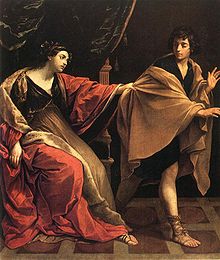
The story of Chanukah is typical of all of our confrontations in גלות. What was the emblem of Yosef? Was the shield of Yosef? What’s his coat of arms? His symbol is his coat of many colors. The brothers knew it, and they stripped him of it when they wanted to weaken him. What does the כתנת הפסים represent? It’s the symbol of the Jewish people, of the חשמונאים and of us as well.
Yosef dreams of his sheath, which rose up and the other sheaths came around and bowed down to his sheath. The brothers were not jealous of him because of that dream. They hated him, but weren’t envious of him because of it. Yet, in the second dream he dreams of the sun, the moon and the stars. After this dream, his brothers are now jealous of him. Yosef has two visions: one of material and economic power, which came true totally. These are the אלומות – the sheaths. But the other dream revolves around spiritual greatness, and not just powerful and feared by people – loved and revered by people. He wants to be worshipped by the sun and the moon and the stars. Can one person combine both qualities of economic, military power, and also the dream of spiritual greatness and moral heights? Can one person unite both elements of power and greatness together with spirituality and visionary leadership? Are they mutually exclusive, or can they be merged? Apparently, Yosef thought yes, and he combines them, and this combination is symbolized by the כתנת פסים – many colors that contradict one-another, but somehow synthesize together.
This is the vision of the Jew throughout history – to achieve power and greatness and success; this is the Jew’s reputation of a good merchant and businessman. Without this quality, we couldn’t have survived. But at the same time, that Jew comes home for Shabbos from peddling his wares, with another dream of spiritual greatness – השמש והירח והכוכבים – to be great spiritual personalities.
That is what the חשמונאים were as well. They fought well, and hard. But as soon as they laid down their arms, their interests turned to the בית המקדש, to the פך השמן and to returning to spirituality and greatness.