Showing posts with label Israel. Show all posts

Thursday, December 31, 2015

Conversion Standards, and the Debate about Private Conversion Courts in Israel Today

Over the past several months, the media in Israel has made a great deal of noise about the private conversion court convened by Rav Nachum RabinovitchIt seems clear to me that there's a great misconception about how gerut takes place here, and the standards for conversion. Truth be told, I myself did not really understand the full picture until I heard a talk from Rav Yisrael Rosen of Tzomet during a Yom Iyyun at my son's yeshiva. Rav Rosen has been intimately involved in the Rabbanut Conversion Courts for many years.

Rav Rosen speaking at the Yom Iyyun in Ma'aleh Adumim
First we must ask ourselves: why is there such a thing as a conversion court at all? Why not just go to the regular Beit Din? With the first waves of aliyah from the former Soviet Union, it became clear that the normal batei din were not equipped or willing to handle the kinds of cases that were coming before them. Applying the regularly accepted (and rather stringent) standards that are common in Chutz L'aretz made the process impossible, and a dayyan who wished to be lenient would be criticized by his colleagues. Ask a dayyan today from the "regular" battei din - from any stripe - RZ, Chareidi, etc - about the giyyurim and they'll immediately say: "I don't have anything to do with giyyur." These battei din are a separate entity, not related to the Beit Din structure. The only official connection that they have is that they require the Chief Rabbi's signature to be acceptable in the secular context of the State of Israel.

Rav Rosen explained that in the early 90's, Rav Bakshi Doron approached a number of leading RZ rabbis asking them to deal with the giyyur issue. They established a beit din system as well as a framework of machonei giyyur - essentially giyyur seminaries - aimed at training potential candidates for conversion. These rabbis explicitly view these conversions not only in a halachic framework, but also in an ideological framework, hand in hand with the Religious Zionist view of the State itself. He quoted one explanation that the אובדים מארץ מצרים would be non-Jews who were lost to their ancestry over time, and would one day return the Land.

For this reason, these Batei Din do not see their role as adversarial to the potential convert. They never ask any "gotcha" questions, and see themselves as guides, looking to help people who wish to join the Jewish nation. A very high percentage - well over 90 percent - of the candidates who apply to convert are in fact converted in the framework of the conversion courts. He explained that they're not looking to "catch" anyone, and if someone declares the intention to keep the mitzvot, then they take them at their word. 

This is the basis for most of the conversions taking place in the framework of the rabbinate. The situation is even more "lenient" (for lack of a better word) in the IDF, where candidates in the Netiv program study a three-month program about Judiasm before conversion. It is common knowledge that a very significant percentage of these converts do not keep Shabbat or kashrut in any normative manner. This is not to say that they don't keep mitzvot. But we would not consider them Orthodox. Rav Rosen actually lamented that not enough people convert in Netiv, where they're easy to target as candidates for giyyur, as they're stuck in the army anyway.

Let me be clear: the current standards already in place for decades are far, far below the standards of any Beit Din in the United States that I am familiar with - and intentionally so. The entire network of Batei Din for giyyur was created specifically to encourage as many Russians as possible to convert. This also explains the entirely legitimate criticism of Rav Sherman (from the regular battei din) and many of his chareidi and non-chareidi colleagues, who disagree entirely with the methodology and ideology that created the batei din l'giyyur, and question their validity. The only reason these many thousands of conversions are accepted today is because Rav Ovadya Yosef accepted them and was willing to sign the conversion certificates.

The new conversion court in session
When Rav Rabinovitch ruled that in his opinion a beit din can convert a minor child despite the fact that his mother is not a Jew nor converting herself, he wasn't deviating from accepted halachic norms in the Beit Din system. The issue isn't that controversial, ironically. Even Rav Moshe allowed the practice. (In an interesting twist, Rav Kook explicitly forbade such conversions.) But Rav Rabinovitch is deviating from the Rabbanut policy, one that Rav Yitzchak Yosef doesn't accept. Rav Rosen and Rav Druckman actually agree halachically with Rav Rabinovitch's psak. They just don't think that he should attempt to implement it with a private Beit Din because of the legal ramifications here in Israel. Essentially they're afraid that if the Israeli Supreme Court allows Rav Rabinovitch's (and Rav Riskin's) unlicensed conversions, what's to stop a Conservative Beit Din from doing its own conversions that would then have to be accepted by the State? (Good question. Answer: nothing.) 

To sum up: The new private Beit Din isn't a geirut of a different standard than the current rabbinate standard. That ship sailed long ago. It's a political fight about power and control (as is almost always the case), with the current Chief Rabbi (Rav Yosef) unwilling to sign on giyyurim that Rav Rabinovitch feel's are a critical and relatively simple tool - giyyur kattan - for addressing an ongoing demographic problem in the Jewish State.

Friday, November 27, 2015

Come to Jerusalem for Dinner

We drove last night to Yerushalayim to meet with friends for dinner last night, and decided to meet at Burgers Bar on Yaffo - near the Midrachov. We ended up at Cafe Hillel next door, but I was truly surprised at just how few people were out enjoying a really lovely Thursday night.
I was expecting the normal crowds - normally you have to fight your way into Burgers Bar to order your food and wait for a table to clear. Last night - plenty of empty tables. So come to Israel and buy dinner. The restaurants, and the Holy City miss you.

Thursday, May 30, 2013

Levine Kipnis, the Ma'apilim, and Parshat Shelach

This week I met the Israeli poet and author Levin Kipnis.
Actually, I didn't really meet him. He's been dead for quite a while. And, truth be told, I've known his work for quite a while. I just didn't know that he was the author of the songs, er - poems. (He in fact won the Israel Prize in the 1970's.) Here's a little quiz: Do you recognize this poem?

חנוכה, חנוכה,
חג יפה כל כך
אור חביב מסביב,
גיל לילד רך.
חנוכה, חנוכה,
סביבון סוב סוב
סוב נא סוב, סוב נא סוב
מה נעים מה טוב.

How about this one?


חג פורים, חג פורים,
חג גדול ליהודים!
מסכות, רעשנים,
שיר וריקודים!
הבה נרעישה:
רש רש רש!
הבה נרעישה:
רש רש רש!
הבה נרעישה:
רש רש רש!
ברעשנים!

You see - you probably do know Levin Kipnis! Or at least some of his poems. His songs have been played many thousands of times, even by the United States Army Band! He was a famous author of children's poems that my daughter will probably know by heart by the time she leaves kindergarten.

This week, though, I came across a very different poem by Levine Kipnis called אל ראש ההר - "To the Top of the Mountain." Here's the poem:

אל ראש ההר! אל ראש ההר!
הדרך מי יחסום לפדויי שבי?
מעבר הר הן זה מכבר
רומזת לנו ארץ צבי.

העפילו, העפילו,
אל ראש ההר העפילו!
העפילו, העפילו,
אל ראש ההר העפילו!

אחים עלו, אחים עלו -
לב מי יירך ייחת מאבן נגף.
צעד עשו, ראה תראו
פי שניים אנו אז נישגב

העפילו...


Listen to the song (and read the words) and answer the following question: What would you say is the attitude of the author towards the word העפילו or מעפילים - "Climb Up!"? Is להעפיל a good thing to do or a bad thing to do?
From the poem, the answer is clear. He wants us to "Climb the Mount!" Don't be afraid! On the other side of the cliff lies the Promised Land! In fact, the word מעפילים today carries an incredibly positive connotation, completely due to Kipnis' poem. It alludes to those who rise up to fight for the Land of Israel, despite the dangers and despite the risks. The poem itself refers to mortal dangers - and asks:
"Whose heart will soften from a stone of death?
See, do, look you will see
We will then achieve twice-fold!"
Today in Israel, the title מעפילים is so positive that even religious youth groups call an entire age group Shevet Hama'apilim - all thanks to Levin Kipnis.
There's only one problem with all of this.
Until Kipnis' time, the word מעפילים had an entirely different connotation. Instead of alluding to the positive, forward-thinking drive to overcome all obstacles to retake the Land, it had a totally negative implication, which is explicit in the Torah.

The word ויעפילו appears as a verb only one time in the Torah, following the story of the Sin of the Spies. After the Sin of the Spies, God decrees that the Jewish people would, due to their lack of faith in God's ability to guide them in conquering the Holy Land, the nation would spend forty years wandering around in circles in the desert. Their reaction is understandable:
וַיְדַבֵּר מֹשֶׁה אֶת-הַדְּבָרִים הָאֵלֶּה, אֶל-כָּל-בְּנֵי יִשְׂרָאֵל; וַיִּתְאַבְּלוּ הָעָם, מְאֹד.
And Moses told these words unto all the children of Israel; and the people mourned greatly. (Bamidbar 14:39)
I would also be upset if I learned that I'd spend the rest of my life in the desert, and that only my children would be allowed to conquer the Land. Yet, I find the next verse surprising, even shocking.
וַיַּשְׁכִּמוּ בַבֹּקֶר, וַיַּעֲלוּ אֶל-רֹאשׁ-הָהָר לֵאמֹר: הִנֶּנּוּ, וְעָלִינוּ אֶל-הַמָּקוֹם אֲשֶׁר-אָמַר ה'--כִּי חָטָאנוּ.
And they rose up early in the morning, and got them up to the top of the mountain, saying: 'Lo, we are here, and will go up unto the place which the LORD hath promised; for we have sinned.' (14:40)
In other words, they wake up in the morning and say to Moshe, "OK, let's go! We're ready now!"
I can just imagine the conversation between Moshe and the Jewish people (reading between the lines):
Moshe: Let's go? What do you mean 'Let's go'? Didn't you hear me yesterday?! God said that you're going to die in the desert. We're not going anywhere.
People: Yeah, we know God said that. But that was yesterday. And we said that we're sorry. It's time to move on. Today's a new day! Don't be such a spoilsport! Let's go! You were right. We can take the Land! Let's GO!
Moshe's response is clear:
וַיֹּאמֶר מֹשֶׁה, לָמָּה זֶּה אַתֶּם עֹבְרִים אֶת-פִּי ה'; וְהִוא, לֹא תִצְלָח. אַל-תַּעֲלוּ, כִּי אֵין ה' בְּקִרְבְּכֶם; וְלֹא, תִּנָּגְפוּ, לִפְנֵי, אֹיְבֵיכֶם. כִּי הָעֲמָלֵקִי וְהַכְּנַעֲנִי שָׁם לִפְנֵיכֶם, וּנְפַלְתֶּם בֶּחָרֶב: כִּי-עַל-כֵּן שַׁבְתֶּם מֵאַחֲרֵי ה', וְלֹא-יִהְיֶה ה' עִמָּכֶם.
And Moses said: 'Wherefore now do ye transgress the commandment of the LORD, seeing it shall not prosper? Go not up, for the LORD is not among you; that ye be not smitten down before your enemies. For there the Amalekite and the Canaanite are before you, and ye shall fall by the sword; forasmuch as ye are turned back from following the LORD, and the LORD will not be with you.' (14:41-43)
In other words, "Don't do it. God will not be with you, and you'll all die." This of course, is exactly what happens. Yet, despite Moshe's harsh warnings, the people insist on doing it their way.
וַיַּעְפִּלוּ, לַעֲלוֹת אֶל-רֹאשׁ הָהָר; וַאֲרוֹן בְּרִית-ה' וּמֹשֶׁה, לֹא-מָשׁוּ מִקֶּרֶב הַמַּחֲנֶה. וַיֵּרֶד הָעֲמָלֵקִי וְהַכְּנַעֲנִי, הַיֹּשֵׁב בָּהָר הַהוּא; וַיַּכּוּם וַיַּכְּתוּם, עַד-הַחָרְמָה.
But they presumed to go up to the top of the mountain; nevertheless the ark of the covenant of the LORD, and Moses, departed not out of the camp. 45 Then the Amalekite and the Canaanite, who dwelt in that hill-country, came down, and smote them and beat them down, even unto Hormah. (14:44-45)
Their reaction? ויעפילו - here translated as, "they presumed to go up."
Yet, the precise meaning of the word is actually unclear, as it doesn't appear in this form anywhere else in Tanach. What exactly does the word mean? Rav Elchanan Samet offers seven possible explanations for the word, of which I'll note a few.
1. In it's most basic meaning, עופל refers to the height of a mountain. Thus, Ibn Ezra explains that the word simply means that they "went up". According to this interpretation, the word carries no value judgment.
2. Targum Onkelos translates the word to mean וירשיעו - "and they acted wickedly"
3. Rashi follows Onkelos and the Midrash, assigning significant ethical value to the word. Rashi writes that ויעפילו means, "they strengthened their hearts," as in "and [God] strengthened Paroh's heart". In essence this refers to an overt desire to rebel. It's a way of saying, "Oh yeah? You tell me not to go? ויעפילו - I'm going up there anyway - in spite of what you want!"
Based on these explanations, the מעפילים were those who not only rejected Moshe's word before the Sin of the Spies. After they did so and were punished, they spit in his face and essentially said, "We're going anyway, in spite of your warnings." This has classically been the connotation of this strange, unique word for thousands of year.
And then came Levin Kipnis, and his poem called אל ראש ההר - "To the Top of the Mountain."
Israeli writer Uri Haitner describes (in Hebrew) the story of the writing of the poem. Kipnis, born in Russia (now Ukraine) in 1894, made Aliyah to Ottoman Palestine in 1913 - at the age of 19. He eventually studied at the Bezalel Academy for Art and Design. 
In 1919, he was on a hike with friends. Towards midnight, they reached a mountain and began to race towards the peak. Most of the racers dropped out, but Kipnis and two others finally reached the top. When they returned to Jerusalem, they shared the experience with their teacher, Professor Eliezer Sukenik. Kipnis explained that this had been the first time he had ever climbed a mountain, having been raised in the flat Pale of Settlement in Russia. Sukenik challenged Kipnis to write a poem about his experience...
Kipnis undoubtedly knew the negative connotation of the word ויעפילו. Raised in a traditional home and educated in Cheder, he surely knew the classical interpretation of the word מעפילים. According to Haitner, he specifically chose to use the word העפילו in order to make a statement. What statement did he want to make? 
At that time, one who wished to make Aliyah had to overcome two specific, very formidable obstacles. First and foremost, the Ottoman Empire wasn't keen on allowing masses of Jews to settle in Palestine, especially given the growing Zionist movement in Europe. At the same time, the vast majority of rabbis issued harsh, stern warnings against the spiritual danger of emigrating to Palestine. Zionism, to most of them, represented the abandonment of Jewish faith and practice. (In fact, for many Pioneers, it did in fact mean that).
One can easily imagine rabbis across Eastern Europe telling their Jewish communities, in exactly these words,
לָמָּה זֶּה אַתֶּם עֹבְרִים אֶת-פִּי ה'; וְהִוא, לֹא תִצְלָח. אַל-תַּעֲלוּ, כִּי אֵין ה' בְּקִרְבְּכֶם; וְלֹא, תִּנָּגְפוּ, לִפְנֵי, אֹיְבֵיכֶם.
Wherefore now do ye transgress the commandment of the LORD, seeing it shall not prosper? Go not up, for the LORD is not among you; that ye be not smitten down before your enemies. 
Except, to the rabbis at the time, they worried less about physical enemies than spiritual ones.
Knowing this, Kipnis responded with his poem: העפילו - "Go up anyway! Despite the fact that there are powerful forces telling you not to come. Overcome them, and come up to rebuild the Land of Zion!"

I find it fascinating that many modern Israelis (even religious ones) know the word העפילו from Kipnis - in the positive sense, and have no idea that for thousands of years, להעפיל meant to rebel against the will of God. Meanings of words do indeed change over time. They take on new connotations and interpretations, teaching us about the Torah, our history, and even ourselves.

Wednesday, April 3, 2013

The Embarrasment that is the Women's Section in Many Orthodox Shuls in Israel

Rivkah Lambert Adler's piece lamenting the sorry state of the woman's section in Orthodox shuls is spot on. Many, many shuls in Israel, even in ostensibly modern communities, consign the women to a location where they can barely hear, much less see what's going on during davening. Take our shul, for example.
When we arrived in Yad Binyamin, the municipality was already well into the process of building the shul. The plans had long-since been approved, and changes of any kind weren't really much of an option.
When we finally inhabited the building, we realized that the architect, while he built a physically striking and beautiful building, had never spent much time in a shul, much less in the women's section. The women were seated in the balcony at the back, but in such a way that it was impossible for them to see anything while seated, as the wall separated the balcony from the main section was at least four feet high (and about a foot thick). Moreover, the entire section was built on a single level - not on graduated steps, so there was (and still is) no way for anyone behind the front row to see anything.
When the time came to buy the furniture, the shul quickly ordered the nice, comfy seats for the men's section, while the women sat in plastic chairs. Today, the women have been upgraded to nicer, plush office chairs, but they're still waiting for their Lavi seats. (That's in the works, I hear) We quickly replaced much of the wall with glass, but added decorative stickers on the glass that obscure the view to some degree.
It should go without saying that this situation would never, ever happen in an American Modern Orthodox shul. Before I left Michigan we were in the planning stages of finally replacing the old mechitzah, and we spent an inordinate amount of effort and energy trying to ensure the mechitzah that would allow women to feel part of the davening to the greatest possible degree. And yet, as Adler notes, if you tour many shuls in Israel you almost never find this type of attention given to the women's section. Why not?
Part of the blame for this situation lays with the men, of course. Men build the shuls and, for the most part, run them as well. Yet, to claim that it's only the fault of men would be less than accurate.
Back to our shul in Yad Binyamin. Almost immediately after we took possession of the building, it became clear that we had to quickly change the mechitzah wall. The shul sent out an email asking female members of the community to serve on the committee that would implement the changes, and of the women who responded, exactly none of them were Israelis. Only Anglos answered the call.
And, while Israeli women do complain about the cramped nature of the women's section, they aren't really active in trying to effect change. Why this is so is difficult to say. Some might suggest that after years of frustration, they've bothered trying. But I think that there's something else going on here as well.
In the United States, attendance at shul is an integral part of Orthodox Jewish life. Many, if not most women, attend shul each and every week. In my former shul, the women's section was as full as the men's each and every week, without fail. Shul wasn't just the domain of the men, at least on Shabbat.
That reality somehow hasn't made its way to Israel. While some women do attend shul regularly, and of course deserve a respectable women's section, far less women come to shul than men. Many women come to meet their husbands leaving shul and wait outside for them with their kids. Even many women whose husbands daven at an early minyan don't come to shul to daven - something their U.S. counterparts would usually do. Shul attendance and participation is just not seen as integral to women's religious lives. They come less and have less to do with the shul in general, which leads to the men (justifiably or not) putting less resources into the women's section.
We spent last Shabbat in Modiin, at the beautiful new shul in Buchman where my good friend Rabbi Shlomo Sobol serves as rabbi. The shul now sports three minyanim on Shabbat morning (so there's room for everyone), but on Friday evenings in the winter, when there's no early minyan, the place is packed. At least the men's section is. While men can't find a seat, there's more than enough room in the women's section.
While all of this doesn't excuse skimping on the women's section, it certainly does explain it. (Except at the Kotel. That's really an embarrassment.) The more women attend shul, participate in shul life, and take ownership over the shuls they belong to, the less we'll find the disturbing circumstances detailed in Adler's article.

Saturday, December 24, 2011

My Last-Minute Gift Giving Guide. Of a Different Kind.

Yes, I know that I'm late for the "gift giving" season. But this guide is for a different sort of gift. It's not the kind of guide where you give presents to your loved ones. Rather, this guide is for people who want to give to people that they don't know and never heard of. That's right - it's my First Ever, Annual, End-of-(Secular)-Year, Tzedakah Guide.
For those of you living in the United States (and Israel), we're at the tail end of the tax year, meaning that you might want to give some tzedakah and enjoy the last minute benefits of the corresponding deduction. And, according to this article in the Washington Post, you won't be alone. Plus, I received the following email from a friend, who wrote me:
I’m doing end of year accounting, and I while most of my tzedaka is local, I like to give something to aniyei eretz Yisrael. I somehow went an entire year without any personalized requests from people I trust. (I put solicitations from organizations I know nothing about directly into recycling – I’m so very eco-conscious that way.) Any suggestions? Oh, I do have two requirements:
1. I don’t like giving to organizations that hate me / my hashkafa / think I’m a goy but will accept my money anyway. I’m perfectly fine letting insular communities be completely self-supporting.
2. I don’t like giving to organizations that encourage dependency. If your hashkafa is to be poor and starving, that’s fine. I never considered the deprived monastic life a major part of my religion, but if that’s your religion I certainly don’t want to disrupt your way of life by pumping money into it.

So, I'm sharing my answers with you, in the hopes that you too will dig deep and help support a worthy Eretz Yisrael cause. Caveat: I work at the Orot College of Education, which I support wholeheartedly, and strongly recommend donating tzedakah towards our scholarship fund, which helps young women complete their education. If you're interested, email me here. That being said, here are some Israeli tzedakah options fitting the above criteria that I recommend wholeheartedly (all allow online donations):

1. Leket Israel: At its core, Leket Israel reclaims food that would otherwise have gone to waste, from restaurants to grocery stores to entire fields, and uses that food to feed the hungry.
2. Jobkatif: Created originally to assist the former residents of Gush Katif and help them find new jobs (and often new careers), JobKatif is a grassroots organization that has helped change literally thousands of lives in Israel for the better.
3. Pa'amonim: This organization, instead of simply giving poor people money, trains volunteers to help people who have jobs but have fallen into debt get a handle on their finances, so that they can get on track on their own, and don't need charity.
4. Hazon Yeshaya: It's a soup kitchen. They give hungry people food.
That's enough for one year. If you've got money left over, email me. I'll be happy to make other suggestions.

With blessings for a very blessed, profitable new (secular) year, in which you'll need to make many tax-deductible donations!

Friday, November 4, 2011

What's Under Me'arat Hamachpelah 2 - The Rest of the Story

Continued from this post.

In our last (and only other) installment, I wrote about the story of how Moshe Dayan sent down a young, very skinny girl through the hole in the floor of the building built above the ancient burial site. (A kind commenter corrected me - it was not Moshe Dayan's daughter, but that of an aide.) Nonetheless, she reported walking down a narrow corridor and finding a staircase, climbing the staircase and knocking on the rock she found at the top only to hear...someone knocking back. Sounds like a bad made-for-TV movie, but it really did happen.
She zipped back to the hole and climbed out, undoubtedly scared out of her wits. It wasn't clear whether they had told this poor young girl about the legends (Jewish and not) going back hundreds of years stating explicitly that anyone who ventured into the cave would die. In any case, my tour guide, Noam Arnon, said that when she came out and reported her findings, he realized that there was another way to enter the case.
Arnon knew that there were in fact two entrances to the cave - the first being the hole in the floor, and the other found at the far side of the cave, blocked by a huge stone. He surmised, correctly, that the cave had two entrances - one from the top and another from the side, and that when the girl knocked on the stone from the inside, someone had simply knocked back from the outside.
The hole in the wall
Knowing about the entrance was only part of the challenge. Getting in to the cave was another matter entirely. As previously mentioned, the Arabs considered themselves the caretakers of the cave. It didn't help that the Israeli government told them so. (Sometimes our collective foolishness simply boggles the mind.) In any case, before the terrible Baruch Goldstein massacre, the two groups prayed at the cave in loose shifts - the Jews at times, and the Arabs at others. (Today, the IDF separates Jews and Arabs completely). Arnon and his friends knew that the Arabs left close to midnight, after the final prayer (Islamic tikkun chatzot?) and would not return until early morning. Being Elul time, they planned an elaborate Selichot. Or, as Arnon put it (using a very thick Sefardi accent) Se-li-hot, a prayer service that would involve a great deal of crying out, screaming, singing, shofar blowing, and other forms of spiritual mayhem. And, they also brought pickaxes, shovels and other tools not commonly used during Selichot to remove the stone.
As selichot progressed, they began to work. "ANA Hashem!" they'd scream. Boom! Boom! "Tekia!" WHAM! As the davening continued, young men hammered away at the stone. Eventually, davening ended when they removed the rock and did indeed find the staircase that they expected, leading them down. They entered the hole, and climbed down the stairs.
Arriving at the bottom, they walked down the corridor described by Michal and found...nothing. There wasn't anything there. They came back to the staircase. Again, nothing. Sooner or later, though, they realized that they felt a slight breeze. There must be something under them. Getting to work, they began to remove the stones in an area they found in the floor, and eventually uncovered a cave beneath them. They descended into that cave, and, as Arnon describes it, found pottery consistent with that found from the times of the Beit Hamikdash (I think he said Bayit Rishon, but I don't remember.) They then realized that the chamber they were in was an outer cave, leading to an inner cave - a cave within a cave - a double cave - (Me'arat Hamachpelah) and when they proceeded into the inner cave, Arnon said, "I realized that I was standing in the midst of human remains."
I'm not entirely sure how long they were down there, but time clearly was a factor. They needed to clean up, get out of the cave, and try to cover their tracks before the Arabs arrived in the morning. They reassembled the stone floor as best they could, recovered some pottery, made their way out of the cave, and tried to put the rock back where they found it.
Arnon's drawing of the cave
It was a valiant effort, but when the Arabs returned in the morning, it was pretty obvious that something was amiss. They realized that the Jews had entered the cave against their will, and sealed off the rock with concrete. Since that time, no archaeological examinations of any kind have taken place at the Cave.
After his talk, I had one question for Mr. Arnon: "Why didn't you take more pictures?"
He told me the obvious. Cameras thirty years ago were somewhat more complicated and difficult to manage than our point-and-clicks today. It was pitch black. Lighting was impossible. He took as many pictures as he could, but it's not like today, where you look at the screen and see what you've got. Anyone older than thirty will remember that way back, not more than ten years ago, you took a picture with something called "film", and you shot the picture and hoped for the best.
What you see is what came out.
Pottery from the Cave
Often, when visiting ancient sites here in Israel, I find myself wondering whether this is the "real" burial place, or just some shrine erected centuries later. (Think: Kever Rachel, Kever David, Kever Yosef - the list goes on and on). Some part of me always wondered whether that same question applied to the most important burial ground in Jewish History. Hearing Arnon's story doesn't answer the question scientifically, but I never needed absolute proof. That place was - and is - an ancient burial ground - and I truly believe that Avraham Avinu chose that cave as the final resting place for his wife, himself, and his descendants.
Its a tribute to Noam Arnon and the people who live in Hevron today, that we merit the ability to visit, pray and worship there today.

Monday, October 24, 2011

A Letter from the Prime Minister...Sort Of

As faithful Chopping Wood readers might remember, I've been reading Yehuda Avner's powerful book "The Prime Ministers". I finally finished it. (As an aside, after all of his devotion and admiration for Menachem Begin, I marveled at the fact that he began his political career firmly entrenched in the Labor camp. It's a wonder how a high level government official on the left suddenly switched course and became an equally if not higher level official on the most right-wing of Israeli governments. What exactly were his political beliefs? And could Begin not find an English speaking aide to do the job so he needed to borrow one from the previous prime minister? Imagine the uproar if Barack Obama had retained George W. Bush's political advisers to assist him in vital government matters. But I digress.)
In any case, I was taken by the powerful chapter describing Begin's weekly shiur, and I thought to myself, "Our current Prime Minister is a big Tanach fan. His son was in the Chidon Hatanach. He'd probably like the idea of reviving the Prime Minster's shiur." So I sent him an email, from his website, suggesting the idea.
That was a while back. Well, this week I got a response, not from the PM, but from the Public affairs Department (their capitalization - really) Here's the letter:

It says:
Honorable Rabbi Spolter, first of all, we thank his honor for his communication to the Prime Minister, Mr. Netanyahu. Secondly, of course, for his important idea to reestablish the custom of Mr. Menachem Begin z"l with relation to the Tanach.
Honorable Rabbi Spolter, it is true as you note in your communication, that the Prime Minister is occupied by an exceedingly busy schedule, a matter that prevents him from participating in activities that do not directly relate to the many subject that he must deal with.
Honorable Rabbi Spolter, due to his busy schedule, the Prime Minister is not answering you personally,your communication has been transmitted to his office.
Wishing you a good year,
Shnaider Nechemia

In other words, he can't learn. He's too busy. (Except, of course, no one seems to have asked him.) Sounds just like the rest of us.

Tuesday, October 11, 2011

What's Under the Me'arat Hamachpelah Part 1

Noam Arnon, Spokesman for the Chevron Jewish Community
As I mentioned in earlier posts, I was in Chevron last week for a work-related conference. After the "work" related portion ended, we headed to the Me'arat Hamachpelah for davening and then a tour. After we all davened minchah, we gathered together for a talk from Noam Arnon, who is the official spokesman for the Jewish community of Chevron. He also writes semi-regularly for Arutz 7 in Hebrew here.
There, he told a somewhat well-known story that I had never heard before and answered a question that I had always wondered about: What is really under the Me'arat Hamachpelah.
After the 1967 Six Day War, Israeli leaders made the tragic decision to return control of Judaism's holiest sites - including the Temple Mount and the Cave of the Patriarchs - to the Muslif Wakf. It's a decision we're still paying for to this very day.
It so happens that in one of the main halls (The Hall of Yitzchak) of the Tomb in Chevron, there's an obvious circular door in the floor. One only need lift up the cover and climb down to find out what's there.  Two things stand in the way of climbing down. The first is simple fear. There's a significant literature of legends promising death (or worse) to people who violate the sanctity of the final resting place of our Forefathers (and, according to the Midrash, Adam Harishon as well.) The second reason is more practical: the Arabs refused to allow anyone to do any type of archaeological research in "their" holy places.
Michal Dayan Being Lowered into the Cave
Moshe Dayan, then the Mister of Defense, had a thing for Israeli antiquities. (Apparently, he liked keeping them for himself too, or so I've heard.) He soon began to regret returning control of Me'arat Hamachpelah to the Arabs, because they  refused to consider the issue of exploring the cave. So Dayan, not to be troubled with simple matters like the opinions of Arabs took matters into his own hands. His daughter Michal, then around twelve years old, happened to be exceedingly skinny, and could slip into the hole through one of the small openings in the door so that the cover could then be returned without the Arabs learning what he had done. (This story is referenced on the Machpelah website in Hebrew here.) One evening, he told the Arabs to "get lost for a while" (back then people listened to Moshe Dayan) and they lowered his daughter into the cave. When she reached the ground, she found herself along a long narrow passageway. She followed the path until she reached a staircase - leading up. She climbed up the staircase and found a large stone blocking her path. She knocked on the stone and soon...heard someone knock back. (That would have freaked me out too!) She quickly made her way back down the stairs and had herself lifted out of the hole, no worse for wear, but no secrets revealed.
Yet, Arnon said, what she told them gave the Jews of Chevron the critical information that they needed to make their own attempt to enter the cave.

To be continued...

Friday, September 2, 2011

Monday, August 15, 2011

A Summer Lesson about Mesirut Nefesh: A Visit to the Ayalon Institute

The Place: Pre-State Palestine
The Time: Mid 1940's
The Problem: With Arabs attacking Jews relentlessly and the British preventing Jews from procuring weapons, ammunition supplies presented a serious problem. Where would Jews get bullets to shoot to protect themselves from attack and fight the inevitable war?
The Solution: Build an underground factory right under the noses of the British authorities, in which dedicated people work in total secret to produce millions of bullets crucial for the initial stages of the War of Independence.

I'm on vacation for a couple of weeks, and today we visited the Ayalon Institute, a very small museum on the outskirts of Rechovot, which takes you into the underground factory that the Haganah built in order to produce bullets in total secrecy. For a full description you can see here, or just Google the Ayalon Institute.

First of all, it's powerful to experience history first-hand. They still have the original machinery (much of it still works), and you get a sense of the tight working conditions, and how hard they worked to keep the factory secret even from many of the people living above the factory in the working kibbutz. It's also a pretty short tour - about an hour and a half - that goes by really quickly. It's really something that an entire family can (and should) do.
Mostly though, I was taken by two aspects of the visit: Firstly, I'm in awe of the self-sacrifice of the young people who worked, day in and day out, in that factory. They lived under constant threat of discovery - and if so - execution at the hands of the British. And yet, they volunteered to work in the heat, noise and danger because they knew just how important their work was. We don't live in such desperate times, thank God, but we also seem to lack that same sense of self-sacrifice and dedication to the klal.

The visit also reminded me that as much as things change, they remain the same. The tour began with our excellent guide asking us, "Imagine that someone was punching you in the face, but the person charged with protecting you wouldn't let you fight back or defend yourself." That was the situation of the Jewish community in Pre-State Palestine, forcing them to work as they did in secret.
But it's also still true today. The world still deems it necessary to tell us how we're supposed to defend ourselves, and what is and is not legitimate to protect our citizens. We still hear about how Israel is guilty of "disproportionate response", as if we don't have the right to decide the best way to protect ourselves.
Thank God, today we've learned to listen less and do what we think is right. But it's always good to remember that not that long ago, the world not only told us how to behave, but took steps to prevent us from taking the necessary measures to defend ourselves. We made the bullets we needed, but we did it in secret, under their very noses. (Take the tour. It's fascinating).
We still act in secret, without the knowledge or assent of the powers that be when necessary. The people of Israel learned the hard way that the world wouldn't come to our defense and protection, and if we felt endangered, it would be up to us to take action. We did back then, and thankfully, when we have to we continue to do so to this very day.

Wednesday, May 11, 2011

Audio Talk - Yom Ha'atzmaut 5771 - Israel, and our Ability to Change

Audio Shiur:
Yom Ha'atzmaut 5771 - Israel, and our Ability to Change

I gave this (short - 25 minutes) talk to the members of the YU Israel Kollel as well as the students of Yeshivat Torat Shraga, on the eve of Yom Ha'atzmaut 5771, as we began the celebrations for the 63rd birthday of the modern State of Israel.


Click here to download the shiur, or here to navigate to the shiur on YUTorah.org.


New! Now you can subscribe to this shiur as a podcast, directly from iTunes! To subscribe, click here.

Tuesday, March 29, 2011

When No Bias is the Worst Bias

Imagine if after Barack Obama won the 2008 presidential election, a leading congressional figure had said, "Obama is fully qualified to take on the presidency. And the fact that he's black should not raise any problems."
Such a statement would, justifiably, raise the obvious follow-up question: Why would it be a problem? You see, the very fact that someone thinks there's a need to deflect criticism isn't indicative of a lack of bias, but of the most sinister, insidious bias. (It's kind of like saying, "Some of my best friends are black.")
Now, no politician that I'm aware of was stupid enough to make such a statement about Obama. But what if the statement was said not about being African American, but about being a religious Jew?  There'd be an outcry! The world would not stand for it! Right? Don't be on it.
Recently, the Israeli government released the identity of the candidate for the top spot in the Shin Bet. The Jerusalem Post reported that,
Yoram Cohen will make history as the first head of the Shin Bet (Israel Security Agency) to wear a kippa – serving as another example of the increasing presence of national religious officers within Israel’s security and intelligence organizations.
Cohen, 51, lives in Jerusalem but grew up in Tel Aviv and went to a yeshiva high school in Pardess Hanna, before being drafted into the Golani Reconnaissance Battalion.
Oh, there's another apparently important detail about him: he wears a Kippah. In other words, he's a religious Jew.
Defending the decision to appoint Cohen to the position,
Former Shin Bet head (Israel Security Agency) Yaakov Perry on Tuesday morning said that incoming chief Yoram Cohen is "a professional with moderate views" and in the past had supported a deal to release Gilad Schalit, according to Army Radio.
"The fact that he is a religious person should not interfere, though he is the first person to enter this position wearing a kippa," Perry told Army Radio.
Phew! That's a relief. Because it's clear from the question and answer that most - if not all religious Jews are complete fanatics who can't serve their country with distinction. Why else would they have to go out of their way to emphasize just how "moderate" he is - as opposed to the rest of us.
How would the non-religious public feel if every kippah-wearing Israeli assumed that they were Meretz-supporting liberals willing to give the country away to the Arabs? Can we question the fitness of the non-religious public to serve their country because they don't keep the mitzvot? After all, won't they just make yeridah and end up Miami or LA anyway?
I hope that the time will soon come when the general Israeli public stops looking at every kippah-wearing Jew with suspicion; when we're appreciated not just for our spirituality, but for the values and contribution we bring to the table.
Because sometimes, just asking the question reveals that the bias rests not in the heart of the subject of the question, but in the person who asked it.

Sunday, January 16, 2011

Kol Hakavod Bibi! Kol Hakavod IDF!

For this. And this.
We complain, and rightly so, when things go wrong. But let us not forget that the thousands of people working to protect us are doing an amazing job. Keep up the good work!
We laud the soldiers who stand on the fence, or fly the planes the defend us. But this year, the greatest defender of Israel might very well have been a computer programmer sitting in front of a screen.
Thanks to the U.S. for its collaboration and assistance. And let us continue to pray to the Creator to give us continued strength to protect the Jewish State from all attackers.

Tuesday, December 28, 2010

Judaism or Democracy: What Would You Choose?

In the Declaration of the Establishment of the State of Israel, signed on the eve of Israel's War of Independence, the founders of the State tiptoed around a fundamental paradox. Their attempt to evade this glaring issue, probably because they could see no ready solution to the problem, has been the root of many, if not most of the major debates in Israel and across the Jewish world.
It's worthwhile to spend time studying the document in its entirety, but I'll focus on two small sections for now.
השואה שנתחוללה על עם ישראל בזמן האחרון, בה הוכרעו לטבח מיליונים יהודים באירופה, הוכיחה מחדש בעליל את ההכרח בפתרון בעיית העם היהודי מחוסר המולדת והעצמאות על-ידי חידוש המדינה היהודית בארץ-ישראל, אשר תפתח לרווחה את שערי המולדת לכל יהודי ותעניק לעם היהודי מעמד של אומה שוות-זכויות בתוך משפחת העמים.
The catastrophe which recently befell the Jewish people - the massacre of millions of Jews in Europe - was another clear demonstration of the urgency of solving the problem of its homelessness by re-establishing in Eretz-Israel the Jewish State, which would open the gates of the homeland wide to every Jew and confer upon the Jewish people the status of a fully privileged member of the comity of nations.
Survivors of the Nazi holocaust in Europe, as well as Jews from other parts of the world, continued to migrate to Eretz-Israel, undaunted by difficulties, restrictions and dangers, and never ceased to assert their right to a life of dignity, freedom and honest toil in their national homeland.
I need to make a small but critical point here: there's a problem with the translation in the text. I didn't translate here. The Israel's Ministry of Foreign Affairs did. Notice the section that I've highlighted in bold and red: "the problem of its homelessness", which is a paraphrasing of the words, בעיית העם היהודי. While technically correct, it's missing the critical nuance of the language that the framers clearly intended. When we translate the words בעיית העם היהודי literally, we find that this phrase means "the problem of the Jewish nation." This is clearly a reference to the "Jewish Problem" articulated by Nazi Germany. See also here. As we all well know, the Nazis came up with a rather ingenious solution to the problem. I see this minor translation (or the lack of nuance) as critical, because it highlights how strong a role the Holocaust played in the creation of the State of Israel, not only in the minds of the members of the international community, but also in the minds of the founders of the Jewish State.
With this is mind, we can begin to get a sense of the urgency of creating a Jewish State. Jews were slaughtered by the millions, with nowhere to run for refuge. The founders of the State declared openly that this would never happen again. Israel would stand ready to accept any Jew running from persecution. It would be a haven for Jews fleeing from the rampages of antisemitism. It would do so, by definition, by creating itself as a Jewish State: by the Jews, and for the Jews.
But then, later on in the document, the framers make another important statement:
THE STATE OF ISRAEL will be open for Jewish immigration and for the Ingathering of the Exiles; it will foster the development of the country for the benefit of all its inhabitants; it will be based on freedom, justice and peace as envisaged by the prophets of Israel; it will ensure complete equality of social and political rights to all its inhabitants irrespective of religion, race or sex; it will guarantee freedom of religion, conscience, language, education and culture; it will safeguard the Holy Places of all religions; and it will be faithful to the principles of the Charter of the United Nations.
In other words, Israel would be a democracy, granting full rights to all of its citizens. Sounds great. But there's only problem. How do you ensure that the State remains Jewish if it truly adheres to the principles of democracy fully? If you grant "complete equality" to all citizens, what do you do if a minority grows to the point that it threatens to overtake the Jewish minority?
Let's leave the territories of out the equation. What do you do when you see secular Israelis fleeing the country, while the Israeli Arab population explodes? Would the State of Israel still be a Jewish State if its Arab majority voted for an Arab Prime Minister? How then do you guarantee that the State remains both Jewish, and a democracy?
In a word, you can't.
Until now, we've been avoiding this internal contradiction. We haven't had to confront the truth: a Jewish State and true democratic values might not be completely compatible. Something has to give.
So you've got to choose. Which are you willing to sacrifice? Are you willing to risk Israel's status as a Jewish State for the sake of the principles of democracy, equality and fairness, hallowed and sacred and important values? Or, will you sacrifice that equality for all to ensure that Israel remains a Jewish country?
That's the choice. Which would you choose?

Sunday, December 19, 2010

Watch This Video. (And Then Ask, How Can I help?)

Sharon, who works with me here in Orot sent me this video, which I hadn't seen before. It's a very moving and powerful testament to the need for volunteerism, to defend Israel, and the fact that one person really can make a difference. After watching the video, I called offering to help by giving shiurim to the volunteers on the subject of Zionism and Judaism. (I think I know something about the topic.) No, I don't have time, but if things work out, you've got to make time.
After watching the video, ask yourself: what can you do for them?
Their website is here.

Friday, December 10, 2010

A Nation of Schnorrers

Each year on Chanukah, Orot (where I work) takes the entire administrative staff on a tiyyul. (It's a rather nice perk - a great day, and a fascinating tiyyul. We always hire a rather popular tour guide named Elyada bar Shaul, who sadly, speaks almost no English, and speaks Hebrew so fast that an American wouldn't follow. But he's truly a terrific tour guide. But I digress. You can see a tour of his following the footsteps of Rav Aryeh Levine here.) The tour, which followed some of the military activities of the Eshel and Lechi during the British Mandate immediately preceding the creation of the Jewish State, began at Kikar Safra and wound its way through some of the neighboring areas.
Towards the end of the tour, we wound our way through the back edge of Me'ah She'arim. I was lagging behind at that point, and was speaking with someone when I caught up to the group. As we passed through the street, I noticed an elderly Chareidi man, with a long, dirty black coat, white beard and his hand out, collecting money.
When the group passed him without making a donation, he turned to us and yelled angrily (in Hebrew), "Not one of you! Not one of you gave anything!" What was he collecting for? He didn't really say. Yet, it seemed clear that because we took the liberty of walking in his streets (ours too), he felt that we owed him a donation. His indignation at our unwillingness to give him money indicated his clear expectation - not so much that we would give - but that we should.
This, I imagine, is not an unusual story. Anyone who has tried to pray at the Kotel has had, I'm sure, a very similar experience. I daresay that this same event takes place in many shuls around the world. I walked away from the man without any sense of guilt. He might feel that I owe him money, but I certainly do not. But this tiny episode illustrated to me a much larger issue that our country needs to face following the recent fires in the North.
Following the devastating fires in the Carmel region last week, Jeffrey Goldberg wrote a rather controversial blog post (also here) that garnered a great deal of attention. Goldberg essentially argued that while giving money to victims of the fire is an important act (and he did), giving money to the JNF to pay for fire engines only enables Israel to continue to make bad choices.
Let us be clear: there's never enough money to have everything that you want. Budgeting, whether in our homes, our communities, or an entire country, is about making a series of difficult choices about what we want vs. what we need. (Truth be told, the United States is notoriously bad about these kinds of choices. Why else would it be borrowing money from China to give tax cuts to rich people?) The State of Israel can afford fire engines. The reason it never bought more fire engines, or newer ones, or cooler one, is because we've never had a terrible fire like this one before. It has always rained much earlier in the year. The ground was wet (or at least damp) for much of the summer. And most of the buildings in this country are made of stone or concrete. Sure, houses burn, but not entire buildings. You almost never hear of major fires like the ones that occur in the United States.
Moreover, after the fire the Israeli government allocated 2,500 shekel to every person in the North displaced by the fire, at a total cost of 60 million shekel. Imagine that the government had spend that 60 million shekel on firefighting equipment this year. It's impossible to know whether we would have had the fire under control earlier and saved all that money later on. But the money is somehow there (some other need won't be met this year). We just didn't want to spend it on fire trucks.
So, whether correctly or incorrectly, no one making budget choices felt that the possibility of a major fire should take precedence over another choice. So we bought parks, and schools, and roads and numerous other things that a country wants and needs, instead of buying fire trucks. As an aside, we also bought gas masks for the entire population of Israel. I picked up ours last week. One can only imagine how much the Israeli government spends buying and distributing them. In essence the government made a choice: what is the likelihood of a gas or chemical attack on the civilian population, versus the likelihood of a major forest fire? I'm not sure that we chose wrong.
After the fire, it's clear that we need fire trucks. The only question is, who should pay for them? And is there a problem with asking Jews from the Diaspora to fund infrastructure that the government should itself provide?
On some level, the answer is clearly "no." We have no problem with the fact that private individuals fund the construction of hospitals, parks, schools, and numerous other buildings that dot the country. People should give. They should donate to build the State of Israel. But, at the same time, we need to understand that Israel didn't neglect to buy fire trucks because it couldn't. Rather, the lack of necessary equipment resulted from a choice that we made - a bad choice, but a choice nonetheless. And asking Jews of the world to pay for our bad choices only encourages us to make the same choices down the road.
I think that was Goldberg's point. We're no longer the Israel of the 1950's, where we really can't afford to supply even basic needs. This is a thriving, growing, vibrant society, with wireless 3g internet service (albeit spotty), great kosher restaurants and a solid economy, which in truth is probably in better shape than that of the United States. (There is a shortage of butter now, but no one's sure why.)
Of course we need the help of Diaspora Jewry. And of course Jews from around the world should feel the desire and need to help the State of Israel grow and prosper. But I keep coming back to that Jew in Me'ah She'arim. He chose a certain lifestyle - where exclusive Torah study precludes the possibility of gainful employment. And yet now, he expects me to pay for it.
Sorry. I didn't make that choice for myself, nor for him, and his expectations notwithstanding, I will give tzedakah, but not to support what I consider to be inappropriate choices with which I do not agree.
We need not be a Nation of Schnorrers, with our hands out at every turn, looking for money to solve every problem. When Jews around the world stop seeing Israel as the poor, downtrodden Jew, but instead as the bustling Jewish wonder which is the greatest incubator for Judaism since Biblical times, they will give. But not because they feel guilty, and not because someone yelled at them. They'll give because they understand that giving to Israel is the best investment that they can make in the future of the Jewish people.

Sunday, November 21, 2010

Bibi, Don't Take the Deal

As we speak, the Cabinet of the Knesset is weighing whether to accept an American proposal for security guarantees to Israel in exchange for a three month moratorium on building in Judea and Samaria. Despite my being rather right-wing and in favor of continued construction and Jewish presence in our Biblically mandated lands, I'm against the deal for a very different reason: We're essentially discussing a bribe, and taking bribes never works in the end, either for the briber, or the bribed.
Essentially, the "security guarantee" is $3billion in advanced fighter planes. Now, I like advanced fighter planes as much as the next guy. They fly over my house practically every day. But what do fighter planes have to do with the security arrangements in the West Bank? What have they got to do with whether we do or don't build in East Jerusalem? Nothing. And that's what bothers me.
In an op-ed article in the Washington Post, former U.S. Ambassador to Israel Daniel Kurtzer writes,
This is a very bad idea. And while Washington will almost certainly come to regret bribing Israel, Israel may regret receiving such a bribe even more.
I agree with him, and found some of his points critical. But while I don't agree with his thesis that Israel is "behaving badly", he's right on the money when he calls the deal a bribe, plain and simple. And we shouldn't take it.
The reason I believe we shouldn't take it is because of the attitude of normal Americans. It's difficult to overstate their justified anger at Wall Street, General Motors, and the other fat cats that the American government bailed out and gave money for no reason. Often, the most angry Americans are the ones who offer Israel the greatest support.
And now we've got our own hands out, asking for money to justify a peace process that no one is their right mind thinks will pan out. Does that smell right? If I was a "regular" American, that would make me pretty mad, and wonder whether all that other money the U.S. gives to Israel isn't also some kind of payout - when it fact it really does represent an important strategic investment in the Middle East.
Taking the money now will only reinforce the very worst stereotypes about the Jewish State: that all we want is America's money, whether it's good for the United States or not.
If Bibi thinks that we should refreeze building for another three months, then he should try to push the initiative through without the promise of new planes. And if he doesn't think it's a good idea, then taking planes as an "incentive" to change our minds is a very bad idea, making us look cheap and petty, and willing to sell our souls (and our ideals), as long as it's for the right price.

Sunday, October 3, 2010

Belated Beraishit Post: A Thought from Rav Charlap

Rashi's Israel-focused commentary on the first verse of the Torah is well known. I'll quote it anyway. Thanks to Chabad for saving me a ton of time with the Rashi text and translation.

אמר רבי יצחק לא היה צריך להתחיל [את] התורה אלא (שמות יב ב) מהחודש הזה לכם, שהיא מצוה ראשונה שנצטוו [בה] ישראל, ומה טעם פתח בבראשית, משום (תהלים קיא ו) כח מעשיו הגיד לעמו לתת להם נחלת גוים, שאם יאמרו אומות העולם לישראל לסטים אתם, שכבשתם ארצות שבעה גוים, הם אומרים להם כל הארץ של הקב"ה היא, הוא בראה ונתנה לאשר ישר בעיניו, ברצונו נתנה להם וברצונו נטלה מהם ונתנה לנו
Said Rabbi Isaac: It was not necessary to begin the Torah except from “This month is to you,” (Exod. 12:2) which is the first commandment that the Israelites were commanded, (for the main purpose of the Torah is its commandments, and although several commandments are found in Genesis, e.g., circumcision and the prohibition of eating the thigh sinew, they could have been included together with the other commandments). Now for what reason did He commence with “In the beginning?” Because of [the verse] “The strength of His works He related to His people, to give them the inheritance of the nations” (Ps. 111:6). For if the nations of the world should say to Israel, “You are robbers, for you conquered by force the lands of the seven nations [of Canaan],” they will reply, "The entire earth belongs to the Holy One, blessed be He; He created it (this we learn from the story of the Creation) and gave it to whomever He deemed proper When He wished, He gave it to them, and when He wished, He took it away from them and gave it to us.
First of all, the fact that Rashi chose to focus on the Land of Israel with his first comment on the Torah speaks volumes. Rena and I were discussing the comment on Shabbat, and she pointed out that Rashi was most probably making a historical comment to the people of his times, as they watched Christian hordes pillage Europe on their way to conquer the Holy Land. "Not to worry," he seems to tell them - and us. "They might take it now, but one day it will once again be ours."
How right he was.
On Shabbat, I heard a talk which quoted Rabbi Yaakov Moshe Charlap, one of Rav Kook's main students, who asked a very pointed question about the verse that Rashi quotes from Tehillim, "The strength of His works He related to His people, to give them the inheritance of the nations”. If the whole point of the message is for us to convey our ownership of the Land of Israel to the nations of the world, then the verse should say, כח מעשיו הגיד לעמים - "The strength of His work He related to the nations." Why does God first have to tell His nation?
That, said Rav Charlap, is precisely the point. Sadly, too often Jews themselves fail to appreciate our own inherent, intrinsic connection to God's holy land. They think other inhabitants
have as much right to the Land as the Jewish people do , and that while it might be a Jewish homeland, we have no more claim on the Land than other nations.
That's our biggest problem. If we believed fully in our inherent right and connection to the Land of Israel, then the nations of the world would accept our position as well. As long as we waver, the world will as well.

Sunday, July 4, 2010

Partners in Peace? With Friends Like These...

Today the New York Times reported that,
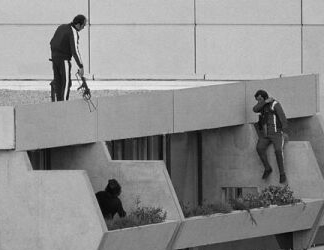
Mohammed Oudeh, a former math teacher who became the mastermind of the deadly attack on Israeli athletes at the 1972 Munich Olympics, died Friday in Damascus.
Sounds like good news, doesn't it? Actually, it doesn't, not only because of his feelings about his role in the murder of innocent Israeli athletes, but even more because of the reactions of Israel's current "peace partners." Although in 1996 Oudeh, "and several other former guerrillas were allowed back by to Israel in order to attend an assembly amending the Palestinian national charter," and "joined those voting to remove the charter’s call for an armed struggle to destroy the Jewish state," he didn't feel all that bad about the terrorism after all.
“Would you believe me if I tell you that if I had to do it all over, I would?” he said in a 2008 interview with The Associated Press. “But maybe, just maybe, we should have shown some flexibility. Back in our days, it was the whole of Palestine or nothing, but we should have accepted a Palestinian state next to Israel.”
Thanks for that last part. Sadly, he never really changed his mind about being a terrorist mastermind. All he would have changed were his tactics; maybe not to kill all the prisoners - just some of them.
Of course, Hamas issued a statement mourning his death. But would you be surprised to learn that,
Amin Maqboul, secretary general of the Fatah Revolutionary Council, the Palestine Liberation Organization faction to which Mr. Oudeh belonged, praised him as “a fighter of the highest order.”
That's right - Fatah, the guys that we're supposed to be negotiating with in the West Bank. The group that the world wants Israel to give back territory to; our supposed partners for peace. These are the good guys, and they're mourning the death of a murdering terrorist.
At least Oudeh told the sad, unpopular truth: terrorism works. The Munich Olympics really did put the PLO on the map, and set the stage for the Palestinian Authority that we have today. So it's not so hard to understand why he would do it all over again today.
But if he would, wouldn't the people mourning him do it as well?
And these are the people that we're supposed to trust?

Sunday, June 6, 2010

Feeling Quite Alone following the Flotilla. Where was Everybody?

Following the disturbing events on the boat "flotilla" last week, I've been feeling quite alone - not personally, but nationally. I really have to wonder: where is everyone? And I'm not sure that I like the answer.
Everyone watched the videos; everyone saw the protests in countries (mostly Arab) around the world - and even in the United States. But what no one saw was any counter protest. The Israeli press - both on Arutz Sheva and even the Jerusalem Post, carried the video of the lone young man waving an Israeli flag in the face of an pro-Palestinian protest. That kid's got guts - that's for sure. But I wonder something different: why was he alone? Where was everyone else? (As of today, the video's been watched by half a million people - a testament to the power of even one person in today's internet connected world!)
Listening to liberal pundits on my podcasts recently (see here and here), it has become increasingly clear that liberal Jews are uncomfortable with the notion of Jewish power. Israel was great when it was a plucky little state, fighting for its existence. But as soon as Israel asserts its right to exist, and demonstrates a willingness to bring the fight to the enemy instead of waiting for its citizens to be slaughtered like cattle, everyone gets a little jittery. Hey wait - that's not the Jewish state that I know?
I got an email from a major Jewish organization last week (right after the flotilla incident) with the subject line: "Secure your institution", cautioning community leaders vigilance in making sure that their buildings, staff, etc. are safe. It seems that there hadn't really been any threats at all made against any Jewish institutions, but nonetheless Jews were warned to be "vigilant."
I'm all for vigilance; it's clearly important to be aware of what's going on around you. But I find it fascinating that when something happens related to Israel, Jews immediately feel threatened, but don't feel the need to take positive action.
Where were the pro-Israel protests? Why didn't more Americans speak out?
I wrote back to the email sender, that perhaps instead of hunkering down, she should be organizing a counter-protest. She responded politely, but clearly making public statements in support of Israel was a no-go. Why? I can think of two reasons:
  1. American Jews really are queasy about Israeli displays of power, no matter how justified they may be. They buy into the liberal mindset that the weak must always be in the right, and he who suffers on TV must necessarily be on the side of morality and justice. They didn't put together a protest, because they weren't sure that anyone would come.
  2. The sha-shtill mentality still reigns supreme. Here in Israel, when we're quiet and complacent, our enemies use the lull as an opportunity to build their arsenals for the next attack. Jews living in the Diaspora still maintain the stance that if they don't stir the pot then things will remain quiet.
I hope that they're right. But I doubt it.