Showing posts with label Jewish Thought. Show all posts

Wednesday, January 29, 2014

The Danger of Too Much Information

Speaking this week at the Cybertech 2014 Conference in Davos, Switzerland, Israeli Prime Minister Benjamin Netanyahu spoke about the importance of secrets.
There isn't any privacy. You know why? You see this thing here, this computer? Porous. Anything that you see around you is perforated and if it's not perforated, it can be perforated. The networks are exposed. The fact that we have networks, increasing complexity of networks, interconnectivity on networks means that anything and everything can be exposed and violated.
That's not something that we've had in history. We have kept human society free because we have had a society of secrets. Individuals have their own space. What is developing now in the world is a fundamental challenge to the idea of privacy and secrecy. There are some who, for obvious and legitimate reasons, extol transparency and transparency has its virtues, but ultimately free societies have limits on transparency. They guarantee individuals or collections of individuals the ability to decide to keep their secrets. For example, the whole idea of intellectual property – that is being fundamentally challenged. The privacy of individuals – fundamentally challenged. The sanctity of our bank accounts – fundamentally challenged. And this goes obviously into public systems: power grids, traffic nets, water systems – you name it. Everything can be violated. Everything can be opened up. Everything can be also sabotaged.
Reading his comments, I began to wonder: What about halachic information? Would Netanyahu's warnings apply to Judaism as well? Is there a value to secrecy in Judaism? As Netanyahu said, "Free societies have limits on transparency." Would the same rule apply to halachic systems? Must everything be transparent? If the sanctity of our bank accounts depends on privacy, what about the sanctity of our spiritual lives?

Commenting on the commandment to build a "cover" for the Ark of the Covenant in the Mishkan, Kli Yakkar writes,
כיסוי מלמעלה, רמז שצריך לכסות סודות התורה שלא לגלותם ברבים כי דברים שכיסה עתיק יומין אל תגלה אותם
A cover above - this is a hint [to the fact that] one must cover the secrets of the Torah, not to reveal them in public, for matters that were covered from ancient times you shall not reveal them.
It seems clear that Kli Yakkar was referring to the public teaching of Kabbalistic teachings - what is called סוד - secret - in Jewish thought. Yet, could his lesson apply to larger Jewish teachings as well. Is there such a thing as too much Torah?
I think that the answer may very well be yes.

Today, every piece of Jewish information is available via the Internet. Whether via normal websites like Aish.com, free portals like Hebrewbooks, or even through pay online portals like the Bar Ilan site or Otzar Hachochmah, if a Jewish scholar throughout history wrote it, you can access it. Information truly is free - open and available to anyone with a computer (and sometimes a credit card). These are, of course, wonderful innovations. More people are learning more Torah via the internet than probably ever before in our history. Thousands are learning daf yomi, mishnah, basic Judaism - you name it - utilizing the great power of the web to learn and grow.
But this great power can dangerous as well, for two reasons.
First and foremost, information can be used not to help, but to harm - even Torah. It can be molded and shaped to exclude, vililfy and distort.
Yet, the more dangerous aspect of "free" information, is knowing how to use it. While information might be openly available, that doesn't mean that everyone - or most people for that matter, know how to use it properly. It can be used to transform that which is pure into impure, and visa-versa.

The Gemara in Eruvin (13b - a little confession - I vaguely remembered the source, but couldn't remember where it was exactly. Guess who helped me find it? You guessed it - HaRav Google!) says,
א"ר אחא בר חנינא גלוי וידוע לפני מי שאמר והיה העולם שאין בדורו של רבי מאיר כמותו ומפני מה לא קבעו הלכה כמותו שלא יכלו חביריו לעמוד על סוף דעתו שהוא אומר על טמא טהור ומראה לו פנים על טהור טמא ומראה לו פנים...
R.  Aha  b.  Hanina  said:  It  is  revealed  and known before Him Who spoke and the world came into existence, that in the generation of R.  Meir  there  was  none  equal  to  him;  then why was not the halachah fixed in agreement with  his  views?  Because  his  colleagues  could not  fathom  the  depths of  his  mind,  for  he would declare the ritually unclean to be clean and supply plausible proof, and the ritually clean to be unclean and also supply plausible proof..
The Gemara is clearly alluding to exactly this problem. The Sages didn't just have the Torah at their fingertips. Rather, their greatness stemmed from the fact that they both had the information, and also knew how to use it properly. The halachah doesn't follow even the greatest of Sages when his knowledge is so vast that it cannot lead to a definitive conclusion.

Today, as we transition to an age where everyone has all of the information at our fingertips, I fear that while we don't really know how to use it properly, we have lost reverence for those unique individuals who do.

In his thoughtful comments on the raging issue of women and tefillin, Rabbi Dr. Jeffrey Woolf writes,
I have spent thirty years fighting for the right of learned rabbis to have their own halakhic opinion, contrary to some Rashe Yeshiva who deny them that prerogative. After seeing the half-baked, uninformed and revoltingly disrespectful way in which Facebookers and other Commenters treat Hazal, the GRA, the Rema, the Arukh HaShulhan etc. I begin to wonder. Orthodoxy maintains a balance between deep reverence for Tradition and Gedole Torah, alongside the need to confront new questions and challenges. R. Shlomo Zalman Auerbach zt'l used to predicate his hardest decisions on the agreement of colleagues. He was a giant of Torah and Piety and Humanity who was attached to the entire Jewish People, from Haredi to Hiloni. Still, he was cautious and responsible when he ventured into new territory. Yet here are people filling the Blogosphere, the Newspapers and Social Media who blithely toss out established halakhic categories as if they were so much detritus because 'it makes no sense to me.' As my revered teacher, Rav Soloveitchik זצ"ל once said, innovations are the lifeblood of the Torah, but they occur within its autonomous sphere. You engage the system. You don't violate it by judging it because it doesn't fit superficial, media driven ideologies.
I believe that he has identified the primary challenge that leaders of Modern Orthodoxy must face over the coming years.
Today, every layperson with internet access feels that because he read a source (or secondary summary of a source), he can therefore proclaim himself the arbiter of proper Jewish practice. And, every rabbi with access to the Bar Ilan can find a responsa to justify any and almost every desired innovation. But a responsible, authorotative posek will take that responsa - and the breatdth of knowledge -  and place it in a larger context. He will not just know the information, but will also know how to use it.
Not everyone is a gadol. Yet today, it seems to me that we're living in an age where the phenomenon of finding forty-eight reasons to justify anything and everything isn't confined to the Beis Medrash. Rather, all it takes is a blog, a Facebook connection and an acquaintance at the Times of Israel, and you too can be a gadol.
But you can't. Because you're not. And while you might be fooling yourself and your followers, ultimately, you may very well be leading them astray.

Monday, June 25, 2012

The Cost - and Value - of Lashon Hara

Everyone knows that Lashon Hara is not only forbidden; it's also damaging, hurtful and wrong. Slanderous speech can ruin friendships, families and communities. Whole organizations exist to highlight the dangers of lashon hara and encourage us to avoid them.

Last week after davening, the speaker in my shul wondered whether one could speak about the foul smells in our yishuv (if such smells actually exist), or if that too is considered dibat ha'aretz - "slander against the Land," akin to the slander of the Meraglim. He suggested that there is a notion of speaking negatively about even the inatimate objects in Eretz Yisrael.
It was not a "halachic" talk in the strictest sense, but the speaker was trying to convey the seriousness of speaking slanderously about anything. After all, the Torah tells us that the Meraglim's sin was speaking negatively about the Land itself.
And yet, I couldn't help but wonder: Let us assume that because of the prohibition of Lashon Hara, no one spoke about the smell of sewage coming from the local treatment plant (if there is such a plant...) Rather, one only forwarded complaints to the responsible people in local government. Of course that's the ideal path to pursue. But I wonder whether government officials would respond with the same sense of urgency and vigor to a problem - any problem - if they knew that no one was talking about the problem.
It seems clear that sometimes the very fact that people are discussing an issue among themselves, in private, coerces individuals in power to try and effect change.
A prime example of this phenomenon is the growing awareness of, and attempt to address abuse within the Orthodox community. I recently saw a quote from a Mishpachah Magazine article (You can read the full article here)  from Rabbi Chaim Dovid Zwebel, the Executive Director of the Agudas Yisroel of America, who said the following:

Yes, it is a high price to pay. But is it too high of a price? If the fact that people we speaking lashon hara saved a child - or tens, or hundreds of children - from the scourge of sexual abuse, is that worth the cost of the lashon hara? Many would suggest that it was.
It would be wonderful if people in prominent positions always acted altruistically, responding immediately to problems with alacrity and zeal. But even leaders are human. They must make choices, and prioritize, and decide which problems to attack and address, and which to ignore in the hopes - as vain and they may be - that they go away.
This is where the power of the crowd - the power of lashon hara - can affect their actions. If enough people talk about an issue; if enough bloggers blog and enough Facebookers post statuses, at some point, an issue cannot be ignored. It must be addressed, for better, or for worse.
And yet, are we not still speaking about lashon hara? Is it not still slander, speech forbidden by the Torah? Who are we to say that the benefit justifies the cost?

Thursday, March 22, 2012

Patience

My wife's grandfather, or "Grandpa" as we call him (may he live and be well!), loved to tell a particular story about one of the few trips that he took to Israel during his lifetime. As he tells it, arriving in Israel for a tour, he and his wife (Savta a"h) got settled on the tour bus, when the guide stood up in the front to address the American tourists for the first time.
"Over the course of our time together, we're going to learn a number of Hebrew words," he told them. "But the first word I'm going to teach you is also one of the most important ones. Sav-la-noot. Patience. Here in Israel, you need a lot of savlanut. If you've got that word, we'll have a great trip together."
Grandpa loved to tell that story because it articulated a core belief of his: Slow down. Stop being in such a rush. Patience. Things will come in their proper time.
If only things were that easy.
In recent years, we've become nothing if not more impatient. I want my dinner right now. I want my education instantly (a couple of online courses, a clep or two, and viola! A degree!). I recently heard a talk about internet habits which stated that we won't even wait two seconds for a slow-loading web page. (Actually, that is kind of annoying).  And yet, Grandpa's story still resonates. The things that we won't wait for aren't really worth very much.
How did that instant soup you had for lunch taste? How healthy was it?
How much did you learn and grow from that instant degree you "earned"?
We won't wait for websites to load because we don't really care about what's in them. After all, on average, we'll only spend somewhere between nine and twelve seconds scanning the page anyway. (If you've gotten this far reading this post, you're way beyond the average reader.)
Moreover, sometimes the things that we want the most demand patience. My mind often reflects on a short piece from the Gemara (Brachot 64a) that I recently learned that resonates strongly with me.
אמר ר' אבין הלוי כל הדוחק את השעה שעה דוחקתו וכל הנדחה מפני השעה שעה נדחת מפניו מדרבה ורב יוסף דרב יוסף סיני ורבה עוקר הרים אצטריכא להו שעתא שלחו להתם סיני ועוקר הרים איזה מהם קודם שלחו להו סיני קודם שהכל צריכין למרי חטיא אף על פי כן לא קבל עליו ר' יוסף דאמרי ליה כלדאי מלכת תרתין שנין מלך רבה עשרין ותרתין שנין מלך רב יוסף תרתין שנין ופלגא כל הנך שני דמלך רבה אפילו אומנא לביתיה לא קרא:  
Said Rav Avin the Levi: Anyone who forces the hour - the hour pushes him away. And one who is pushed away by the hour - the hour is pushed away from before him. [We derive this lesson] from Rabbah and Rav Yosef. For Rav Yosef was a Sinai (a man of broad knowledge) and Rabbah was an Uprooter of Mountains (a man of deep intellect). They were needed at a particular moment (to lead the Jewish community), and a message was sent to them [asking], 'Which takes precedence: A "Sinai" or an "Uprooter of Mountains"?' They answered, a Sinai (Rav Yosef) takes precedence, for all need the one who gathers the grain. Nonetheless, Rav Yosef refused to accept upon himself [the appointment], for the Caldeans had told him that he would only rule (lead) for two years (and then he would die). Rabbah ruled for twenty-two years, and afterwards (when Rabbah died), Rav Yosef ruled to two and a half years. And all the years that Rabbah ruled, [Rav Yosef] did not even need to call the doctor to his home.

Did Rav Yosef want to the be the leader of the Jewish community when the first asked him? I'm sure he did. But, for whatever reason, he recognized that the time just wasn't right. He'd rather live in health for twenty-two years first, and then take the job. (Actually, one wonder why he didn't refuse the job the second time around also.)
Ironically, the more we want something, and the more meaningful it is, the harder it is to be patient and wait for the right moment. And yet, according to the Gemara, the more we may press to bring the hour closer, the more we push that thing away.
What's the answer? That word that Gradpa learned on a tour bus so long ago: Sav-la-noot.

Thursday, December 1, 2011

Occupy Wall Street, Sodom, and Tzedakah in Yad Binyamin - Part 2

Part 2 of 3 - Continued from this post.

We find the most obvious example of greed in Torah literature in the description of the city of Sodom, and it's not a flattering description. When Lot lifts his eyes and looks to move away from Avram, he sees the lush lands in the Jordan Valley and the and the cities of Sodom and Amora, which were, "Like the garden of the Lord, like the Land of Egypt," and chooses Sodom. The represented an unwise choice as,
ואנשי סדם רעים וחטאים לה' מאד
And the men of Sodom were wicked and sinners against the Lord exceedingly. (Bereishit 13:13)
The people of Sodom were so wicked that they made the infamous list in Sanhedrin of people who, "Have no portion in the World to Come." How did their wickedness manifest itself? What made the so bad? Aside from the obvious (think Sodomy), the Midrash, in light of the "welcome" the angels receive when they visit to destroy the city, paints the wickedness of Sodom in monetary terms: they were exceedingly selfish. In simple terms, "they would not permit anyone to dwell in their city, and universally agreed not to receive guests, leaving them in the streets. They cut the trees surrounding the city to prevent the birds from benefiting from them, and passed a law in Sodom that any person receiving guests in his home would be burnt at the stake." (Yalkut Meam Loez, Bereishit 1, p 358). And they instituted numerous laws to ensure that strangers would distance themselves from their city for fear of harm. Simply put, they refused to feed beggars, and any beggar who remained in Sodom died of starvation. The Midrash tells the following rather gruesome story:
At that time, Lot married a daughter named Paltit to a citizen of Sodom. One day, a beggar came and asked her for charity, having already fasted several days - for no one would give him anything to eat. When Lot's daughter saw that he neared death she had compassion upon him, and secretly passed him food. Each day, when she went to the well to draw water, she would place bread in her jug and signaled to the beggar to take the food. This she did for many days.
The judges of Sodom marveled when they noticed that this beggar remained alive. They said, "Who is feeding him?" From the color of his face it was clear that someone was assisting him, and they needed to know who was committing the "crime" and had the [evil in his] heart to violate the laws of the Land.
So, three men went and hid secretly to discover the truth. The next day, they witnessed the daughter of lLot giving the man bread from her jug. They quickly ran and reported the matter to the judges of Sodom, who decreed that she be burnt to death. And they executed her in the center of the city to instill fear on the remaining people, that they not follow her ways and act with compassion towards visitors.
Yes, it was that bad. Thus, Midrashically, Sodom represents the worst aspects of monetary behavior: a miserly refusal to share in one's wealth to benefit anyone else, even the most desperate, coupled with a rigid enforcement of that very ethic threatening death to anyone who might violate the law and exhibit compassion for a needy person.
Where, though, do we draw the line? What is the root source of the wickedness of Sodom? Clearly, they were bad. But was it the death penalty for helping strangers, or their refusal to help in the first place? Or, was it the underlying attitude that their money was theirs, and they had no moral obligation to share it with others? While a proud capitalist confidently asserts an almost divine right to private property, the Mishnah isn't so clear.
In Avot, the Mishnah (5,10) presents four models of monetary policy.
 ארבע מידות באדם:  האומר שלי שלי, ושלך שלך--זו מידה בינונית; ויש אומרין, זו מידת סדום.  שלי שלך, ושלך שלי--עם הארץ.  שלי שלך, ושלך שלך--חסיד.  שלך שלי, ושלי שלי--רשע.
There are four possible attributes [related to money] a person can have. One who says, "What is mine is mine, and what is yours is yours" - this is an average character type. And some say, this is the attribute of Sodom. [One who says] "What is mine is yours and what is yours is mine" - this is an am ha'aretz. [One who says] "What's mine is yours and what's yours is yours" - this is a righteous person. [One who says] "What's yours is mine and what's mine is mine" - this is a wicked person.
Commentators clarify that when the Mishnah alludes to one who says, "What's yours is mine" - this does not refer to a thief, because thieves are clearly evil, and stealing is forbidden. Rather, these four archetypes represents an attitude towards money. One who says, "What's yours is mine" doesn't have to physically steal his neighbor's property. He thinks that he has a right to his neighbor's property, and that it really should belong to him.
Examining the first two models of monetary policy carefully, we find that they represent the two economic models we're familiar with:
"What's mine is mine and what's yours is yours" = Capitalism
"What's mine is yours and what's yours is mine" = Socialism
A red-blooded American would assume that Capitalism beats Socialism without breaking a sweat. But in the Mishnah, that's not the case. According to our Sages, at best, capitalism represents an average attitude. But the other opinion considers a capitalist worldview to be "The attribute of Sodom." On the other hand, the Mishnah labels the socialist as an am ha'aretz. Nowadays, if you called someone that you'd be insulting him. But in Mishnaic times it wasn't an insult. Rather, you were calling him the "salt of the earth." Rav Ovadia Bartenura explains that this is the type of person needed for the world to run,
For he benefits [from others] and allows others to benefit from him in equal amounts. And this is [necessary for the] settlement of the earth....and this is the meaning of the term am ha'aretz, [meaning that] he desires the proper function of the world." 
In other words, the world needs people willing to share what they have in order to benefit from what others have to offer.
Given the choice, which attitude in the Mishnah would you rather adopt: the one that's either unremarkable and average at best, and at worst the underlying attribute of Sodom; or would you rather describe yourself as someone advocating a worldview critical for the proper function of society? Asked in that way, you'd clearly choose the latter. But then you'd be a Socialist.
In his commentary on Megillat Esther called Kol Ya'akov, Rabbi Ya'akov of Dubno wrote,
דע שלולא תורתנו הקדושה שאסרה לנו הגזל והחימוד, היה ראוי ע"פ משפט השכל להיות כיס אחד לכל אדם יחד ושתהיה יד הכל שוין בכל שפע וברכה בעולם ואין גזל ואין צדקה שייך כלל, כי הלא באמת אין בעלים ואדונים על העולם הזה ומלואו כי אם הקב"ה, וכשם שאין במרום שום בעלים ואדנות וממשלה כי אם להשם לבדו, וכן למטה ממדרגתנו כמו הבהמות והחיות שאין עמלם אלא לפיהם ואת היותר יד כולם שוין בו. אבל אנחנו עם בני ישראל להיותנו עם סגולתו ית' חלק לנו את הארץ הטובה ונתן חלק ונחלה לכל שבט, איש לפי פקודיו ע"פ הגורל, להיות כל אחד אדון ומושל על שלו. לפי שרובי תורתו ית' תלויה בזה, כמו צדקה ומעשרות לקט ושכחה ופאה ואיסור גניבה וגזילה וחמדת ממון זולתו וכדומה, כי אם היתה יד הכל שוה אין חסד ואין צדקה... שהתחלת היושר שבין בני אדם להיות מה שיש לזה – שלו ומה שלזולתו – לזולתו, הכנתו ית' הוא כי הוא החליק לכל אחד חלקו כאילו היה שלו באמת, והכל היה בשביל להגדיל תורה בישראל ולהאדיר.
Know that were it not for the fact that our holy Torah forbade theft and jealousy, it would have been appropriate according to the law of logic for there to be one communal wallet for all of mankind. Andh every person would have equal acess to the bounty and blessings of the world, and neither stealing nor charity would have any relevance at all. For in truth, there are no masters over this world and its contents other than the Holy One blessed be He; just as in the heavens there is no ownership and dominion other than God’s alone; and below our level among the beast and animals, where there toil goes only to feed their hunger, and what’s left is open to all equally. Yet, we the nation of Israel, so that we should be God’s cherished nation, He apportioned to use the good Land and gave an inheritance and a portion to every tribe, each according to his accounting based on the lottery, so that each person should me the master over that which is his. This is because the majority of God’s Torah depends upon this matter. Take, for example charity, tithes, leket, shikchah, pe’ah, the prohibitions against stealing or theft or coveting the property of another and other similar commandments. For if each person shared equally in the property there would be no kindness or charity…for righteousness between men begins with the principal that that which belongs to a person – is his, and that which belongs to the other – is the other’s. To prepare us for this the Blessed [God] divided to each person his portion as if truly were his, all of which in order to enhance the Torah in Israel. (Thanks to my boss, Rav Professor Neria Gutel, for sharing this source and the next one in a shiur.)
It's a jarring comment: really, which asserts that we should all share everything - total socialism. We shouldn't really own any property, because it's all from God in the first place. And, the only reason why God gave us private property was so that we could adhere to the mitzvot in the Torah related to ownership and property. How can a person give charity if nothing really belongs to him? So God "gave" us property - but not because we really own it. Rather, it's only a means to follow God's will.
Rabbi Ya'akov Emden makes a similar comment in his commentary on the Mishnah in Avot writing,
שבלי ספק היה דבר מועיל מאוד בתיקון קבוץ המדיני אם היה כיס אחד לכולם, כי אז בטלה קנאה ושנאה מבני אדם. ולכן היו נמצאים בדורות קדמונים כתות פרושים בישראל שכל נכסיהם היו בשותפות, אין לאחד זכות בשום קנין מהקנינים לעצמו יותר מחבריו אלא כולם ניזונים מן האמצע.
For without a doubt it would be enormously beneficial for the improvement of society if there was one pocket for all. For then jealousy and hatred would be nullified from mankind. For this reason, in previous generations there were groups of separatists in Israel who shared all of their property communally, none having more rights to any of their acquisitions for himself than any of his friends. Rather, they all were supported from the [communal] pot.
Rabbi Moshe Chaim Luzzatto (Derech Hashem, Section 3, Chapter 2) makes a similar statement regarding wealth and poverty, (albeit in a different context) writing that God bestows wealth and poverty simply as a means to give us the opportunity to grow both personally and spiritually. God gives the wealthy man money not because he's better at business than his poor neighbor, but rather to test whether he will be generous with that wealth or stingy; will he look down upon others who don't enjoy his level of affluence, or exercise humility towards others? Still, the wealth isn't his as an end, but rather given to him by God as a means to a far more important goal of personal and spiritual growth.

Wednesday, November 30, 2011

Occupy Wall Street, Sodom, and Tzedakah in Yad Binyamin - Part 1


Like many other Orthodox communities, Yad Binyamin - the Yishuv in which I reside, often finds itself besieged by pan handlers. Whatever the cause, whatever the reason - for a wedding, a sick relative, an illness, a yeshiva, a kollel - they collect for it in Yad Binyamin. And the people of Yad Binyamin, like those of so many other communities - are generous. They gave, and continued to give. Sadly though, many of the collectors turned out to be fabricating some part of their tragic tales. A recent young Chattan, collecting for his wedding, turned out not to have actually met his kallah yet. But when he does, he'll have money for the wedding.
So, as is the custom in communities across the Diaspora, the rabbinate in Yad Binyamin formed a rabbinic committee which would issue a document to approved collectors whose credentials could be verified. The committee recommends that citizens of the yishuv donate more generously to collectors armed with a certificate, and to those without one, we should give a shekel. (Truth be told, it was not unusual to give a shekel to collectors in any case. People in Israel give far less to tzedakah collectors at the door than we did in the U.S.)
Yesterday in shul, a man made the rounds after davening collecting for his kollel in Yerucham. I had given money to the kollel previously, so I considered him reliable, and gave him five shekel. Everyone else in shul recognized him from previous rounds - he comes rather often - but due to the new protocol, no one else gave him more than a shekel. He began acting like many collectors do when they don't get what they think they should, and began muttering indignantly, under his breath, but in a manner that everyone could hear, "Imagine...you can't collect in Yad Binyamin....No one will give more than a shekel...I've never heard of a place that won't allow you to collect for tzedakah..." And then he said the magic words, that actually got people angry, "This reminds me of Sodom." Ouch.

This isn't just a local issue. The world has watched with some amusement as the Occupy Wall Street movement fizzled, as police forced them out of the streets and in from the cold. Yet, the Occupy movement came at the heels of - and perhaps in response to - a similar tent-city protest in Israel demanding social change: better access to housing, cheaper childcare, lower grocery prices, and greater parity between the poor and the wealthy. In truth, the American protesters can only dream of achieving social change that would bring them to parity with Israeli norms now . Let's set aside the political undertones of each movement, which are significant but not relevant for this discussion of the larger issue. What does Judaism have to say about balancing wealth between the rich and the poor? Where does the Torah fall on the spectrum between Capitalism and Socialism? Does God want us to accumulate for ourselves, or share equally between all? Do the Occupiers have a point? Has capitalism run so rampant as to have warped American society completely out of balance?
Judaism has a great deal to say about these issues, and they are, of course, not black and white. But the way I read them, they take us in a direction that many in America might find surprising.

To be continued...

Thursday, February 3, 2011

Thoughts on Brain Death 2: Way, Way Out There Department

The Brain Death issue remains perhaps one of the most complicated, difficult and frightening halachic and hashkafic challenges we face today. As a rabbi, I could never make that call to pull the plug and allow the harvesting of organs from one person to another. But, on the other hand, how could I not make the call? How could I rob a person of the potential for rebirth, from the gift of a new heart, or a lung or a liver?
Let's be clear: this decision rests firmly in the hands of the local rabbi (which is an interesting turn of events). With the gedolim lining up on both sides of the issue, families faced with such a drastic and consequential decision often turn to their own spiritual guide - as they should. The rabbi must choose whose psak he wishes to follow. In a world where every small question immediately goes to the rosh yeshiva or the gadol in Israel, small-time rabbis find themselves thrust back into the big-leagues of psak.
Yet, thinking about the "largeness" of the issue, I kept coming back to myself. If, God forbid, someone I loved needed an organ, would I take it? Somehow, with the incentive of a life-or-death decision, the abstract "Brain Death" question would probably matter little to me. After all, with skin in the game the decision becomes that much clearer. I'd probably say, "Well, with great gedolim on the side of accepting the notion of brain death, who am I to argue with them?" I'm pretty sure that I'd take the organ.
If I'd do that, though, how could I possibly dare to prevent someone else from doing the same? How can I be willing to take - which I am - but be wary of giving?
I think I've found an "out." It's way, way out there, so bear with me.
Consider for a moment a tragedy: John suffers traumatic injury resulting from an industrial accident, and doctors agree, using the requisite medical tests, that John is indeed brain-dead. Let us assume for the moment that we reject the notion of brain death, and consider life based solely on cardiac function. At this moment, from this point of view, John remains fully alive.
If, for whatever reason, the doctors needed to stop his heart to conduct a test, but then restarted that heart (which they can now easily do), did they kill him? I think that the answer is clearly no.
But what if they stopped his heart, and put it in another body. Is John now dead? Remember that his heart functioned independently of his body before. It continues to do so now; just in another body. Biologically we know that this is the case. Organ donor recipients must take anti-rejection drugs for the rest of their lives. Their bodies often consider the inserted organ as a foreign force to be rejected and expunged. If that's biologically true, cannot it also be spiritually true.
What I'm getting at here is, who are we to say that the life-force we knew as John ended when we transferred his heart to a different body? Could it be that on some level, John remains alive (or at least his life-force), living in the body of someone else?
To me, the entire brain-death issue smacks of excessive hubris on all sides: doctors think they can define life or death, and rabbis declare with certainty that we can definitively determine when life exactly ends. (To me, the "anti-brain-death" position has always appealed to me because it takes the "who knows?" approach. How can we end a life if we really don't know if it's over? Good question.) Yet, I have come to believe that this question of life is not binary. It's not yes or no, but shades of gray.
Judaism teaches us that there are many levels of life. On the very simplest level, there's something the Torah calls nefesh, and something else called neshama. To the best of my very limited understanding, nefesh refers to the life-force inside us, while neshama is that spark of God which illuminates our humanity. Could it be that the brain-dead person has been separated from his neshama, while his nefesh remains intact? How are we to know?
And if that's the case, when I take John's heart out of his body, it was already separated from his neshama.
And then, when I insert it into a new body and restart that heart, perhaps the nefesh that was, and is John, is still very much alive.

Monday, November 8, 2010

Living With Doubt

During Seudah Shlishit at the YU Kollel Shabbaton in which my family participated this past Shabbat, Rabbi Assaf Bednarsh, one of the Roshei Yeshiva made the following announcement to the Kollel: "Please make sure to finish eating bread by 4:42 to avoid the question of whether to bentch with ya'aleh v'yavo. If you finish eating bread before that time, then according to 99% of the poskim, you only need to say retezei during birkat hamazon."
(Just to explain the issue, when Rosh Chodesh falls on a Sunday, birkat hamazon for Shalosh Seudot presents a halachic conundrum. Normally, we have no problem extending Shabbat into Saturday night, and when one recites birkat hamazon after dark we nevertheless recite retzei as normal. Yet, when Rosh Chodesh falls on a Sunday, if you extend Shabbat, you run into Rosh Chodesh which raises the issue of what do with during birkat hamazon. Do you recite retzei only, as you normally would? But it's after dark, and Rosh Chodesh has already arrived. Ya'aleh V'yavo only? But you began the meal on Shabbat, and essentially it's a Shabbat meal. What about just saying both? That also makes little logical sense, as the two days don't chronologically overlap. Any way you slice it, it's a dicy halachic situation, hence Rabbi Bednarsh's sage advice: Avoid the situation by consuming your bread early.)
I, of course, piped up. "What if I don't want to avoid the safek situation? What if I want to eat bread later? What should we do then?
He thought for a minute and said, "Still just say retzei."
Yet, his suggestion makes me wonder: is it better to avoid situations of safek - halachic doubt? Should I go out of my way to avoid situations in which I'll find myself in halachic conundrums which I then need to sort out? Or, should I live my life and deal with the halachic issues as they arise, looking for the proper resolution for each safek situation? Usually I choose the latter. God put us in the world to live Torah lives, and we must apply the rules of halachah to each situation as it arises. I don't go out of my way to avoid certain situations which will then force me to make a challenging halachic choice.
At least that's what I thought. And then an offhand comment by Rabbi Michael Broyde caught my attention.
During a shiur that he gave at YU's popular Kollel Yom Rishon, Rabbi Broyde discussed some of the halachic conundrums that Orthodox Jews face in the workplace. He stated the obvious fact that most frum Jews don't have the luxury of dealing with only Orthodox people in their workplace, and therefore they face numerous challenges in that they knowingly or unknowingly assist Jews in the violation of halachah. (For example, a Jewish doctor prescribing contraceptives to a Jewish woman is directly aiding her in non-halachic sexual behavior.) He said, "Some of us are privileged to have a job in which we only work with Orthodox Jews, but most of us don't." Then he added, almost as an aside, "Most of us don't even want such a job." (to which he received a smattering of laughter).
His side comment caught my attention. I work in a religious environment where I interact almost entirely with religious Jews. I have never had to pass a coworker a ham sandwich during a work-related meal, nor have I ever felt that I was abetting a fellow Jew in chillul Shabbat. I'm clearly in the minority and don't think that being in Israel is an better that the Diaspora on this matter. (In fact it might be worse. Outside of Israel there's a strong chance that most of your coworkers are not Jewish, so passing them the ham presents no issue. But in Israel, the vast majority of your coworkers are Jewish, and if you send them the file right before Shabbat, it's a sure bet that they're violating the Shabbat.)
But I love the fact that I don't face these types of ethical and halachic challenges in the workplace. I feel fortunate that we close for every Jewish holiday without fail (and the Israeli ones too). I appreciate that kashrut is a given. And I'm not entirely sure that I'd want to confront the halachic challenges that most everyone else faces and the compromises that they demand. In many ways, while we might need to confronting situations of safek, it's surely easier to avoid them.
Which is exactly what I did at Seudah Shlishit. I would have said only retzei during birkat hamazon anyway. But I finished my bread early.

Thursday, May 27, 2010

Can a Woman Be Too Modest?

In my recruitment work at Orot, I often need to photograph students in various educational settings at the college. I have found that a great deal of the students simply don't want to be photographed.
Orot's student body can generally be defined as very religious Zionist. Our students come to the school specifically because they're looking for a Torah-oriented atmosphere, as well as fellow students who share their values. I have no scientific evidence, but it seems to me that Orot students refuse to be photographed more than the average female population. And, while I'm happy to honor their wishes and never take pictures of unwilling students, I have recently begun to wonder: why are so many frum girls camera shy?
I fear that their shyness comes from a misplaced understanding of tzniut.
Among the numerous ramifications of the laws of modesty, halachah makes very specific requirements about female dress, including what parts of the body a woman must cover and what's considered appropriate modes of dress. It's no secret that Judaism considers the human body private, a vessel to be saved for the privacy of intimacy, and not to be shared with the public at large.
Yet, I get the sense that we somehow muddle the message. Instead of teaching our girls that they should view their bodies, molded by none other than God Himself, as beautiful sources of pride to be saved and savored, they somehow understand that they should cover themselves because they have something to be ashamed of. So, if someone wants to photograph them, these girls feel that simply appearing in a photo is somehow a breach of modesty, and they refuse to allow anyone to take a picture of them.
I wonder: How do you instill in a young woman a sense of pride and self-confidence on one hand; that they understand their own beauty and self-worth; but at the same time the notion that their beauty is not something to be put on display for the world, but rather a quality to be cherished and saved for the intimacy and holiness of married life?
I want my daughters to know how beautiful they are, but not need to share it with the world. At the same time, I hope they don't feel that because we teach them to cover themselves, that they're doing so because they have something to be ashamed of.

Wednesday, February 17, 2010

Leadership and the Problem of Ego

It seems to be a regular occurrence now: charismatic leader gains large following, great popularity. Charismatic leader lets popularity get to his head. Charismatic leader engages in bad, dangerous, harmful behavior. Leader falls from grace. Community suffers.
In a way, it seems natural, almost expected. We all think that we’d be immune, but we’re not being honest. (Kind of like the way we tell ourselves that we’d give so much to charity if only we won the lottery. It’s very easy to give away money you don’t have. It’s much harder to write the check when someone’s actually going to cash it.) The same rule applies to ego: humility’s not a big deal when you’re not a popular person.
But imagine if you are popular – not in the modern media sense, but in the sense that people seek you out. They thirst not only for your teachings, which today can become instantaneously recognized worldwide, but also for your personal counsel. They want to meet with you at all hours of the day and night, and are constantly hounding you for attention.
At some point, does it not make sense for a person to begin to believe what everyone else does: that he really is special, important, even different; that he has unique qualities that make him indispensible, even invincible; that the rules don’t really apply to him they way they do to everyone else?
This, the Torah tells us, was Moshe Rabbeinu’s greatest quality. At the conclusion of the Torah we read that Moshe was ענו מכל אדם – “the most humble of men.” He wasn’t the smartest, the wisest, probably not the best looking. No, he was the most humble. Some part of us wonders, “Is that the best that the Torah can tell us about him? Wasn’t their some trait that outshone his humility?” The reason that we wonder is because we were not in his shoes. We didn’t stand on Sinai and receive the Torah from God. We did not challenge the leader of the world and redeem a people from bondage. We didn’t create a people and change world history forever.
Moshe did. And, as opposed to every single one of us, he amazingly realized that for all of his historic accomplishments, they weren’t really his after all. He had the unique self-awareness to know that it wasn’t really him after all. He never allowed himself to believe his own press.
And that’s how he remained Moshe Rabbeinu. Because imagine if he lacked that sense of humility – God forbid. Imagine that he one day began to see his accomplishments and achievements as symbolic of his own greatness. Imagine if he let things go to his head. What would have come of the Torah that he delivered from God and transmitted to the people?
We all want that great popularity so sought after today. We think that we could handle the pressure with grace and ease, and be the leaders we imagine we should be.
I’m not so sure. Humility seems so simple. Yet for most of us, it often proves elusive.

Monday, December 21, 2009

I Don't Have a Facebook Account

Usually, I like being at the front of a tech curve. I like technically oriented magazines, blogs, podcasts, etc. I designed my own website, and do all kinds of things with digital media. Despite all of this, I never opened a Facebook account (nor do I Tweet). I've been thinking about why not for a while, and I can now boil it down to a few reasons:

1. Time Wasting: The NY Times posted this article about kids swearing themselves off of Facebook and watching their grades (and real friendships) improve. I already blow a staggering amount of time on the Interwebs. (see above). I console myself by telling myself that at least some of it carries a redeeming Torah value. At least I hope so. I also spend too much time reading news, checking the weather - you name it. I'm pretty confident that this is not a phenomenon unique to me. But Facebook takes time-wasting to a whole new level. Now it's not just famous people that I'd have to keep up with, but everyone: my friends, their friends, and their friends. And their pictures. And fun videos that they've flagged. And articles they'There's an almost infinite amount of Facebook worthy material for me to peruse, and I don't have time for it.

Then there's Farmville, Mafia Wars and other social network games - which I am intentionally not linking to. These are incredibly addictive, viral, mind-blowingly-time-wasting game that suck people in and then get them to pay real money for online stuff. I actually think that these types of game border on evil. If you want to waste your own time, that's one thing. But creating a game that asks people to waste time along with you to suck them in - that's an ethically questionable practice. End Farmville rant.

2. Silliness, Minutia and Friends: The funny thing about "friends" on Facebook is that they're not really friends. They're more like acquaintances; people that you know casually and keep track of. I don't care what my friend had for lunch or whether his kid has a cold (sure, it's a pain to them, but do I really need to know?), but I would love a forum where I could talk with real friends about real things. Facebook isn't built for that. It's more about quick hits and short status updates - Twitter on steriods, 140 characters at a time. I probably could build a closed Facebook group for my close friends to discuss real things, but then I'd have to deal with issue #1 (see above).

3. Modesty: There's something inherently immodest about the whole idea of Facebook. I don't mean immodesty in the skirt-length way, but rather in a lifestyle kind of way. Facebook is about broadcasting my status - what I'm doing, thinking, eating, which video games I'm playing - for the world to know. It makes everyone a mini-celebrity. We promote ourselves, because my gripes about my kids' homework, or what we had for dinner must obviously be important news. But this very notion of celebrity runs against the principle of modesty. Modesty teaches us to live a proper life without broadcasting details to the world - the very opposite of the Facebook ideal.

We live in a world fascinated with celebrity. Everyone wants to be famous - either for gatecrashing the White House or planting sweet potatoes in their virtual garden. Judaism wants us to do the opposite: to lead real, meaningful lives in which we engage with and study Torah with our real friends, children, and families. And, when we do these real things, we don't tell anyone about them.
God knows. And that's more than enough.

Sunday, November 8, 2009

Judaism: A Religion or an Nationality?

The New York Times shared a fascinating report on a very public court case in England about whether a Jewish school was required to admit a specific student. Fascinatingly, British public schools are religious in nature - the Jewish school is in fact a public school. (Wouldn't American Jews just love to have that financial burden lifted off their backs?) Additionally, the recognized United Synagogue in Britain falls under Orthodox auspices, under the capable leadership of Chief Rabbi Lord Jonathan Sacks. So when a student whose mother is not Jewish applied and was rejected for not technically being Jewish (according to Orthodox standards), the student sued for discrimination. The Times piece continues,
In an explosive decision, the court concluded that basing school admissions on a classic test of Judaism — whether one’s mother is Jewish — was by definition discriminatory. Whether the rationale was “benign or malignant, theological or supremacist,” the court wrote, “makes it no less and no more unlawful.”
The case rested on whether the school’s test of Jewishness was based on religion, which would be legal, or on race or ethnicity, which would not. The court ruled that it was an ethnic test because it concerned the status of M’s mother rather than whether M considered himself Jewish and practiced Judaism.
While I'd love to agree with the Orthodox position in the case that the decision was a religious one and not ethnic in nature, I can't. To me, the issue boils down to a simple question: Is Judaism a religion, or is it a race - a nationality? First we need to define terms. What's a religion, and what's a nationality? Let's turn to the dictionary:
Religion: a set of beliefs concerning the cause, nature, and purpose of the universe, esp. when considered as the creation of a superhuman agency or agencies, usually involving devotional and ritual observances, and often containing a moral code governing the conduct of human affairs.
Nationality: the status of belonging to a particular nation, whether by birth or naturalization; Nation: a large body of people, associated with a particular territory, that is sufficiently conscious of its unity to seek or to possess a government peculiarly its own (I highlighted that last part.)
Of course, you'll answer: Judaism is a religion. It demands practices and beliefs. But then, what difference does it make whose mother was what? How can whether a Jew eats a ham sandwich on Yom Kippur have no affect on his or her Judaism? (see the article) In reality, Judaism is both. On one hand, it does have aspects of nationality and ethnicity. Yet, it's also got trappings of religion. The question then becomes, which is it more? What's the defining quality of Judaism - the aspect of theology or the nationality?
To me the answer is clear: First and foremost, Orthodoxy views Judaism is an ethnicity. To be more precise, it's a nationality - one into which Jews are born. It's a fact, a reality completely divorced from behavior or belief. If you accept that according to the Torah one's Judaism stems from the birth mother, I don't really see any way around this. Once you're born into that nationality, Judaism binds you with certain obligations, beliefs and practices. But if you're not born into it, you can practice the religion and adhere to the beliefs until the cows come home - but you're still not Jewish. Perhaps Louis Brandeis said it best,
Let us all recognize that we Jews are a distinctive nationality of which every Jew, whatever his country, his station or shade of belief, is necessarily a member.
I'll give two simple examples from Judaism to illustrate my point:
1. When we call a man up to an aliyah to the Torah, he recites two blessings, one before the Torah reading, and one after. These two blessings reflect the dual nature of Jewish existence. The blessings are:
בָּרוּךְ אַתָּה ה' אֱלֹהֵינוּ מֶלֶךְ הָעוֹלָם, אֲשֶׁר בָּחַר-בָּנוּ מִכָּל הָעַמִּים וְנָתַן לָנוּ אֶת תּוֹרָתוֹ. בָּרוּךְ אַתָּה ה' נוֹתֵן הַתּוֹרָה
Blessed are You, LORD our God, king of the universe, who chose us from all the peoples and gave to us His Torah. Blessed are You, LORD, giver of the Torah.
בָּרוּךְ אַתָּה ה' אֱלֹהֵינוּ מֶלֶךְ הָעוֹלָם. אֲשֶׁר נָתַן לָנוּ תּוֹרַת אֱמֶת וְחַיֵּי עוֹלָם נָטַע בְּתוֹכֵנוּ. בָּרוּךְ אַתָּה יְדֹוָד. נוֹתֵן הַתּוֹרָה:
Blessed are You, LORD our God, king of the universe, who gave us the Torah of truth and set everlasting life in our midst. Blessed are You, LORD, giver of the Torah.
In simplest terms, the two blessings address these dual aspects of Jewish existence. On one hand, Judaism is a nationality, a binding of a people. And yet, it also demands behavior and action. But which blessing do we recite first? Which aspect takes the primary role? אשר בחר בנו מכל העמים - that God gave us the Torah as a means to choose us as a nation. First and foremost, we are a nation. Once we establish that principle we can then continue to the next aspect of Judaism which understand the Torah as a means to חיי עולם - eternal life - through adherence to God and His commandments.
2. Whenever you're at an interdenominational event and you want to sing a song that everyone knows, you've got pretty much two choices: hava nagilah - I have no idea how that song got so popular, but they even play a bad version of it at baseball games - and Am Yisrael Chai. Let's leave have nagilah for a moment. What's the meaning of Am Yisrael Chai? The nation of Israel lives. Not the religion, but the nation.
Why isn't this obvious to all of us? The trouble seems to stem from 2000 years in the Diaspora. (2000 years of exile can do that to you.) Without a homeland, a language, a government, an army - all the trappings of a nation, we forgot our true identity. We forgot that Judaism is, first and foremost, a nationality. We forgot that we have a home, a country, and that we will only realize our true purpose in the world through the Jewish nation. Instead, we allowed Judaism to become in our minds a religion of strict practices, firm beliefs, required devotion. All important, but in the end, still just a religion.
We were wrong. We are not adherents of a religion. Judaism is a nationality; an ethnicity. And while that might not help the Jewish School in England, the sooner Jews in the Diaspora come to this realization, the better off the Jewish people - עם ישראל - the Jewish nation - will be.

Sunday, June 28, 2009

Tying and Untying

A few years ago, I led an amazing trip to Israel with the members of my Eim Habanim Semeichah shiur. During the trip, we stopped at the P'til Techelet factory, where I picked up two pairs of techelet tzitzit - one for my weekday tallit, the other for my Shabbat tallit. I intended to attach them as soon as I returned, but never did. I'm pretty sure that there are some deeper psychological reasons for my not having "switched over." Or maybe I was just being lazy.
Finally, this past Friday I started the job. I went to a minyan that I thought started at 8am, but turned out to begin only at 8:30am. I had a half-hour to kill, so I started on the tzitzit.
Obviously, before I could put on new tzitzit, I had to remove the old ones. So I began to untie them, which actually took quite a long time. At one point, someone came up to me and said, "You know, you can just cut them off. That's what most people do."
I didn't mention the obvious: I didn't have any scissors with me. But there was something deeper. "Yeah - but then I can't use the old strings again if I cut them. This way, I still have usable tzitzit."
I'm not sure what it was, but there was something about the act of untying that I found particularly satisfying. It also gave me an interesting insight into the laws of Shabbat.
The Torah prohibits us from performing inherently constructive acts on Shabbat. According to many opinions, the rabbis derive the thirty-nine melachot (prohibited activities) from the construction and service in the mishkan. Among those thirty-nine are the activities of tying a knot, and untying that same knot. (I gave a shuir on the melachah of tying in my Hands-On Halachah:Hilchot Shabbat series. You can download the audio here, and the source sheets here.) While we can readily understand the constructive nature of tying, how is untying constructive? Aren't you undoing a knot - an act that's inherently destructive?
The answer, I think, is that while you might be untying the current knot, you're really preparing your rope for a new knot. In this way, untying is actually the very first act in the tying of the next knot. Because, if you really didn't need the rope anymore, instead of untying the knot, you'd simply cut the rope, rendering it useless in the future. Interestingly, cutting string or rope is certainly not prohibited from the Torah, and in some instances is actually permitted on Shabbat. (Check with your LOR - local Orthodox rabbi - for details.)
This got me thinking about the knots that we make in life - and what we do with them when we no longer need them.
Life is a process of relationships. Sometimes we use a knot for a period, but then need to move on, whether it's to a new job, a new friend, a new social group. What do we do with the old knots? It's always easiest to cut the string. It's instantaneous and painless. But then you don't have the string available, should you need it in the future.
On the other hand, untying is hard work. It takes time, and can leave our fingers blistered and frayed. (The tighter the knot was, the more difficult it can be to untie.) But that effort and energy exerted to untie the knot is a constructive act. You may no longer want the friendship - but the relationship can end on a positive note; the job may not have paid well enough, but instead of firing off a "go to hell" email, maintaining positive contacts could prove useful in the long run.
But those contacts take energy, both mental and even physical. It's the energy of untying a knot, carefully and slowly, so that the strings are still there to tie the next not should the need arise.

Monday, May 4, 2009

Drug Enhanced Torah-Study

I know a person who has a job sitting in an office at a desk, attending to customers. His office doesn't have a steady stream of customers - just a few a day. He's free to do whatever he wants the rest of the time. So he spends his days learning Torah.
As nice as that seems, it's not that easy to spend hours at a time learning. He sits there alone in his tiny office, all week long. If you haven't spent much time trying to focus and concentrate, you'd never undertstand how challenging it can be. How does he avoid this problem? He uses a little help: Ritalin. Not every day - and not that much. But the way he described it to me, on Ritalin he can concentrate better and for a longer period of time than when he doesn't take the pill. And if they give it to kids who can't sit still (which they do all the time), why shouldn't he use it to learn better?

For men, the obligation to learn Torah is all-encompassing. There's never a time when one is not required to study Torah. Even a cursory reading of Rambam's Laws of Torah Study gives us a sense of the scope of the obligation. I'll quote just a couple of choice sections.
כל איש מישראל, חייב בתלמוד תורה: בין עני בין עשיר, בין שלם בגופו בין בעל ייסורין, בין בחור בין שהיה זקן גדול שתשש כוחו, אפילו עני המחזר על הפתחים, ואפילו בעל אישה ובנים--חייב לקבוע לו זמן לתלמוד תורה ביום ובלילה, שנאמר "והגית בו יומם ולילה"
Every Jewish man is obligated in the study of Torah: be he poor or rich, healthy or suffering, young or old and weak, even a beggar making his daily rounds, even a husband and father - he is obligated to appoint time for Torah study in the day and night, as it is written, "And you shall engage [Torah] day and night." (1:8)
That sounds reasonable - set aside some time during the day and some time at night to learn.
עד אימתיי חייב אדם ללמוד תורה--עד יום מותו, שנאמר "ופן יסורו מלבבך, כל ימי חייך"
Until when is a person obligated to study Torah? Until the day of his death, as it is written, "Lest they stray from your hearts all the days of your lives." (1:10)
Again you're probably thinking: it still seems reasonable that God requires that I study Torah during the day and night every day of my life, from a young age until senility. What else would he want me to do - surf the internet? But now Rambam turns to specifics:
כיצד: היה בעל אומנות--יהיה עוסק במלאכה שלוש שעות ביום, ובתורה תשע:
How [should he divide his study into thirds]? If he is a craftsman, he should work for three hours a day, and study Torah for nine. (1:12)

אין דברי תורה מתקיימין במי שמרפה עצמו עליהן, ולא באלו שלומדין מתוך עידון ומתוך אכילה ושתייה--אלא במי שממית עצמו עליהן, ומצער גופו תמיד, ולא ייתן שנת לעיניו, לעפעפיו תנומה. אמרו חכמים דרך רמז, "זאת, התורה, אדם, כי ימות באוהל" (במדבר יט,יד)--אין התורה מתקיימת, אלא במי שממית עצמו באוהלי החכמה.
The words of Torah do not endure in one who weakens himself upon them, and not for thoes who study in comfort, eating and drinking - rather [they endure] in one who pains himself over them, and constantly stresses his body, and gives no sleep to his eyes nor slumber to his eyelids. Our sages said by way of a hint [from the verse] "This is the Torah of a man who shall die in a tent," - the Torah only endures in one who kills himself in the tents of Torah. (3:12)

אף על פי שמצוה ללמוד ביום ובלילה, אין אדם למד רוב חכמתו אלא בלילה; לפיכך מי שרצה לזכות בכתר התורה, ייזהר בכל לילותיו, ולא יאבד אפילו אחת מהן בשינה ואכילה ושתייה ושיחה וכיוצא בהן, אלא בתלמוד תורה ודברי חכמה
Although it is a mitzvah to study Torah in the day and the night, a man truly learns the majority of his study at night. Therefore, one who wishes to merit the "crown" of Torah will be careful with all his nights, and will not waste even one of them with sleep, eating, drinking, conversation and similiar pursuits - but instead with study of Torah and words of wisdom. (3:13)
What emerges from these short sections - and becomes painfully clear with a more careful, nuanced reading, is the all-encompassing, overarching obligation to study Torah. Always, at all times. Your entire life. Pretty much everything else is a waste of time. If you've studied seriously in yeshiva and absorbed this ethic, it induces an incredible amount of guilt because you come to realize that everything that you do outside of Torah study is exactly that: bittul Torah - a waste of an opportunity to study Torah.
I often wonder about the practicality of this obligation - at least for most of us. When are we supposed to sleep? According to Rambam, pretty much never - at least if you want to learn seriously. Work is fine - even important - but only for a few hours; just enough to cover expenses. The rest of your time should be spent learning. Finally, the best Torah learning is during the night, when most of us are the most tired.
We've all read the gedolim stories, and know how great, true scholars really did fulfill Rambam's vision of the obligation to learn Torah to a large degree. But what about the rest of us? Was Rambam only writing for the elite? How realistic does this obligation seem?

This morning, I read this article in the New Yorker Magazine about the increasingly common use of "neuroenhancing" drugs to enhance performance. If a drug can make someone suffering from ADHD focus, it certainly can also make a "normal" person concentrate better as well, especially if he wants to focus for extended periods of time. While the piece focuses on college students and tech workers who seem to be popping these pills at an alarming rate, I wonder about them in the realm of Torah study. What does halachah say about taking pills in order to increase one's focus and concentration?
To me the question boils down to three issues:
1. Can one take a prescription medication in order to enhance one's cognitive ability? This would seem to be a question of costs vs. benefits. Halachah has no problem with a person taking vitamins to enhance one's physical health. Why then, if modern science has developed the means, shouldn't one also take a pill to enhance the mind?
2. If one can take such medicines, should he? Does the Torah want me to artificially enhance my learning performance if that will enable me to learn yet another mishnah or page of gemara? Or, am I supposed to learn the way God made me - and that's enough.
I study with a chavruta twice a week at the local yeshiva. As much as I'd like brag about my superior level of concentration and claim that my mind never wanders, that is not the case. Early on in life my I remember my grandfather telling my mother, after a short learning sessions that, "he's got a good mind, but no zitz-fleish." (I still can't sit still.) So I medicate - with caffeine. I show up to each session with a small bottle of Coke-Zero, which I administer slowly as we learn. It helps, just enough to keep me focused. My chavruta's drug of choice is coffee, black - hot or cold. I should be able to learn for two hours at a time, twice a week, without stimulants. Or should I? And if I can't, I really don't think that I should give up my chavrusa for a half-liter of Coke which I would probably drink anyway.
3. Finally, if I should use stimulants when necessary to enhance my learning, then must I as well? If the Torah obligates me to study Torah "day and night" - always without fail, if I can't do it without help, must I use that help to fulfill this obligation? Do we really think that Rav Schach, or the Chafetz Chayim didn't drink coffee or smoke to stay awake during their late-night learning sessions? Would we think any less of them if they had?
Put another way, is taking Adderall part of the commandment to study Torah?

Wednesday, April 29, 2009

The Matrix - 10 Years Later

I saw this comic which informed me that the Matrix came out in theaters 10 years ago this month. I smudged out some adult language in the comic, from this site. In any case, April 2nd marked the tenth anniversary of the release of the Matrix, which I consider a very important science fiction film - mostly because it contains what I consider to be a great deal of truth.
No, I don't think that the world is run by a robots and that we're actually batteries powering their world. And, a friend in YB invited me to an anniversary BlueRay viewing of the film - and it has fallen considerably in my estimation of late. But it still raises important questions about the nature of reality - and especially the crucial scene where Morpheus explains the Matrix to Neo.
Judaism has a lot to say about the underlying assumptions that drive much of the plot in the Matrix. I daresay that much of it - a great deal of it - coincides with ideas in Jewish thought. I have often thought that there's enough material in the original Matrix for me to write a book. ("The Matrix of Jewish Thought?") Maybe I still should try. I just found other books that do exactly that with regard to philosophy.
But then again, I probably won't do anything other than write a blog post and watch the movie again. Too many other things to do.

Tuesday, April 21, 2009

Food in Jewish Thought, part 1

Post 1: The Problem

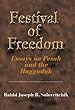
Over Pesach I spoke at Sha’arei Tefilah (a new shul in Yad Binyamin) on the topic of “Food and Eating in Judaism”, basing my talk on an essay from the Rav that appears in the book Festival of Freedom, published after his death. So, none of this is from me – it’s all based on the Rav’s first essay entitled, “An Exalted Evening: the Seder Night.”
So what’s the problem with food? We all like food. Most people I know have no problem with food – and in fact like it very much. (I consider myself strongly in this category, especially with regard to grilled meats.) Generally, food tastes good. It serves as a source of nourishment. It brings us a sense of physical well-being and even pleasure. So what could be bad? It boils down to biology.

Generally, human beings keep their biology to themselves. We consider biological function private and personal, to be shielded from the view of others. Think about the different types of biological functions that our bodies perform: defecation, lactation, cohabitation. We perform each function in private, as we should. And then there’s eating. Functionally, there’s nothing that distinguishes eating from any other biological function. And yet, for some reason, we perform that particular act in the most public of settings. Why? Frequency -- we use the bathroom every day. Pleasure -- sexuality certainly fits that bill, and despite changing societal norms, that still belongs in private. So what’s different about eating? Why should the biological function of eating enjoy a place in public while other functions languish in private?
We can also ask the question another way: in what ways can and should we humanize eating? Humanity considers itself substantially different than the animal world. We use our cognitive capacity to elevate ourselves both physically, but also ethically and morally. But the biological function of eating is substantively no different than that of the animal world. We eat – but so does the beast of the field, the fish of the sea, the termite in his wood. Each needs biological sustenance, so he consumes nourishment. We’re no different. We’re hungry, so we consume food. But we’re supposed to be different. We’re not supposed to simply fulfill biological needs; we must elevate them and even sanctify them.
In recent years, a new “sport” has cropped up called “competitive eating.” This sport pits contestants from around the world in a competition to see who can consume the largest quantity of – whatever food it is – in a specific amount of time. While this practice probably began harmlessly enough, with the pie-eating contest at the county fair (remember the great scene though, from Stand by Me) – it has mushroomed into a full-fledged sport complete with sponsorships, prize-winnings, and television deals. Who can forget Kobiyashi’s memorable championship performance during this year’s July 4th Hot Dog eating contest, where he suffered a “reversal” (that’s industry-speak for “vomiting”) but was able to re-ingest to avoid disqualification, and soldiered on. (Full disclosure: I missed the broadcast. Sadly, I was probably eating hot dogs on July 4th – not watching others). In any case, any objective observer who can take a step back would realize just how animalistic, vulgar and profane “competitive eating” truly is. It’s really unfair to call it “animalistic”, because no animal would ever eat in this way. An animal might eat a huge amount – but only because he’s been programmed biologically to store his food for an extended period of time. No animal would intentionally eat a quantity of food that would make him sick. What would be the point of that? No – “competitive eating” is an endeavor that only human beings engage in.
Hot-dog and matzah-ball eating contests only highlight the problem for us. They demonstrate the quandary food presents to us all: our biological functions have the ability to degrade below the level of the animal world. It carries that much danger – but also the same amount of positive potential. Just as food can denigrate us, in can elevate us – make us better people: more human, more spiritual and more exalted. The question is how.
The Rav, articulating the problem in his eloquence, notes that the Torah requires that we introduce God into the process of eating.
If man wants to redeem his eating activity and sanctify it, he must invite God to partake of the meal, or to join him and his friends while they are engaged in something so carnal and "primitive." This strange experiment of introducing God into the circle of men enjoying their food is not a homiletical image, but a solid biblical idea. Man eats his bread before God:
Jethro, Moses' father-in-law, took a burnt offering and sacrifices for God; and Aaron came and all the elders of Israel to eat bread with Moses' father-in-law before God (Ex. 18:12).
Upon the nobles of the children of Israel He laid not His hand: also they saw God, and did eat and drink (Ex.24:11)
There you shall eat before the Lord your God, and you shall rejoice in all that you put your hand unto (Deut. 12:7).
"Eating before God": how strange this phrase would have sounded to the Greeks of old! Thinking before—or rather with God was a truism in late Greek philosophy, particularly among the Stoa, who considered the finite human intellect an infinitesimal component of the infinite divine logos, and who regarded thinking as a reflex of the divine poetic gesture. Whenever man engages in cognition, he submerges in God, because only through Him is acquisition of knowledge possible. To come close to God or to unite with Him through such an unrefined carnal activity as eating would simply evoke ridicule.
Yet our religious conscience felt differently: one eats with God, in His presences How? By sacrificial action, which converts the food of man into the bread of God:
You shall sanctify him therefore; for he offers the bread of your God (Lev. 21:8).
Command the children of Israel and say unto them: My offering and My bread for My sacrifices made by fire ...(Num. 28:2).
Judaism developed a new institution, the se`udah. It is neither an ordinary meal nor a feast; it is more than that. It is the crucible in which the bread of man is transposed into the bread of God; it expresses the fellowship between God and man and the participation of God in all human pursuits and activities.
The realization of the idea of se'udah can occur only when man eats differently than the animal, when he displays uniqueness even with regard to the physiological processes in which he must engage in order to satisfy the demands of his body.
Judaism answers the challenge of sanctifying our eating in a number of different significant ways, each addressing a different aspect of the process of eating. Appreciating the significant demands that Judaism makes during each step of the process can transform the way we look not only at the food that we eat, but the very way that we live our lives.

Tuesday, March 3, 2009

Be Like Moshe...

I recently found a shiur from my teacher and mentor, Rabbi Jacob J. Schacter on the YUTorah website. Apparently, they've been adding old materials from the tape library to the site, and recently included this gem which I downloaded and listened to with interest. (Although the title on the YU site says that the shiur is about R' Yaakov Emden, it's really a much larger talk called Facing the Truth of History, connected to his long article in the Torah U'Madda Journal. Also highly recommended.)

Gedolim biographies have legitimately taken a lot of abuse over the years. In this Jewish Action article from 2002, Rabbi Emanuel Feldman describes many of the criticisms levels against these popular books including the habit of cleansing a gadol of weaknesses, shortcomings and deficiencies. Authors write not about who a particular sage really was, but how they think he should be portrayed today. They gloss over or ignore shortcomings, or even mundane pieces of interest that conflict with the larger message of their books.
Among the many problems associated with these kinds of efforts, when an author cleanses the life of a gadol, writing not what the man actually did in his life but what we want him to have done, he robs the reader of any aspiration to emulate that great sage. How can anyone - no matter how pious, studious and passionate, possibly compare with a person who lived apparently without shortcoming - someone who never fought with his wife; never entertained feelings of doubt; never spoke an angry or negative word?
In a word - he can't. No one is perfect, not even a gadol. Moreover, his greatness often lay precisely in his ability to overcome those shortcomings. Without appreciating a gadol's greatness, how can any normal person aspire to grow to such heights?
With these thoughts percolating in my mind, I came across a fascinating commentary of R' Ya'akov ibn Habib in his work, Ein Ya'akov.
The gemara in Berachot (33b) discusses the notion of Yirat Shamayim - "fear of heaven."
ואמר רבי חנינא: הכל בידי שמים חוץ מיראת שמים, שנאמר: "ועתה ישראל, מה ה' שואל מעמך כי אם ליראה". אטו יראת שמים מלתא זוטרתא היא? והא"ר חנינא משום ר' שמעון בר יוחאי: אין לו להקב"ה בבית גנזיו אלא אוצר של יראת שמים, שנאמר" "יראת ה' היא אוצרו"? אין -- לגבי משה מילתא זוטרתא היא, דאמר ר' חנינא: משל לאדם שמבקשים ממנו כלי גדול. ויש לו, דומה עליו ככלי קטן. כלי קטן ואין לו - דומה עליו ככלי גדול.
Said Rabbi Chanina: Everything lies in the hands of heaven except for the fear of heaven, as it is written, "and now, O' Israel, what does God ask from you other than fear?" Yet, is fear of heaven a small (minor) thing? Did not Rabbi Chanina say in the name of Rabbi Shimon bar Yochai: The only thing the Holy One blessed be He has in his treasury is a storehouse of "fear of heaven" - as it is written, "Fear of God - this is His store"? Yes, regarding Moshe it is a small matter. As Rabbi Chanina stated: it can be compared to a man from who they ask for a large vessel: if he has it, it seems small to him. [If they ask him for] a small vessel and he doesn't have it, it seems to him like a large vessel.

At face value, the Gemara raises a difficult and challenging issue. Moshe asks us simply: "What's the big deal? All you have to do is fear God? Is that asking too much?" To this the gemara answers, "Actually, it is. It was easy for Moshe, who had plenty of "fear of heaven," but for the rest of us, it's like asking us for a small pot when we have nothing at all. It's a really big deal.
The gemara itself is at least a little problematic, leaving us with the impression that Moshe gave us advice from his ivory tower, with little knowledge or understanding of how "the rest of us" really live. "Is it really that big of a deal?" he asks us, "to have fear of God"?
"Actually", we tell him, "It is. But you wouldn't understand."
That doesn't really paint Moshe in the most positive light in terms of his leadership of the people. He seems aloof and distant, unable to appreciate the simple struggles of most normal people.
Rabbi Ya'akov ibn Habib, in his commentary called הכותב in the Ein Ya'akov, resolves this seeming difficulty by explaining the piece in a very straightforward manner.
ועל דרך הפשט ראוי ליישב לשון המאמר ולא ישאר בקושיא, כי כיון שהכיר משה בעצמו דמלתא זוטרתא היא, א"כ יכול היה לומר להם "שאלה קטנה אני שואל מכם, כי הלא מחומר קורצתי גם אני", כי להיותו ילוד אשה ג"כ היתה היראה דבר קשה עליו בתחילה, ואחר כך גבר שכלו על הכוחות גופניות והכניעם עד שנשארת היראה חקוקה בלבו, והתמדתה היא מילתא זוטרתא אצלו, שגם ישראל יוכלו לעשות כן. כי אם יגבר החומר עליהם, יכניעהו וישפילהו הכח השכלי. ולכן שתק המקשה בשמעו זה התירוץ להיות מספיק לבטל קושיתו מצד מאמר רשב"י "אין להקב"ה בבית גנזיו וכו'" שהאמת אתו, שהיראה היא אוצר חביב לפניו יתברך. ועכ"ז הוא דבר קל ואפשר קרוב לישרים בלבותם להגיע אליה ולהיות ירא ה' כמשה. א"כ, ענוה גדולה היתה למשה בזה שהיה אומר להם "ועתה ישראל למה לא תהיו כמוני? כי הנה כולכם בני ישראל ואברהם ויצחק, והרשות נתונה לכם להיות שוים אלי בדבר זה, כי גם אני אחיכם."
And in the manner of simple understanding, it is worthy to explain the language of this section, and it will not remain in question. Since Moshe recognized in himself that this indeed was a small matter, therefore he was able to say to [the people]: "I ask from you a small request - for I am also made of physical matter." For, since he was born of a woman, fear [of heaven] was also a difficult matter for him at first. Only afterwards, his intellect overcame his physical desires and subjugated them until the fear [of heaven] remained hewn into his heart. Moreover, persistence was a minor matter to him, that [members of] Israel could also do. For if physicality would overcome them, they could lower and subjugate that [inclination] with the power of the intellect.
For this reason, the questioner was silent when he heard this sufficient answer to negate his question with regard to the saying of Rabbi Shimon bar Yochai, "God only has in his storehouse..." For the truth is with him, that fear [of heaven] is a beloved stored [matter] before Him. Nonetheless, it is an easy thing, and quite possible for those who are straight in their hearts to achieve, and to fear God like Moshe. Therefore, it was a matter of great humility for Moshe who said to [the people]: "And now O' Israel, why will you not be like me? For all of you are the Children of Israel and Avraham and Yitzchak, and the ability is given over to you to be equal to me in this matter - for I am also your brother."
Two amazing ideas emanate from Ein Ya'akov's comments:
1. According to him, anyone truly can achieve Moshe's level of yirat shamayim. If he could do it, so can we, because it's a matter of overcoming our physical inclinations and allowing our knowledge and intellect to help us make the proper choices in life.
2. Most surising to me is his formulation that, "since he was born of a woman, fear [of heaven] was also a difficult matter for him at first." While it seems logical and obvious, his comment is anything but. Moshe began life not as Moshe Rabbeinu, but with faults, struggles and difficulties. He too needed to overcome his yetzer hara - his evil inclination. One imagines that he too failed at times. He wasn't born perfect. No one is.
And still he grew to become the great teacher and leader of Israel that he did, despite - or perhaps because of those shortcomings.
And maybe, just maybe, so can we.

Sunday, February 24, 2008

Judaism and Imagination

If my experience is any indication, Jewish education does not place a very positive emphasis on developing an imagination. Rebbeim generally associate imagination with sexuality and inappropriate sexual thoughts - which is not all that surprising given the fact that they're usually speaking to teenage males. Thus, they encouraged us to stifle our imaginations in the hopes of avoiding violation of obvious issurim.
Moreover, most Jewish education involves the assimilation and spit back of skills and information. We teach our young children simple skills, and have them repeat them back to us. Then as they grow older we teach them more advanced skills which they must apply to more difficult texts and applications. Finally, if they reach a very advanced stage, they study extremely difficult and advanced materials which they then repeat and share with others to demonstrate their advanced knowledge. Halachah and gemara - the staples of yeshiva learning - have reached such a level of intellectual maturity that to all but the most advanced, there's nothing really to add. How many students feel that they have substantial chiddushim to contribute to the world of Jewish study? In truth, in the academically oriented atmosphere of the Beis Medrash, creativity and imagination have been, quite literally, ushered from the room.
And yet, imagination and creativity seem to be not only critical to a healthy psychological and emotional makeup, but to a positive Jewish intellectual life as well.
Parshat Ki Tisa relates the qualities that Bezalel ben Uri ben Chur possessed that made him uniquely qualified to head the mishkan construction project.
ואמלא אותו רוח אלקים בחכמה ובדעת ובכל מלאכה. לחשב מחשבות לעשות בזהב ובכסף ובנחשת
And I filled him with a spirit of God, with wisdom and knowledge of every craft. And to think thoughts - to make with gold, silver and copper. (Shemot 31:3-4)
What does the Torah mean when it tells us that God bestows upon Bezalel the spirit of God לחשב מחשבות -- "to think thoughts"? Rashi explains that this refers to מעשה חשב - work of embroidery, and is simply another skill set Bezalel possessed. Yet, Targum Yonatan ben Uziel translates the verse this way:
למיחשב ברעיוניהון היך למעבד בדהבא ובכספא ובנחשא
To think with their ideas how to create with gold, silver and copper
In essence, a craftsman's greatness lies not in his or her technical ability, but in the ability to translate a picture of the mind into reality. Sure, this requires great tactical skill, but it demands even greater mental ability to imagine in one's mind how that creation will appear when complete.
We think that we know what the mishkan actually looked like. Each year when we study these parshiot that deal with the mishkan's construction, we pull out the pictorial Tabernacle book, and study the pictures to better understand the descriptions in the text. During summer camp we build scale models of the different vessels to learn their various dimensions and attributes. So we know exactly how the mishkan looked. Only we don't.
No book or model can approximate the fantastic craftsmanship, creativity and imagination that the builders of these vessels utilized to create them. Who can picture the true beauty of the hand-woven tapestries that adorned the walls and curtains of the mishkan? What about the engravings, etchings and carvings in the gold throughout the structure. Indeed, while we can approximate the size and shape of the different vessels, we cannot estimate their inherent beauty in a picture of a model. Nor should we try. We should leave that to our imaginations.

And we need our imagination for more than just arts and crafts. We need it for life.
In order to grow beyond ourselves, we need the ability to envision a different kind of life; an experience beyond our familiarity. To create life beyond what we know we must first be able to imagine what's possible. Only when it's real in our minds can we translate that vision into reality. This truism applies not only to life experiences, but to communities, institutions, programs -- basically any human endeavor. Great businessmen are not the people who simply fulfill the needs of others. Rather, they are the people who see a need unfulfilled, and can envision their ability to fill that need. In essence, they see in their minds what others cannot or do not. Similarly, great communal builders see not just the challenges in building their ideas and institutions, but also their finished product in their minds. Only then can they set about bringing their visions to fruition. Without creativity we become stale, stagnant and unable to adapt and grow, limited to the finite borders of our past experiences. With imagination and creativity, we open ourselves to the unlimited expanses of the possible, as long as we can dream it.

In cannot be coincidental that Jewish tradition considers great Jewish leaders and builders dreamers. Yosef's brothers describe him as an איש החלומות -- "a man of dreams". While his inability to conceal those dreams land him in trouble during his youth, that very same imagination and creativity literally save him and the world. Only Yosef can not only properly interpret the dream of Par'oh, but perhaps even more importantly, devise a solution to resolve the problem. His solution brings him to prominence and provides sustenance for the region during the difficult years of famine.

The Midrash Tanchuma writes,
ילמדנו עוד רבינו מה בין חלומות הצדיקים לחלומות הרשעים? חלומות הרשעים לא בשמים ולא בארץ, שנאמר ופרעה חולם והנה עומד על היאור (בראשית מא א). וכך נבוכדנצר כתיב חלם (הוא) [חזית] ודחלנני (דניאל ד ב), שלא היה לא בארץ ולא בשמים, אבל חלומות של צדיקים בשמים ובארץ, שכן אתה מוצא שאמר יוסף לאחיו הנה אנחנו מאלמים אלומים (בראשית לז ז), הרי בארץ, ובשמים מנין, שנאמר הנה השמש והירח ואחד עשר כוכבים משתחוים לי (שם שם /בראשית ל"ז/ ט), וכן באבינו יעקב ויחלום והנה סולם [מוצב ארצה וראשו מגיע השמימה, הרי בשמים ובארץ].
Let our rabbi also teach us, what is the difference between the dreams of the righteous and the dreams of the wicked? The dreams of the wicked are neither in the heavens nor the earth, as it is written, "and Par'oh dreamt and behold he was standing over the Nile," and it is written similarly about Nevuchadnezzar "I saw a dream which made me afraid," for he was neither on the earth or in the heavens. But the dreams of the righteous are both in the heavens and the earth, for we find that Yosef said to his brothers, "behold we were binding sheaves," - so we see the earth. Where do we see the heavens? As it is written, "behold the sun, moon and eleven stars were bowing to me." And furthermore, [regarding] our forefather Ya'akov it is written, "and behold a ladder was standing on the ground and its head reached the heavens" - so we see his dream related to both the heavens and the earth.
A truly righteous dreamer - and his dreams - are rooted not in the heavens or the earth, but in the connection between the two; in binding one's yearnings for the heavens with worldly pursuits. Ya'akov dreamed of bridging the gap between the lofty spirituality of the heavens and the stark reality of the world. And because he dreamed it, he brought it to fruition.

Rav Kook in the fifth chapter of Orot discusses the difference between Jewish imagination in the Land of Israel and Jewish imagination in the Diaspora. He writes,
הדמיון של ארץ ישראל הוא צלול וברור, נקי וטהור ומסגל להופעת האמת האלקית, להלבשת החפץ המרומם ונשגב של המגמה האידיאלית אשר בעליונות הקדש
Imagination in the Land of Israel is clear and transparent, clean and pure and prepared for the true divine appearance, for the clothing of the exalted and lofty desires of the ideal orientation in the uppermost levels of holiness...
To me, even more important than the distinction that Rav Kook draws between imagination inside or outside of Israel, is his emphasis on the significance of imagination in the Jewish religious and spiritual experience. After years - centuries perhaps - of educating our children to suppress their imaginations, perhaps the time has come to reexamine that value and begin to emphasize the positive growth that can come from properly directed creativity, either through study of artistic ability (something now confined to young children and girls), creative writing and poetry or other similar disciplines.
Only when we learn to harness - and stop fearing -- the constructive power of creativity and imagination will we begin to imagine what the Jewish people can truly become.