Showing posts with label Vaera. Show all posts

Wednesday, January 25, 2017

Parashat Va'era - the Leadership of Moshe vs the Leadership of Aharon

Audio Shiur:
Parashat Vaera - the Leadership of Moshe vs the Leadership of Aharon

The Torah seems to repeat a number of apparently innocuous verses, also switiching the order in which Moshe and Aharon are listed. Is this simply innocuous repetition, as Rashi implies, or is the Torah communicating something far more important?

Click here to navigate to the shiur on YUTorah.org.

Click on the player below to play the Shiur or right click here to download)


Did you know that this shiur is available as a free podcast on iTunes? Click here to subscribe - and leave a comment and rating so more people will find the shiur! Thanks!

Thursday, January 7, 2016

Audio Shiur: Parshat Vaera - Hail to the Chief

Audio Shiur:
Parshat Vaera - Hail to the Chief

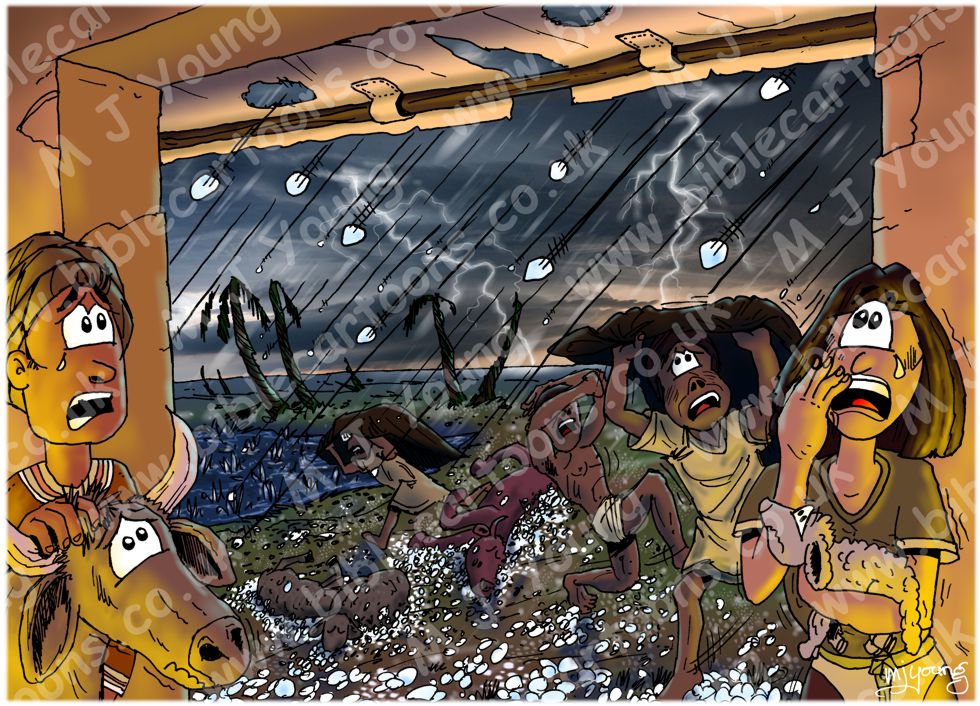
A careful look at the plague of hail reveals a great deal about the structure of the plagues altogether, and one understanding of the psychology of hardening Par'oh's heart.

Click here to navigate to the shiur on YUTorah.org.

Click on the player below to play the Shiur or right click here to download)


Did you know that this shiur is available as a free podcast on iTunes? Click here to subscribe - and leave a comment and rating so more people will find the shiur! Thanks!

Tuesday, December 24, 2013

Audio Shiur: Parshat Vaera - Do We Believe in Miracles?

Audio Shiur:
Parshat Vaera - Do We Believe in Miracles?

In order to convince Par'oh of his authenticity, Aharon famously cast his staff before the king and it turned into a "tanin" (we discuss the identity of the creature in the shiur). Was Par'oh convinced? Hardly. Should he have been? Do miracles really make us believe in God? Should they?


Click here to navigate to the shiur on YUTorah.org.

Click to play the Shiur (or right-click to download)

Sunday, December 22, 2013

Seeing the Goםd - A Thought for Parshat Va'era

It was almost inevitable.

Even before the streets were plowed, media figures and government officials began calling for an investigation into the "failures" surrounding the recent blizzard that blanketed a good chunk of Israel. True, many people lost power, and thousands were stranded. But, from my point of view, we did pretty well: the roads were shut down appropriately, saving many, many lives; the power company crews worked around the clock to restore and repair power lines that buckled under the heavy weather.

And yet, we complain. Somehow, too often, our intuition is to see the negative, rather than appreciating the positive that exists in every situation. Our task – and responsibility, is to overcome this inclination to kvetch, and to try to appreciate and grow from our struggles. According to Rashi, this is precisely the message that God conveys to Moshe Rabbeinu.

By all accounts, things aren't going well.

Rather than rescuing the Nation of Israel from bondage, Moshe has only made things worse, as the people must now gather the straw necessary to construct the bricks themselves while still fulfilling their old quotas. Recognizing his failure, Moshe complains to God.
God, why did you deal negatively with this people? Why did you send me? Since I came to Pharaoh to speak in your name, he has made things worse for this people; and You have not saved Your people.' (Shemot 5:22-23)
God responds by telling Moshe that He would, in fact, redeem the nation as promised. But then God adds:

'I am the LORD; and I appeared to Avraham, to Yitzchak, and to Yaakov, as God Almighty, but by My name Yud-Hay-Vav-Hay I did not make known to them.
What is the nature of this minor lesson about the Avot? What is the difference between the two different names of God, and what is God trying to communicate to Moshe?

Rashi, in his second answer to these questions (on verse 9), quotes the Midrash explaining that God's message was a direct response to Moshe's complaints.

Said God [to Moshe]: I yearn for those who are lost but not forgotten!…Many times I revealed Myself to them, and they never asked me, "What is Your name?" And you said, "[When they ask] what is His name, what should I tell them?"

When Avraham wished to bury Sarah and could not find a grave until he was compelled to purchase one at great expense; When they complained to Yitzchak about the wells that he dug; When Ya'akov was compelled to purchase the plot of the field in order to pitch his tent –they did not wonder about My attributes! And yet you said, "Why have You made things worse?"
It's a chilling message.

How often do we "wonder" about the struggles we endure and immediately lapse into "complaint" mode – whether we're talking about the snow, our jobs, our kids' education?

I believe that these verses also carry the key to unlocking a successful Aliyah. After all, the subject under discussion here is the redemption of the Jewish Nation and their ultimate arrival in the Holy Land.) 

Aliyah, especially for people making Aliyah by choice, represents a degree of hardship.  Moving to the Holy Land requires sacrifice. Sometimes you really do feel like you've taken two steps backwards. And yet, God powerfully relays to Moshe the message that our attitude is critical. We cannot immediately complain when things don't go our way. Rather, we must permit ourselves to see the good, the blessing, and the potential that lies ahead.

Thursday, January 19, 2012

Who Wants to Leave Egypt? A Thought for Va'era


 On my recent whirlwind tour of the United States, my travels brought me to Lakewood, NJ, for the Sunday evening Bar Mitzvah of my nephew. The next day, I returned to Lakewood to spend the day with my family, as we shopped together before we caught our flight home. We hit a Seforim store, an amazing toy store, the pizza store, and of course, Target. (They have those in other places too.)
Truthfully, while it was really nice to see my sister's new home, I found Lakewood depressing for two very different reasons. I found that the center of town reminded me of Washington Heights - reason enough to get depressed. But then, right before we left, we ran to minchah in a brand new subdivision near my sister's house in a basement shul, and I began to grasp just how much Lakewood had expanded since my last visit several years earlier. The entire subdivision - and many of the houses surrounding it, were entirely frum. Moreover, the developer was obviously an Orthodox Jew as well, having named some of the streets after old European communities (Kelm Woods Drive, Brisk Lane). Seeing the street signs depressed me a great deal because it really hit me: here is a community of people truly dedicated to living lives of commitment to Torah, and they were building their Torah-true community in Lakewood, NJ. (If you didn't understand that last sentence and thought, "What's so bad about that?", there's a very strong chance that you don't live in Israel. Because if you do, the sentence would be self-explanatory.)
At the beginning of Va'era, God explains to Moshe the divine plan to deliver the Jewish people from Egypt. God tells Moshe, 
 וְגַם אֲנִי שָׁמַעְתִּי, אֶת-נַאֲקַת בְּנֵי יִשְׂרָאֵל, אֲשֶׁר מִצְרַיִם, מַעֲבִדִים אֹתָם; וָאֶזְכֹּר, אֶת-בְּרִיתִי.
And moreover I have heard the groaning of the children of Israel, whom the Egyptians keep in bondage; and I have remembered My covenant.
Rabbi Benzion Firrer, in his book "Hegyonah Shel Torah" asks why God needed to hear the cries of the Jewish people in order to remember His covenant. Does Jewish suffering make the covenant any easier to remember? In fact, it seems clear that the divine plan included increased suffering of the Jewish nation. After all, God knew that Par'oh would initially refuse to free the Jews, and would increase their workload as well. Why was all of this necessary?
Rav Firrer answers his question by quoting a famous Rashi about the plague of darkness. Rashi wonders what the purpose of the darkness was at all. After all, it didn't cause any lasting suffering or damage. What was the point? Rashi answers,
שהיו בישראל באותו הדור רשעים, ולא היו רוצים לצאת, ומתו בשלשת ימי אפלה כדי שלא יראו מצרים במפלתם ויאמרו אף הן לוקין כמונו. 
There were wicked Jews in that generation who did not wish to leave [Egypt], and they perished during the three days of darkness, so that the Egyptians would not see their downfall and say, "They are being punished like us."
Rav Firrer suggests that if a good number of Jews didn't want to leave Egypt after the first eight plagues, it would stand to reason that a much larger number didn't want to leave the country before any of the plagues hit at all. Sure, a small number of radicals were willing to follow Moshe from the beginning. But most Jews probably figured that while life was indeed terrible in Egypt, they didn't want to leave. 
Why wouldn't they leave an Egypt that tormented them so terribly? Rav Firrer explains that they didn't want to leave, because they considered themselves Egyptians. Sure life was bad. But in every country, some people did better and others did worse. Some groups enjoyed success while others toil and struggle. Why should Egypt be any different. And, they attributed their suffering  to the acts of evil people. They weren't enslaved because of any inherent difference between themselves and their masters. Rather, they all shared the same common nationality with their captors; they shared a bond that they weren't willing to give up. They wouldn't leave Egypt because in the end, they too were Egyptian.
This, explained Rav Firrer, is why God engineered an increase in their suffering. At some point, the Jews' suffering became so great that they came to recognize the truth: they were different. The Egyptians didn't see them as fellow countrymen, but instead as a separate people to oppress and subjugate. Only when the Jews themselves came to that realization could the Redemption even be possible.
I stumbled upon Rav Firrer's words this evening, as a perused his book at the back of the shul. Reading his thought, I realized that he had articulated what so bothered me about my trip, and Lakewood, and Baltimore for that matter. If you can build a Jewish city in the heart of New Jersey, then you really don't see yourself as inherently different. Sure, Orthodox Jews might act differently, eat differently and pray differently. But the Jews of America are precisely that: American. They (understandably) feel an intrinsic connection, and a sense of belonging to their homeland, and see no reason to think otherwise.
History is nothing if not repetitive. The time will come, whether sooner or later, when the Jews of America will come to realize that as great as America is, they do not belong. They might be from America; they might live there, speak the language, immerse themselves in the culture; but one day they will realize clearly enough just how different they are, and that it is not their place.
Lakewood, like Goshen, is a wonderful town. But those towns have no long-term future, no matter what they name the streets.

Wednesday, January 18, 2012

Audio Shiur: Parshat Vaera - The Fifth Cup

Audio Shiur:
Parshat Vaera - The Fifth Cup

Having recently returned from a visit to the United States, my Religious Zionist "spidey sense" is going on full blast. So, our study of the four languages of redemption highlight the obvious question: what about the fifth? What about the Land of Israel. Like last week, this week's shiur is replete with heavy Religious Zionist ideology, so if you live in the Golah and upset easily, it might not be for you.

Click here to download the shiur, or here to navigate to the shiur on YUTorah.org.


Now you can subscribe to this shiur as a podcast, directly from iTunes! To subscribe, click here.

Friday, December 31, 2010

Audio Shiur: Parshat Va'era - Kvetching

Audio Shiur:
Audio Shiur: Parshat Va'era - Kvetching
To understand the beginning of Parshat Vaera, we must first examine the end of Shemot. Why does Moshe complain? How can he complain to God? Didn't he know that this would happen? His complaints (and the explanation of them by the commentators) tell us a great deal about Moshe, and also about ourselves.

Click here to download the shiur, or here to navigate to the shiur on YUTorah.org.

Wednesday, January 13, 2010

Parshat Vaera - Seeing the Hand of God

Audio Shiur:
Parshat Vaera - Seeing the Hand of God

Seeing the hand of God in the world - whether in big things or in small - is one of the great challenges of religious life. Moshe seems to struggle with this matter, as do we all. In studying the beginning of the parshah, we see Ramban's beautiful explanation of some of the textual challenges of the opening pesukim, as well as his critical message to see yad hashem in all areas of our lives.

Click here for the audio link, or listen in the handy audio player supplied below.

Tuesday, January 20, 2009

Seeing the Good. And the Bad - Devar Torah for Va'era 5769

Thank God, the war has ended. At least for now. By the time you read this, our sons will have returned to their bases, once again out of harm's way. Quiet has returned to the south of Israel, and we hope that the stability and normalcy most people take for granted can again become part of daily life citizens living in the south of Israel.
By all accounts, the war was an incredible success. At a shiva house this week (not related to the war), Rabbi Lazer Brody noted that if someone had said before the war that Israel would suffer only thirteen casualties (and each one is a terrible loss) in a full-fledged Gaza war, no one would have believed. We must see the fantastic hand of Hashem that heard our prayers, guided our soldiers, and protected our citizens.
Truthfully, seeing Hashem's hand isn't that hard. How many times did we hear on the radio or read in the news, "Twelve missiles fell today – no one was hurt." How can 900 missiles and rockets aimed at cities and population centers miss so often, if not for yad Hashem?
In truth though, it's always easier to feel God's guiding grasp on our shoulder when things go the way we'd like. But what about when they don’t? Do we feel a level of hashgachah when things don't go our way? Do we search for and see the Divine when we endure the distress of defeat – both nationally and personally?
Often you have to go back to the end of last week's parshah to understand the beginning of this week's Torah reading. This week is a good example. At the end of Parashat Shemot Moshe presents Hashem with a series of complaints. "It didn't work. I went to Par'oh, told him what you said, and not only aren't things better – but they've gotten worse. למה הרעתה לעם הזה – why have you damaged this poor people? למה זה שלחתני – why did you send me?" Hashem, concluding the parshah, answers Moshe's questions by insisting that He would indeed redeem the nation from slavery in Egypt. And that's where Parashat Va'era begins.
וארא אל אברהם אל יצחק ואל יעקב ושמי ה' לא נודעתי להם – "I appeared to Avraham, Yitzchak and Ya'akov, and never revealed my Divine Name to them." Why does Hashem refer specifically to the Avot here? How do they relate to Moshe's complaint and Hashem's response? Rashi (on verse 9) answers these questions by quoting a Gemara from Sanhedrin (111a).
Our rabbis learned out regarding the issue above, when Moshe said "Why have you done evil" the Holy One blessed be He said to him, "Woe to those that are lost and not forgotten. I have what to complain about the deaths of the avot. I revealed myself to them many times as el shakai, and they said to me, 'What's your name?' And you ask me, 'What's Your name – what should I tell them?' When Avraham went to bury his wife Sarah and couldn't find a suitable grave until he had to pay an exorbitant sum; and Yitzchak [struggled with the residents] who complained about the wells that he dug; and Ya'akov needed to buy the field where he pitched his tent – and they never complained against me. And you said, 'Why have you done evil?'"

In other words, when Moshe complains to Hashem, Hashem throws the complaints right back: "You know, things don't always go the way you think that they should. Why, when things don't see to go the way that you'd like do you immediately wonder where I've gone?
The Avot achieved greatness precisely for this reason: their faith transcended the difficulties they encountered in life. They could see yad Hashem not only in the good, but also in the bad. And while we're not Avot by any stretch, growing in our emunah means learning to see Godliness in every aspect of life, both good and bad.
The Mishnah in Berachot (Chapter 9) teaches us, חייב אדם לברך על הרעה כשם שמברך על הטובה – "a person is obligated to bless God on the bad that befalls him, just as he blesses God on the good." No, it's not easy to see yad Hashem either in personal or national setbacks. But our emunah demands that if we're going to believe that Hashem intervenes and guides our lives during our most joyous and happy moments, then He must also be there with us, crying alongside us, when we suffer and mourn.
It's hard to think about emunah when times are hard. Perhaps this Shabbat specifically, when we can sigh with a sense of relief; when we can give thanks for the good – for the safety and security that God blesses us with - we can best ponder this question.
Shabbat Shalom.

Friday, January 4, 2008

Table Talk - Vaera 5768

Jewish leaders always seem to have a skeleton in their closet. Many doubted the very Jewishness of King David, the progenitor of the Moshiach, as he descends from Rut the Moavite convert. Moreover, David's entire family emanates from our forefather Yehuda's curious relationship with Tamar, his former-daughter-in-law. Ya'akov Avinu finds himself married to two sisters - a clear violation of a future Torah law. At least Moshe -- our greatest teacher -- has nothing to hide. He has impeccable family credentials - doesn't he? Actually, he doesn't.
The Torah explicitly states: "And Amram took Yocheved his aunt for a wife, and she bore him Aharon and Moshe..." (6:20) Yes, Moshe's father marries his aunt, a relationship soon to be forbidden not only to Jews, but to Noachides as well. Moshe's entire family emanates from a completely forbidden familial relationship. How can it be that our greatest teacher, and so many of our progenitors are the product of questionable family relationships?
Chizkuni comments: "The fact that God allows that a man as great as Moshe should emanate from a relationship that He would ultimately prohibit, is because we never appoint a leader over the community unless he has a 'box of vermin' hanging from his neck, lest he become haughty over his community."
Throughout his life and despite the greatness he achieves, Moshe remains the most humble man in history. Perhaps he never allows himself to forget that box hanging from his neck.