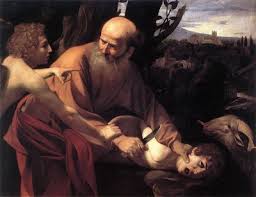
Showing posts with label Rosh Hashanah. Show all posts

Wednesday, September 10, 2014

Ray Rice, Teshuvah, and The Book of Remembrances

I've been thinking recently about the Ray Rice video (showing him knocking his wife unconscious in a hotel elevator). Before the revelation of the video, he received a two-game suspension, and was set to resume his well-paying career as an NFL running back. After the release of the tape he was fired, suspended, and may never play football again, costing him literally millions of dollars in lost revenue.
What really happened this week? Did Ray Rice do anything different? Did we not think after the release of the first video  (showing him dragging his wife out of the elevator) that he had hit her? Did we imagine that she suffered from a diabetic-related sudden blackout? Hardly. The world "knew" what had happened, but without the information right before our eyes, we looked the other way. We forgot. We moved on.
That's exactly what happens to us as we approach Rosh Hashanah.
When the time comes to make an accounting of the year, in order to begin the process of repentance and renewal, suddenly things become quite fuzzy. We conveniently forget the many, many times we acted  selfishly, harshly, crudely, nastily - you name the adverb. We forget the times we forgot to pray, bentch, make a brachah, do a mitzvah. We forget our sins - or at least the vast majority of them, and when looking back at the year think to ourselves: Sure, I can always improve, but I had a pretty good year, didn't I? Sure I did, assuming that I forgot all of my blunders, mistakes and misdeeds.
There's only one problem: there's a tape, just like the Ray Rice recording. Of everything,
The Gemara in Rosh Hashanah relates a familiar but chilling image.
אמרו מלאכי השרת לפני הקדוש ברוך הוא: רבונו של עולם, מפני מה אין ישראל אומרים שירה לפניך בראש השנה וביום הכפורים? - אמר להם: אפשר מלך יושב על כסא דין
וספרי חיים וספרי מתים
 פתוחין לפניו - וישראל אומרים שירה? (ר"ה לב, ב)
Said the heavenly angels before the Holy on Blessed be He: Creator of the world, why is it that Israel does not recite words of praise (Hallel) on Rosh Hashanah and Yom Kippur? [God] said to them: is it possible that the King sits on the seat of judgment, with the books of life and the books of death open before him, and Israel should sing praise?
The Midrash raises a number of fascinating questions, such as: what is the book of the dead? Who in fact is being judged (see here for a fascinating interpretation); why not sing praise during a time of judgment? Wouldn't that get us a better deal? But we'll leave those aside to ask another question: what's written in those books?
During Unetaneh Tokef, we get even more specific. In the context of this solemn, chilling prayer, we say to God,
אֱמֶת כִּי אַתָּה הוּא דַּיָּן וּמוֹכִיחַ וְיוֹדֵעַ וָעֵד
וְכוֹתֵב וְחוֹתֵם וְסוֹפֵר וּמוֹנֶה
וְתִזְכֹּר כָּל הַנִּשְׁכָּחוֹת וְתִפְתַּח אֶת סֵפֶר הַזִּכְרוֹנוֹת
וּמֵאֵלָיו יִקָּרֵא וְחוֹתָם יַד כָּל אָדָם בּוֹ
It is true that You alone are the One Who judges, proves, knows, and bears witness;
Who writes and seals, Who counts and Who calculates.
You will remember all that was forgotten. You will open the Book of Chronicles
 —  from it, it will be read - in which everyone's signature is. (translation from Wikipedia)
What is this "Book of Chronicles" that God reads on Rosh Hashanah while standing in judgment? What's written in it? And I don't remember signing any such book?
Actually, we've seen a similar book before in Tanach - in the Book of Esther, when the king can't sleep and has his servants read from his ספר הזכרונות - Book of Remembrances. Only then does he remember the favor Mordechai did in saving his life, and takes steps to repay Mordechai (and save the Jewish people). What's in this book? It's a detailed diary of everything - every word we've said over the past year, and over our entire lives. Every thought. Every feeling. And every action.
But the author of the Unetaneh Tokef poem only used the language and imagery available at his time. The idea of the signature connotes the undying accuracy of what's written in the book. How can you deny the veracity of a book's contents if they bear your signature. Today we'd say it differently. If we were writing a modern Unetaneh Tokef we'd say:
It is true that You alone are the One Who judges, proves, knows, and bears witness;
Who writes and seals, Who counts and Who calculates.
You will remember all that was forgotten. You will open the Divine YouTube,
 — from it, all will be viewed - in which everyone's action are found. 
There is a video. Of everything. Whether you can see it or not, there is a camera in the room. In all probability, there is in fact a camera on the device you're using to read these words. So it's not that difficult to imagine. Except that it's on, and recording, all the time, uploading to a special Sefer Zichronot YouTube site we cannot access. While we might not have access to this specific version of YouTube, it's there, and one day we too will watch it.
In the aftermath of the Ray Rice media circus, his wife Janay (who he punched) wrote, "To make us relive a moment in our lives that we regret every day is a horrible thing." It must indeed be horrible to have your worst mistake splashed on screens around the world; to have to live with the consequences of your most terrible behavior for the rest of your life.
But it's not just Ray Rice.
It's all of us. We just might not realize it yet.

Tuesday, September 3, 2013

Audio Shiur: The Centrality of Akeidat Yitzchak on Rosh Hashanah

Audio Shiur:
The Centrality of Akeidat Yitzchak on Rosh Hashanah

Why does Akeidat Yitzchak play such an important role throughout the tefillot of Rosh Hashanah and the High Holidays? What does it have to do with: Adversity, Land for Peace, the Crisis in Syria, and our own personal Teshuvah?


Click here to navigate to the shiur on YUTorah.org.

Click to play the Shiur (or right-click to download)

Wednesday, September 12, 2012

The View from Here: On Iran, Rosh Hashanah, and What We Can Do About It

This might sound strange to the average American, but I’m not entirely sure that we know or feel the situation in Iran any more than you do. With instant global communications, we’re reading the same websites and watching the same news. I daresay that in America, the Jewish community might be more aware of the Israel-Iran issue, and more frightened. Of course Iran comes up on the news here. But there’s also other local news that doesn’t make it to the English-language press. Try the following experiment: check out the English version of Ynet, and then the Hebrew version. The English version almost always deals with security issues; the Hebrew one almost always leads with local Israeli news. I just tried it now. English site headline: “Panetta: US has only 1 year to stop Iran.” The lead story on the very same site, but in Hebrew? “White House: Obama has no time in his Schedule for Netanyahu.” 
That’s not to say that Iran isn’t a concern; of course it is. But like Jews do around the world, we here live our daily lives, worried about the normal things that occupy our time: our jobs, the economy, getting the kids to sleep and the laundry done. At least for now, we’re not talking about an imminent threat; we’re discussing whether Israel should take action to prevent Iran from becoming an imminent threat.
So, at least personally, I don’t really walk around worrying about Iran. I certainly don’t walk around carrying a gas mask. I walk around worrying about gas prices.

What, then, can and should the American Jewish community be doing about the Iran threat? I have two thoughts. 
As we all know, when Yaakov Avinu prepared to face Eisav, he did so in three ways: he sent gifts to Eisav; he split the camp preparing for a fight, and he prayed. In other words, he prepared to fight; he engaged in diplomacy (the gifts), and he turned to the רבונו של עולם.
In my view, the American Jewish community can and must play a role in each of these critical areas:
  • Diplomacy and fighting: American Jews won’t fly the planes, and neither will I. But American Jews can and must play an active role in the American political process to ensure that Israel has the very best planes to fly, and has the diplomatic backing of the American government behind it, without which those planes might not get off the ground. Israel enjoys incredible support in the halls of Congress. But let us not imagine for a moment that we can take that support for granted. It’s the result of decades of work that many in the Orthodox community haven’t engaged in. I’m a big believer in the work that AIPAC does, and I’ve seen the power of its work firsthand. If ten percent of the people hearing a drashah about Israel on Rosh Hashanah this year committed to become more involved in AIPAC, not just by giving money, but by getting involved in this coming year’s election, Israel would enjoy a better, stronger position to deal with Iran.
  • Tefillah: Obviously, this isn’t just the domain of Israelis. We all must pray for the wellbeing of the Jewish State. I heard a talk last week from the Rishon L’tzion, Rav Amar, who emphasized the special need for tefillah this coming year. Noting that Chazal explain that ה' withheld children from our אמהות because ה'  is מתאוה לתפילתם של צדיקים, Rav Amar suggested that the current Iran crisis demonstrates that ה' really wants us to call out to Him; to pray with passion and fervor for the safety and security of the Jewish people.
One final point: the Gemara in Brachot (4a) wonders: if God had promised Yaakov והנה אנכי עמך ושמרתיך בכל אשר תלך – why was Yaakov so afraid of Eisav? After all, he had God on his side! The Gemara answers that Yaakov never doubted God’s ability to protect him. Yet, אמר, שמא יגרום החטא – “he said, perhaps the sins that I have committed will cause [me to lose God’s protection].”
In the end, we place our trust in the Master of the Universe. Yet, will we merit God’s divine protection? That’s really up to each and every one of us. Each of us has the power to raise the merit of the Jewish people, or, God forbid, lower it. Whether we value that power and take measures to protect and cherish it is up to us.

Sunday, September 9, 2012

Should we be Worried?


As we approach the coming New Year, it seems that we've got a lot to worry about. The Prime Minister keeps beating the drum about the impending danger of a nuclear Iran; rockets are still falling on Sederot (which is pretty close to where I live), and gasoline reached an all-time high this week (what goes up doesn't seem to want to go down, either!) All of these worries don't even begin to touch on the personal concerns each of has for our families; for their health and well-being; for our children's continued growth and development. As I said, there's a lot to worry about.
But should we worry? Is worry something good and positive, or is it an emotion we should specifically try to control and minimize to whatever degree possible? The answer, of course, is that it depends on the subject of our worry.
In the classic Mussar work אורחות צדיקים, the anonymous author describes worry as a negative, destructive trait.

הדאגה. זאת המידה היא רעה ברוב ענייניה, והיא ניכרת על כל הפנים, כדכתיב (בראשית מ ו): "וירא אתם והינם זועפים"; וכתיב (נחמיה ב ב): "מדוע פניך רעים, ואתה אינך חולה". ואמר אחד מן החכמים: איני מוצא כלל באנשי נפשות העליונות סימן דאגה. הדואג על עולם זה להשיג מאומה – הוא מגונה מאוד, והיא לא נמצאת כלל באנשים הבוטחים בשם ומאמינים בו. הדאגה והיגון הם מכלים הלב, והם חולי הגוף. והדאגה הרעה שבכל הדאגות היא שירדוף אחר העבירות, ובעת שלא ימצא כל חפץ לבו – אז הוא דואג ומצטער. הדואג על עולם זה הוא רחוק מאוד מן התורה והמצוות והתפילה. לכן יחוש מאוד לתקן המידה הזאת, להסיר אותה ממנו. ואין צריך להאריך ברעתה, כי כל הטובות הבאות מן השמחה – הן היפוך הדאגה.
Worry. This attribute is almost always negative, and is recognizable on every face, as it is written, "And [Yosef] saw them and they were sad." (Bereishit 40:6) and it is also written, "Why is your face sad, and you are not sick." And one of the scholars has said, I have not seen worry in the spirits of the higher-level souls. On who worries about achieving anything in this world – this is very obscene – and is not found in those people who trust in God and have faith in Him. Worry and anguish destroy the heart and they are sicknesses of the body…Thus, a person should make great effort to fix this attribute and remove it from himself. And there's no reason to write at length about the negative nature [of worry] because all of the goodness that comes from happiness – is the direct opposite of worry.
In essence, "Don't worry, be happy."
But there is a type of worry that is positive and productive. We find in the Gemara in Brachot (4a) that although David Hamelech considered himself generally righteous, telling God שמרה נפשי כי חסיד אני – "Save my soul, for I am righteous" (Tehillim 86:1), nonetheless at the end of Chapter 27 of Tehillim (לדוד ה' אורי – which we recite twice daily throughout Elul), David seems to think differently of himself.

אל תתנני בנפש צרי, כי קמו בי עדי שקר ויפח חמס. לולי האמנתי לראות בטוב ה' בארץ החיים...
Deliver me not over to the will of my adversaries; for false witnesses have risen up against me, and breathe out violence.  If I had not believed to look upon the goodness of the LORD in the land of the living! (Chapter 27:12-13)
On this verse the Gemara quotes David as saying to God,

רבונו של עולם, מבטח אני בך שאתה משלם שכר טוב לצדיקים לעתיד לבא, אבל איני יודע אם יש לי חלק ביניהם אם לאו!
Master of the World – I am sure that You give proper reward to the righteous in the future. Yet, I do not know if I have a portion among them or not.
What happened to the confident, self-assured Chassid? Where is the righteous David Hamelech, who declared his goodness to God? The Gemara answers: שמא יגרום החטא – "perhaps he would lose [his reward] because of sin."
David Hamelech was indeed worried. He wasn't worried about his enemies attacking him or global warming or even whether he'd be able to afford the new iPhone. Rather, he was worried about himself, and whether he'd be able to continue to serve God properly in the future.
This, says אורחות צדיקים, is the only proper type of worry.  We can and should indeed worry whether our actions over the past year have drawn us away from God. We should be concerned, even anguished over the mistakes that we've made. And we should definitely use the power of worry to keep us from sinning in the future.
It seems, then, that we're worried entirely about the wrong things.
Should we worry about Iran? That's not really in our control, and worrying about it will only make our lives more miserable. Should we even worry about our livelihoods and the exorbitant price of gasoline? Again no. We should try and work on ourselves, so that we recognize that our sustenance lies in the hands of the Creator, who "provides bread to every living creature." We of course should pray for good health and blessing, but worrying about it won't help at all.
Still, there is something we can and must worry about: ourselves. We must worry about the insidious, seductive nature of sin, so that we can learn from our mistakes and commit ourselves to improvement, return and renewal.

Monday, September 26, 2011

Seeing Yad Hashem in the World

Remember those "Magic Eye" books?
A few years back, these books were all the rage. You've seen them – pictures of seemingly blurry blotches of nothing, but if you look at the picture in just the right way from the proper distance, you begin to see that there's a picture inside the picture, hiding in plain sight.
If you never figured out how to properly "see" the hidden image, these books are infuriating. After all, your friends stare at a page for a second and then say, "Whoa! Look at that!" And no matter how long you look, you can't see anything at all. But it's not that you can't see the picture. You're looking straight at it. You just haven't learned how to look at it in the manner which will allow you to see the picture inside the picture. With enough practice, a person can indeed learn to see the picture in the picture.
These Magic Eye books are a great metaphor for spiritual life.
We live our lives knowing that God plays an intimate, direct role in our lives, aware of the fact that God's firm grasp continues to guide klal yisrael. And yet, we cannot see what's right in front of our eyes. Like those "magic" pictures, the keys lies in learning how to look for what we see but cannot identify. How can we learn to see the Hand of God in the world? Rav Kook, commenting on a beautiful Aggadah, provides an fascinating suggestion.
The Gemara (erachot 58a) tells the story of ben Zoma, and the proper attitude towards the acts of kindness that others perform for us.
He used to say: What does a good guest say? 'How much trouble my host has taken for me! How much meat he has set before me! How much wine he has set before me! How many cakes he has set before me! And all the trouble he has taken was only for my sake!' But what does a bad guest say? 'How much after all has mine host put himself out? I have eaten one piece of bread, I have eaten one slice of meat, I have drunk one cup of wine! All the trouble which my host has taken was only for the sake of his wife and his children!' What does Scripture say of a good guest? "Remember that you magnify his works, where of men have sung." (Job 35:24)  But of a bad guest it is written: "Men do therefore fear him; [he regards not any that are wise of heart]". (37:24)
It's so easy to write off the things that other people do for us, as his "bad guest" so easily does. After all, they didn't make the effort for us - they made if for themselves. But all too often, we take this attitude not with our hosts, but with those we love the most - a spouse, a parent, a sibling or friend - we just take them for granted, which we should never allow ourselves to do. If we took the time to focus on the effort that goes into meeting our daily needs, and appreciating the good that others do on our behalf, we'd be much happier, content and more fulfilled.
It's a beautiful Gemara. But Rav Kook, in his commentary Ein Ayah on the Aggadah, sees ben Zoma's lesson as a critical key to seeing God's hand in the world.
Rav Kook begins his essay by noting that the issue of whether to believe in God's Hand in the world or not is not an intellectual question. It's not a matter than can be proved or disproved. "Rather, these two [attitudes] are dependent on the condition of the soul, whether for good or for bad…" How then do we learn to see God's goodness in the world? We do this through practice, by learning to see the good in those around us.
…the pure soul, which is ready to do good, will look upon the Divine influence with a good eye, for his soul will see that God's will is only to bring good. And where does this goodness come from, if not from the Divine light that is good and bestows good. Therefore, he will be certain that all is done for the good, and those seemingly negative events in the world have an ultimate positive end.
In essence, the way we look at the world at large is the very same way that we'll see the people who surround us. If we see God's goodness in the world, we'll also see that goodness in the actions of our fellow man. And, if we refuse to see the Hand of Hashem in the world, we won't see goodness or kindness in the things others do for us either.
Yet, the opposite rule also applies. If we can learn to see the goodness in the small things, that positive attitude will spread as well to the way we look at the world. In essence, if we can learn to not only see, but appreciate the small acts of kindness that others do for us in life, we'll train ourselves not only to see small acts of goodness in the world, but the big ones as well. In a nutshell, the more goodness we learn to see, the more we'll see it all around us.
How many kindnesses do we allow to go unnoticed? How many times has a loved one gone out of his or her way on our behalf, and we just took it for granted? How many times has a neighbor done us that small favor – one which we forgot to acknowledge? Think about the small kindnesses built into the fabric of daily life: someone cooked us dinner (and if you cooked it, odds are that someone else earned it.) Someone made sure to post the schedule of davening in shul. Someone took the time to ensure that the community tiyyul arrangements were properly addressed. The list goes on and on. And it's not their job. They weren't doing it anyway. (That's what ben Zoma's "bad guest" says, remember?) They did us a kindness, and we didn't even notice.
And then we wonder why we cannot see the larger, hidden good, when we fail to pay attention to the obvious acts of kindness happening right in front of us!
How then can we learn to see something we know is there but invisible all the same? Like those "Magic Eye" books, the answer lies in knowing how and what to look for. When we start focusing on all of the good in our lives; when we begin to see the small acts of kindness and goodness that surround us, we'll begin to train our eyes to see that which was already there: the Divine goodness of God, guiding us and bestowing goodness upon us, our families, and Klal Yisrael.

Friday, September 23, 2011

The Right Rosh Hashanah Video

In a previous post, I questioned the wisdom and value of a video produced by Aish Hatorah that featured cool break dancing and great scenes of Yerushalayim, but little religious value. This morning, I saw the Rosh Hashanah video that it could and should have been, produced by the Maccabeats.
I'm pretty sure that the piece will virally make its way through the Jewish world.  It's a powerful example of the strength that these videos can have simply by combining wonderful music, talented singers, clever lyrics and a sense of the story the video can tell.
We tend to compartmentalize our religious lives and our "outside" lives. When we look at the past year and the process of Teshuvah, we place our primary focus on our religious lives: how was my Shemirat Shabbat? Did I speak too much lashon hara? (Of course I did. Who hasn't?) But we don't ask the broader questions: Was I a good, sensitive spouse? Did I live a healthy life? Not only did I go to the shiur, but did I listen and use the time in the best way that I could? Was I a good employee or boss?
Rosh Hashanah really is about all of these questions, and not just how many mitzvot or aveirot I've done over the past year. Teshuvah must be about improving ourselves in all areas of our lives - in shul and yeshiva, but also at home, work, on the subway and at the gym. All represent critical areas of our lives, and all reflect our relationship with God.
This video conveys this powerful message in a strong, but meaningful way. It might even be the perfect video. If only they were filming it depicting life not in Washington Heights or Riverdale, but Tel Aviv or Modiin. Hopefully, someone as talented and insightful as the Maccabeats and their producer will come here and produce similar Hebrew language titles for a public that badly needs meaningful, beautiful, spiritually motivated media.

Monday, September 6, 2010

Audio Shiur: What's Your Mitzvah?

Audio Shiur:
What's Your Mitzvah?
We live in an era of specialization: professional, rabbinic, medical, legal – but what about religious? Is there such a thing as a religious specialist? There really is. Have we ever considered becoming religious specialists? When we take a closer look, we find that the notion of "specialization" in spirituality is actually a rather common theme that spans much of Jewish thought.
After listening to this shiur you yourself might be wondering: what's my mitzvah?

Click here to download the shiur, or here to navigate to the shiur on YUTorah.org.

Sunday, August 29, 2010

Being There for Our Children - Thoughts for Rosh Hashanah

As my children have grown I they prompt me to think about Teshuvah in terms of my role as a parent. Parenting (like Jewish life), is an endless task. The demands seem infinite, whether in terms of financial obligations (especially if you live in chutz l'aretz and have to pay for yeshiva tuition) but even more so in time and energy. I find myself wondering: Do I do enough? Do I spend enough time with my children, es pecially the older ones? Am I helping them develop properly? And, as my older son recently celebrated his bar mitzvah, I ask the opposite question: Am I too controlling? Am I allowing and encouraging him to develop on his own?

Click here to download the shiur.

Monday, September 21, 2009

Happy New Year?

Back during my time in Yeshiva, I heard that the wife of a friend of mine had given birth to a child. As a recently married young man in kollel (read here: no money), the finances of parenthood occupied my mind. After wishing him Mazel Tov I asked him, "I heard that having kids is really expensive. Is it that bad?"
"Actually," he told me, "that's not true. The kid is free. It's the accessories that are expensive."

Apparently, we're not happy. The reason that we're not happy is because we have children. At least that what the science tells us. Maureen Dowd writes,
One area of extreme distraction is kids. “Across the happiness data, the one thing in life that will make you less happy is having children,” said Betsey Stevenson, an assistant professor at Wharton who co-wrote a paper called “The Paradox of Declining Female Happiness.” “It’s true whether you’re wealthy or poor, if you have kids late or kids early. Yet I know very few people who would tell me they wish they hadn’t had kids or who would tell me they feel their kids were the destroyer of their happiness.”
Even Newsweek is in on the secret: kids are a drag. They require work, energy and effort, and can really dampen our fun quotient. We're just not happy. Our children are making us miserable. And in a way, I can see it. Who really likes dragging around every Sunday from birthday party to birthday party? Who truly enjoys the "bliss" of arguing with a child about a piece of candy, or a movie, or a bedtime? Who needs the hassle and the stress of raising children?
From Judaism's point of view, these surveys don't mean much. Sorry, but having children is a mitzvah - a commandment. God demands that we procreate - that we deal with the runny noses, tuition expenses and all the hassles that children bring. It's the very first commandment in the Torah, so the commandment to have children must be a fundamental, integral element to Jewish life.
Indeed it is. While God certainly wants us to be happy, it's not the "happiness" of American sensitivities. Rather, it's a happiness rooted in something far more important and meaningful.
If life is all about experiencing the greatest pleasure, the highest amount of leisure and the most fun, then having kids might not be the way to go. But is that really the definition of happiness? While buying a new car might make me feel good, does it really make me "happy"? Isn't happiness something deeper than the model and year of the car that I drive, and my financial security and well-being? How can you ask a parent compare her "happiness" level with a non-parent? Doesn't that happiness really depend on what you expected out of life.
Even more significant, though, is the root of a person's "happiness". Does your happiness come from giving or from taking? Are you happier when you enjoy a pleasurable experience, or when you give that pleasure to someone else? Answering that question will determine how you'll feel about the trials and travails of child-rearing.
This might be why at Rosh Hashanah we don't wish each other a "Happy New Year". It's not about being happy, although God certainly wants me to find joy in my life. Rather, at the Jewish new year we wish each other a shanah tovah u'metukah, a "good and sweet year".
It might not always be fun to change diapers, discipline teenagers or set limits. But, if we raise our children with the understanding that parenting allows us to share with God in the ultimate form of creation, it certainly is sweet.
Shanah Tovah, U'metukah!

Thursday, September 17, 2009

Audio Shiur: Akeidat Yitchak - Doing Teshuvah as Parents for Rosh Hashanah

Audio Shiur:
Akeidat Yitzchak - Doing Teshuvah as Parents
Using this article about parenting as a springboard for our shiur, we study the story of Akeidat Yitzchak. This powerful tale, which we read on the second day of Rosh Hashanah, evokes strong emotions, both for the questions that it forces us to confront, and the ethical challenges it presents. But when we look at the story carefully, with a focus on the language that the Torah employs, we find some powerful lessons for parents to consider.

Click here for the audio link, or listen in the handy audio player supplied below.

Monday, September 29, 2008

The Banking Crisis, Teshuvah, and Rosh Hashanah

Even in Israel we hear about the financial crisis plaguing US banks and sending shockwaves around the world. The combination of the devaluation of the dollar combined with the drop in the stock market has especially affected the poorest of Israelis, who count on donations from the US to make ends meet, as noted in this piece in the Jerusalem Post. (And not all of them learn in Kollel. Many are just poor.)
So, we all breathed a sigh of relief when the US government announced a massive bailout plan aimed at stemming the crisis, relieving the pressure on the banking industry, and returning Wall Street to normal. Many pundits - both political and financial from across the spectrum have come to agree that no matter how distasteful the bailout seems to be, non-intervention on the part of the government would bring even greater pain and calamity than the cost of the bailout.
It sounds true. But the bailout still bothers me - not because of my conservative "small-government" leanings. Rather, the bailout bugs me because of teshuvah - or the lack of it.

Rambam, along with so many other authorities, divide the process of repentance into a series of steps. First, one must regret one's past. Then I have to abandon the sin -- in essence, stop sinning. I must also confess my sin, either before God, if it's a ritual sin, or to my fellow man, if I harmed him in some way. Finally, I must definitively decide to never again return to my sinful ways. I must make a commitment never to transgress that sin again in the future. Without any one of these components, one cannot call himself truly "repentant." There is no real teshuvah. After all, can one truly call himself repentant if he doesn't regret his behavior? Or if he cannot commit himself to change in the future? Each and every component carries critical weight; without it teshuvah is lacking and faulty.
What then is the sin of the banking crisis plaguing Wall Street? Who is the guilty party - the sinner that must repent? While one might want to point the finger at some executive, who made the bad bets that sealed his or her bank's fate, that's only partly true. To my mind, we are all guilty. We're guilty of trying to transform a system designed to foster economic vitality and growth into a monetary printing press. We didn't just want our investments to grow. We wanted them to skyrocket, because normal, slow growth wasn't enough. In essence, we have been guilty of the cardinal sin of greed.
For some reason, I've always been a "buy and hold" kind of investor. My uncle bought me two shares of Dow Chemical for my Bar Mitzvah, and I've still got them. Only now they're six shares and worth several times their original value. But that type of investing doesn't really work right now. You see, investors aren't interested in slow growth; they're interested in meteoric growth. They don't want to know that you've made money for the past forty years. They want to see that you've got a plan to make significantly more money in the near future, or else your stock isn't worth holding on to -- and then it's not worth that much at all.
Shareholders get it, as do corporate executives, so they take steps that might not be in their long-term best interest to spur short-term growth. They front-end their stock options, and don't make plans for a viable long term future. I owned UPS for five years. UPS is a great company; it serves a need worldwide, and makes money year after year. And yet, its stock is worth less now than it was when I bought it. That's the world of investing in which we live today.
Banks got it too. It was not enough to make small profits by lending money to solid potential homeowners. That didn't bring a large enough return. So they started making even larger bets, and enjoying larger returns, a process that only fed upon itself. Until the whole house of cards came crashing down.
I really do feel that this crisis is something that we've all created and fed. Unless we all change fundamentally; unless we change our outlook on work and investing; unless we stop viewing the stock market as some type of slot machine that will safely and reliably keep on making payouts - we will only revisit this crisis again.
Which brings me to my problem with the government's bailout. I really do understand what it's trying to prevent: recession bordering on depression, rising unemployment, widespread misery. Who wouldn't want to avoid such a disaster?
And yet I wonder: Other than that scenario - other than real pain, spread throughout the country, and even the world - what can possibly change the underlying attitude that brought us this crisis in the first place? Where is the teshuvah? Where is the regret about the past? Where is the commitment not to commit the same sin in the future? Sure, the goverment will provide oversight, but how can government even hope to reign in a normal emotion and desire without the need to worry about the consequences?
From another vantage point, the US government is only going to make things worse: all it's really done is shown people that no matter what bad decisions they make; no matter how greedy they get and no matter how much money they lose - it won't be their responsibility. They won't have to pay the price. Someone will step in and save them.
Until someone won't.
I worry about the next time. Where is the US getting the $70 billion to finance this bailout? We're borrowing the money, of course. That's a lot of money to borrow. Who's lending us the money? What's going to happen when someone - or everyone - loses confidence that the US government - the biggest bank of all - can pay back all that money that it owes?
Then we'll have a run on the biggest bank - us - and every other bank as well. And then the "depression" that we're avoiding this year will seem small in comparison, a minor scrape compared to the terrible trauma we will then endure. And the US government will be powerless to prevent it.
I truly believe in the power of pain. No one likes pain, but everyone grows from it. In fact, pain is our most effective symbol of growth. Pain is also our natural radar system, warning us when we're going too far. Imagine a child born without the ability to feel pain. Rather than fortunate, that child must be watched and guarded at all times, because he has no ability to sense just how dangerous his actions might be. What about the parent constantly shielding his daughter from painful situations? Is that protection productive? Hardly, because his daughter never learns how to navigate life situations on her own.
And that's what's happened to us - to American society. In our unwillingness to feel any pain at all; to suffer through the relatively mild pain of a recession, we are losing any ability to sense our own limits. Run out of money? Borrow on a credit card. Maxed out your credit card? Refinance your house. Until no one wants to buy that house, and the bank forecloses. What's going to happen when the foreclosure isn't on Main Street, but on Wall Street?

It sounds depressing. It really is scary. But I cannot see how I'm misreading this situation. Am I missing something? Is there a silver lining? Is there any way that our society of debt - and living beyond our means, both as individuals and as a society - can escape unscathed? I don't see how.

But I sure hope I'm wrong.

Monday, September 10, 2007

Avodas Halev - A Thought for Rosh Hashanah

Last night at Shalosh Seudos (before slichos 5767), I gave the following דבר תורה that I wanted to write up so I would remember it in the future:

Standing at the edge of the ימים נוראים season, we struggle trying to prepare oursevles for the upcoming יום הדין. All too often, while we know that we're supposed to do something, we don't really know what it is we're supposed to do. Perhaps we can find some direction both from the Rambam and the parshah.
At the outset of הלכות תפלה, the Rambam introduces the notion and source for the requirement to daven to God. He writes:
מצות עשה להתפלל בכל יום, שנאמר "ועבדתם, את ה' אלוהיכם" (שמות כג,כה): מפי השמועה למדו שעבודה זו--היא תפילה, ונאמר "ולעובדו, בכל לבבכם" (דברים יא,יג); אמרו חכמים, איזו היא עבודה שבלב, זו תפילה.
First and foremost, the word להתפלל itself requires explanation, as does the word תפלה itself. At face value, the word תפילה shares the root as the word להפליא -- as in judgment or separation. Yet, how does that word connote the notion of reaching out to God, speaking to Him, and opening our hearts to Him? Moreover, the word להתפלל uses the reflexive form of the word, implying that this separation or division is self-induced. How is one supposed to separate himself, and how does that imply worship and prayer?
We can find initial answers to these questions by examining the text of the first הלכה of the Rambam. In this section, Rambam notes that the Torah never uses the words תפילה or להתפלל. Rather, the Torah commands us לעבוד את ה -- to serve God. Yet, without the added instruction of the חכמים, we would never know what the Torah intended when using this cryptic phrase, עבודה שבלב. For this reason, the תורה שבעל פה teaches us that this work -- this service refers to תפילה.
But we're still left to wonder: what is this עבודה שבלב? Is it simply the act of opening one's heart when praying to God instead of simply reciting meaningless words? If so, wouldn't the Torah then use the term תפילה, and then have the תורה שבעל פה teach us the importance of כוונה? Is there a notion of עבודה שבלב independent of prayer that can also manifest itself in the act of prayer? What is עבודה שבלב?
חז"ל teach us that in creating man, God combined two totally incompatible elements, each which struggles to return to its natural and original state. God took our souls -- the צלם אלקים, literally a spark of the רבונו של עולם Himself and placed this totally spiritual existence in the midst of a physical body. The body, created from the earth, yearns to return to its roots, seeking to satisfy its primal, physical urges and desires. The soul, also wants to return to its original form -- only it struggles to return to the heavens and free iteself of the burden of a cumbersome and futile physical existence.
This, in a nutshell, is the struggle of humanity. We find ourselves stuck in the middle of the battle between the physical and the spiritual; the struggle between the יצור הטוב and יצר הרע; the impulse of a physical body against the soaring and lofty goals of the soul.
I think that this is what Rambam alludes to when he refers to תפלה as עבודה שבלב. The real work that we need to do on our hearts is the battle between the יצר הטוב and the יצר הרע -- the struggle between the desire to soar to the heavens and submit to the mundane and coarses aspects of human nature. That's why we refer to prayer in the reflexive form: להתפלל -- to separate ourselves, from ourselves.
I often tell my students (7th graders) that while we can force them to say the words of תפילה, no one can force them to daven. No one can force them to focus, concentrate, and reach out to the infinite. That inner work -- that עבודה שבלב -- the work both of the heart, and in the heart -- is something that must come from within, or not at all.
This is the greatest challenge of the ימים נוראים: to rise to the occasion to find meaning through the words, but not to seek refuge in the ritual and recitation itself. To transform תפילה from recital into reflection and division. When we truly reach out to God and find our true selves, we have begun the process that Rambam calls "worship of the heart."