
Friday, June 10, 2016
Thought for Naso: Aggression in the Interest of Peace
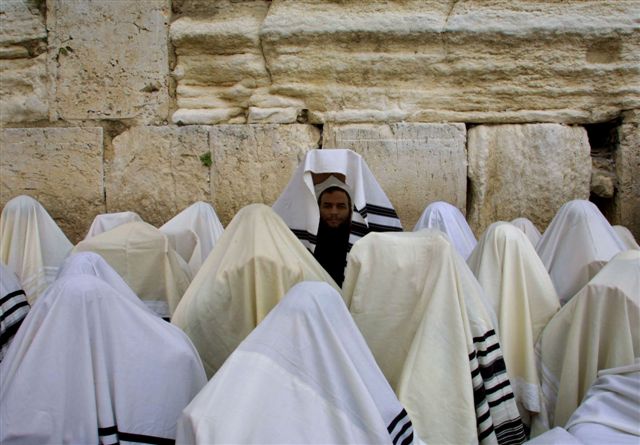
As the Kohanim are tasked with conveying the blessing of peace to the nation, a Kohen who was involved in causing a death – even accidentally – cannot participate in the Priestly Blessing. This rule is codified in the Code of Jewish Law (Orech Chaim 128:35): “A Kohein that killed a person, even accidentally, should not ‘lift up his hands’, even if he has subsequently repented.” In light of this ruling, an IDF soldier who was a Kohein once asked Rabbi Ovadia Yosef, the former Sephardic Chief Rabbi of Israel, the following question: Serving guard duty at an IDF post, he identified several Palestinian terrorists approaching to attack. He opened fire on the unit, killing several of them. He asked the rabbi whether his action would now prevent him from reciting the Priestly Blessing in the future. Rabbi Yosef answered unequivocally: He was certainly permitted to duchen. Rabbi Yosef wrote, “Had the soldier hesitated for even a moment from opening fire, who knows how many Jewish lives could have been lost…and heaven forbid that he should violate the verse, ‘Do not stand idly by the blood of your brother…’ You merited eliminating [the terrorists] before [they could attack], and you should be blessed from above for the salvation that you have brought to Israel…” (see Mesos Teivel vol. 4 p. 26) According to Rabbi Yosef, eliminating deadly threats is not an act of war; it is an act of peace that prevents unnecessary death and protects innocent lives.
Is it difficult to imagine how different the world would be today had Israel not bombed Saddam’s reactors and Iraq had achieved nuclear weapons capability. Would a strongman who gassed thousands of his own citizens have hesitated for a moment to nuke Israel, his declared enemy? Would the United States have even considered the possibility of toppling Saddam in 1991, after he casually conquered Kuwait and threatened the stability of the Middle East? With the hindsight of history, we now recognize that Israel’s attack, rather than threatening peace and stability, enhanced and increased regional and global stability in incalculable ways. During the debate in the Security Council, Yehuda Blum, Israel’s representative to the UN said that, “the raid against the Iraqi atomic reactor Osirak had been an act of self-preservation with which Israel had exercised its right of self-defense...In order to avert greater pain to the civilian population in Baghdad, the Israeli government had decided to strike the nuclear facility before it could become an immediate and great menace to Israel.”
Today, thirty-five years later, no one harbors the illusion that the United Nations will retract its condemnation and commend Israel for its forward-looking “act of peace”. But honest students of history readily recognize the wisdom of Israel’s leaders at the time, and the peace and stability that their decisions, which prevented a madman from gaining access to the most terrible weapons humanity has ever known, brought to the world.
Audio Shiur: Parshat Naso - Uncomfortable Situations
Parshat Naso - Uncomfortable Situations
We begin with the claim that some women make that having male judges in the room when a female convert dunks in the mikvah is inappropriate, because it makes her uncomfortable. Then we turn to Sotah, and study some of the details of the process, which all agreed, are far, far worse.
Click here to navigate to the shiur on YUTorah.org.
Click on the player below to play the Shiur or right click here to download)
Friday, May 29, 2015
Parshat Naso: Birkat Kohanim
What does Birkat Kohanim have to do with dreams?
Click here to navigate to the shiur on YUTorah.org.
Click on the player below to play the Shiur or right click here to download)
Wednesday, May 30, 2012
Audio Shiur: Parshat Naso - Sotah and the Sanctity of Marriage
Parshat Naso: Sotah and the Sanctity of Marriage
Click here to download the shiur, or here to navigate to the shiur on YUTorah.org.
Now you can subscribe to this shiur as a podcast, directly from iTunes! To subscribe, click here.
Friday, June 3, 2011
Parshat Naso: Don't Eat that Cake! Or Should I?
Click here to download the shiur, or here to navigate to the shiur on YUTorah.org.
Thursday, June 5, 2008
Table Talk for Naso 5768 - Mesirat Nefesh
But we that Rashi utilizes this term in our parshah in an entirely different context that might surprise us. Describing the consecration of the mishkan we find at the end of the parshah, the Torah begins the section by telling us, וַיְהִי בְּיוֹם כַּלּוֹת מֹשֶׁה לְהָקִים אֶת-הַמִּשְׁכָּן – “and it was on the day that Moshe completed the erection of the mishkan..” (7:1) Rashi and others immediately wonder: did Moshe alone build the mishkan? After all, Betzalel, Oholiav and numerous craftsmen, artisans and other workers invested their time, effort and energy to construct God’s home in the desert. Why then does the Torah specifically attribute the construction of the mishkan to Moshe?
Rashi explains: לפי שמסר נפשו עליו – because he “gave of his life” for the sake of the mishkan. In contemporary American term we would say that he was “moser nefesh.” In what way did Moshe sacrifice? Rashi elaborates: “to ensure the form of each and every item the way that God had shown him, to instruct the craftsmen, and he did not err in even one creation.” In essence, Rashi defines Moshe’s mesirat nefesh as an incredible attention to detail; an insistence on perfection in the construction of the mishkan and a tireless devotion to that cause.
At first glance, Rashi’s explanation does not corresponding to our normal definition of mesirat nefesh. Does attention to detail and meticulousness necessarily imply self-sacrifice? Or must we redefine mesirat nefesh in a new and different way?
Monday, May 21, 2007
Table Talk -- Naso 5767
Yet, God takes great strides to avoid that pitfall – to whatever degree possible – in the sphere of Jewish religious life. When commanding the Kohanim – the priests – to give His blessing to the Jewish people, God tells them, כֹּה תְבָרְכוּ אֶת-בְּנֵי יִשְׂרָאֵל – “So you shall bless the children of
Rabbi Yisrael of Modzitz explains that God instructs the Kohanim to bless the people as they are, without giving preference to one individual or group of people over another. If you think about it, that’s precisely the way our Kohanim bless the members of the community: they stand together, covering their eyes from the looking at the people, and bless the congregation as a whole. In this way, every Jew receives God’s blessing, and not only the wise, or righteous, or wealthy.
This reminds us that while we might not always realize it, at least in God’s eyes, all Jews really are created equal.