Audio Shiur:
Parshat Masei - Parshat Eretz Yisrael
The Land of Israel represents a primary theme that runs throughout the entire Parshah. This shiur, given during Tzuk Eitan - the ongoing war in Gaza, was dedicated to the safety of our soldiers. Not surprisingly, in the parshah, we found much material related to the current struggle for the Land of Israel.
Click here to navigate to the shiur on YUTorah.org.
Click to play the Shiur (or right-click to download)
Showing posts with label Masei. Show all posts
Tuesday, July 22, 2014
Parshat Masei - Parshat Eretz Yisrael
Wednesday, July 18, 2012
Audio Shiur: Parshat Matot-Masei - An Army of Chareidim
Audio Shiur:
Parshat Matot-Masei - An Army of Chareidim
The topic of Chareidim in (or out of) the Army has topped the headlines
in Israel, and might yet topple the government. Rashi, the Midrash, and
Ramban all make comments that are quite relevant to the discussion.
Click here to navigate to the shiur on YUTorah.org.
Click to play the Shiur (or right-click to download)

Now you can subscribe to this shiur as a podcast, directly from iTunes! To subscribe, click here.
Parshat Matot-Masei - An Army of Chareidim
Click here to navigate to the shiur on YUTorah.org.
Click to play the Shiur (or right-click to download)
Now you can subscribe to this shiur as a podcast, directly from iTunes! To subscribe, click here.
Thursday, July 28, 2011
Audio Shiur: Parshat Masei - Oh, the Places You Will Go
Audio Shiur:
Parshat Masei - Oh, the Places You Will Go
The laundry list of places appearing at the beginning of Masel begs one critical question: who cares? The answers to this question, from Rashi, the Midrash and others, lead us to a deeper understanding of the times in which we live.
Click here to download the shiur, or here to navigate to the shiur on YUTorah.org.

Now you can subscribe to this shiur as a podcast, directly from iTunes! To subscribe, click here.
Parshat Masei - Oh, the Places You Will Go
Click here to download the shiur, or here to navigate to the shiur on YUTorah.org.
Now you can subscribe to this shiur as a podcast, directly from iTunes! To subscribe, click here.
Monday, July 5, 2010
A List of Names: Thoughts on Parshat Masei
| Jewish Communities |
To download a pdf version of the d'var Torah, click here. Otherwise, continue reading.
When my children grow up, I imagine that one day we’ll look at the old photos and tell them about the places where we lived. “Well, we got married and lived in the Washington Heights. Then we moved to Linden, NJ, and then to West Hartford, CT. From there we moved to Oak Park, MI (We moved around a lot.). Then we made aliyah to Yad Binyamin.”
What will my children think about these different places? What could Linden, New Jersey or a small city in Connecticut mean to them? What about their children? To us the names of these cities bring back memories of small homes, early married life, friends and relationships from an earlier time in our lives. But to our children – and especially to their children (God willing!) the names of these places will probably mean nothing. They’re just names of places, no different than any other place to which they’ve never been and will probably never visit.
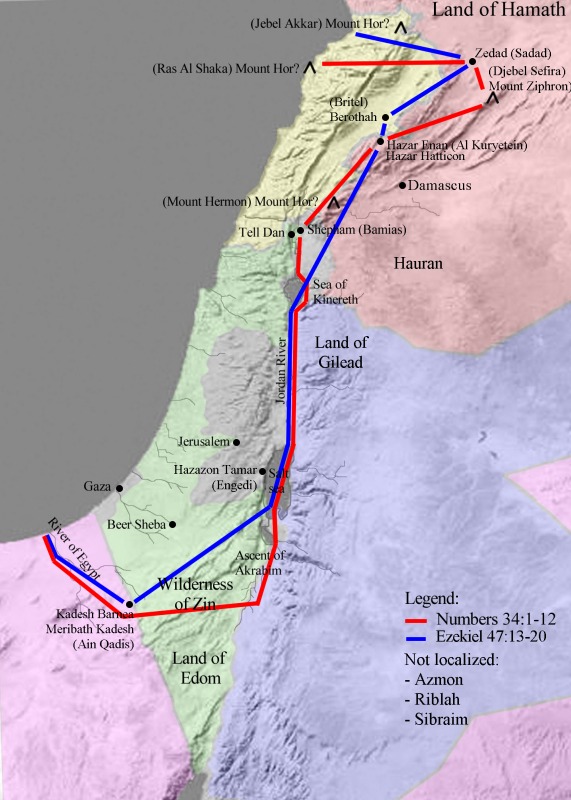
I think about these names of places when I read the first section of Parashat Masei. The first section of the parashah lists a number of places, most of which we’ve never heard of and could never locate on a map. Did you know that the Jewish people traveled from Livnah to Risah to Keheilatah to Har Shafer? It’s right there in the Chumash; (33:21-23) the list goes on and on, a litany of places that I neither remember nor care about.
Chazal too wondered about this long list of names. Rashi and Ramban suggest that the list is surprisingly short to teach us just how much God loved the Jewish people. He loved them so much that He only forced them to uproot the camp a relatively small number of times over a forty-year period. Ramban also quotes Rambam who suggests in Moreh Nevuchim that one day people might claim that the Jews never really traveled in the desert. (Can you imagine?) Therefore, the Torah meticulously chronicles their travels to affirm that the nation really did survive miraculously in the desert. Yet, even after quoting Rambam’s long explanation, Ramban adds,
In essence, says Ramban, we don’t know why Moshe wrote down the names of the places, other than the fact that God commanded him to do so. God wanted us to have this long list, and didn’t tell us why.והנה מכתב המסעות מצות ה' היא מן הטעמים הנזכרים או מזולטן, ענין לא נתגלה לנו סודו...Behold, the writing of these travels is a commandment of God, either due to the reasons mentioned or without them; this is a matter whose secret is not revealed to us…
Yet, while I don’t know precisely why God commanded Moshe to record the list, I can tell you how reading the list of these places makes me feel: I feel like I’m reading a list of Jewish communities destroyed by the Nazis in the Holocaust.
Have you ever tried to look at map of Jewish Poland, and just read through the names of the communities? Just Google “shtetels in Poland”. I recognized perhaps five – of more than fifty! The names are foreign, strange. Have you ever heard of Kanczuga, Kiernozia, Kleczew, Konin, Korczyna, Krasnosielc, or Kurzelow? And those are just the K’s that have websites. Have you ever visited the Valley of Communities at Yad Vashem? It’s a haunting canyon that simply lists the names of destroyed Jewish communities during the Holocaust. If I would ask you how many communities are on the list, how many would you guess? 500? 1,000? Would you believe that over 5,000 names of communities are engraved on the walls of the Valley of Communities?
They don’t even feel real to me. And despite this feeling I know that each name not represents not just a place, but tens or hundreds or thousands of Jews who built families, communities, shuls and schools. And now they’re gone. How many thriving Jewish communities from Northern Africa are now just names on a list? What about the former Soviet Union? Ukraine? The Middle East? The list goes on and on.
This is the mournful message of Massei. The travels of the Jewish people outside the land of Israel are fleeting, temporary, and anonymous. We might stop at one location for a shorter time, and another for longer – perhaps much longer. But in the end, each place will be forgotten, just a memory of its former self, a name on a list, but nothing more.
Can it be a coincidence that we always read Massei during the Three Weeks, the period of time when we recall the destruction of Jewish communities from around the world? We know that as they traveled through the desert, the Midrash teaches us that each Tisha B’av, every Jew who reached the age of sixty that year died. How many Jewish graveyards were lost in the sands of the Sinai desert? Maybe this list is both a lament and a foreshadowing; a kinah of God for the lost time and the destroyed Jewish community which perished in the desert - a lamentation for the tens of thousands of Jews who died needlessly in the desert, and the tens of millions who would perish after them in the desert of the exile.
And what about America? To me names like Baltimore and Akron and St. Louis and Lawrence and Oceanside and Brooklyn seem natural. I’ve been to those places. I know people who live there. But do we have any illusion that they will always be known as Jewish places? (Is that something we even want?) How long will it be before those cities also become anonymous names on a meaningless list, foreign and alien and hard to imagine?
I’m sorry to be so depressing. Tisha B’av is coming.
Wednesday, July 11, 2007
Table Talk - Matos Masei 5767
What’s in a number? Well, if the number is one, or seven, or even ten, each number has specific significance. One=God; Seven=Days of the week, weeks in the Omer, days of Sukkot and Pesach, ten=commandments. But what if the number is something much larger…say 24,000? While it seems strange, that number appears in Judaism too often to be coincidental.
When God commands the Jewish people to attack the nation of Midyan and avenge the desecration that Midyan caused (by instructing their daughters to seduce the men and entice them into idolatry), God commands Moshe to send a specific number of troops: אֶלֶף, לַמַּטֶּה, אֶלֶף, לַמַּטֶּה--לְכֹל מַטּוֹת יִשְׂרָאֵל – “One thousand per tribe, one thousand per tribe, for all the tribes of Israel.” While some explain that Moshe only sent 12,000 men, the Midrash, noting the repetitive nature of the verse, explains that God commands Moshe to send two thousand troops from each tribe, for a total of 24,000. Intuitively, this seems to make sense, as it’s the exact same number of Jews who died in the plague that followed the sinful behavior precipitated by the Midyanite women. (see 25:9)
But if God really wants two thousand per tribe, why not just say אלפים למטה – “two thousand per tribe,” instead of saying “one thousand” twice?
Perhaps God’s command has to do with the nature of the number 1,000. The Hebrew word for 1,000 is אֶלֶף – (pronounced eleph), which we spell identically to the letter א', written in Hebrew as אָלֶף – (pronounced aleph). אָלֶף – the first letter of the alphabet, is also equivalent to the number 1, and carries mystical references to the unity of God. Perhaps then, אֶלֶף – the number 1,000, refers to the smallest unit of numbers that make up a large community, in this case a tribe.
Interestingly, this number appears in another famous example in Jewish history as well. As we know, during the Omer we mourn the deaths of Rabbi Akiva’s students who died between Pesach and Shavuos. How many died? The Gemara tells us that it wasn’t simply 24,000. Rather, in the langue of the Gemara, 12,000 pairs of students perished – or, put another way, the tribes of Israel multiplies times two.
Subscribe to:
Posts (Atom)