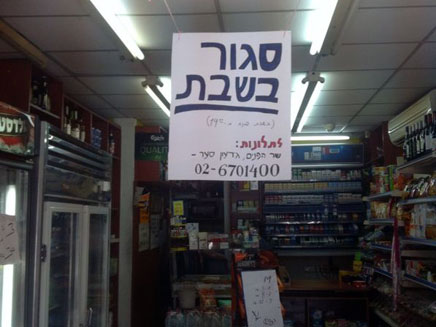
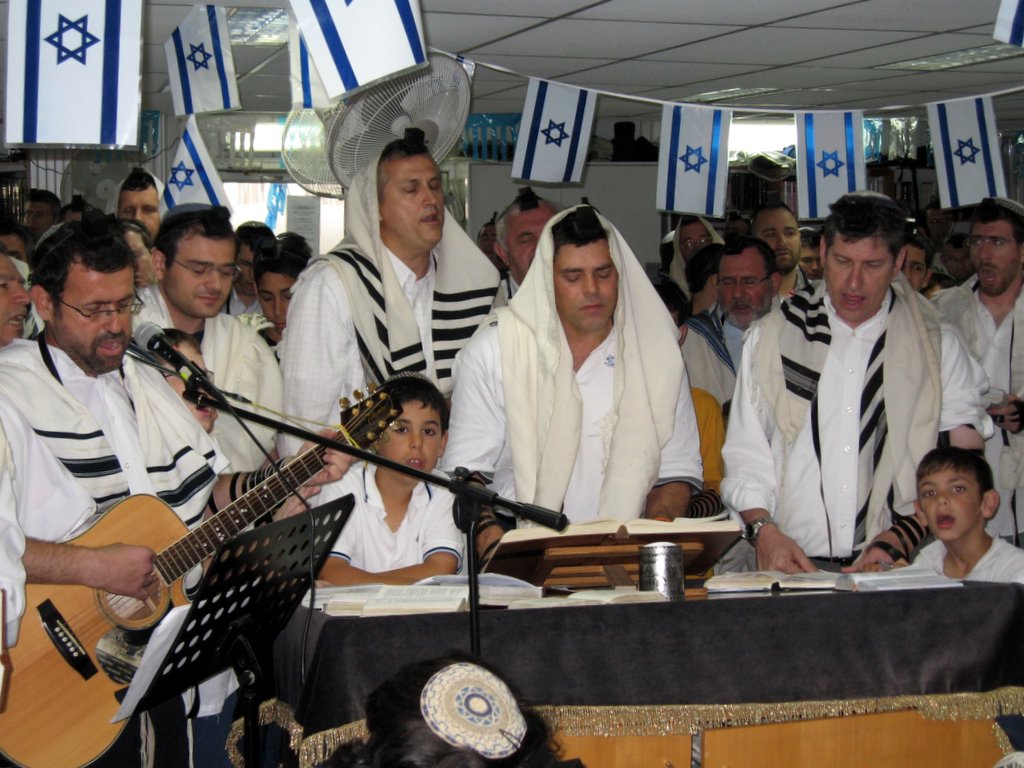
Zeev Kam - my favorite political reporter, just shared this post about a critical meeting that took place this week regarding the issue of stores remaining open for business in Tel Aviv. This issue has been percolating for a number of years, as smaller businesses complain that when larger chains remain open on Shabbat (as they do, and simply pay the fines for breaking the law), the smaller, privately owned stores feel that they too must remain open in order to compete. Some really do want to close because of Shabbat, while others want a day off, as the (secular) law mandates. They've been pushing the government to enforce the law and drastically reduce the number of stores which can remain open on Shabbat in Tel Aviv.
Generally, the Minister of the Interior decides whether to issue exemptions for stores that wish to remain open on Shabbat. Yet, Silvan Shalom, the previous Interior Minister punted, and sent the decision back to the Knesset as a whole (smart move). Netanyahu did what he usually does when confronting a difficult and challenging issue, especially surrounding the contentious issue of religion and state: he formed a committee, which met this week to issue its report.
As Kam describes the meeting, the Chareidi parties pushed hard for the option which would strongly enforce Shabbat. They feel that the State should make a strong statement in favor of Shabbat, even though everyone knows that many residents of Tel Aviv are not Shabbat observant. Media outlets reported that Netanyahu will turn over responsibility for this issue to the current Minister of the Interior: Arye Deri. (Any guess on what he'll decide to do?)
Yet, it's not really that simple. While Deri of course wants to increase Shemirat Shabbat, there are political realities that must also be addressed. At the meeting (which the Prime Minister attended), Minister of Tourism Yariv Levin (Likud) turned to the Chareidim and warned them that the solution must not be perceived as one community (the Chareidim) forcing its standards on the secular public. "Otherwise, Yair Lapid will have 30 seats in the next Knesset." Does Deri care enough about Shabbat to alienate enough secular Israelis to bring Lapid back to power? I wonder.
I would add that the Chareidim themselves bristled at the notion that anyone (i.e. Lapid's party) would enforce its values on the Chareidim, and for this reason insisted on the reversal of the law mandating that all Chareidi schools teach basic secular subjects like math and English. They were right. Change occurs not when one community forces itself on another, but when it comes from within.
This issue began with the secular owners of the stores in Tel Aviv; with professional soccer players who wanted to keep Shabbat without having to work. They must take the lead on this issue and promote the notion that as a Jewish State, Shabbat must be a common value both for those people that observe Shabbat, and also for those that do not.
Showing posts with label Shabbat. Show all posts
Friday, August 5, 2016
Friday, August 9, 2013
Half Shabbos/Shabbat Comes to the Holy Land. Is it Zomet's Fault?
![]() |
| The cover story on texting on Shabbat |
The piece clearly generated a significant backlash (suggesting that rather than reporting on a phenomenon, Motzash actually helped to create one), because in the next issue the magazine editor defended himself from that charge, and it devoted two pages to responses from Rabbi Yona Goodman, Director of Chinuch Emuni (faith-related education) of the Orot College of Education (where I happen to work) and one from Rav Yisrael Rosen, the director of the Zomet Institute for Halachah and Technology. You can read the articles here.
![]() |
| The Responses of Rabbis Goodman and Rosen |
Yet, the conclusion to Rav Rosen's article fascinated me. After noting happily that the article outlines people who text on Shabbat aren't calling to change halachah, but instead don't think that their behavior is that terrible halachically (on the grand scale of things), he offers a fascinating confession:
In truth, as the head of Machon Zomet, which develops "gimmicks" to circumvent the prohibitions of Shabbat, mainly in the areas of electricity and electronics in the areas of medicine, security and similar fields, I ask myself many times if we are not legitimizing disrespect for the laws of Shabbat, specifically with regard to technology. Do we not bear some of the responsibility for the drift towards the slippery slope of tradition of "rounding of corners" in the words of the interviewees in the article?It's a great question. Why specifically are we seeing this trend of corner-cutting specifically in the area of technology? Why aren't people cutting corners in the laws of Borer, or carrying outside an eiruv, or any other area of the Laws of Shabbat? Might people think to themselves, even subconsciously, "Well, if a doctor can make a call on his cellphone; if he can type on his nifty computer - then it can't really be that big of a deal, can it?" Sadly, Rav Rosen clears himself of all responsibility.
My answer is that exact opposite is true. The gimmicks of Machon Zomet, limited specifically to cases of great need, testify like a hundred witnesses to the vitality of halachah, which includes allowances to account for necessary circumstances, even if there is no danger of loss of life. The solutions of Zomet do not negate the Halachah. Rather, they highlight the imminent possibilities hidden within it, which say: Up to this point is forbidden, but from this point forward is permitted. Openings such as these are the foundations of the unfrozen Jewish Halachah, a guiding light for legitimate Poskim. However, these boundaries are not given into the hands of each and every individual, but instead [only] to those rabbis and their students spread and involved across the chain of the halachic generations. For the development of Halachah is one of the foundations of our faith.Read what he wrote again, because it's certainly a mouthful. First and foremost, Rav Rosen's Hebrew is rich and difficult. And I also agree with his underlying conclusion: Halachah isn't static; it does adjust to the needs and developments of time. It's easy to say no, and much, much more difficult to find creative halachic solutions to challenging problems.
Moreover, the new reality of a Jewish country presents challenges that simply must be addressed: What is the meaning of Shabbat in an Israeli hospital? Or army? Or police? The country cannot and will not shut down. Even if you could, would you want to rely on non-Jews to run the country every seventh day? Was that really the ideal given to us at Sinai? (ושמרו בני ישראל את השבת - The nation of Israel shall guard the Shabbat [and have all the goyim do the stuff they can't?]") I don't believe this to be the case.
I firmly believe in the great work of Zomet, and the fascinating approach that they've taken to addressing difficult challenges of fealty to Shabbat in an increasingly technological world. But at the same time, Rav Rosen, "Thou doth protest too much!" ("Testify like a hundred witnesses"? Really?) Can we really say that the leniencies of Zomet have not, to some degree, contributed to this phenomenon of casualness towards observance of halachah in the area of technology? Issuing lenient opinions related to Shabbat and technology is exactly what Zomet does, day in and day out. So it can't just wash its hands when we see negative effects of that work, as important as it is.
What then is Zomet to do?
I believe that Zomet must begin to take the other side of the coin, and speak not only about things that are permitted, but things that are forbidden. It should embark upon a campaign for Shemirat Shabbat - perhaps on an elevated, more stringent level - precisely because so much of our community must invoke the kulot in their lives either as doctors, or soldiers or as members of local security details across the country. After all, it's impossible to measure the effect of permitted use on a person's attitude towards Shabbat. After you've used the computer (with the kosher mouse and keyboard) to manage your yishuv's security cameras, how greatly does that affect your attitude towards the normal, non-Shabbat computer? Is there any way to really answer that question?
Of course half-Shabbat is not Zomet's fault. But it also bears a responsibility to counter the negative affects of its work, so that it ensures that as it finds important workarounds to challenging questions, it isn't undermining the very value of Shemirat Shabbat it works so hard to uphold.
Labels:
Halachah,
Life in Israel,
Shabbat,
Shabbat and Technology
Thursday, May 31, 2012
Upping the Ante: A New Shabbat Speaker System
For previous posts discussing technology and Shabbat see here and here.
One of the more enjoyable aspects of being a community rabbi was the opportunity to speak from the pulpit every Shabbat. I worked very hard at it, writing my speeches beforehand, giving a good deal of thought not only to what I would say, but how I'd say it. Yet, one aspect of the Shabbat Drashah presented a challenge that was never easy to overcome. Instead of speaking from the pulpit, I had to scream. Otherwise, no one would have been able to hear me.
The main sanctuary in our shul is indeed beautiful. But it was also quite deep (and narrow), with the women seated behind the men. In order for any of the women to hear me at all, I learned to speak slower, but also how to project at a rather high volume. Essentially, I had to yell without yelling. And, as any public speaker will tell you, that takes away any possibility of nuance in tone. It's all one tone: loud.
It would have been much easier to speak using a microphone. Only there wasn't one that was widely accepted for Shabbat use. At least there wasn't until now.
Machon Zomet recently introduced a new Shabbat microphone system brandishing its stamp of approval. In truth, from a halachic point of view, this is really nothing new. People (including my son) have been using hearing aids for years, and hearing aids are essentially identical to the system in question. Moreover, the issue of sound systems on Shabbat has enjoyed comprehensive halachic analysis from many different circles, and while many modern poskim permit its use, you simply don't see them in normative Orthodox shuls. Why not? Because they don't feel right.
For some reason, the Orthodox community simply rejected the use of these microphone systems, labeling shuls that installed them as "progressive" or "liberal", which are code for "almost Conservative." In essence, the use (or lack of use) of these types of systems isn't halachic, but cultural. We don't use them because...we don't use them.
Yet, Zomet has, over the past thirty years, achieved a level of authority - especially in Israel, where you can find its stamp on many products that you buy every day, from water heaters to gas stoves - and even in the United States as well. I'm not sure how many shuls in America will order this system today. But you will begin to see them in Israel. In fact, Ynet (in Hebrew) just reported on a Shavuot evening program that used the microphone (and they probably gave a shuir about why they were using it). As more and more communities install these systems over time, the pressure to install them will grow, as people will rightly wonder why those hard of hearing, or the people in the back of the shul, or women (stuck in the balcony) shouldn't be able to hear the Chazzan or the Rabbi. After all, there are real tangible benefits to loudspeakers. Even in shul.
And, as so often happens, when Americans return to their shuls from a visit to Israel, they will begin to report on how wonderful davening was at the very reputable shuls in Israel at which they davened. And they'll start pressuring their rabbis to allow them to install the system in their shul as well.
Will the system become widely accepted in most Orthodox circles? Who knows? Moreover, as they become more widely adopted (which I think they will over time), I fear that they will also serve to further divide our community, between people who will daven in shuls with a microphone, and between those who don't. (Would a chareidi family daven at a family simcha in a shul which had a mike? Conversely, would the shul agree not to use the mike should a family make a request? I can see the fights already...)
Just to be clear, I am not personally comfortable with such a system. It just doesn't feel right. I really don't like the computer screen in the back of our shul that displays davening times. It just doesn't belong in the sanctuary.
My point is, something that doesn't feel right to me might not bother my children - or their children - at all. So while we might reject the use of this microphone today, there's no way to know if it won't be a part of some, or most Orthodox shuls in the future.
The main sanctuary in our shul is indeed beautiful. But it was also quite deep (and narrow), with the women seated behind the men. In order for any of the women to hear me at all, I learned to speak slower, but also how to project at a rather high volume. Essentially, I had to yell without yelling. And, as any public speaker will tell you, that takes away any possibility of nuance in tone. It's all one tone: loud.
It would have been much easier to speak using a microphone. Only there wasn't one that was widely accepted for Shabbat use. At least there wasn't until now.
Machon Zomet recently introduced a new Shabbat microphone system brandishing its stamp of approval. In truth, from a halachic point of view, this is really nothing new. People (including my son) have been using hearing aids for years, and hearing aids are essentially identical to the system in question. Moreover, the issue of sound systems on Shabbat has enjoyed comprehensive halachic analysis from many different circles, and while many modern poskim permit its use, you simply don't see them in normative Orthodox shuls. Why not? Because they don't feel right.
For some reason, the Orthodox community simply rejected the use of these microphone systems, labeling shuls that installed them as "progressive" or "liberal", which are code for "almost Conservative." In essence, the use (or lack of use) of these types of systems isn't halachic, but cultural. We don't use them because...we don't use them.
Yet, Zomet has, over the past thirty years, achieved a level of authority - especially in Israel, where you can find its stamp on many products that you buy every day, from water heaters to gas stoves - and even in the United States as well. I'm not sure how many shuls in America will order this system today. But you will begin to see them in Israel. In fact, Ynet (in Hebrew) just reported on a Shavuot evening program that used the microphone (and they probably gave a shuir about why they were using it). As more and more communities install these systems over time, the pressure to install them will grow, as people will rightly wonder why those hard of hearing, or the people in the back of the shul, or women (stuck in the balcony) shouldn't be able to hear the Chazzan or the Rabbi. After all, there are real tangible benefits to loudspeakers. Even in shul.
And, as so often happens, when Americans return to their shuls from a visit to Israel, they will begin to report on how wonderful davening was at the very reputable shuls in Israel at which they davened. And they'll start pressuring their rabbis to allow them to install the system in their shul as well.
Will the system become widely accepted in most Orthodox circles? Who knows? Moreover, as they become more widely adopted (which I think they will over time), I fear that they will also serve to further divide our community, between people who will daven in shuls with a microphone, and between those who don't. (Would a chareidi family daven at a family simcha in a shul which had a mike? Conversely, would the shul agree not to use the mike should a family make a request? I can see the fights already...)
Just to be clear, I am not personally comfortable with such a system. It just doesn't feel right. I really don't like the computer screen in the back of our shul that displays davening times. It just doesn't belong in the sanctuary.
My point is, something that doesn't feel right to me might not bother my children - or their children - at all. So while we might reject the use of this microphone today, there's no way to know if it won't be a part of some, or most Orthodox shuls in the future.
Tuesday, May 29, 2012
I Haven't Posted in a While Because...
Well, things have been somewhat busy. Sure, there have been holidays, work, and all the usual stuff. But in a addition to all of that...we bought a house in Israel!
It's really exciting, but also very very detail oriented and time consuming. We haven't actually completed the mortgage process yet. You buy the house before you get your mortgage. (no, I don't really know why), and then we have do a "little bit" of work, as well as install a kitchen (the person who built the house did so as an investment, and gave us the choice of having him install the kitchen or doing it ourselves. We chose to do it ourselves.)
Where's the house?
In Yad Binyamin, about a five minute walk from our current house. (For those who are planning a visit or have been here, it's on the other side of the shul. So, what was a three minute walk will now be a two minute walk.)
When are you moving?
Good question. We're looking to move in the middle of July. Did I mention that there are a zillion things that need to get done? I did?
More to come...
It's really exciting, but also very very detail oriented and time consuming. We haven't actually completed the mortgage process yet. You buy the house before you get your mortgage. (no, I don't really know why), and then we have do a "little bit" of work, as well as install a kitchen (the person who built the house did so as an investment, and gave us the choice of having him install the kitchen or doing it ourselves. We chose to do it ourselves.)
Where's the house?
In Yad Binyamin, about a five minute walk from our current house. (For those who are planning a visit or have been here, it's on the other side of the shul. So, what was a three minute walk will now be a two minute walk.)
When are you moving?
Good question. We're looking to move in the middle of July. Did I mention that there are a zillion things that need to get done? I did?
More to come...
Monday, May 7, 2012
Internet Filters: Why We Need Them, Even if They Don't Work
Gil Student just published an important piece on the various forms of internet filters available. I highly recommend it, and especially the advice for parents with children on the web that he shares at the end of the post (which I haven't fully implemented yet - but will). In Israel, the server-side filters are far more developed than they are in the United States (we use Internet Rimon, but there are other options available as well), and are even cheaper than many of the regular internet providers.
And yet, despite all of our efforts, we know that internet filters don't really work. For every effort that we make to make the internet safer in our homes, we know, deep down, that our children are often way, way ahead of us.
I was recently invited to speak to a group of seventh-grade boys, and I spoke with them about the challenge of making good choices. When I casually alluded to the choices that they make when they're sitting at the computer and noted that we have Internet Rimon in our home, their teacher chimed in.
"You know," he told me, "there's a program that you can download to get around Rimon's limits - and all of the kids know about the program?" I didn't know. "Even worse," he said, "is that you can download the program from the web, and Rimon doesn't block the site from which you can download the program!"
I can't say that I was that surprised. After all, children throughout time have exerted immeasurable efforts to circumvent the limits that their parents place upon them.
And yet, despite the fact that these filters are limited; despite the fact that they have holes - they're critical tools that every religious person needs to install in his or her home. Moreover, they're not just for our children. These filters are important - perhaps even most important - for ourselves.
Let us not mince words. The Internet doesn't only present a danger to our children. We fall prey to those very same dangers ourselves. We seek not only to protect the members of our families from their lapses; rather we must also protect them from our failures as well.
How then are we supposed to protect ourselves from ourselves? After all, if I'm the one that set up the web filter; if I have the passwords, and can circumvent the censor, of what value is the filter?
I believe that they offer great value, especially when we examine an important aspect of how the yetzer hara functions, and one of the principal ways that he (the side of us which draws us toward sinful activity) operates.
Essentially, our yetzer hara doesn't want us to think. He wants us to do anything but think. He wants us to yearn, to desire, to act impulsively. He realizes, perhaps better than we do, that when we pause to examine our actions, chances are that we'll make the right choice. When we stop to weigh whether we really want to sin, and consider not just the benefits, but also the consequences, there's a strong possibility that we won't sin after all. It's just not worth it.
Our yetzer hara knows all of this. So his best bet is to avoid the thought process entirely. So he tells us to, "Just Do It." Now. Don't Delay. Don't think. And that, to our great dismay, is precisely what we do.
The best illustration of this tactic that I've ever read can be found in the first letter of C.S. Lewis' "The Screwtape Letters." (While Lewis himself was speaking about Christianity - in fact, the entire book is a series of "letters" from a head tempter to one of his junior associates - the work is perhaps the most effective mussar work I have encountered, and I try to reread it before Rosh Hashanah each year.) In the first letter he writes,
The greatest danger of the Internet isn't simply the content. Rather, it's the fact that the most dangerous, insidious, pernicious content is instantly accessible. Back when I was a kid (yes, I know, ages ago, when they still distributed movies on tapes), if you wanted to watch something remotely inappropriate, you had to have gumption to actually rent it from the video store. There was some sense of shame. But not today. With the web, you're there in literally an instant, without thinking. And, before you know it, you've enmeshed yourself in a website from which it's difficult to disengage.
This, to my mind, is one of the primary motivations for internet filters.
No, they're not perfect, and clever people can get around them, perhaps easily. But filters make us pause, if only for a moment. And a critical moment it is. If I've got to get around the filter that I myself put into place, I must take at least one additional step in order to access a site that the software thinks I should not.
That instant is crucial, because it's the moment that I must stop and ask myself, "Do I really want to access that site?"
More often than not, the answer is no. So I click elsewhere.
And yet, despite all of our efforts, we know that internet filters don't really work. For every effort that we make to make the internet safer in our homes, we know, deep down, that our children are often way, way ahead of us.
I was recently invited to speak to a group of seventh-grade boys, and I spoke with them about the challenge of making good choices. When I casually alluded to the choices that they make when they're sitting at the computer and noted that we have Internet Rimon in our home, their teacher chimed in.
"You know," he told me, "there's a program that you can download to get around Rimon's limits - and all of the kids know about the program?" I didn't know. "Even worse," he said, "is that you can download the program from the web, and Rimon doesn't block the site from which you can download the program!"
I can't say that I was that surprised. After all, children throughout time have exerted immeasurable efforts to circumvent the limits that their parents place upon them.
And yet, despite the fact that these filters are limited; despite the fact that they have holes - they're critical tools that every religious person needs to install in his or her home. Moreover, they're not just for our children. These filters are important - perhaps even most important - for ourselves.
Let us not mince words. The Internet doesn't only present a danger to our children. We fall prey to those very same dangers ourselves. We seek not only to protect the members of our families from their lapses; rather we must also protect them from our failures as well.
How then are we supposed to protect ourselves from ourselves? After all, if I'm the one that set up the web filter; if I have the passwords, and can circumvent the censor, of what value is the filter?
I believe that they offer great value, especially when we examine an important aspect of how the yetzer hara functions, and one of the principal ways that he (the side of us which draws us toward sinful activity) operates.
Essentially, our yetzer hara doesn't want us to think. He wants us to do anything but think. He wants us to yearn, to desire, to act impulsively. He realizes, perhaps better than we do, that when we pause to examine our actions, chances are that we'll make the right choice. When we stop to weigh whether we really want to sin, and consider not just the benefits, but also the consequences, there's a strong possibility that we won't sin after all. It's just not worth it.
Our yetzer hara knows all of this. So his best bet is to avoid the thought process entirely. So he tells us to, "Just Do It." Now. Don't Delay. Don't think. And that, to our great dismay, is precisely what we do.
The best illustration of this tactic that I've ever read can be found in the first letter of C.S. Lewis' "The Screwtape Letters." (While Lewis himself was speaking about Christianity - in fact, the entire book is a series of "letters" from a head tempter to one of his junior associates - the work is perhaps the most effective mussar work I have encountered, and I try to reread it before Rosh Hashanah each year.) In the first letter he writes,
My Dear Wormwood,If what Lewis wrote held true in England of the 1930s, how much more true are his sentiments today! We live in an era of constant distraction, when we can't get anything done without being interrupted by texts, instant messages, emails, status updates, tweets, calls - the list is unending. It seems that if we're not doing three things at once, we're not really doing anything. And, with smartphones, we're distracted even while interacting with other people. Even when I'm giving a shiur, people constantly check their phones, text, send email. (As a teacher, that's really distracting.) It seems that what happens on Facebook today is, in fact, more real than the actual lives that we're leading. That's just how the yetzer hara likes things. Don't think. Click. What's next. Click on that link.
I note what you say about guiding your patient's reading and taking care that he sees a good deal of his materialist friend. But are you not being a trifle naif? It sounds as if you supposed that argument was the way to keep him out of the Enemy's clutches. That might have been so if he had lived a few centuries earlier. At that time the humans still knew pretty well when a thing was proved and when it was not; and if it was proved they really believed it. They still connected thinking with doing and were prepared to alter their way of life as the result of a chain of reasoning. But what with the weekly press and other such weapons, we have largely altered that. Your man has been accustomed, ever since he was a boy, to having a dozen incompatible philosophies dancing about together inside his head. He doesn't think of doctrines as primarily "true" or "false," but as "academic" or "practical," "outworn" or "contemporary," "conventional" or "ruthless." Jargon, not argument, is your best ally in keeping him from the Church. Don't waste time trying to make him think that materialism is true! Make him think it is strong or stark or courageous—that it is the philosophy of the future. That's the sort of thing he cares about.
The trouble about argument is that it moves the whole struggle onto the Enemy's own ground. He can argue too; whereas in really practical propaganda of the kind I am suggesting He has been shown for centuries to be greatly the inferior of Our Father Below. By the very act of arguing you awake the patient's reason; and once it is awake, who can foresee the result! Even if a particular train of thought can be twisted so as to end in our favour, you will find that you have been strengthening in your patient the fatal habit of attending to universal issues and withdrawing his attention from the stream of immediate sense experiences. Your business is to fix his attention on the stream. Teach him to call it "real life" and don't let him ask what he means by "real."
Remember, he is not, like you, a pure spirit. Never having been a human (oh, that abominable advantage of the Enemy's!) you don't realise how enslaved they are to the pressure of the ordinary. I once had a patient, a sound atheist, who used to read in the British Museum. One day, as he sat reading, I saw a train of thought in his mind beginning to go the wrong way. The Enemy, of course, was at his elbow in a moment. Before I knew where I was I saw my twenty years' work beginning to totter. If I had lost my head and begun to attempt a defence by argument, I should have been undone. But I was not such a fool. I struck instantly at the part of the man which I had best under my control, and suggested that it was just about time he had some lunch. The Enemy presumably made the counter-suggestion (you know how one can never quite overhear what He says to them?) that this was more important than lunch. At least I think that must have been His line, for when I said, "Quite. In fact much too important to tackle at the end of a morning," the patient brightened up considerably; and by the time I had added "Much better come back after lunch and go into it with a fresh mind," he was already halfway to the door. Once he was in the street the battle was won. I showed him a newsboy shouting the midday paper, and a No. 73 bus going past, and before he reached the bottom of the steps I had got into him an unalterable conviction that, whatever odd ideas might come into a man's head when he was shut up alone with his books, a healthy dose of "real life" (by which he meant the bus and the newsboy) was enough to show him that all "that sort of thing" just couldn't be true. He knew he'd had a narrow escape, and in later years was fond of talking about "that inarticulate sense for actuality which is our ultimate safe guard against the aberrations of mere logic." He is now safe in Our Father's house.
You begin to see the point? Thanks to processes which we set at work in them centuries ago, they find it all but impossible to believe in the unfamiliar while the familiar is before their eyes. Keep pressing home on him the ordinariness of things. Above all, do not attempt to use science (I mean, the real sciences) as a defence against Christianity. They will positively encourage him to think about realities he can't touch and see. There have been sad cases among the modern physicists. If he must dabble in science, keep him on economics and sociology; don't let him get away from that invaluable "real life." But the best of all is to let him read no science but to give him a grand general idea that he knows it all and that everything he happens to have picked up in casual talk and reading is "the results of modern investigation." Do remember you are there to fuddle him. From the way some of you young fiends talk, anyone would suppose it was our job to teach!
Your affectionate uncle,
SCREWTAPE
The greatest danger of the Internet isn't simply the content. Rather, it's the fact that the most dangerous, insidious, pernicious content is instantly accessible. Back when I was a kid (yes, I know, ages ago, when they still distributed movies on tapes), if you wanted to watch something remotely inappropriate, you had to have gumption to actually rent it from the video store. There was some sense of shame. But not today. With the web, you're there in literally an instant, without thinking. And, before you know it, you've enmeshed yourself in a website from which it's difficult to disengage.
This, to my mind, is one of the primary motivations for internet filters.
No, they're not perfect, and clever people can get around them, perhaps easily. But filters make us pause, if only for a moment. And a critical moment it is. If I've got to get around the filter that I myself put into place, I must take at least one additional step in order to access a site that the software thinks I should not.
That instant is crucial, because it's the moment that I must stop and ask myself, "Do I really want to access that site?"
More often than not, the answer is no. So I click elsewhere.
Tuesday, May 1, 2012
What is Jewish Culture? Does it Even Exist? A Thought for Achrei Mot
On Shabbat, when we sing the
zemirot around the table, I often wonder about the tunes to which we sing the beautiful words of the songs. To what degree are those tunes simply a
reflection of the myriad of cultures from which the Jewish people have
emerged?
Take Dror Yikra, for example. On the one hand, its a Sephardic ballad, drawing heavily on the mournful Arabic notes we all recognize. The next week, it's a gruff German tune, short, curt and severe. Then, the following week, it's a Beach Boys tune (who doesn't love Dror Yikra to Sloop John B? Check out this version - nicely done, but it really highlights the Beach Boy's theme.) You can even sing it to Scarborough Fair. Some claim that Paul Simon actually stole the tune from his grandfather, and that it was originally Dror Yikra. Actually, I think that you can sing it pretty much anything. While the words are undoubtedly Jewish, to what degree does the tune influence the song? Is Dror Yikra to the Beach Boys "Jewish"? Is that the way we're supposed to sing these songs? And if not, what tunes do we actually have that are in fact authentically Jewish? What "Jewish" culture exists that isn't borrowed from the surrounding culture in which we lived?
The section of the Torah that outlines the numerous forbidden sexual relationships is called the Arayot. One would think that it needs no introduction. And yet, the Torah introduces this section in a rather unusual manner.
While the notion of - חקות הגויים - "the laws (or practices) of the nations" - is a broad and fascinating subject that requires deeper analysis, I'd like to focus on Rashi's powerful comments. What do they do that we may not? Rashi writes,
Rashi's comments raise a myriad of challenges for the modern Jew (and I imagine Jews in all times). Does he really mean that I can't attend a Tigers game (I'm not sure) or the latest Avengers flick? (pretty much sure that he meant that) To what degree have we become so embedded in the culture surrounding us that it is now our culture as well? More pointedly, if Judaism disdained foreign, non-Jewish culture, what is Jewish culture?
I thought of this question in light of a short news item about a future Ten Volume Look at Jewish Culture that recently appeared in the NY Times, which reported that,
So is singing Dror Yikra Jewish if I sing it to the Beach Boys? Is that not what Rashi meant when he wrote that we must not follow "their customs"? And if he did mean that, how should I sing Dror Yikra - or any other song? What is a Jewish melody? What is Jewish culture?
Take Dror Yikra, for example. On the one hand, its a Sephardic ballad, drawing heavily on the mournful Arabic notes we all recognize. The next week, it's a gruff German tune, short, curt and severe. Then, the following week, it's a Beach Boys tune (who doesn't love Dror Yikra to Sloop John B? Check out this version - nicely done, but it really highlights the Beach Boy's theme.) You can even sing it to Scarborough Fair. Some claim that Paul Simon actually stole the tune from his grandfather, and that it was originally Dror Yikra. Actually, I think that you can sing it pretty much anything. While the words are undoubtedly Jewish, to what degree does the tune influence the song? Is Dror Yikra to the Beach Boys "Jewish"? Is that the way we're supposed to sing these songs? And if not, what tunes do we actually have that are in fact authentically Jewish? What "Jewish" culture exists that isn't borrowed from the surrounding culture in which we lived?
The section of the Torah that outlines the numerous forbidden sexual relationships is called the Arayot. One would think that it needs no introduction. And yet, the Torah introduces this section in a rather unusual manner.
The entire short section requires analysis and explanation. Rarely, if ever in the Torah, do we find allusions to other cultures and civilizations. What behavior of the Canaanites and Egyptians does Judaism find so abhorrent that it must be mentioned specifically? What is the meaning of the final phrase, וחי בהם - "he shall live by them", and what is its relevance to the rest of the section? What is the meaning of the commandment, "you shall not walk in their statutes"? What do they do that we may not?וַיְדַבֵּר ה’, אֶל-מֹשֶׁה לֵּאמֹר.. דַּבֵּר אֶל-בְּנֵי יִשְׂרָאֵל, וְאָמַרְתָּ אֲלֵהֶם: אֲנִי, ה’ אֱלֹקיכֶם. כְּמַעֲשֵׂה אֶרֶץ-מִצְרַיִם אֲשֶׁר יְשַׁבְתֶּם-בָּהּ, לֹא תַעֲשׂוּ; וּכְמַעֲשֵׂה אֶרֶץ-כְּנַעַן אֲשֶׁר אֲנִי מֵבִיא אֶתְכֶם שָׁמָּה, לֹא תַעֲשׂוּ, וּבְחֻקֹּתֵיהֶם, לֹא תֵלֵכוּ. אֶת-מִשְׁפָּטַי תַּעֲשׂוּ וְאֶת-חֻקֹּתַי תִּשְׁמְרוּ, לָלֶכֶת בָּהֶם: אֲנִי, ה’ אֱלֹקיכֶם. וּשְׁמַרְתֶּם אֶת-חֻקֹּתַי וְאֶת-מִשְׁפָּטַי, אֲשֶׁר יַעֲשֶׂה אֹתָם הָאָדָם וָחַי בָּהֶם: אֲנִי, ה’.And the LORD spoke unto Moses, saying: Speak unto the children of Israel, and say unto them: I am the LORD your God. After the doings of the land of Egypt, wherein ye dwelt, shall ye not do; and after the doings of the land of Canaan, whither I bring you, shall ye not do; neither shall ye walk in their statutes. Mine ordinances shall ye do, and My statutes shall ye keep, to walk therein: I am the LORD your God. Ye shall therefore keep My statutes, and Mine ordinances, which if a man do, he shall live by them: I am the LORD.
While the notion of - חקות הגויים - "the laws (or practices) of the nations" - is a broad and fascinating subject that requires deeper analysis, I'd like to focus on Rashi's powerful comments. What do they do that we may not? Rashi writes,
In other words, Jews are forbidden to follow secular, non-Jewish culture. According to Rashi we may not attend non-Jewish sporting events, nor may we sit in their theaters to watch their plays (or movies).מה הניח הכתוב שלא אמר, אלא אלו נמוסות שלהן, דברים החקוקין להם, כגון טרטיאות ואצטדיאות.What has the verse left out that has not yet been stated? This must refer to their customs - things which are statutes for them, such as their theaters and stadiums.
Rashi's comments raise a myriad of challenges for the modern Jew (and I imagine Jews in all times). Does he really mean that I can't attend a Tigers game (I'm not sure) or the latest Avengers flick? (pretty much sure that he meant that) To what degree have we become so embedded in the culture surrounding us that it is now our culture as well? More pointedly, if Judaism disdained foreign, non-Jewish culture, what is Jewish culture?
I thought of this question in light of a short news item about a future Ten Volume Look at Jewish Culture that recently appeared in the NY Times, which reported that,
Yale University Press and the Posen Foundation are embarking on a 10-volume anthology that covers more than 3,000 years of Jewish cultural artifacts, texts and paintings. “This monumental project includes the best of Jewish culture in its historical and global entirety,” the editor in chief, James E. Young, a professor of English and Judaic Studies at the University of Massachusetts Amherst, said in a news release. “It will provide future generations with a working legacy by which to recover and comprehend Jewish culture and civilization.”Reading the piece I wondered (and commented on the site - I'm "Shibaz"), "Why is the writing of Judy Bloom "Jewish culture"? (Sure, she wrote great books, but was there anything particularly "Jewish" about Superfudge?) Will this be an anthology of Jewish culture, or simply a collection of cultural items created by Jews? And perhaps most importantly, what's the difference between the two?"
The series, called the Posen Library of Jewish Culture and Civilization, is starting at the end, with Volume 10, a collection of works that date from 1973 through 2005 and include cultural figures like the writers Saul Bellow and Judy Blume, the architect Frank Gehry, the sculptor Louise Nevelson, Supreme Court Justice Ruth Bader Ginsburg and the Harvard law professor Alan M Dershowitz. (Volume 1 will begin in the second millennium B.C.) More than 120 scholars are expected to work on the project, according to John Donatich, director of Yale University Press.
So is singing Dror Yikra Jewish if I sing it to the Beach Boys? Is that not what Rashi meant when he wrote that we must not follow "their customs"? And if he did mean that, how should I sing Dror Yikra - or any other song? What is a Jewish melody? What is Jewish culture?
Monday, April 30, 2012
Yom Ha'atzmaut in Israel vs. in the Diaspora
Each year, as Yom Ha'atzmaut approaches, the rabbis begin a series of discussions about the religious observances of the day, including whether and how to recite Hallel, tachanun, and the suspension of the mourning practices of Sefirat Ha'omer. I recently wrote a response not to any particular email, but to the entire genre, as it highlighted a substantial gulf between the observance of these holidays here, and the way that we observed them in the States. Then, my good friend Rabbi David Brofsky sent a moving response, which I am also sharing. (Note: While the email list is private, I have removed any reference to members of the group, and only share my own and Rabbi Brofsky's words with his permission.)
Inevitably, it seems, each year the same discussions arise in some form. Do we recite hallel, when, with a brachah or without? Did the Rav recite hallel? What's the position of the Chief Rabbinate? I know that the questions come from a desire to adhere precisely to the letter of the law, but feel that sometimes they overshadow the true nature of the day. Instead of focusing on the nisim and yad hashem, we occupy ourselves with whether to say hallel with our without a brachah, and which rabbanim advocate what (which is sometimes also code for "is or is not a big enough Zionist").
[A certain rabbi] asked about what actually takes place here. In my religious yishuv Yom Ha'atzmaut is treated as a fully religious holiday. People came to shul on YH eve dressed by and large in white shirts (which is pretty much like Shabbat), we recited a tefillah chagigit
(without hallel), and on YH morning the shul recited Hallel with a brachah. More to the point, the davening itself had a celebratory tone - in the way that people prayed. It wasn't a rushed, weekday morning davening, but more like the relaxed davening of a minor holiday. This might have much to do with the fact that no one had to get to work. To be honest, I find myself
in an unusual situation, in that personally I don't recite the brachah, following the practice that has become accepted in the United States (as communicated from Rav Soloveitchik). But I haven't communicated this to my children, and they recited a normal hallel with a brachah - which is the accepted, universal practice here in Israel in the community where I live.
I see no reason to confuse them.
Personally, I long for a time when these discussions take a backseat to the univserval acceptance on Yom Ha'atzmaut as a religious event; when our communities will see it as such, and spend more time thanking God for the State of Israel and the sovreignity of the Jewish people in our Homeland, than allowing the nuance of ritual, as important as it may be, to distract us.
***********************************************************************
| Rabbi David Brofsky |
To be honest, when I lived in America, I found great difficulty connecting to the religious side of Yom HaAtzmaut. Yes, my "Zionism" was solid, as was my firm belief that the establishment of the state of Israel and its continual existence is a miraculous event- the largest event to affect the Jewish people in almost two thousand years, and obviously one must give thanks to HKB"H. However, the feeling was somewhat dry, and often, I felt that Yom HaAtzmaut events were "hijacked" by who I perceived as "nationalists"- who did not necessarily emphasize the religious aspect of the say (or at least I thought then).
After living in Israel for almost two decades, I must relate the following:
1. Yom Ha-Zikaron: There is no day similar to Yom Ha-Zikaron in the secular or religious calendar. Chazal were aware that despite the intensity of the aveilus of Tisha BeAv, Aveilus Yeshana (old mourning) is important to commemorate, and we should all merit feeling it in the depths of our soul, but it is still Aveilus Yeshana. We all know, however, that the intensity of a shiva house in which a young woman and children have lost their husband/father is far more intense than Tisha BeAv. That is Aveilus Chadasha. (New mourning) Yom HaZikaron is Aveilus Chadasha. One listens to the radio, watches the television, attends ceremonies in military ceremonies- and simply spends the day crying. If one has not personally known a soldier that was killed, or a civilian killed in a terror attack, then one is certainly connected in another way; one remembers the incident, mourns those who have lost their lives, cries for the widows and children left behind. There is nothing like it. Halavay our feelings on Tisha BeAv should be so intense; halavay the nation should mourn on our religious days of mourning as they do on Yom HaZikaron.
2. Yom HaAtzmaut: R. Spolter noted the festive mood during davening. In many religious communities, tefillot yom haatzmaut, especially hallel, are the most heartfelt of the year. For me, this reminds me of R Hai Gaon's understanding of hallel on leil ha-seder: shira. It is praise which is not imposed, like the regalim, or even lke Chanukka, which the Chasam Sofer
suggests may even be mi-deoraisa! - but rather which comes from the feelings and experiences of the kehilla. Imagine if we really felt that we were saved by the hand of God on Chanukka, or that if the salvation of Purim was still felt! Imagine if we really felt as if we had just left Egypt and were marching towards the land of Israel! Here, the niflaot Hashem (wonders of God) are apparent to all. The feeling of what was, what could have been, what could be (which we all try to feel during the tzomos and chagim during the year- as that is partially their purpose!) is felt by all. (Incidentally, one who experiences Yom HaAtzmaut in such a manner cannot fathom how one can omit tachanun on Tu B'shvat or pesach sheini, but say it
on Yom Ha'atzmaut. Similarly, one cannot understand the objection to suspending nihugei aveilus for the day- just as shiva is set aside for a regel.)
It is possible that the commemoration of Yom HaAtzmaut in chutz la'aretz should be different- as the expectation that one so intensely feel gratitude to HKB"H may not be reasonable. In addition, culturally, the American equivalents, Memorial Day and July 4, are, to the best of my
memory, days of shopping family get-togethers (also noble activities...). But I feel that rabbinic leadership outside of Israel should at least understand what these days are to a religious-zionist Israeli, and hopefully, as R. Spolter suggested, the discussion of how to make Yom
HaAtzmaut a more intensely/religiously felt holiday should take a greater role in these yearly discussions.

Labels:
Life in Israel,
Shabbat,
Yom Haatzmaut,
Yom Hazikaron
Thursday, April 26, 2012
Audio Shiur: Parshat Achrei Mot - To Life!
Audio Shiur:
Parshat Parshat Achrei Mot - To Life!
As we gathered on Yom Hazikaron to study the introduction to the section of the Arayot at the beginning of Chapter 18, the words "vechai bahem" resonate strongly. What's are the "rules" that bring life? What kind of life do they bring? We touch upon aliyah, Brooklyn, sports, soccer and the sacrifice of those holy people who gave their lives to protect and defend the Jewish nation.
Click here to download the shiur, or here to navigate to the shiur on YUTorah.org.

Now you can subscribe to this shiur as a podcast, directly from iTunes! To subscribe, click here.
Parshat Parshat Achrei Mot - To Life!
Click here to download the shiur, or here to navigate to the shiur on YUTorah.org.
Now you can subscribe to this shiur as a podcast, directly from iTunes! To subscribe, click here.
Wednesday, April 25, 2012
Unity
We've all seen the photos of stopped traffic as the sirens wail here in Israel. This morning I realized that the pictures don't really do it justice. Usually I'm alone at work at 11am. And last night, we were ready for the siren, waiting attentively at a Yom Hazikaron program in the yishuv.
But this morning, somehow, even though I knew the siren was coming, it caught me by surprise.
I was sitting at a second-floor balcony at the bank - which was quite busy this morning, when the siren sounded at precisely 11:00am. Everything just stopped. Everyone stood up, and we all bowed our heads, left to our thoughts, prayers and emotions. I actually found the shift from movement and activity to frozen silence jarring. Think about it: have you ever seen a group of people, simply standing silently at attention, not moving, not speaking? Everything just stopped, and I marveled at the quietness; the stillness of the busy bank as the siren blared outside.
As we all stood in silence. I looked down at the scene below. I saw a group of Ethiopians; two elderly chareidim, who had been meeting with a bank official at one of the desks: young Sabras and immigrants of all stripes and ages.
Over the week between Yom Hashoah and Yom Haatzmaut, for two minutes, the entire country really does stand still. Standing at the bank, I felt a sense of oneness with all of these people who I don't know; a sense of shared sacrifice and a feeling of the shared burden that we all appreciate. And I thought of the families of those who we remember on this day.
Why do we unite only for sadness? Why is it so difficult to stand together on other days of the year? Who knows.
But these silent moments give me strength. Because as much as we argue, they remind us all that if we ever need it, we will stand together as one.
But this morning, somehow, even though I knew the siren was coming, it caught me by surprise.
I was sitting at a second-floor balcony at the bank - which was quite busy this morning, when the siren sounded at precisely 11:00am. Everything just stopped. Everyone stood up, and we all bowed our heads, left to our thoughts, prayers and emotions. I actually found the shift from movement and activity to frozen silence jarring. Think about it: have you ever seen a group of people, simply standing silently at attention, not moving, not speaking? Everything just stopped, and I marveled at the quietness; the stillness of the busy bank as the siren blared outside.
As we all stood in silence. I looked down at the scene below. I saw a group of Ethiopians; two elderly chareidim, who had been meeting with a bank official at one of the desks: young Sabras and immigrants of all stripes and ages.
Over the week between Yom Hashoah and Yom Haatzmaut, for two minutes, the entire country really does stand still. Standing at the bank, I felt a sense of oneness with all of these people who I don't know; a sense of shared sacrifice and a feeling of the shared burden that we all appreciate. And I thought of the families of those who we remember on this day.
Why do we unite only for sadness? Why is it so difficult to stand together on other days of the year? Who knows.
But these silent moments give me strength. Because as much as we argue, they remind us all that if we ever need it, we will stand together as one.
Tuesday, April 24, 2012
The Halachic Significance of Yom Ha'atzmaut
I take it as a given that Israel's declaration of independance in 1948 represents a momentous day in Jewish history, with fundamental implications not just on the future of the Jewish people, but also on our very definition. Yet, is there also halachic meaning to the fact that we, as a nation, once again control our own destiny? I just heard a short talk from Rabbi Professor Neria Guttel (my boss), where he asserted that indeed there is halachic significance to Yom Ha'atzmaut. I'll share one example that he cited.
The Gemara in Megillah (14a) wonders why we don't recite Hallel on Purim, and offers several explanation. Among them we find:
1. Because we don't say Hallel for miracles that took place outside of the Land of Israel
2. The reading of the Megillah constitutes a form of praise, obviating the need to recite Hallel.
Rava adds a different perspective.
We can derive, of course, the opposite rule as well. Living in an era that witnessed the rebirth of the Jewish nation, we can proudly proclaim that we no longer live as "subjects of Achashverosh." Whether we like the government's decision or dislike it - it remains a Jewish decision, made by the Jewish nation.
For that fact alone, we must declare thanks and praise to the Creator.
The Gemara in Megillah (14a) wonders why we don't recite Hallel on Purim, and offers several explanation. Among them we find:
1. Because we don't say Hallel for miracles that took place outside of the Land of Israel
2. The reading of the Megillah constitutes a form of praise, obviating the need to recite Hallel.
Rava adds a different perspective.
According to Rava, the fact that God saved the entire Jewish nation from annihilation on Purim is not sufficient justification to recite Hallel, because they remained the subjects of the King Persia afterwards as well. As great as the salvation was, as long as the Jews remained subject to the whim of a foreign ruler, they should not recite Hallel.רבא אמר בשלמא התם הללו עבדי ה' ולא עבדי פרעה, אלא הכא הללו עבדי ה' ולא עבדי אחשורוש? אכתי עבדי אחשורוש אנןSaid Rava, Regarding [the Exodus from Egypt when the nation did recite Hallel], we can say that "these [the Jewish people] are the servants of God and not servants of Pharaoh. Yet here [in the Purim story], can we say that "these are the servants of God and not the servants of Achashverosh?" We are still the servants of Achashverosh.
We can derive, of course, the opposite rule as well. Living in an era that witnessed the rebirth of the Jewish nation, we can proudly proclaim that we no longer live as "subjects of Achashverosh." Whether we like the government's decision or dislike it - it remains a Jewish decision, made by the Jewish nation.
For that fact alone, we must declare thanks and praise to the Creator.
Thursday, April 19, 2012
Audio Shiur: Parshat Tazria-Metzora: There Will Be Blood
Audio Shiur:
Parshat Tazria-Metzora: There Will Be Blood
While most of the parshah deals with tzaraat in many forms and its ramifications, the double parshah both begins and ends by describing the ramifications of uterine bleeding. What is the difference between niddah and zivah? Why does a woman become impure after childbirth? And what does all this have to do with original sin?
Click here to download the shiur, or here to navigate to the shiur on YUTorah.org.

Now you can subscribe to this shiur as a podcast, directly from iTunes! To subscribe, click here.
Parshat Tazria-Metzora: There Will Be Blood
Click here to download the shiur, or here to navigate to the shiur on YUTorah.org.
Now you can subscribe to this shiur as a podcast, directly from iTunes! To subscribe, click here.
Labels:
Audio shiur,
Metzora,
Parshat Hashavua,
Shabbat,
Tazria
Wednesday, April 18, 2012
Lose Weight, and then Gain it Right Back! All in One Email!
I'd like to thank the good people of Group-e, the Orthodox Groupon (that's right, the people that brought you Arba Minim over the internet), for the following email.
On the right hand side, you'll notice an ad for a weight loss solution, which promises a "natural diet" of Dr. Simons (Do you know him? Where did he go to medical school?) for a loss of up to 15 kilograms in 40 days! Amazing. I'll take it.
And once I lose all that weight, I can then click on the ad on the left for a...you guessed it, Belgian Waffle Maker - "just like in the restaurants! 58% off!" So then, when I eat all those waffles and gain the weight back, I can go back on the miracle diet.
Maybe they should stick to Lulav and Etrog.
Tuesday, April 17, 2012
Thoughts on Yom Hashoah
National Gevurah
Interviewing a current Orot student for a public relations piece that I'm working on, she described a trip that she participated in to meet educational figures in action. Among the people who met with the group was Rav Sharon Shalom, who among the many other hats that he wears, is a lecturer in history at Orot. In addition, Rav Shalom is the Rav of Kehillat Kedoshei Yisrael, a shul founded by survivors of the Holocaust in Kiryat Gat.
Rav Sharon is an impressive person: a rabbi, scholar, Talmid Chacham and an academic. Oh yes - he's also Ethiopian.
Discussing her experience of listening first to a Holocaust survivor tell of his experiences, and then hearing from his forty-year-old Ethiopian rabbi, the student spoke about the powerful emotions she felt. Where else, she wondered, but the State of Israel, could someone who lived through the Shoah speak with pride about his black rabbi, who walked from Ethiopia to the Promised Land?
Where else, indeed?
Yom Hashoah is of course about the destruction and devastation. But it's that's only half the story. It's really Yom Hashoah V'hagevurah. As we note the massive loss of the Holocaust, we should also mark the bravery and strength of Am Yisrael to get up off the mat, look at the world squarely in the face and rebuild itself yet again, in its ancestral homeland, into a country for all Jews, no matter their country of origin or the color of their skin.
Never Again? No...and Yes.
Even more than six decades after the fact, Yom Hashoah is a very frightening day for children (if not for adults as
well). My son's school screened the film adaptation of "The Boy in the
Striped Pajamas", which left him somewhat jarred. (I'm not a personal
fan of the film or the book, which is, according to IMDB, "a story seen through the
innocent eyes of Bruno, the eight-year-old son of the commandant at a
concentration camp." Sorry, but only Hollywood would try to see the
Nazis' side of the Holocaust, so that we should feel sorry for their innocent children.) In any case, the film led to a discussion
about the Shoah and whether it could happen yet again. It's scary to
watch a depiction of Jews marching towards their own deaths in the
showers of a concentration camp. Bezalel, my twelve-year-old son, felt that the
Holocaust could indeed happen again. If no one rose to protect the Jews of
Europe, what assurances do we have today?
Moreover, Bezalel added, the Jews can lose. He's learning Navi, and noted that Jewish kings fought and lost wars against their enemies. So who is to say that even in Israel, even with the strength of the IDF, that we're safe?
I agreed with him. It could indeed happen again. Indeed I feel that the Jewish efforts (and the tens, if not hundreds of millions of Jewish dollars spent) to ensure "never again" seem naive and short-sighted. After all, who could have imagined that it could happen in Germany? No one believed it possible, even while it was happening. Moreover, there indeed are no shortage of people trying to kill us. After all, just last month we enjoyed yet more family time in our protected room, as our Arab cousins to the south shared some of their homemade and imported rockets. (Thanks!)
No, there are no guarantees. But, I told him, there is a critical difference. Something has indeed changed.Today, even as our enemies attack us, we stand up and fight. Indeed, we may (God forbid) lose and suffer a terrible defeat. But at least if we go down, we will go down fighting.
No one can say that never again will an enemy of the Jews rise to power on a wave of hatred, racism and fanaticism, hoping to exterminate the Jewish people. It's happened before, and probably likely to happen again, sooner than anyone would like to believe.
But we can say a different type of "Never again."
As long as their is a Jewish State, we will never again walk placidly to our own deaths without a struggle. We will "never again" allow an enemy of the Jews to kill us without a fight.
Of that, we can indeed be sure.
Interviewing a current Orot student for a public relations piece that I'm working on, she described a trip that she participated in to meet educational figures in action. Among the people who met with the group was Rav Sharon Shalom, who among the many other hats that he wears, is a lecturer in history at Orot. In addition, Rav Shalom is the Rav of Kehillat Kedoshei Yisrael, a shul founded by survivors of the Holocaust in Kiryat Gat.
Rav Sharon is an impressive person: a rabbi, scholar, Talmid Chacham and an academic. Oh yes - he's also Ethiopian.
Discussing her experience of listening first to a Holocaust survivor tell of his experiences, and then hearing from his forty-year-old Ethiopian rabbi, the student spoke about the powerful emotions she felt. Where else, she wondered, but the State of Israel, could someone who lived through the Shoah speak with pride about his black rabbi, who walked from Ethiopia to the Promised Land?
Where else, indeed?
Yom Hashoah is of course about the destruction and devastation. But it's that's only half the story. It's really Yom Hashoah V'hagevurah. As we note the massive loss of the Holocaust, we should also mark the bravery and strength of Am Yisrael to get up off the mat, look at the world squarely in the face and rebuild itself yet again, in its ancestral homeland, into a country for all Jews, no matter their country of origin or the color of their skin.
Never Again? No...and Yes.
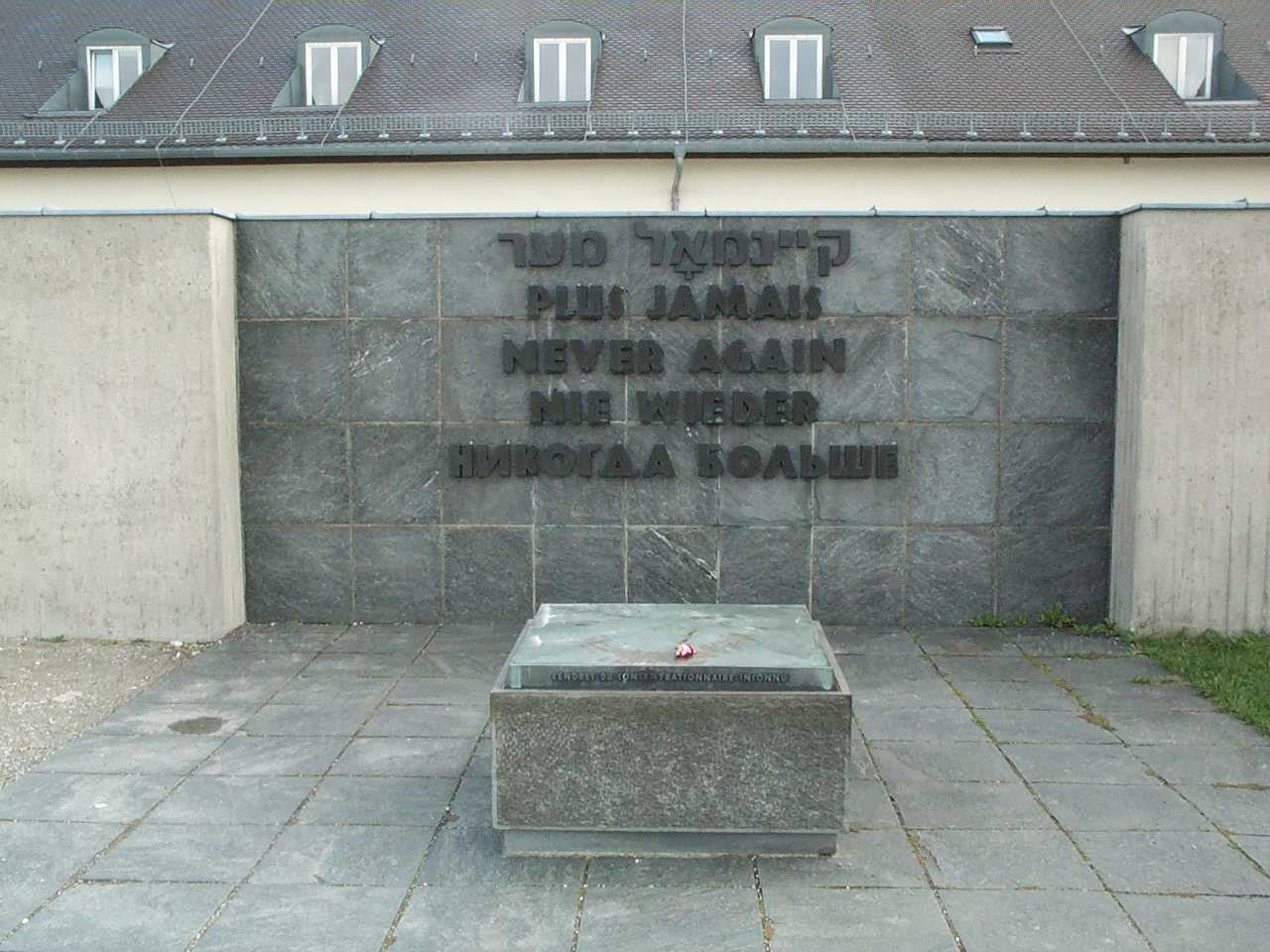
| The Memorial at Dachau |
Moreover, Bezalel added, the Jews can lose. He's learning Navi, and noted that Jewish kings fought and lost wars against their enemies. So who is to say that even in Israel, even with the strength of the IDF, that we're safe?
I agreed with him. It could indeed happen again. Indeed I feel that the Jewish efforts (and the tens, if not hundreds of millions of Jewish dollars spent) to ensure "never again" seem naive and short-sighted. After all, who could have imagined that it could happen in Germany? No one believed it possible, even while it was happening. Moreover, there indeed are no shortage of people trying to kill us. After all, just last month we enjoyed yet more family time in our protected room, as our Arab cousins to the south shared some of their homemade and imported rockets. (Thanks!)
No, there are no guarantees. But, I told him, there is a critical difference. Something has indeed changed.Today, even as our enemies attack us, we stand up and fight. Indeed, we may (God forbid) lose and suffer a terrible defeat. But at least if we go down, we will go down fighting.
No one can say that never again will an enemy of the Jews rise to power on a wave of hatred, racism and fanaticism, hoping to exterminate the Jewish people. It's happened before, and probably likely to happen again, sooner than anyone would like to believe.
But we can say a different type of "Never again."
As long as their is a Jewish State, we will never again walk placidly to our own deaths without a struggle. We will "never again" allow an enemy of the Jews to kill us without a fight.
Of that, we can indeed be sure.
Tuesday, April 10, 2012
Rabbinic Tricks of the Trade: Making Source Sheets (with a Smartphone)
1. Text bases sheets, built using the Bar Ilan CD (or some other similar source)
2. Scanned sheets of original sources
Many teachers prefer the first method for a simple reason: it's much, much easier. After all, you don't have to go scrounging through books for the right sources. You don't need to deal with scanners, resolution, or photocopying. You're good to go.
The Better Method: Scans of Original Materials
I personally prefer the second method despite the added difficulty because I feel that a student (or learner) should have a sense of the books that they're studying. Text is simply that: you can't look at a text and identify its source. You don't have a feel for the book that you're reading from. It's just text.
Source material scanned from books is just different. A text from Tanach looks fundamentally different...
than a piece from Mesillat Yesharim.
Also, many modern texts have vowels (which many students really need) as well as translations (which are very, very helpful).
The problem with this method is obvious. It's a pain in the neck, especially if you use the old, old method of photocopying each source you'd like to use, cutting out the relevant text and pasting it on to your new page. If you're doing that, this post will save you a tremendous amount of time and energy.
The Old New Method: Scanner and Computer
For years, I scanned each book into my computer, imported the scan into a program called PaperPort, and then cut and paste (digitally) that source into a document in Microsoft Publisher. You can still do that, and it's a very effective method, but it's got shortcomings.
1. You have to have access to a scanner
2. You need to be able to bring the books to the computer, which isn't always possible. Often, I'd find myself in a library or a yeshiva Beit Midrash, and I couldn't take the book home with me to scan. At times I found myself asking to use a local copier, just to be able to take the source with me. But that's not much better than manual cutting and pasting.
Thankfully, I've found a solution that's (mostly) free, easy and incredibly convenient, allowing me to make source sheets in almost no time at all, using readily available digital tools. All you need is a smartphone.
The Smartphone Solution
(I've got an Android phone, but I think that the apps that I mention are widely available on iPhones as well)
Step 1: Acquiring the Texts
| Camscanner Screenshot |
Step 2: Uploading to the Web
This is actually the easiest aspect of the job, as your smartphone does all the work for you. Camscanner allows you to share your document in about a zillion ways. If you've got Dropbox, you can do it that way. (If you don't have Dropbox, you really, really should have it - but that's another post. If you don't have it and would like it, please click here, as I'll get more free space.) I actually started using a program called Evernote, which allows you to keep a virtual notebook on the web. Either way is fine. You can even email yourself the file. It really doesn't matter, as long as you get the pdf to your computer.
Step 3: Opening the file and copying it
To me, it's important that the scans remain at a high resolution for your source sheets. The best way to do this is to use a free PDF program called Foxit Reader. The program allows you to take a picture of your open document, and even more importantly, set the resolution of the picture that you're copying, so that you can ensure that your sheets are at a good (high) resolution.
Go to Tools >> Preferences and click on "General". There you'll find an option to "Use fixed resolution for snapshots. Check that. I set mine to 300, which is high, but great for sheets.
Now you just click on the Camera to take a snapshot, and highlight an area of text that you want to copy.
This will copy your text onto the clipboard.
Step 4: Placing Your Text in Microsoft Publisher
Actually, you don't really need an added program like Publisher to make this work. You can do it in Microsoft Word if you'd like (and you don't want to pay for Publisher). But it can be a pain to work with a bunch of images in Word, and this is exactly what Publisher is made for, so it's really worth the added expense. (And thus far in this little exercise, you haven't spent a dime!)
Just open a new document in Publisher (you can set up a template for your source sheets if you like) and Paste in your image.
Simply save your work as a PDF file (or print yourself), and you're done. (If you're interested, here is the final sheet shared on Evernote).
While this method might take you a few minutes longer the first time you do it, after a few tries you'll find that you're spending less and less time making your actual sheets, and more time preparing the sources you need to teach.
Audio Shiur: Parshat Shemini 5771 - The Sound of Silence
Audio Shiur:
Parshat Shemini 5771 - The Sound of Silence
I gave this shiur last year while still reeling here in Israel the terrible murder of almost an
entire family in Itamar. We look at Aharon's reaction to the
sudden death of his sons. What did Moshe say to him to console him? Why
was Aharon silent? And what lessons can we take away from national
tragedy and mourning?
Click here to download the shiur, or here to navigate to the shiur on YUTorah.org.

Now you can subscribe to this shiur as a podcast, directly from iTunes! To subscribe, click here.
Parshat Shemini 5771 - The Sound of Silence
Click here to download the shiur, or here to navigate to the shiur on YUTorah.org.
Now you can subscribe to this shiur as a podcast, directly from iTunes! To subscribe, click here.
Friday, April 6, 2012
The Best Time to Take a Vacation in Israel
After having failed to take a family vacation for the past three years (we have gotten away, but not the entire family together), we decided to go away for a couple of days this week. Yup, on the week before Pesach we took a vacation to Teveria. It was a great decision. Let me count the reasons:
1. The Seder isn't that Big of a Deal: First of all, here in Israel there's much less to do, as there's only one Seder and one day of Yom Tov to prepare for. We make the Seder for our family alone :-( , and we're actually invited out for lunch tomorrow. So the cooking is for all of one meal. Moreover, we stopped eating a large meal at the Seder years ago. After all the Matzah and Romaine lettuce, we eat chicken soup and matzah balls, my mother's famous fricassee, some desert, and move on to the afikomen.
2. Cleaning: We don't do spring cleaning. We clean for Chametz. It's not that big of a deal when you stop washing the walls. (Also, with all the kids home from school beginning last week, the older ones helped quite a lot. I was still working).
3. Amazing deals: Basically, pretty much no one takes a vacation during the week before vacation, so we had the entire city of Teveria more or less to ourselves. And the tiyyullim we took were also more or less empty, other than the random families who are as nutty as us, or groups of men and boys who were kicked out of their homes by the ladies. That means that empty hotels are looking to grab you, and we found a really good deal (at a Groupon-like site) for a hotel that included breakfast and dinner. That was a good move. There's nothing like a vacation when you don't have to worry about most of the food (lunch = ice cream) and you can get up from the table after dinner and walk away.
4. Gorgeous Weather: If you like hiking, walking around and outdoor activities, this is the time to do it. We went on two tiyyulim over two days (to Tel Dan and Nachal Amud), and the weather was perfect!
So, if you're looking for something to do over the week before Pesach, try taking a vacation in Israel. You'll save money, have a great time, and get back home just in time for Bedikat Chametz.
OK, that was a little hectic.
Chag Sameach!
1. The Seder isn't that Big of a Deal: First of all, here in Israel there's much less to do, as there's only one Seder and one day of Yom Tov to prepare for. We make the Seder for our family alone :-( , and we're actually invited out for lunch tomorrow. So the cooking is for all of one meal. Moreover, we stopped eating a large meal at the Seder years ago. After all the Matzah and Romaine lettuce, we eat chicken soup and matzah balls, my mother's famous fricassee, some desert, and move on to the afikomen.
2. Cleaning: We don't do spring cleaning. We clean for Chametz. It's not that big of a deal when you stop washing the walls. (Also, with all the kids home from school beginning last week, the older ones helped quite a lot. I was still working).
3. Amazing deals: Basically, pretty much no one takes a vacation during the week before vacation, so we had the entire city of Teveria more or less to ourselves. And the tiyyullim we took were also more or less empty, other than the random families who are as nutty as us, or groups of men and boys who were kicked out of their homes by the ladies. That means that empty hotels are looking to grab you, and we found a really good deal (at a Groupon-like site) for a hotel that included breakfast and dinner. That was a good move. There's nothing like a vacation when you don't have to worry about most of the food (lunch = ice cream) and you can get up from the table after dinner and walk away.
4. Gorgeous Weather: If you like hiking, walking around and outdoor activities, this is the time to do it. We went on two tiyyulim over two days (to Tel Dan and Nachal Amud), and the weather was perfect!
So, if you're looking for something to do over the week before Pesach, try taking a vacation in Israel. You'll save money, have a great time, and get back home just in time for Bedikat Chametz.
OK, that was a little hectic.
Chag Sameach!
Monday, April 2, 2012
Pesach, Matzah and Maror: The Essence of Jewish Education
Every Sunday morning, a student studying in Orot's M.A. program for Educational Counseling hitches a ride with me from Yad Binyamin to Elkana. During the ride, conversations often turn towards the material that he's studying. (While Orot's B.Ed. program in Elkana is for women only, men also study in separate classes towards M.A. degrees.) It's been interesting to watch as the trajectory of our conversations has shifted over the course of the year.
At the beginning, my "tremper" complained bitterly about the program. "It's so theoretical! I deal with real kids every day. I need to know how to handle the kids in the real world, and not delve into arcane psychological theory." And yet, as the year has progressed, his complaints have grown more tempered, and his appreciation for the program has grown. This morning he told me that he's already enlisted three friends to register for the program for next year.
What changed? I can tell you categorically that the program didn’t suddenly shift orientation due to his complaints. Rather, his appreciation for the material slowly matured. While he at first failed to see the significance of the theory to his work, over time he began to appreciate that while the theory of counseling might not directly impact on his counseling specifically, it allowed him to gain a broader, deeper appreciation for his work.
The "Obilgation" of the Three Symbols: What Obligation?
As we near the conclusion of Maggid and can almost taste the matzah in our mouths, we recite a famous statement from Rabban Gamliel, which is actually a direct quote from the Mishnah in Pesachim (116b):
While his statement which obligates us to mention each of these three critical elements during the Seder seems clear, it's actually anything but. What "obligation" does one fail to fulfill should he not mention the three elements? Where do we find such an obligation? Not surprisingly, the answered to this question is mired in dispute.
According to Ramban (see מלמחות ה', דף ב' בדפי הרי"ף), one who fails to mention these three elements does not properly fulfill his obligation to eat the three foods on the night of Pesach. While the Torah commands us to eat, Rabban Gamliel adds that eating is not enough. One must also speak about them, understand them, and place them in the context of the story. Others, including Ra'avan, disagree, explaining that one who fails to mention these three foods does not completely fulfill the obligation to tell the story of יציאת מצרים.
A Critical Educational Lesson
Yet, when we take a step back, both positions seem to be two sides of the same coin. According to each position, Rabban Gamliel was expressing a critical idea.
On the first night of Pesach we confront two very different types of mitzvot. The first is academic: והגדת לבנך – "and you shall tell your child" the story of the Exodus from Egypt. At face value, telling a story is a theoretical exercise, as we recount the historical tale of our ancestors' exit from slavery. (Anyone who has ever been stuck in a boring history class can attest to just how irrelevant names and dates can be.) The second type of Mitzvah is action-oriented. More specifically, on this night we are commanded to eat, whether we taste the simplicity of the matzah, the bitterness of the Maror, or the richness of the Korban Pesach.
According to Rabban Gamliel, if we allowed these two elements to remain separate and disconnected, we would fail both in our telling of the story and in our eating of the food, as we neglected to focus on the critical connection between the learning and discussion and the tastes associated with that story. Rabban Gamliel reminds us that Chazal designed the different elements of the Seder to complement each-other. The study and action go hand-in-hand, each building upon the other to create a complete educational experience.
Rabban Gamliel's Lesson in the Real World of Education...and Parenting!
Education is a tricky thing. On the one hand, in the purest sense, learning is an academic, intellectual pursuit. It can be dry and theoretical, conducted in the sterile, antiseptic Ivory Tower, devoid of any real-world meaning. At the same time, practical education without underlying thought, analysis and study leaves students with a shallow, peripheral understanding of the material. Without the deeper meaning, contemplation and reflective analysis academic study demands, a student's understand is cursory at best.
In the world of Chinuch, the same holds true. If our students can analyze and parse complicated tracts of Gemara but don’t see any connection between their Torah studies and the music that they listen to or the movies that they watch, then their Torah education is sorely lacking. At the same time, if through fantastic experiential programming we've instilled in them a passion for spirituality and love of Judaism but they can't read a line of Rashi, we've also failed them.
On the night of Pesach, Rabban Gamliel reminds us that our children's education must be comprised of both academic knowledge and practical meaning. It must combine the story of יציאת מצרים together with the tastes of the Pesach foods. Only when we, as parents and teachers, combine these two critical elements together, can we rest assured that we have indeed fulfilled our educational obligation to our children.
At the beginning, my "tremper" complained bitterly about the program. "It's so theoretical! I deal with real kids every day. I need to know how to handle the kids in the real world, and not delve into arcane psychological theory." And yet, as the year has progressed, his complaints have grown more tempered, and his appreciation for the program has grown. This morning he told me that he's already enlisted three friends to register for the program for next year.
What changed? I can tell you categorically that the program didn’t suddenly shift orientation due to his complaints. Rather, his appreciation for the material slowly matured. While he at first failed to see the significance of the theory to his work, over time he began to appreciate that while the theory of counseling might not directly impact on his counseling specifically, it allowed him to gain a broader, deeper appreciation for his work.
The "Obilgation" of the Three Symbols: What Obligation?
As we near the conclusion of Maggid and can almost taste the matzah in our mouths, we recite a famous statement from Rabban Gamliel, which is actually a direct quote from the Mishnah in Pesachim (116b):
רַבָּן גַּמְלִיאֵל הָיָה אומֵר: כָּל שֶׁלּא אָמַר שְׁלשָׁה דְּבָרִים אֵלּוּ בַּפֶּסַח, לא יָצָא יְדֵי חובָתו, וְאֵלוּ הֵן: פֶּסַח, מַצָה, וּמָרור.Rabban Gamliel used to say: Anyone who did not speak about three things did not fulfill his obligation. And they are: Pesach (the Paschal lamb), Matzah, and Maror.
While his statement which obligates us to mention each of these three critical elements during the Seder seems clear, it's actually anything but. What "obligation" does one fail to fulfill should he not mention the three elements? Where do we find such an obligation? Not surprisingly, the answered to this question is mired in dispute.
According to Ramban (see מלמחות ה', דף ב' בדפי הרי"ף), one who fails to mention these three elements does not properly fulfill his obligation to eat the three foods on the night of Pesach. While the Torah commands us to eat, Rabban Gamliel adds that eating is not enough. One must also speak about them, understand them, and place them in the context of the story. Others, including Ra'avan, disagree, explaining that one who fails to mention these three foods does not completely fulfill the obligation to tell the story of יציאת מצרים.
A Critical Educational Lesson
Yet, when we take a step back, both positions seem to be two sides of the same coin. According to each position, Rabban Gamliel was expressing a critical idea.
On the first night of Pesach we confront two very different types of mitzvot. The first is academic: והגדת לבנך – "and you shall tell your child" the story of the Exodus from Egypt. At face value, telling a story is a theoretical exercise, as we recount the historical tale of our ancestors' exit from slavery. (Anyone who has ever been stuck in a boring history class can attest to just how irrelevant names and dates can be.) The second type of Mitzvah is action-oriented. More specifically, on this night we are commanded to eat, whether we taste the simplicity of the matzah, the bitterness of the Maror, or the richness of the Korban Pesach.
According to Rabban Gamliel, if we allowed these two elements to remain separate and disconnected, we would fail both in our telling of the story and in our eating of the food, as we neglected to focus on the critical connection between the learning and discussion and the tastes associated with that story. Rabban Gamliel reminds us that Chazal designed the different elements of the Seder to complement each-other. The study and action go hand-in-hand, each building upon the other to create a complete educational experience.
Rabban Gamliel's Lesson in the Real World of Education...and Parenting!
Education is a tricky thing. On the one hand, in the purest sense, learning is an academic, intellectual pursuit. It can be dry and theoretical, conducted in the sterile, antiseptic Ivory Tower, devoid of any real-world meaning. At the same time, practical education without underlying thought, analysis and study leaves students with a shallow, peripheral understanding of the material. Without the deeper meaning, contemplation and reflective analysis academic study demands, a student's understand is cursory at best.
In the world of Chinuch, the same holds true. If our students can analyze and parse complicated tracts of Gemara but don’t see any connection between their Torah studies and the music that they listen to or the movies that they watch, then their Torah education is sorely lacking. At the same time, if through fantastic experiential programming we've instilled in them a passion for spirituality and love of Judaism but they can't read a line of Rashi, we've also failed them.
On the night of Pesach, Rabban Gamliel reminds us that our children's education must be comprised of both academic knowledge and practical meaning. It must combine the story of יציאת מצרים together with the tastes of the Pesach foods. Only when we, as parents and teachers, combine these two critical elements together, can we rest assured that we have indeed fulfilled our educational obligation to our children.
A New Look at the Wicked Son
This past Shabbat, Rena and I traveled to Naharia (a nice beach town north of Haifa) for Orot's staff Shabbat. I heard a wonderful thought about the Rasha - the wicked son - from Rav Ze'ev Hass, an instructor at Orot.
For parents and educators, we find the Wicked Son the most challenging of children. First of all, what parent would even label her child as "wicked"?
We all well know the questions regarding the Rasha. At face value, his question really isn't that difficult: מה העבודה הזאת לכם - "what is this worship of yours?" His question is so similar to the question of the Wise Son that we are left to wonder why we react to him in such a seemingly harsh manner, and to the Wise Son with such love and care. Secondly, as soon as he stops speaking, we stop talking to him, and start talking about him - in third person. Only then do we return to speaking to him to deliver our harsh response. Finally, the answer that the Hagadah provides to the Rasha should trouble us. Blunt his teeth? Tell him that he would still be in Egypt? When has that worked on a child?
Not an Only Child
Rav Hass suggested an answer by considering the "Wicked Son" not in a vacuum, but in contrast to his brother - the Wise Son. Imagine this son growing up, constantly trying to compete with his older, "perfect" brother. (This phenomenon isn't that unusual.) The oldest is often the most accomplished - intellectually, physically, educationally. Imagine how his brother feels when he's the one in school whose teachers always say, "Are you the Chacham's brother?" (As much as we ask teachers not to say things like that, somehow they still do...) How about at report card time, when he invetiably compares his grades to his "perfect" brother's? It's not hard to imagine him thinking that he can never really live up to the standard his brother set for him, so why bother?
That's our "Rasha". If he can't compete with his brother - and he can't - then why bother. So he begins to act out. We don't believe that children are inherently wicked. But he acts wickedly. His behavior certainly is bad, manifesting an attitude of apathy and indifference. And so he asks his question: "What is this worship of yours?" Why should I bother if I'll never measure up?
This inherent Jewish inherent quality will never change. And yet, it's the very notion that the Wicked Son rejects. So we say not to the Rasha - but about him, that if his apathetic attitude had been in Egypt, then he and the rest of us would never have been redeemed. Change can only come about when you believe in yourself and see not only your shortcomings, but the great potential within you to grow.
The Solution: Show Him the Truth
For this reason, we are instructed specifically to "blunt" his teeth (and not knock them out). Rav Hass noted a fascinating truth about God's creations: the more sophisticated and advanced a being is, the more primitive it is at birth. Think about it: animals are expected to get up and walk on their own moments after being born. Human beings, on the other hand, enter the world helpless, unable to care for themselves in even the most simple manner. We require nurturing, care and attention for years before we can take the necessary steps to care for ourselves, and then hopefully, our children. Nothing symbolizes this idea better than our teeth. We're born without them, and as we grow, our teeth grow, symbolizing our development and maturity. (Baby teeth --> adult teeth --> wisdom teeth). So, when addressing the Rasha's attitude of indifference, we tell him to look at his teeth. Does he really think that he was supposed to be born with a mouth full of teeth? Why then should he necessarily have to live up to the Chacham from the very beginning? Just as his teeth will grow and sharpen, so too will he develop, grow and become the person that he was meant to be.
Like the Jewish nation, every child has that spark. It's up to us to help it emerge - to bring each and every child the personal redemption he or she can and must achieve.
For parents and educators, we find the Wicked Son the most challenging of children. First of all, what parent would even label her child as "wicked"?
The Questionsרשע מה הוא אומר? 'מה העבודה הזאת לכם?' - ולא לו. ולפי שהוציא עצמו מן הכלל וכפר בעיקר, אף אתה הקהה את שיניו, ואמור לו: 'בעבור זה עשה ה' לי בצאתי ממצרים' - לי ולא לך, אילו היית שם לא היית נגאל!What does the Wicked Son say? "What is this worship for you?" - and not for him. And because he excluded himself, he has rejected a founding principle. You too must blunt his teeth and say to him, "For this God did for me when I left Egypt." For me and not for him. Had you been there, you would not have been redeemed.
We all well know the questions regarding the Rasha. At face value, his question really isn't that difficult: מה העבודה הזאת לכם - "what is this worship of yours?" His question is so similar to the question of the Wise Son that we are left to wonder why we react to him in such a seemingly harsh manner, and to the Wise Son with such love and care. Secondly, as soon as he stops speaking, we stop talking to him, and start talking about him - in third person. Only then do we return to speaking to him to deliver our harsh response. Finally, the answer that the Hagadah provides to the Rasha should trouble us. Blunt his teeth? Tell him that he would still be in Egypt? When has that worked on a child?
Rav Hass suggested an answer by considering the "Wicked Son" not in a vacuum, but in contrast to his brother - the Wise Son. Imagine this son growing up, constantly trying to compete with his older, "perfect" brother. (This phenomenon isn't that unusual.) The oldest is often the most accomplished - intellectually, physically, educationally. Imagine how his brother feels when he's the one in school whose teachers always say, "Are you the Chacham's brother?" (As much as we ask teachers not to say things like that, somehow they still do...) How about at report card time, when he invetiably compares his grades to his "perfect" brother's? It's not hard to imagine him thinking that he can never really live up to the standard his brother set for him, so why bother?
The "Wicked Son" in our Schools
If you've ever taught in a school that tracks students by ability, you can see this phenomenon outright. It doesn't matter how you label the classes: "A1, A2, A3"; "Masmidim, Lomdim" - whatever you call them, the students in the bottom class know that they're the "dummy" class, and they'll say so outright. Oh - they'll do something else as well. They'll stop trying. After all, if their very own school calls them idiots, then why should they even bother trying to disprove them? (It's a good question that schools constantly struggle with: how do you establish an environment that allows excellent students to grow without labeling the others as inferior?)That's our "Rasha". If he can't compete with his brother - and he can't - then why bother. So he begins to act out. We don't believe that children are inherently wicked. But he acts wickedly. His behavior certainly is bad, manifesting an attitude of apathy and indifference. And so he asks his question: "What is this worship of yours?" Why should I bother if I'll never measure up?
The Unique Nature of the Jewish Nation
Chazal teach us that at the time of the Exodux, the Jewish people found themselves in the depths of spiritual depravity and degradation. In the words of the Midrash, they had reached the 49th level of impurity, as far down as one can possibly descend and yet repent and return. What if they had adopted the attitude of the wicked son. Had the Jewish nation given up, the Exodus would never have taken place. This, explains Rav Hass, is the concept of the "Chosen Nation"; the unique quality of the Jewish people that we contain within us a spiritual spark which can, and ultimately must propel us to improve, grow and acheive spiritual greatness. This is an eternal "rule" of the Jewish people. Even if we ourselves cannot see the great potential within us, God can. He will redeem us and nurture us in order to draw out the spark of holiness that we all contain.This inherent Jewish inherent quality will never change. And yet, it's the very notion that the Wicked Son rejects. So we say not to the Rasha - but about him, that if his apathetic attitude had been in Egypt, then he and the rest of us would never have been redeemed. Change can only come about when you believe in yourself and see not only your shortcomings, but the great potential within you to grow.
The Solution: Show Him the Truth
For this reason, we are instructed specifically to "blunt" his teeth (and not knock them out). Rav Hass noted a fascinating truth about God's creations: the more sophisticated and advanced a being is, the more primitive it is at birth. Think about it: animals are expected to get up and walk on their own moments after being born. Human beings, on the other hand, enter the world helpless, unable to care for themselves in even the most simple manner. We require nurturing, care and attention for years before we can take the necessary steps to care for ourselves, and then hopefully, our children. Nothing symbolizes this idea better than our teeth. We're born without them, and as we grow, our teeth grow, symbolizing our development and maturity. (Baby teeth --> adult teeth --> wisdom teeth). So, when addressing the Rasha's attitude of indifference, we tell him to look at his teeth. Does he really think that he was supposed to be born with a mouth full of teeth? Why then should he necessarily have to live up to the Chacham from the very beginning? Just as his teeth will grow and sharpen, so too will he develop, grow and become the person that he was meant to be.
"Our" Rasha
No parent today would label her child a "Rasha." (God forbid!) And yet, every parent and teacher knows which child feels inferior; that he cannot keep up with the stronger kids, and would rather not bother. Our task must be to instill in our children a sense of potential. We must help them sharper their teeth (ושננתם לבניך - from the word שן - see Rashi) to the point that they too have a sense of confidence in their unique abilities.Like the Jewish nation, every child has that spark. It's up to us to help it emerge - to bring each and every child the personal redemption he or she can and must achieve.
Audio Shiur: Hagadah Shel Pesach - Celebrating Half Geulah
Audio Shiur:
Hagadah Shel Pesach - Celebrating Half Geulah
With our national return to our ancestral homeland, the night of Pesach
leaves us in a quandary: How do we celebrate a future redemption that we
believe has already begun? How did Chazal design the seder to reflect a
future (and a missing past) that we have begun to realize? Answering
these questions will help you bring meaning to your Seder.
Click here to download the shiur, or here to navigate to the shiur on YUTorah.org.

Now you can subscribe to this shiur as a podcast, directly from iTunes! To subscribe, click here.
Hagadah Shel Pesach - Celebrating Half Geulah
Click here to download the shiur, or here to navigate to the shiur on YUTorah.org.
Now you can subscribe to this shiur as a podcast, directly from iTunes! To subscribe, click here.
Subscribe to:
Posts (Atom)