Sunday, August 2, 2009

Competition in Education Part 2: The Recruiting Mess

In this post, I noted how the opening of a new four-year Hesder program was simply an attempt by the Hesder Yeshivot to compete with and take students from post-High school mechinah programs.
This weekend's Mekor Rishon featured an article titled "High School Seniors Feel Like Kids in a Candy Store." Not a good sign if you're trying to run and recruit for a serious yeshiva. (I have scanned the article, as Mekor Rishon does not allow for linking. Click on the article to see it in full size.)
Last week, approximately fifty representatives from high schools, Hesder yeshivot and other educational institutions gathered to try and find some way to help high school seniors make good decisions about where they'll plan on studying during the following year. Currently, there are 59 Hesder yeshivot, 15 Mechinot, 16 Yeshivot Gevohot (that are not connected to army service), and numerous other post-high school programs and other army/educational tracks. A high school administrator put it this way: there are about 180 school days during the year. If 100 yeshivot want to send a representative to the school, on the first day, the kids are willing to listen. On the tenth day, they're already heard it. By the twentieth day, they're falling asleep. Even more troubling is the damage that this causes to the standing of the Roshei Yeshivot, who find themselves pandering to students hoping to attract them to their yeshiva. How can a student truly respect a Rosh Yeshiva who needs to almost be that student to attend? Moreover, how is a student supposed to decide what yeshiva to attend? How can these yeshivot possibly differentiate themselves? Are there really 59 different and unique Hesder yeshivot?

According to the article, it has gotten so bad that one yeshiva actually offered potential students a jeep-tour to entice them to come visit the yeshiva - which doesn't really surprise me. At the end of the day, a yeshiva is a place to learn full-time, with hopefully good teachers who will be positive role-models and good educators. They can't all be that different. So how else are they supposed to attract students?
The group of educators did decide to hold a fair where all the yeshivot will set up booths and present their yeshiva to potential students. Which is fine, I guess. But I doubt that many of the students will leave the fair with any better sense of where they want to study than they did before the fair.
On a practical level, the high schools need to start giving formal Yeshiva guidance - very much like college and yeshiva guidance in America. They need to act as filters for the schools, so that they can at least give their students a sense of direction.
At the same time, there need to be fewer yeshivot. Does Israel really need 59 Hesder yeshivot? Would it be better for there to be 30, with each yeshiva having double the students? (In 1990 there were 15 Hesder yeshivot, 25 in 1995, 44 in 1999, and now 59. That's a pretty staggering growth rate. A little too staggering.)
Rabbis open yeshivot because they want to move up in the world. They've taught for a certain number of years, and now they want their own place. So they open a yeshiva, put out a shingle, and try and attract students.
And, as I've written before and will continue to write about in future posts, what attracts high school seniors is almost never the best education. High school seniors care about a lot of things, but not always which yeshiva will work them the hardest, be the most challenging, and make them the best person they can be.
Sometimes, all a high school senior really wants is a jeep ride. And with competition the way it is now (and not changing anytime soon), if anything, the future holds more recruiting jeep rides, and not less.

Saturday, August 1, 2009

Parents or Peers? Who Plays a Greater Role?

Who would you think has greater influence on teens as they develop religiously: their parents or their peers? Most people would say that peers have the greatest influence on religious choices. Not true, says a noted Israeli educator.
In a recently published study by Dr. Shraga Fisherman of the Orot College of Education (full disclosure: I work at Orot, and know Dr. Fisherman. ) addressed the issue of religious influence on children.
In the end, parents have the greatest influence on their children's spiritual choices. In his survey of teenager boys he found that children in grade seven very much value their parents' wishes. As the kids got older, that level of importance declined, reaching a low at eleventh grade. But then, as the teens got even older, they once again gave greater weight to their parents' values, and by age twenty valued their parents' opinions almost as much as they had in seventh grade.
What did he take away from this survey? Dr. Fisherman concluded,
ולכן חשוב לא להתייאש ולהמשיך ולתת את הדעת על חינוך לזהות דתית גם בשלהי גיל ההתבגרות
Therefore, it's important not to give up, and to continue to express [parental] opinions in order to educate towards religious identity, even during the teenage years.
I have heard so many parents tell me that they're afraid of coming down too hard and driving their children away. This study carries great importance because it tells us that no matter what we do or say, our children naturally gravitate away from us during the middle high school years. As they search for a sense of inner guidance, they feel a need to rebel on some level, and find their own spiritual path. But they're still listening. And while during the difficult years of high school they may not always do what we say, they do want to know how we feel. So when they grow a little older and more self-confident, they have solid guidance on a direction to turn.
While our children may recoil from our opinions, it's probably what they most need - and even want to hear. If so, the worst thing parents can do is not say anything at all.

Friday, July 31, 2009

Not as Secular as We Think

While many like to complain about the secular nature of the State of Israel, I often comment that secular Israelis are not as anti-religious as they seem. Many lay Tefillin, celebrate Shabbat with family members, fast on Tisha B'av and Yom Kippur, observe some level of kashrut, and care very much about Jewish ritual life. I saw a recent survey that seemed to agree with my sentiments.
Yediot Achronot (a very secular newspaper) published a survey taken on Tisha B'av that asked average Israelis whether they wanted the Beit Hamikdash to be rebuilt. To my pleasant surprise, 64% - almost two-thirds, and nearly half of secular Israelis said yes, they would like to see the Beit Hamikdash rebuilt. Rebuilding the Beit Hamikdash is a pretty abstract idea, so I personally would have expected people who identify themselves as "secular" not to care much about the Beit Hamikdash. But apparently they do, and that's a great thing.

Wednesday, July 29, 2009

A Website You Might Not Know About

If you've ever been to a shiur of mine, you know that I generally try and hand out source sheets to the shiur with copies of the original text as it appears in book form. (Some people just copy the text from a CD, but I feel that the form factor of the text is important, and contributes significantly to the learning experience.) So I faithfully scan the books, edit the scans and paste the material using Microsoft Publisher. I once even gave a short presentation on how I make my sheets at the Soloveitchik Institute (a"h) for a bunch of rabbis. At the Tzohar Conference last week a fellow participant told me that since then he's been making his sheets that way, and he always thinks of me because of it.
I recently discovered a new tool that has the potential to save me a ton of time. HebrewBooks is a website that has put literally thousands of old seforim - most of which you've never, ever heard of - online and available for download. It's truly incredible. But they also helped me quite a bit, because they recently added a shas section which has the entire Shas available online both for reading and download. If you learn daf yomi and need a quick printout of today's daf, they've got you covered. If you're giving a shiur on masechet Brachot, and need a perfectly scanned copy of the entire masechta with the Rosh, Rif and Rabbeinu Yonah (like me), you can do that too. Oh yes - it's also totally free.
My chavruta and I were learning recently and we came across a reference to a Teshuva of Rav Moshe Feinstein in Igrot Moshe. I was about to get up to get one from the library when he opened his laptop, and quickly opened a pdf file with the entire eight-volume work. When I asked him where he got it from, he answered me in his heavy Hebrew accent: "Hebrewbooks."
You know how we're always complaining about how terrible the Internet is, with the pornography, violence, gambling, and pretty much everything else. We're right too. Except we don't often acknowledge that there's another side too. The Internet also has amazing learning sites (like, ummm, I don't know...spolter.net?), where you can download thousands of shiurim for free, and even learn the entire shas.
It's not that the Internet is bad. It's neutral. The trick is learning (and teaching our children) how to use it, and how to have the self-control to know where to go, and where to stay away from.

Audio Shiur: Parshat Va'etchanan - Growing from Tragedy

Audio Shiur:
Parshat Va'etchanan: Growing from Tragedy
While Va'etchanan teaches us a great deal about the causes of and reasons for calamities that befall the Jewish people, it also conveys critical parenting lessons in the process.

Click here for the audio link, or listen in the handy audio player supplied below.

Monday, July 27, 2009

Mourning for the Kotel on Tisha B'av

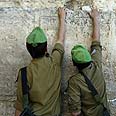
Over the weekend, I read an article in Mekor Rishon about the kotel. (they have a funny web system, so I can't link to the piece.) The author lamented the fact that over the past few years he had grown increasingly distant from the Kotel. In past years, before any wedding the chatan and kallah would have pictures taken in front of the Kotel. You see less and less of that nowadays. We recently went to the Kotel for the Bar Mitzvah of the son of friends. Instead of davening at the kotel, I intentionally davened early at shul in Yad Binyamin to avoid having to daven at the Kotel. I did this so that I wouldn't feel pressured to make it to the Bar Mitzvah on time primarily. But there was also a part of me that doesn't really like davening at the Kotel. It's too much of a production. People are always bugging you for money. It's such a scene. And some part of me recoils at a sort of Kotel worship that I sense in so many Americans. The Kotel makes me sad, as I think it should. Instead of running to the kotel, sometimes I avoid it. I'm not entirely sure, but I feel that this might be a healthy feeling.

I wasn't alive for the capture of the Kotel during the Six-day war. I never felt that personal powerful sense of euphoria that's so evident when watching the old black and white video of the capture of the Kotel and Rav Goren blowing the shofar. But it's clear that the Kotel became a sign not of mourning, but of redemption. It became the symbol not of destruction and loss, but of redemption and rebirth.

I've never had that feeling. Every time I visit the Kotel, especially when I approach the site from the Jewish Quarter where I have to descend from the city to the Har Habayit, I feel a powerful sense of loss. How can you not, knowing that the Kotel was simply the outer retaining wall of the larger Beit Hamikdash structure. I find it at times difficult even to pray there, knowing how close - but how far we really are from where we should be. And I often feel that our celebration of the Kotel - our willingness to accept the Kotel as "good enough" - gives us a sense that we don't really need the Beit Hamikdash. After all, we have the Kotel. Do we really need more than that?

We do. The fact that we settle for the site "down below" while the Arabs occupy the holiest location in Judaism in the world should and must be a cause for mourning. I find it difficult to celebrate anything at the Kotel - because that celebration seems to fly in the face of God's House, lying in ruins, occupied by strangers.

And that, by itself, should give us pause on Tisha B'av.

Friday, July 24, 2009

Shock and Disbelief? I Think Not. Thoughts for Shabbat Chazon

Let me begin this post by saying that the level of chillul Hashem the recent case has and must pain each and every one of us. For this reason, instead of hiding from it, we need to write about it. Unless the Jewish community begins to address the core issues at the heart of this case, this won't be the last time we see rabbis in handcuffs.

Even here in Israel, all people have asked me about this morning are the charges of corruption against a large number of government officials and private citizens in the New York Metropolitan area, including several rabbis and leaders of the Syrian community in Deal, NJ. It's really bad. My immediate reaction is simple. The Torah spells things out quite clearly:
וְלֹא-תִקַּח שֹׁחַד--כִּי הַשֹּׁחַד יְעַוֵּר עֵינֵי חֲכָמִים, וִיסַלֵּף דִּבְרֵי צַדִּיקִם.
and do not take bribes, for bribery blinds the eyes of the wise, and perverts the words of the righteous.
Note that the Torah does not say that bribery transforms the righteous into sinners. It blinds the righteous. No one is immune - not even rabbis with long black coats and white beards. Anyone is susceptible to the draw of easy money, even rabbis, and bad things always happen when people begin to think otherwise.
Reacting to the story in the New York Times, Dov Hikind said,
“Shock and disbelief — my cellphone, my office phone, they’re ringing off the hook,” said Assemblyman Dov Hikind of Brooklyn, who represents an Orthodox Jewish community adjacent to the southern Brooklyn neighborhoods where about 75,000 Sephardic Jews live. “People do not believe it.”...
David G. Greenfield, executive vice president of the Sephardic Community Federation, a group representing the approximately 100,000 Sephardim in Brooklyn, Manhattan and New Jersey, said in a statement, “The community is shocked and saddened by these allegations, which go against every value and teaching the community holds dear.”He added, “If over time these allegations are proven, we must remember that these are the isolated actions of a few individuals.”
Really? We don't believe it? Come on Mr. Hikind. These are the actions of a few isolated individuals? Please. Who didn't know that things like this happen all the time. The check to the school, shul, tzedkah - which takes a cut and returns the bulk of the money plus a receipt for a full write off. I wonder what percentage of day school tuition is paid in this manner? (and for that matter, wonder how this scandal will therefore affect Day Schools, as parents fearing repercussions, can no longer deduct their tuition "donations". It's an open question.)
At the same time, we need to begin to address the root of this issue. For whatever reason, the notion of stealing from and cheating the government is simply an accepted behavioral practice in large swaths of the Orthodox community. This is just the latest example of corruption that everyone "knows" about, looks the other way, and the only thing that really shocks us is the fact that they got caught.
A simple example of this is the story of the three yeshiva bochurim currently sitting in jail for drug trafficking in Japan. Let's assume that the bochrum are telling the truth, and that they had no idea that they were carrying drugs in their suitcases. But they did think that they were smuggling artifacts into a foreign country and thereby circumventing the laws of the government. They had no problem whatsoever doing that.
Which makes me wonder: why does our religious educational system (or a really big chunk of it), supposedly steeped in ethical and moral study, which emphasizes adherence to God and continued self-assessment and self-improvement, raise children who think nothing of lying and helping others steal?
Why is it OK to steal from the government - any and every government - in many Jewish circles? Why do we wink at this kind of behavior and look the other way, instead of speaking out loud about it and finally saying that it's got to stop?
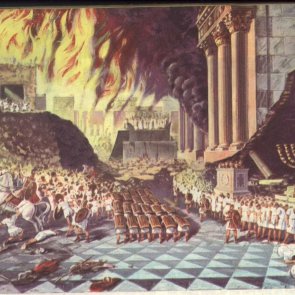
This story is especially timely in light of the Haftarah we'll read this Shabbat - called Shabbat Chazon. We call it Shabbat Chazon because the Haftarah begins with the word "chazon" - the vision that the prophet Yishayahu conveys of the coming destruction of the first Beit Hamikdash. Why? Why were the Jewish people slated to lose their beloved Temple? The prophet answers clearly and unequivocally (See Isaiah Chapter 1):
שָׂרַיִךְ סוֹרְרִים, וְחַבְרֵי גַּנָּבִים--כֻּלּוֹ אֹהֵב שֹׁחַד, וְרֹדֵף שַׁלְמֹנִים
Your princes are rebellious, and companions of thieves; every one loves bribes, and follows after rewards;
If we really want to bring redemption, the prophet tells us quite clearly how to do it:
צִיּוֹן, בְּמִשְׁפָּט תִּפָּדֶה; וְשָׁבֶיהָ, בִּצְדָקָה.
Zion shall be redeemed with justice, and they that return of her with righteousness.
Until we finally start speaking out, the chillul Hashem will only continue. We will continue to see ever more men in black coats, kippot, beards, hats, etc, led away in handcuffs. And we will all suffer the consequences.

Thursday, July 23, 2009

Audio Shiur: Parshat Devarim - From Faith to Reality

Audio Shiur:
Parshat Devarim: From Faith to Reality
We examine the textual challenge of how the story of the Meraglim is described differently in Devarim and in Bamidbar. Using these distinctions, we try and draw lessons both about the tragedy in the desert and the lessons that we can derive from it for our daily lives.

Click here for the audio link, or listen in the handy audio player supplied below.

Wednesday, July 22, 2009

Should There Be an Open Parking Lot in Yerushalayim

Continued from this post

Imagine for a moment Bibi Netanyahu and Mahmoud Abbas sitting around the table at Camp David. After days of strenuous negotiations, they've finally reached an agreement an nearly every critical issue; every issue except one: Kiryat Sefer. The Palestinians insist that there can be no peace deal without the Jewish State abandoning the Chareidi city of 40,000. Netanyahu demurs. It's a pretty big city, and he can't make that decision on his own. So he decides to put it to a vote of the citizens of Israel: Do we keep Kiryat Sefer, or do we give it back to the Palestinians and make peace?
Who wants to guess what the outcome of that vote would be?
Now imagine what would happen if people thought about Yerushalayim the way they do about Kiryat Sefer.
At the International Rabbinic Conference sponsored by Tzohar that I attended yesterday, one of the sessions focused on the issue of p'sak halachah. The fascinating discussion that I participated in focused on the question of how broader perspectives can influence decisions of psak halachah.
During the conversation (which wandered widely), I noted how sometimes we in the religious Zionist community focus on issues that are important to us, but fail to speak out when matters of religious observance arise. As an example, I cited the recent brouhaha surrounding the opening of the parking lot in Yerushalayim that has become the subject of international attention. Disregarding the protests, which are ridiculous, I said, don't the Chareidim have a point? Why are they the only ones against chillul Shabbat? After all, the mealy-mouthed excuse that too many cars parked illegally on the streets may constitute a danger and therefore qualifies as pikuch nefesh seemed to me to be especially weak.
One of the rabbis at the session gave what I thought was an excellent answer that requires careful thought.
The protests over the parking lot are really about a much larger issue: control over the city of Yerushlayim. Who sets the tone and the agenda: The city - and its citizens, or the chareidi community, which continues to grow as a percentage of the city's population? The parking lot was simply a symptom of a larger issue, as these things often are.
How would we feel if Yerushalayim became entirely Shomer Shabbat? At first glance, that would seem to be a great thing. On the one hand, the yishuv I live in, Yad Binyamin, is entirely Shomer Shabbat. Nothing beats the peace and tranquility that brings. Wouldn't it be great if you could literally walk down the center of King George Street on Shabbat morning, because they didn't allow cars to drive in Yerushalayim on Shabbat?
No, it wouldn't be great. Because while it might be peaceful and tranquil, it would also shut out and completely alienate an entire population of people, who happen to be the largest percentage of citizens in Israel.
Secular Jews drive to Yerushalayim to tour the Old City on Shabbat not because they want to be mechalel Shabbat and upset Chareidim. They come to Yerushalayim looking for a connection, for spirituality, for meaning. And they need a place to park. If we allow a group to succeed in alienating them from Yerushalayim entirely, making it a place they feel has no connection to them, while there might not be anyone driving in Yerushalayim on Shabbat, there's also no guarantee that the Holy City would also remain in Jewish hands.
Because that meeting between Bibi and Mahmoud might very well happen. And they won't be talking about Kiryat Sefer. They'll be talking about Yerushalayim.

Friday, July 17, 2009

Religious Zionist Orthodoxy in Israel: Who's Kosher, and Who's Treif?

Recently, Michlelet Lifschitz, a well-known teachers' college in Israel appointed Dr. Samuel Glick as its new head and president, scheduled to begin his new position in September. (Full disclosure: I work for the Orot College of Education, which competes directly with Michlelet Lifschitz. So, sadly, I might very well gain significantly from this story.) Everyone was happy. Dr. Glick was a noted expert in education, and had been a member of the Lifschitz board of directors for many years.
Until last week.
Last week, as Ma'ariv reported,
the institution's board went back on its decision to appoint Prof. Shmuel Glick as the school's new head, after rabbis affiliated with the ultra-Orthodox stream that supports religious Zionism, threatened to stop sending their students to the college if the appointment goes through. According to the rabbis, Glick had in the past taught at the Schechter Institute for Jewish studies, which is affiliated with the Masorti (conservative) Movement in Israel. Sources involved in the affair told Ynet at the time that the rabbis' decision to come out against Glick was in fact motivated by long-standing power struggles at the college.
Why do the rabbis have so much power? Because they essentially decide where their students attend college "on the side" while they're studying in yeshiva. Should the rabbis choose to pull their students out of Lifschitz, they would essentially destroy the school. This essentially gives them a great deal of control over the nature of the school.
So, it's not really clear whether these rabbis are actually upset about the fact that Dr. Glick taught in a conservative environment. It probably is a power play, with Dr. Glick caught in the middle. But the power play is really about who controls the religious-Zionist community here in Israel - a very high-stakes game.
The sides in this game of chicken (in which Dr. Glick has been a victim) are, on one side, the "Chardal" rabbis and the yeshivot they represent. Chardal is a Hebrew acronym (actually, the Hebrew word chardal - חרדל - means "mustard") - חרד"ל - which stands for חרדי דתי לאומי - Chareidi Religious Zionist - who on the one hand support the State of Israel and army service, but favor a more right-wing religious stance. On the other side of the debate stand the more liberal דתי לאומי community, who favor a more open and innovative approach to many issues.
These debates have only just begun to play out in the public square, including in the appointment of Dr. Glick. Last week at a widely attended public lecture, Rav Yehoshua Shapira, the Rosh Yeshiva of the Hesder Yeshiva in Ramat Gan called liberal Orthodox groups such as Kolech, B'nei Akiva and certain Religious Zionist leaders, "Neo-reformists." For an English version of this same issue, see here.
This week another Rav said that he was wrong. Rav Dr. Eliyahu Zini, the head of the Hesder yeshiva in Haifa said that Rav Shapira didn't go far enough. "We're not talking about neo-reformists, but complete reformers."
It's pretty bad out there, with rabbis attacking rabbis, with most people caught squarely in the middle. Many modern-Orthodox Jews stand squarely with the liberal rabbis, who are fighting to try and find a way to integrate Orthodoxy into modern life. They even held a protest last night outside Rav Shapira's yeshiva. But many find themselves uncomfortable with some of the more liberal pronouncements of the left-wing rabbis. Two years ago, Rav Yuval Sherlo, the Rosh Yeshiva of the Hesder Yeshiva in Petach Tikvah issued a ruling on the internet stating that single women could halachically conceive through the use of In-vitro Fertilization - causing a mini-ruckus that still leaves many uncomfortable. This month he said that blind men could "feel" their dates, to know if they wanted to marry them. (Sounds somewhat harmless, but it's pretty controversial. And perhaps even more importantly, why is Yediot Achronot devoting an article to this?)
Who will win? It's very difficult to know. There are a lot of normal, modern Orthodox people in Israel who recoil at the notion of Chareidi-type rabbis imposing their will on the community. On the other hand, Israel is a very traditional place - much more so than America, and liberalism is not popular at all with many religiously-committed Zionist Jews. So, at this point, it's impossible to tell.
What is clear -at least to me, is that while this fight is clearly "for the sake of heaven", with each side standing strongly for its beliefs and fighting for its religious viewpoint, for now, all of us seem to be losing.