Wednesday, December 1, 2010

Eim Habanim Semeichah Shiur 1 - The Living Land

Audio Shiur:
Eim Habanim Semeichah Shiur 1: The Living Land
This shiur studies the classic work of Rav Yissachar Teichtal on the importance of settling the Land of Israel, following the Hebrew text with English translation.
The first shiur begins with the first introduction, pp 27-28, introducing the unique notion that the Land of Israel itself brings special and unique merit to the Jewish people.


Click here to download the shiur, or here to navigate to the shiur on YUTorah.org.

Audio Shiur: Parshat Miketz - Make All Your Dreams Come True

Audio Shiur:
Parshat Miketz - Make All Your Dreams Come True
What types of dreams did Yosef have? Were they the sleeping kind, which came to him voluntarily? Or were they more conscious, emanating at least partly from him? This question carries huge ramifications for how we view the story of Yosef and his brothers, and how we relate to our own dreams as well.

Click here to download the shiur, or here to navigate to the shiur on YUTorah.org.

Jaywalking on Shabbat and Related Issues

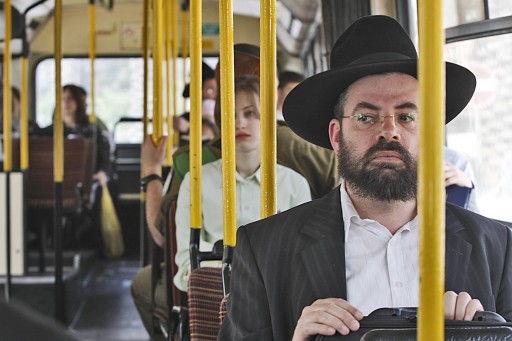
If you can see the attached story, (and if not, the link's here) the Jewish blogosphere is in a tizzy about the scandal of an Orthodox Jew, caught by a police officer jaywalking on Friday night whom the officer proceeded to give a ticket. When the Jew tried to explain that he couldn't sign the ticket because it was his Sabbath, the officer gave him a choice: sign the ticket or face arrest.
The rabbi signed the ticket.
I'm less outraged at the NYC Police Department's insensitivity. While the officers probably should have let him off (or gone with him to his apartment), it's pretty clear that jaywalking of Jews on Shabbat is a neighborhood issue that frustrates local residents. Hence this comment:
I live the area and can tell you that jaywalking on the Sabbath is a real problem on Kings Highway and Coney Island Ave and am surprised that people aren’t killed every weekend for being so careless.
Let's leave the chillul Hashem issue aside. The Yeshiva World News reported that the officers,
forced the individual to write his name and address on a paper. They told him, if he refuses, they will arrest him. Fearing spending Shabbos in jail, with his family not knowing where he was, the individual followed their orders.
I'm left wondering whether he should have.
Writing is one of the 39 Melachot Shabbat - a biblically prohibited behavior. Halachah prescribes that if one writes with a shinuy - in an altered manner - with the wrong hand, for example, that action is nonetheless prohibited, but only constitutes a rabbinic transgression. So even if the "rabbi" signed with the wrong hand, he was still not permitted to sign. Jewish law does allow one to violate Shabbat in cases where human life is in danger, but was that really a concern? While the prospect of spending 24 hours in city lockup surely wouldn't seem enticing, is it really life-threatening?
Finally, let's say that he lost his head for a moment, and in the confusion he decided to sign the paper. Would you then go and publicize the fact that you did just that, compromising the very religious principles you told the policemen you couldn't violate?
And, of course, I cannot resist mentioning that the best solution to the problem is living in a country where they (a) know what Shabbat is and (b) don't give you a ticket for jaywalking.

Monday, November 29, 2010

Women and Chanukah Lighting

Growing up, everyone in my family lit the Chanukah menorah. Everyone, that is, except my mother. After my father lit, we would go in the order of the children, from oldest to youngest, including my sisters. I imagine that if you grew up in an Ashkenazic home, your family followed a similar practice. There's only one problem: it doesn't really make much sense. If my mother didn't light, then why did my sisters - especially after they became Bat Mitzvah? And if adult women should light, shouldn't mothers light as well?

Click here to download a pdf of the article.

Sunday, November 28, 2010

A Joke and its Implications

My nephew, studying in Yeshivas Mir, visited (together with his sister) for Shabbat. He told me a joke that's making the rounds.
A woman climbs on a bus (here in Israel) wearing very little clothing, and sits herself down next to an obviously Chareidi man. Clearly uncomfortable with the immodesty sitting right next to him, he stirs in his seat for a while, and then reaches into his bag. Pulling out an apple, he hands it to the woman.
"Here," he tells her, "take a bite."
"Why?" she wonders. What's with the apple?
"Take a bite," he tells her, "because after Chava ate the apple, she realized that she was naked."
The woman thinks for a moment, and pulls an apple out of her bag.
"Here," he tells her, "take a bite."
"Why?" he wonders.
"Because after Adam ate from the apple, he realized that he'd have to work for a living."
Ironically, my niece had heard the joke, but not the last line. Somehow in seminary everything's about tzniut, even when the joke isn't really about tzniut. But I digress.
I share the joke with you not just because it's funny, but because my nephew learning in the Mir told it to me, obviously highlighting a tension present not just in the yeshiva, but in the entire Chareidi world.
Last week, Rabbi Chaim Amsallem, a Knesset member from Shas gave an extremely controversial interview in which he stated that Jewish men should work. Not shocking for a reader of this blog, but in the context of the Knesset debate about stipends for Chareidi kollel families, it's a bombshell. Shas is supposed to be in favor of the stipends and kollel learning in general. For a member of their Knesset delegation to go off the reservation and take an opposing view is tantamount to heresy. Literally.
After he gave the interview Shas party hacks literally called for him to resign. Most surprisingly, he said "no," defying the explicit demands of Rav Ovadia Yosef, which in the world that is Shas really is kefirah. (He claims that the party has been taken hostage by interests that are in bed with the Ashkenazi Chareidi world, and that traditional Sephardic Jewry never subscribed to a lifetime of full-time Torah learning. He's clearly correct, but since when does being right have anything to do with politics, here or anywhere in the world?) While the English-language press has noted the story, in the Hebrew press it's huge - especially in the secular Hebrew press. They love frum-on-frum fighting.
When Rav Amsallem defied Rav Ovadia, the gloves came off. The Israeli press is reporting that in Shas' paper,
במאמר נוסף הושווה הרב אמסלם ל"עמלק אשר נצטווינו בתורה למחות את זכרו". בסיומו של אותו מאמר אף נקבע: "סופו של האיש יהיה כסופם של עוקרי הדת ומסלפי ההלכה, אשר נתרסקו אל תהום הנשייה".
In an additional article, Rav Amsallem was equated to "Amalek, who the Torah commands us to destroy his memory." The article concludes, "The end of this man will be like the end of those who uproot religion and distort halachah, who fell into the depths of hell."
Ouch. Even for politics in Israel, that's a little harsh. OK, very harsh.
I have two reactions. First and foremost, the very fact that someone from the Chareidi establishment would dare utter words against the current kollel system represents yet another crack in a broken system that clearly demands reexamination. Like my nephew's joke, everyone knows the truth. The only question left is when reality will hit and the guy on the bus takes a bite of that apple and starts getting trained for gainful employment.
Secondly, while I might agree with Rav Amsallem's sentiments, I think he should have quit. When you sign on to Shas, you sign on to the party line. You do what Rav Ovadia tells you to, whether you like it or not, and whether you think he's being manipulated or not. That's how the system works.
If you don't like it and want to start spouting truths against the party line, maybe you should have started your own party, or joined one closer to your line of thinking.
Or, better yet, maybe you shouldn't have gotten into politics at all.

Friday, November 26, 2010

Is Orthodoxy Unhealthy?

About a decade ago, a short time after I arrived in Oak Park, I found a new doctor to manage my thyroid condition (which I've had since college). I already knew the drill. He'd come in, examine me carefully, draw blood and then adjust my medicine based on the results. And that's pretty much what happened: examination, blood test - everything was going fine until he said, "Oh, and if you don't lose weight, in ten years you'll have type-2 diabetes."
Whoa. He could have slapped me in the face. Here I was, sitting comfortably in the doctor's office, minding my own business, and he has the gall to tell me true things that I really don't want to hear. But then he adds,
"You Orthodox eat too much," he being a secular Jew. Orthodox? Why's he picking on us? And then I thought about it, and it's probably because he's right.
Think about a typical Shabbat:
Friday night begins with a big meal: appetizer, soups, main course, a ton of bread (challah), dessert. Then you go out for a Shalom Zachar: some beer, a couple pieces of cake. Drag yourself home and conk out.
Shabbat morning: Piece of cake and cup of coffee before davening. (For now I'll ignore the halachic issues of eating before prayer.) After davening, which can often end at noon or later, you head for kiddush, which is now a mainstay at shuls looking to attract and retain members. At the very least, you're looking at a few pieces of Entemann's (which really aren't that good), some chips and soda. At the worst, you've loaded up on cholent, kugel, maybe some herring - without a doubt a full meal on any other day of the week. And then you go home and do what? That's right - eat another meal - and a large one at that, again with a nice slice of bread, maybe some chicken, cold cuts, and dessert. More sleep.
After minchah, of course comes...Seudah Shlishit. (Shalashudes in the American vernacular). At most shuls this is a simple affair, but it's a meal: maybe a roll, some tuna fish, and a piece of now stale cake leftover from kiddush. (I've seen sheet cakes last longer than some Hostess foods. Scary.) Were we hungry for Shaleshudes? Often we were not, but it's a social thing, everyone's eating, and hey - it's a mitzvah!
Motzei Shabbat: (let's assume it's a early Shabbat, around Thanksgiving time) Whether you call it a Melave Malka or not, what's Saturday night without a slice of pizza (or two or three)? A movie, some popcorn too perhaps?
Objectively, this is a ton of food. But it's also a very typical Orthodox Shabbat - and we haven't touched Sunday yet. All of this points to the very obvious question: Is Orthodoxy unhealthy?
Obviously, there's nothing in Orthodoxy that demands overeating and unhealthy living. But, especially in America, Orthodox lifestyle has clearly led Jews into a dangerous cycle of overeating and indulgence. (A rabbi I know once came to a conference having lost a great deal of weight. When I asked him how he did it he said simply, "I decided that at simchas I was only going to eat one meal, either at the shmorg or at the sit-down dinner." Think about how right he was: How many functions do we attend at which we eat more than one meal? How many bar mitzvahs, school dinners, weddings?)
I've been thinking about this issue for two reasons: Yesterday I received the latest OU Jewish Action, which featured an article about the challenges of healthy eating at kiddush. Asked what to eat at a shul kiddush, the author had a hard time coming up with anything.
This article reminded me of a conundrum we had at YIOP. When the Kollel Torah Mitzion would visit for a shabbaton, I wanted to have them give short shiurim after shul. But we couldn't ask people to stay around for a short class without first giving them something to eat. At the same time, money was quite tight. So we came up with the idea of the DunkinKiddush, at which we'd serve only coffee and donuts - cheap and quick. There was only one problem: I and any diabetic, dieter or simply healthy person, had nothing to eat. So we added baby carrots and hummus, so everyone had something to munch.
With the issue at the back of my mind, I opened up an email from a relative, who sent a couple of pictures from a recent wedding. The pictures are of total strangers, who I don't know at all. Yet, looking at them, I was struck by the fact that they're all overweight - and not by a little.
This is something that you notice coming from Israel immediately when you walk into an American shul. Sure, there are people here that are overweight (and I by no means exclude myself from this category. Far from it.) But in general, people there weigh much more than people here.
I remember when we waged the battle to open the kosher Dunkin Donuts in Oak Park (for reasons I still cannot fathom, the parent company was giving the franchisee trouble about going kosher.) After the battle had been won and the kosher store opened, I got a call from a local columnist at the Free Press. When he asked me how I felt about the victory I said, "I'm not sure that we've struck a blow for the waistlines of Orthodox Jews, but it's a great win for our community. I only hope we can bring the same energy to more important issues down the road."
People used to ask me whether we celebrated a traditional Thanksgiving. I've got nothing against a good turkey dinner, but I personally did not, only because I felt that a huge meal on Thursday would negatively impact my Shabbat meal. (and it wasn't my family minhag). But with many Orthodox Americans stuffed with turkey and the latkes of Chanukah on the way, I wonder about a community full devoted to the gastronomic customs of both secular America and traditional Judaism.
I worry about the long-term health of Orthodox Jews, especially in America. I fear an epidemic of heart disease, diabetes, and of course, unnecessary deaths resulting from complications of obesity. Our community rightly protects the value of life. We'll fight for the right to cling to every last second, devoted to the notion that every moment is precious and holy.
And yet, at the very same time, under the banner of frumkeit we've adopted a lifestyle that's literally going to cut years and perhaps decades from our collective lives.
I call on the OU undertake a study of the collective health of Orthodox people, and especially men between the ages of 35 and 65. The OU's done great work helping Torah Jews put more into our mouths. Now it's time for the O.U. to take the lead in helping us put a little less in as well.

Audio Shiur: Parshat Vayeishev - The Circle of Trust

Audio Shiur:
Parshat Vayeishev - The Circle of Trust
How we treat the people around us depends greatly on how close we consider them: the closer we are, the more generously we relate to them. It's obvious that we're going to act differently to our children than to a stranger in the street.
We see precisely this dynamic in play as Yosef's brothers alienate themselves from him, and eventually commit a heinous act towards him. But, before they can bring themselves to do anything, they first must push him, at least in their minds, out of their inner circle.

Click here to download the shiur, or here to navigate to the shiur on YUTorah.org.

Tuesday, November 23, 2010

The Handshake Hullabaloo - Follow Up

Follow-up of this post.

Last Friday, I joined the YU Israel Kollel on a terrific tour of Nachlaot with Rav Benji Levine, the grandson of Rav Aryeh Levine. As we toured, he described some of the characters that he knew as he lived with his grandfather in that single-room apartment in Nachlaot. One was Rav Unterman, the second Chief Rabbi of the State of Israel, about whom he told the following story.
One day, Rav Unterman was standing outside Heichal Shlomo in the center of Jerusalem, where much of the rabbinic business of the Religious Zionist movement took place, when a secular female tourist was walking by. Somehow, she learned that the Chief Rabbi was standing near her. She walked up to the Chief Rabbi, who was surrounded by a group of rabbis, extended her hand, and introduced herself. Rav Unterman shook her hand, exchanged pleasantries with her, and she continued on her way. After she had left, he said to the somewhat surprised crowd:
לא שאני מקיל בהלכות נגיעה. אלא אני מחמיר בהלכות כבוד הבריות.
It's not that I'm lenient with regard to the laws of touching [a member of the opposite sex]. Rather, I'm stringing regarding the laws of [maintaining] the respect of other human beings.
True story.
Sunday, November 21, 2010

Bibi, Don't Take the Deal

As we speak, the Cabinet of the Knesset is weighing whether to accept an American proposal for security guarantees to Israel in exchange for a three month moratorium on building in Judea and Samaria. Despite my being rather right-wing and in favor of continued construction and Jewish presence in our Biblically mandated lands, I'm against the deal for a very different reason: We're essentially discussing a bribe, and taking bribes never works in the end, either for the briber, or the bribed.
Essentially, the "security guarantee" is $3billion in advanced fighter planes. Now, I like advanced fighter planes as much as the next guy. They fly over my house practically every day. But what do fighter planes have to do with the security arrangements in the West Bank? What have they got to do with whether we do or don't build in East Jerusalem? Nothing. And that's what bothers me.
In an op-ed article in the Washington Post, former U.S. Ambassador to Israel Daniel Kurtzer writes,
This is a very bad idea. And while Washington will almost certainly come to regret bribing Israel, Israel may regret receiving such a bribe even more.
I agree with him, and found some of his points critical. But while I don't agree with his thesis that Israel is "behaving badly", he's right on the money when he calls the deal a bribe, plain and simple. And we shouldn't take it.
The reason I believe we shouldn't take it is because of the attitude of normal Americans. It's difficult to overstate their justified anger at Wall Street, General Motors, and the other fat cats that the American government bailed out and gave money for no reason. Often, the most angry Americans are the ones who offer Israel the greatest support.
And now we've got our own hands out, asking for money to justify a peace process that no one is their right mind thinks will pan out. Does that smell right? If I was a "regular" American, that would make me pretty mad, and wonder whether all that other money the U.S. gives to Israel isn't also some kind of payout - when it fact it really does represent an important strategic investment in the Middle East.
Taking the money now will only reinforce the very worst stereotypes about the Jewish State: that all we want is America's money, whether it's good for the United States or not.
If Bibi thinks that we should refreeze building for another three months, then he should try to push the initiative through without the promise of new planes. And if he doesn't think it's a good idea, then taking planes as an "incentive" to change our minds is a very bad idea, making us look cheap and petty, and willing to sell our souls (and our ideals), as long as it's for the right price.

Friday, November 19, 2010

Audio Shiur: Parshat Vayishlach - Ya'akov's Foreign Policy

Audio Shiur:
Parshat Vayishlach: Ya'akov's Foreign Policy
Ya'akov's dealings specifically with Eisav serve as a historical model for how his children dealt with his descendants. Yet, some of his behavior is not only challenging, but difficult to understand and relate to, especially today. We'll discuss some of the problems with Ya'akov's actions, and Ramban's amazing attitude towards the opening episodes of the parshah.

Click here to download the shiur, or here to navigate to the shiur on YUTorah.org.