I saw this comic which informed me that the Matrix came out in theaters 10 years ago this month. I smudged out some adult language in the comic, from this site. In any case, April 2nd marked the tenth anniversary of the release of the Matrix, which I consider a very important science fiction film - mostly because it contains what I consider to be a great deal of truth. No, I don't think that the world is run by a robots and that we're actually batteries powering their world. And, a friend in YB invited me to an anniversary BlueRay viewing of the film - and it has fallen considerably in my estimation of late. But it still raises important questions about the nature of reality - and especially the crucial scene where Morpheus explains the Matrix to Neo. Judaism has a lot to say about the underlying assumptions that drive much of the plot in the Matrix. I daresay that much of it - a great deal of it - coincides with ideas in Jewish thought. I have often thought that there's enough material in the original Matrix for me to write a book. ("The Matrix of Jewish Thought?") Maybe I still should try. I just found other books that do exactly that with regard to philosophy. But then again, I probably won't do anything other than write a blog post and watch the movie again. Too many other things to do.
Independence is really not a very Jewish notion. In fact, we put a great deal of stock in "dependence," which is precisely the opposite term. What is independence? The dictionary defines independence as "freedom from control or influence of another or other." I get to decide. It's up to me. No one controls me, and no one tells me what to do. But Judaism teaches us that that we're as far as we can possibly be from independent. We depend on God for pretty much everything, from the rooster's call that wakes us in the morning to the very slumber that lulls us to sleep each night. We bless God for every physical act we take during our lives, from eating to sleeping to using the bathroom. We follow "commandments" which is another nice way of saying that we do what we're told to. The very first thing that a Jew says the moment she wakes up each morning? Thank you. Modeh Ani - thanks, God, for my soul. I wouldn't have woken up without you. That's not independence. It's anything but. All of this raises serious questions as we approach the celebration of "Yom Ha'atzmaut" - Israel's Day of Independence. Are we truly independent? Who did we declare independence from? What did we declare on the 5th of Iyyar, sixty-one years ago? And what does that say about us today?
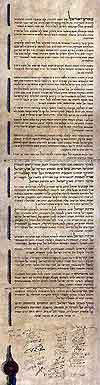
I know - I'm kind of nitpicking about a word. But it's an important word. I've asked around, and no one can tell me why we call it Yom Ha'atzmaut. We just do. Looking at the Megillat Ha'atzmaut - Israel's Declaration of Independence, there's really not very much mention of independence at all. Sure, it announces of הקמת מדינה יהודית - "the establishment of a Jewish state" in the Land of Israel. But when the State was declared in 1948, there certainly was a need to 'establish" a state, but there was no need at all to declare our independence. The British Mandate had ended. No one really wanted Israel - other than the Arabs, of course. Who were we declaring "independence" from?
Why then don't we call it the מגילת ההקמה - "the Declaration of Establishment"? Why not call the holiday יום ההקמה - "the Day of Establishment"? Good questions. My guess is that there's no small amount of irony in the fact that Israel modeled much of itself after the United States. In the U.S., we call the document that gave birth to the country the "Declaration of Independece." We call July 4th, the day we commemorate its signing "Independence Day". So Israel did the same, despite the fact that we didn't declare independence at all. It's even a "mitzvah" (stated jokingly, but everyone still does it) of the day to celebrate with barbecues - all over the country. Sound familiar?
Today, as we celebrate our "independence", we must do so with the understanding that we're just as dependent on God as we ever were. Our enemies threaten to destroy us, and they're growing closer than ever to having the ability to do just that. While our standing in the world is relatively good, let us not kid ourselelves for a moment that it could change in an instant. So we sing Hallel to God for our dependence on Him, and give thanks to Him that He has given us the opportunity to live in a country that we can finally call our own.
Yad Binyamin is a wonderful mixing bowl: Israelis (mostly) and Anglos; but even more significantly, Yad Binyamin brought in many residents of Gush Katif after the Disengagement (i.e. expulsion). I'll write more about this mix and the benefits that it brings to all of us in another post. That's not my point today. At last night's Yom Hazikaron ceremony, the organizers dedicated part of the program to those people from the Gush (Katif - we just call it "The Gush", which many Americans confuse for Gush Etzion) who were murdered in terrorist attacks. Watching the names scroll up the screen, I found myself wishing that every name was the last one, and that there would be no more names of murdered women, men, children. Of course the number of killed stayed the same - but each name rising up that screen brings another pang of pain; another family destroyed. Then I saw a set of names that I recognized. The Chatual family. You may not remember, but Tali Chatuel, together with her four daughters, was murdered in cold blood five years ago - right around this time of year. I remember the devastation we felt even in Michigan; the sadness and anguish and pain. And I also remembered that I spoke about Tali and her children in shul that Shabbat - which was Parshat Emor. I would like to share that drashah with you, as I think it still carries a powerful message for each of us. You can download the drashah here. May we elevate the memories of Tali, 34, Hila, aged 11, Hadar, 9, Roni, 7, and Meirav, 2 - through the ways we improve ourselves in their memories.
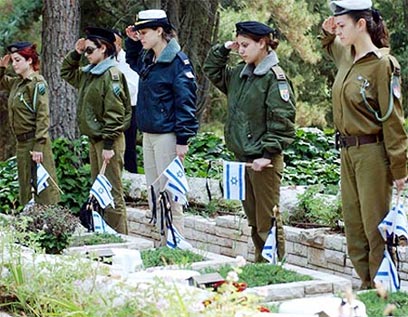
Tonight begins Yom Hazikaron, Israel’s Memorial Day for fallen soldiers and others killed in our ongoing struggle for survival. This time of year brings a whirlwind of emotion; the roller coaster ride of the emotional descent to Yom Hazikaron – and the sudden climb to the heights of Yom Ha’atzmaut.
This past Shabbat, the Beit Knesset Mercazi of Yad Binyamin (my shul) hosted Rav Ya’akov Meidan, Rosh Yeshiva of Yeshivat Har Etzion (also known as the Gush). In his afternoon shiur, Rav Meidan spoke about the way we should approach Yom Hazikaron and Yom Ha’atzmaut. In reality, Yom Hazikaron really borrows its name from another Jewish holiday – Rosh Hashanah. As we know, zichronot – memories – play a major role on Rosh Hashanah. During our tefilah, we refer to the day specifically as yom hazikaron. We relate to God as the zocher kol hanishkachot – He who remembers all that is forgotten. We ask Him to specifically remember us “for good, and not for bad.” What then is the connection between the real “Day of Remembrance” and the modern Yom Hazikaron? Rav Meidan suggested a natural, inherent connection between the two days. The highlight of the davening for many people on Rosh Hashanah is U’netaneh Tokef – specifically the harshest part of the poem: מי יחיה ומי ימות – “who shall live and who shall die.” As we listen to the chazzan chant that haunting tune, our minds turn to those who we lost during the past year. And we wonder: who won’t be with us when we gather again next year? מי יחיה ומי ימות? This was an especially pressing thought for me during the high holidays as the rabbi of a shul. I knew who was sick and suffering. I presided over all of the funerals during the past year. I inevitably would wonder: who will we bury this year? Who won’t be sitting in our ranks next Rosh Hashanah? Morbid? Sure. But how do you stop those thoughts? That emotion – that dread; the fear of the unknown; the wonder of who else will join the fraternity of tragedy, Rav Meidan said, is precisely what occupies the thoughts of most Israelis as they mark Yom Hazikaron each year. As we commemorate the loss of sons, fathers, brothers, sisters, children, and parents, we also wonder about the future. On Israeli television on Yom Hazikaron, one of the channels simply scrolls a list of the fallen throughout the twenty-four hours of the day. This year we added another 122 names to the list. It scrolls slightly faster this year than it did last year. How many more names will we have to add to the list for Yom Hazikaron 5770? מי יחיה ומי ימות? It’s a chilling, frightening question. On a more personal note, I find myself feeling very much like an Oleh – an immigrant – this year. I don’t really have a strong sense of what I’m supposed to do tonight and tomorrow. Sure, I’ll go to the memorial service in Yad Binyamin. But when I come home from work early on Tuesday (work ends across the country after a half-day), while most Israelis visit various military cemeteries to remember friends or family members, can I exercise? Is that disrespectful? In Israel, Yom Hazikaron is personal. It’s not like Memorial Day in America – which is more about sales and bargains than honoring the military, which itself seems more distant and unconnected to daily life. Here, where everyone served in the IDF, it’s about your uncle or cousin who died in a war; your neighbor or the member of your shul killed in a bombing; or the guy who lived on your block who didn’t come home from miluim. Never having served in the army, I don’t feel that strong connection. I don’t have a friend or fellow officer I personally know of who made the ultimate sacrifice for the country. Thankfully, I don’t have a member of my immediate family in that category either. To be honest, I’d really like things to stay that way. Sure, it’s a natural emotion – but is that selfish? On one hand, I’m rather glad to be unable to really appreciate the gravity of Yom Hazikaron. But that gladness brings with it a twinge of guilt. Is it right to be happy to not know the pain of Yom Hazikaron?
By Rabbi Reuven Spolter, Director of Recruiting and Special Projects What's the worst gift that you've ever received? When I got married, my wife and I received a plastic platter in the shape of a fish. We found it both strange and rather ugly. So we kept it. Each of us has a gift like that. I'm sure we've all gotten pretty bad gifts. But in each case, at least someone tried to give you something nice – even though it turned out to be a miserable failure. But what if your neighbor "gave" you the flu – on purpose? Would you consider it a "gift"? Parshat Metzora relates the very unusual appearance of nigei batim, blemishes that appear on the walls of one's home. The Torah describes the procedure requiring the removal of the tzara'at in order to purify the home. Yet, the language describing this particular tzara'at raises an important question. In other cases of tzara'at, the Torah describes the affliction in neutral language: אדם כי יהיה בעור בשרו שאת – "if a person has in his skin a blemish…" The Torah doesn’t make any judgments about the wound. It's there. How should he act? But when describing tzara'at of the home the Torah says,
כי תבאו אל ארץ כנען אשר אני נותן לכם אחזה, ונתתי נגע צרעת בבית ארץ אחזתכם
When you come into the land of Canaan, which I give to you for a possession, and I put the plague of leprosy in a house of the land of your possession.
The word ונתתי doesn't really mean "and I put." It means "and I give," which leads us to wonder, what type of gift is tzara'at on one's home? I can think of many things I'd rather have instead of having to knock down parts of my home. Why then does the Torah use the verb לתת – "to give" when describing tzara'at of the home? Rashi gives the famous answer that the Emorites hid money in the walls of their homes before the Jews conquered the land. So, when Jews moved into their homes, the homes broke out with hives, so that when the people knocked down the walls they found the money. But the Yalkut Meam Loez (Vayikra page 153) answers the question in a way that can give us new appreciation for the trials and tribulations that we have experienced this past year in the Land of Israel. When they originally built their homes, the Emorites dedicated their construction to their idol of choice, thus infusing these homes and buildings with a רוח טומאה – a spirit of impurity which would defile anything that dwelled in those homes. Because Hashem wished to give us the Land and that His presence should dwell in it, He did not wish for his Shechinah to dwell in a place of Tum'ah. For this reason, he sent blemishes in the walls of the homes containing the defilement, so that the people could remove them and purify their new homes, themselves, and their new Land. Meam Loez asks us to see trials and tribulations from a new perspective. Although difficult to appreciate, sometimes destruction is actually constructive. If we succeed in removing the spirit of Tum'ah, and replace it with a sprit of purity, then the tzara'at was indeed a gift, even if it didn't seem so at first. This week we'll celebrate the 61st anniversary of the great gift from Hashem that is the State of Israel. Like tzara'at habayit, sometimes we might feel tempted to look at the difficulties and struggles that Israel must deal with and think, "Some gift. Who needs all these troubles?" Why did we have to add more names to the list of the fallen during the past year? Why must we keep fighting wars to defend our right to live in our God-given Land? But when we place these struggles in context and see the tremendous growth, bounty and blessing that is the State to not only the Jewish people, but to the world, we realize that we have a lot to be grateful for. And one day we will also realizes that even the blemishes – which we commemorate on Yom Hazikaron before we celebrate Yom Ha'atzmaut – were a necessary part of the process that brings about the needed purification of Eretz Yisrael.
Understanding Tzara'at Tzara'at is difficult for us to understand and appreciate. We'll look at the deeper message of tzara'at, and a critical lesson it has to teach us especially today.
Click here to download the shiur, or you can play inside the handy-dandy audio player I have graciously provided for you.
Right before Pesach I received the following question regarding this post, which I am posting with permission, along with my answer.
I read your most recent entry on the Maharat issue. I have one question/issue. You set forth a very compelling case that a learned woman could serve as the functional equivalent of a rav in most categories of a 21st century rabbi, yet, as you contest, a woman doesn’t command the greatness, authority and leadership necessary for the job. As I read it the one name that popped in my head is Devorah. As I read Shoftim, my sense is that she possessed all of those skill sets with enough gravitas that men would go to war upon her command. (I’m aware that men have a tendency to do lots of atypical things because a woman asks; isn’t that the only recipe to a successful marriage!?!). But while she was a naviah, I think those same characteristics (leadership, authority, etc.) are available to (and are possessed by) many modern day women as well.
Thanks for your question about Devorah. On one hand, Devorah's role in Tanach seems to call into question my assertion that women could, but should not lead because it's a lack of modesty or appropriateness.
But when I thought about it more carefully, perhaps Devorah is the best example of precisely what I was trying to say. Devorah clearly could lead the Jewish people - and she did. Her gender really had no bearing on her ability to lead. In the words of the Midrash, הכל לפי מעשיו של אדם רוח הקדש שורה עליו - (the Divine Spirit of God rests on a person completely based on his actions.) Since she was capable and available, she became the leader.
But Devorah's example raises a larger question: If she was such a great example, where are all the other female leaders that should have followed in her wake? Why did so few women follow her example?
A predominant theme running throughout the book of Shoftim is the dearth of quality leadership who led the Jewish people during the period of the Judges. Go through the list: as great as each leader was, each one had a critical shortcoming: Ehud, Shimshon, Gidon. The Navi basically makes this point before the tragedy of Pilegesh B'givah (Chapter 19) when it states, ויהי בימים ההם ומלך אין בישראל - "it was in those days that there was no king of Israel." Shoftim chronicles the results of flawed leadership; the lack of unity that divides the people, the shortcomings in faith and devotion to God.
Discussing Devorah, the gemara makes precisely this point saying that she only became the leader of the people because there was a lack of righteous men in her generation - see Megillah 14a. (and I daresay that Devorah would have been the first person to agree with that statement.) Even when she sends Barak to go fight Sisra, he says that he'll only go if she goes with him. To this she responds: אפס כי לא יהיה תפארתך על הדרך אשר אתה הולך כי ביד אשה ימכר ה' את סיסרא -- "'I will surely go with thee; notwithstanding the journey that thou takest shall not be for thy honour; for the LORD will give Sisera over into the hand of a woman.' (Shoftim 4:9) She mocks her own general for needing a woman to babysit him while he fights the war. (Sisra's finds his ultimate downfall in a similar manner - in the hands of a woman who seduces and then kills him. How's that for a military glory?)
Then the story ends and we don't really hear from Devorah again. She fades from the scene, most probably because she didn't really want to be the leader of her generation anyway. But, as they say, במקום שאין איש - "in the place that there's no man..." She had to take the phrase literally.
I think the Gemara (Berachot 20b) really says it best when discussing whether a woman could lead the bentching for a man: really, she could. אשה מברכת לבעלה - "a woman may bless for her husband." אבל תבא מארה לאדם שאשתו ובניו מברכים לו - "but a curse will (should?) come upon a man whose wife and children bless for him" - because he himself cannot.
That, I think is the point here. Once we assume that halachah does indeed distinguish between the roles of men and women (which I think the Torah clearly does), what does it say about the community that chooses a woman as its spiritual leader despite the fact that she cannot lead the davening, count for a minyan, judge, testify, etc.?
Devorah herself "sat under the date tree" in order to avoid impropriety. People came to ask her questions, and she answered them. But she herself never asserted that leadership. She avoided it. Because she herself understood that the Jewish people would have been much better off had their leader been a man.
Over Pesach I spoke at Sha’arei Tefilah (a new shul in Yad Binyamin) on the topic of “Food and Eating in Judaism”, basing my talk on an essay from the Rav that appears in the book Festival of Freedom, published after his death. So, none of this is from me – it’s all based on the Rav’s first essay entitled, “An Exalted Evening: the Seder Night.” So what’s the problem with food? We all like food. Most people I know have no problem with food – and in fact like it very much. (I consider myself strongly in this category, especially with regard to grilled meats.) Generally, food tastes good. It serves as a source of nourishment. It brings us a sense of physical well-being and even pleasure. So what could be bad? It boils down to biology.
Generally, human beings keep their biology to themselves. We consider biological function private and personal, to be shielded from the view of others. Think about the different types of biological functions that our bodies perform: defecation, lactation, cohabitation. We perform each function in private, as we should. And then there’s eating. Functionally, there’s nothing that distinguishes eating from any other biological function. And yet, for some reason, we perform that particular act in the most public of settings. Why? Frequency -- we use the bathroom every day. Pleasure -- sexuality certainly fits that bill, and despite changing societal norms, that still belongs in private. So what’s different about eating? Why should the biological function of eating enjoy a place in public while other functions languish in private? We can also ask the question another way: in what ways can and should we humanize eating? Humanity considers itself substantially different than the animal world. We use our cognitive capacity to elevate ourselves both physically, but also ethically and morally. But the biological function of eating is substantively no different than that of the animal world. We eat – but so does the beast of the field, the fish of the sea, the termite in his wood. Each needs biological sustenance, so he consumes nourishment. We’re no different. We’re hungry, so we consume food. But we’re supposed to be different. We’re not supposed to simply fulfill biological needs; we must elevate them and even sanctify them. In recent years, a new “sport” has cropped up called “competitive eating.” This sport pits contestants from around the world in a competition to see who can consume the largest quantity of – whatever food it is – in a specific amount of time. While this practice probably began harmlessly enough, with the pie-eating contest at the county fair (remember the great scene though, from Stand by Me) – it has mushroomed into a full-fledged sport complete with sponsorships, prize-winnings, and television deals. Who can forget Kobiyashi’s memorable championship performance during this year’s July 4th Hot Dog eating contest, where he suffered a “reversal” (that’s industry-speak for “vomiting”) but was able to re-ingest to avoid disqualification, and soldiered on. (Full disclosure: I missed the broadcast. Sadly, I was probably eating hot dogs on July 4th – not watching others). In any case, any objective observer who can take a step back would realize just how animalistic, vulgar and profane “competitive eating” truly is. It’s really unfair to call it “animalistic”, because no animal would ever eat in this way. An animal might eat a huge amount – but only because he’s been programmed biologically to store his food for an extended period of time. No animal would intentionally eat a quantity of food that would make him sick. What would be the point of that? No – “competitive eating” is an endeavor that only human beings engage in. Hot-dog and matzah-ball eating contests only highlight the problem for us. They demonstrate the quandary food presents to us all: our biological functions have the ability to degrade below the level of the animal world. It carries that much danger – but also the same amount of positive potential. Just as food can denigrate us, in can elevate us – make us better people: more human, more spiritual and more exalted. The question is how. The Rav, articulating the problem in his eloquence, notes that the Torah requires that we introduce God into the process of eating.
If man wants to redeem his eating activity and sanctify it, he must invite God to partake of the meal, or to join him and his friends while they are engaged in something so carnal and "primitive." This strange experiment of introducing God into the circle of men enjoying their food is not a homiletical image, but a solid biblical idea. Man eats his bread before God: Jethro, Moses' father-in-law, took a burnt offering and sacrifices for God; and Aaron came and all the elders of Israel to eat bread with Moses' father-in-law before God (Ex. 18:12). Upon the nobles of the children of Israel He laid not His hand: also they saw God, and did eat and drink (Ex.24:11) There you shall eat before the Lord your God, and you shall rejoice in all that you put your hand unto (Deut. 12:7). "Eating before God": how strange this phrase would have sounded to the Greeks of old! Thinking before—or rather with God was a truism in late Greek philosophy, particularly among the Stoa, who considered the finite human intellect an infinitesimal component of the infinite divine logos, and who regarded thinking as a reflex of the divine poetic gesture. Whenever man engages in cognition, he submerges in God, because only through Him is acquisition of knowledge possible. To come close to God or to unite with Him through such an unrefined carnal activity as eating would simply evoke ridicule. Yet our religious conscience felt differently: one eats with God, in His presences How? By sacrificial action, which converts the food of man into the bread of God: You shall sanctify him therefore; for he offers the bread of your God (Lev. 21:8). Command the children of Israel and say unto them: My offering and My bread for My sacrifices made by fire ...(Num. 28:2). Judaism developed a new institution, the se`udah. It is neither an ordinary meal nor a feast; it is more than that. It is the crucible in which the bread of man is transposed into the bread of God; it expresses the fellowship between God and man and the participation of God in all human pursuits and activities. The realization of the idea of se'udah can occur only when man eats differently than the animal, when he displays uniqueness even with regard to the physiological processes in which he must engage in order to satisfy the demands of his body.
Judaism answers the challenge of sanctifying our eating in a number of different significant ways, each addressing a different aspect of the process of eating. Appreciating the significant demands that Judaism makes during each step of the process can transform the way we look not only at the food that we eat, but the very way that we live our lives.
Rena needs to transfer her driver’s license, so we drove up to Holon, one of the few places in the country where you can get your paperwork done. (The picture to the left is pretty much exactly what it looks like. Crowds. Long lines. I knew it would be an all-morning affair. I brought my laptop.) About an hour into the waiting a man sat down next to us and opened a conversation with, “So, what number are you?” We were 56, he was 68. They were up to 40. We had time for a talk. He pulled out his papers, as he wanted to know whether I thought that the clerk would accept his paperwork. (No, I’m not sure why what I think matters either. “I hope I don’t get the religious clerk. She’s mean.”) It turned out that he only had a paper license without a photo ID. What happened to his regular license? They took it away when they convicted him of securities fraud before they deported him. Throughout the entire conversation, he seemed unperturbed by his former profession. I didn’t get the whole story, but he apparently worked at a firm whose entire purpose was to steal from insurance companies and the like. “What – you pay your premiums your entire life, and then when you want to make a claim they don’t pay! That’s not stealing?” He had particular scorn for Bernie Madoff, who stole money from Jewish organizations, and organizations that gave money to Israel. But stealing from corporations? In his words, “Hey, הגונב מן הגנב פטור (one who steals from a thief is exempt [from repaying]), right?” (Actually, he’s not at all right. It turns out that this is a huge, well-known dispute among commentators on the Shulchan Aruch, and the Torah expressly forbids the act of stealing intentionally from anyone. But I digress.) We got to talking about buying a new car, and how instead of paying 120% tax on our new car, we only had to pay 100% tax on it because of our rights as new olim. He was incredulous. “Hey, all these Jews from around the world want to move here, but they don’t because of the high taxes.” I disagreed. To my mind, it’s all about the jobs – which brought me to his job. What would he do now that he was “out of work”? I suggested (probably naively) that he go into investment management for the Russian community. After all, I said, you speak Russian, (Georgian, he added), English, Hebrew. Plenty of immigrants need good advice. But this time you’ve got to be honest, I added just to make sure. He didn’t think it was a good idea. “The yetzer hara is too great,” he said. “The money’s there for the taking. On Wall Street, you’re the criminal if you don’t take it.” His honest explanation of his predicament – having been convicted of a white collar felony, spent time eating kosher food in a Federal prison in Pennsylvania, and deported to Israel (free flight!) – explains the mess of the American economy better than anything else I’ve heard so far.
I'm just archiving some past Pesach material from my website, so I'll have these links saved. Nothing really new here.
Pesach Audio Hagadah 5769: Ha Lachma Anya The first paragraph in Maggid rasises some fascinating questions. Who wrote it? Why is it in Aramaic? Learn important tools to help make the seder meaningful. Click here for the Audio File
Hagadah 5769: The Wandering Aramean Who is the Arami of the Hagadah? Where does this text come from? This text, taken from the Torah, speaks clearly to us especially today. Click here for the Audio File
 I saw this comic which informed me that the Matrix came out in theaters 10 years ago this month. I smudged out some adult language in the comic, from this site. In any case, April 2nd marked the tenth anniversary of the release of the Matrix, which I consider a very important science fiction film - mostly because it contains what I consider to be a great deal of truth.