Friday, November 6, 2009

Did He Tell Her?

We all know the famous Rashi about Shalom Bayit in this week's parshah:
When Sarah heard the angel bless the new couple with a child, she laughed saying,
And Sarah laughed within herself, saying: 'After I am waxed old shall I have pleasure, my lord being old also?' (Bereishit 18:12)
God confronts Avraham with a challenge:
And the LORD said unto Abraham: 'Wherefore did Sarah laugh, saying: Shall I of a surety bear a child, who am old? (verse 13)
Rashi, notes that God changes some of the details of the story. Instead of saying that Sarah thought that Avraham was too old, God only tells Avraham that she considered herself too old. Why did God change the facts? In order to maintain peace within the family. From this Rashi we learn that one may actually change facts in order to maintain peace - mipnei hashalom.
Sounds great. I have one simple question: If Hashem really wanted to keep the peace, why did He say anything at all? Isn't that kind of like picking a scab? Why does God need to interject and rebuke anyone? Why not leave well enough alone, and Avraham and Sarah avoid a fight entirely?

It's really late before Shabbat, so I can't answer the question now. But I have a suggestion based upon the comments of Ramban on this section - which I'll share after Shabbat. Still, it's a good question to discuss over the chicken soup.

Thursday, November 5, 2009

Parshat Vayera - When Spouses Fight

Audio Shiur:
Parshat Vayera - When Spouses Fight
Vayera chronicles not one, but two of the three arguments between Avraham and Sarah found in the Chumash. The way they fight, and what they fight about, teaches us a great deal about how we should (or should not) argue with our own spouses.

Click here for the audio link, or listen in the handy audio player supplied below. And if you're wondering where the cool Lego picture is from, check out this site.


Tuesday, November 3, 2009

Wrong Answer. Parenting in the Age of Facebook

A New York Times tech blog featured the following question and answer:
My 13-year-old daughter signed up for Facebook without my permission. Should I be a grinch and make her quit or get over it and just let her keep her account?
(Answer)Rather than crack down on her account, this could be a golden opportunity to help your daughter begin learning how to safely navigate social networks and the Web.
While the article goes on to describe important ways to monitor your childrens' Facebook accounts and activities (and I totally agree that you should insist that your children "friend" you, as you have not only the right, but the responsibility to know about your child's online behavior), the answer doesn't address the fundamental question.
From the question, it's unclear whether the child asked for a Facebook account, and the parent said no, or just signed up on her own. Reading the post, I get the sense that it's the former. If this is true (and this post will assume that it is), then my answer to the question is that the parent must "be a grinch" (notice how guilty the questioner feels) and make her drop the account, at least temporarily.
We have a simple question of discipline. A child asked a parent for permission to have a privilege, and the parent - justified or not - said no. It really matters not whether the kid wanted to stay over at a friend's house, attend a party or open a Facebook account. What matters is that after getting an answer she didn't want, the child proceeded to defy the parent and do it anyway. (Typical child behavior. Nothing shocking there.) But what the child needs most at the moment, is discipline. She violated a rule, and a direct answer from a parent. Relenting now sends the message that it's OK to ignore the parent's wishes, and if you go ahead and violate what the parent says, the parent will feel "like a grinch" and allow the behavior to slip.
I think there's an important point in the question that parents often miss. Discipline stinks. No one likes punishing or disciplining a child - whether the child is four, and bursts into to tears, or fourteen, and gives you an eye-roll that only a teenager can. But, as much as they hate the discipline, they need it too - and even crave it. Because discipline gives our children a sense of security and limits. It sends them the clear, powerful message that their parents not only care, but will fight them to ensure that they do the right thing.
Most thirteen-year-olds' friends are all on Facebook, sharing the minutia of their lives. I don't really have a problem with allowing kids to have Facebook accounts, as long as a parent follows the advice in the column.
But, if I was the parent in question, the violation demands punishment. I would tell the child: "Yes, you can have a Facebook account - in two months. And hopefully, the next time you ask me for something, instead of doing what you want when you don't get an answer you like, you'll come back to me, discuss it, present your side of the issue and we'll be able to reach a reasonable solution."

Sunday, November 1, 2009

Fighting for a Piece of the Pie

A while back I flipped on the radio on my way to work and heard a brief interview with Professor Daniel Hershkovitz, Minister of Science and member of the cabinet from the Mafdal (religious Zionist party). Just as an aside, Professor Hershkovitz is an amazing man - a real combination of Torah and knowledge. He's a rav, a professor, and also a very engaging speaker. But I digress.) Oops, my bad. He's not from the Mafdal (that stands for מפלגת דתי לאומי - the Religious Zionist party). They renamed the party הבית היהודי - the Jewish Home. They're still the Religious Zionist Party, only that's not what they call themselves. And in any case, the name change didn't work. They didn't get any more votes this time than last.
Hershkovitz found himself on the radio fighting for money for Sherut LeUmi. What is Sherut LeUmi? The law in Israel states that every Israeli young person is required to enlist in the Israeli Defense Forces. In a deal that was worked out in the early fifties with Ben Gurion, the government exempted religious women who felt that military service violated their religious and spiritual values. (This is a rather complicated issue here in Israel. While there are certainly Orthodox girls who do serve in the IDF, most do not.) Yet, as opposed to most Chareidi women who had no interest in serving the State in any form, religious Zionist young women felt that while they could not serve militarily, the still wanted to contribute to the State in some way. Hence, Sherut LeUmi - national service - was born.
Today, fifteen thousand young people - many women, most religious, but some men and secular women who cannot serve in the IDF for whatever reason (health, educational, emotional, or whatever), serve in Sherut LeUmi. They serve across the country in hospitals, offices, schools, municipalities - you name it, they volunteer and give between a year or two after high school to the country.
Seems like a great program - and it is. Sherut LeUmi girls are passionate, idealistic, dedicated to the State and devoted to their work. They work under umbrella organizations who arrange their housing, working conditions, oversee their programs and supervise their work. They also give them guidance and ensure that they have food to eat and enough money to get some lunch and a bus pass to get to work and back home. It really is a shoestring budget - about 35 million shekel for the year.
You would think that the government would consider this a good deal; 15,000 idealistic young people dedicating a year or more of their lives to the country. (How much would the United States pay for that many volunteers?) You'd think that the Israeli government would consider it a bargain. And yet, there was Professor Hershkovitz on the radio, arguing for the money for Sherut LeUmi. In Israel, even volunteers for the country are political, and because Sherut LeUmi is considered a "religious Zionist" endeavor, it never made its way into the yearly budget. No, every year it's got to be a fight.
The treasury said that the Mafdal - sorry, Bayit Yehudi - should use its discretionary coalition money for Sherut LeUmi. (apparently, joining the government and supporting the Prime Minister comes with perks; money for the pet projects that you like.) Hershkovitz said nothing doing - why should he be stuck with a bill for a project that really serves the entire country, and should really be part of the State budget anyway?
So they played a huge game of budgetary chicken. The treasury didn't send the check, and the year began. The Sherut LeUmi organizations started the year, promising to pay bills with the money that they "knew" would eventually come, but did not. Until things got so bad that the Sherut LeUmi outfits decided to do what everyone else always does to get what you want in Israel: go on strike. Imagine the outrage across Israel if all the office workers, hospital volunteers, school tutors, etc - just didn't show up one day? It's sad - but strikes, even threatened ones - really have an impact here.
Hershkovitz threatened to leave the coalition if the money wasn't forthcoming, and, as the above article notes, "Finance Minister Yuval Steinitz, after consulting with Prime Minister Netanyahu, approved the budget due to the national importance of the operation." Isn't that rich? Must be really important if they had to threaten to cancel the program before the government approved the budget!
The best part came when the check finally cleared. Last week's Mekor Rishon - the paper of record for the religious Zionist community - featured this large advertisement.

In this ad, the four major Sherut LeUmi organizations give a big thank-you to Professor Hershkovitz for his hard work securing their budgets, ensuring that they didn't have to go on strike, shut down, and cancel a major national volunteering program. They also thank the head of the coalition, member of Knesset Zev Elkin and others. All of this for making sure that they got the budget they were always supposed to get, everyone knew that they'd get - and that they've been getting for decades.
If so, why the fight? Because here, money is all about politics. The government - the Likud in this case - wanted to force Hershkowitz to fight, and use some of his clout on Sherut LeUmi, knowing that they'd send the check eventually. It gives them leverage when they need him to sign on to something that he doesn't really support, but that they want.
Yet, to me, this entire episode hints at a much deeper, more pervasive problem in Israeli politics that plagues the religious Zionist community: the need to get our "piece of the pie."
By creating separate parties, on the one hand the RZ community gives itself a unique and distinct voice, allowing it to raise issues unique to its constituency. At the same time, we also alienate ourselves from the "broader" society. In a way, we articulate a sense of "otherness" and alienation from the larger Israeli public. So that public says: you have your own needs? You want your slice of the pie? Fine - but you're just going to have to fight for it. That's the way the game is played. You don't get the pie for nothing.
But what if RZ Israelis voted with the larger blocks. What if, instead of having a specifically RZ party, the RZs were members of Likud - voting in Likud and also having a seat at the table. Would we be having this argument now? Would we be fighting for every shekel, or would our seat at the table make those fights unnecessary?
Put another way, are the interests of Religious Zionism better served by creating separate parties, or would we all be better off - not just the larger Israeli public - but the Religious Zionist community as well - by combining forces with Likud and fighting not from the outside, but the inside?

Friday, October 30, 2009

What the Heck? Nike Doesn't Seem to Acknowledge that Anyone Lives in Israel!

A while back I started listening to podcasts during my commute, while I run, do the dishes, you name it. The best way to listen to podcasts, is on an Ipod, which I love. (It's really a fantastic blend of hardware and software.) My cousin, who knows that I run, graciously sent me a Nike+Ipod kit. Basically, it's a little pod that you put in your Nike shoe (which I happen to have), which tells your Ipod how fast you're running and how far you went, and helps you keep track of your runs. It sounds kinda silly, but it really does help. For some reason, I want to hear that lady tell me, "Congratulations. You've reached your goal."
Nike even has this great website, called NikeRunning where you can keep track of your runs, set goals - all kinds of nice things. And then there's a feature called "MapIt." (you may need to log in to access the site.)
Apparently, MapIt is a way to map runs of different distance. You can enter your location, and either enter new routes or find routes that other people have already entered.
Being that I live in Israel, that's what I searched for. And while Nike does have Israel on the map, no one seems to live here. It's totally blank. See for yourself.


I have three words for Nike: What the heck? Why is it that I can map a route in Amman, Jordan or Qalaat Deba, Lebanon, but not in Tiberias or Tel Aviv? Who decides that Arab countries get to have roads and cities, but Israel does not?

Thursday, October 29, 2009

Audio Shiur: Lech Lecha - The First Oleh, The First Aliyah Challenges

Audio Shiur:
Parshat Lech Lecha - The First Oleh, The First Aliyah Challenges
Avram's struggles as he moves to the Promised Land, both in Cana'an and especially in Egypt, portend greatly for his descendants. We discuss how the different perspectives of Rashi, the Midrash and Ramban deal with Avram's choices during his first foray into the Holy Land.

Click here for the audio link, or listen in the handy audio player supplied below. And if you're wondering where the cool Lego picture is from, check out this site.

Click to play the Shiur (or right-click to download)


Tuesday, October 27, 2009

Something is Very Much Wrong

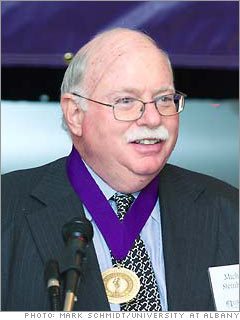
An article in the Wall Street Journal about how students who participate in Birthright trips are far less likely to intermarry included a quote from Michael Steinhardt, a primary supporter of the program.
Mr. Steinhardt, 68 years old, says the study results were encouraging, but he is concerned that education in Jewish upbringing is falling short if one trip can make such a difference in marriage behavior. "Something is very much wrong" in upbringing, he says. Mr. Steinhardt, who describes himself as an atheist, has said he supports Taglit because he wants to pass along Judaism's humanistic values.
I really don't get Michael Steinhardt. On one hand, he criticizes parents for not imparting Jewish values in their children during their upbringing. On the other hand, he calls himself an atheist and only really values the parts of Judaism that are "humanistic."
It would be easy to criticize Steinhardt for the hypocrisy of leading a culturally Jewish life himself but criticizing parents for the way that they raise their children. But I can't. I feel sad for him. Really, I do. He must feel so conflicted.
Someone with only "cultural" connections to the Jewish people doesn't invest tens of millions of dollars in sending Jewish kids to Israel. He doesn't form a foundation funding numerous initiatives critical to enhancing Jewish life - many of them involved in different forms of Jewish religious life. He doesn't invest a huge part of his time and energy to rejuvenating the Jewish people. It just doesn't add up. There's got to be more there.
In this case, in a truly positive way, Steinhardt's actions speak much louder than his words.

Update: (October 30): I recently saw this article on the JTA blog from Mr. Steinhardt about his personal beliefs:
For years Steinhardt has touted himself as an atheist, making his disbelief in God very much a part of his public persona and his identity as a Jewish philanthropist (another phrase he hates)
Yet in talking about how to boost Jewish education, he suggested that Jewish parents join their children in struggling honestly with the notion of God. That, he said, is the Jewish tradition, citing the open squabbles that Abraham, Moses and Job all had with God.
“A God with whom we struggle is a God I could accept and still look myself in the mirror the next morning. And I suspect it is also a God that the next generation of Jews can live with as well,” Steinhardt said. “Our kids will respect us if they feel we are talking to them about a kind of Deity that we, ourselves, struggle to comprehend. It will convince them that we, their parents, are for real; that we aren’t trying to push some pious sounding, but insincere, horse manure on them. In the end, we can only gain by speaking honestly about this. I think it will not lead our kids away from faith. It might even lead them towards it.”
I guess I can say I was ahead of the curve on this one. Oh yes, my favorite Steinhardt quote from the piece:
When asked by an audience member what advice he would give to new graduates of Reform and Conservative rabbinical seminaries, he replied, “Go to Wall Street."
Ouch.

Monday, October 26, 2009

A Beautiful Friday Night Experience

Rena joined the staff of MMY this year, and they invited us to join the girls on their Shabbaton to Tzfat last week. We had a wonderful time - Rena gave a shiur Friday night, I spoke at Seudah shelishit. The gabbai in the Ari shul Shabbat morning reminded me of Manny Mittelman. (Simcha too!) But the highlight for me, by far, was the davening on Friday night.
We were supposed to daven in a specific shul, but I had the map upside-down and got lost. So we started following some people who seemed like they knew where to go, and ended up in an open square where some yeshiva bochurim had set up a couple of mechitzot. They were still davening minchah, so we joined. At the time there were maybe 20 young men, and about fifteen women.
Then Kabbalat Shabbat began, Carlebach style. The young men began to sway. Then they started jumping, up and down, literally bouncing around with energy. Lechu neranena ended, and we began singing shiru lashem. When we finished the words, the song just kept going, and we began dancing in a circle. Only by this time, a group of chareidi yeshiva students who were walking by joined in. About ten minutes later (the same song still going strong), an platoon of soldiers wandered into the square, and a few joined the dancing, their rifles swinging on their backs. It was such a powerful scene; how from twenty yeshiva students there were suddenly hundreds in the square, many watching, but so many singing, dancing, ushering in Shabbat. The circle was what I'd call a "Breslov-style" circle. The problem with regular circles is that when too many people join, there's just not enough room to move. So the circle slows down to a shuffle, killing the energy of the dancing. (This is now my preferred circle - the outermost circle at most weddings that I attend - the shuffling old-guy circle.) But with Breslov Chassidim, when that happens, they swing part of the circle inwards, forming an inverse petal on a flower. In this way, they can add room for more people without slowing the dance.
When I saw them do this it gave me a powerful feeling; that in this circle in which we danced, I felt an almost unlimited ability to expand. No matter how many people joined the circle, there would still be enough room, in that small square, for the dancing to continue at full speed.
The chief rabbi of Tzfat, Rav Shmuel Eliyahu was there, and during a lull they asked him to say a few words. He spoke about the power and joy that emanates from shirah - from song.
It was probably the longest Kaballat Shabbat I've ever participated in. But it doesn't feel like it was. Still over a week later, the davening that evening continues to warm my heart.

Thursday, October 22, 2009

"What Did You Learn about the Parshah?"

A parent in my community recently sent out an email to the community listserve, complaining about many shortcomings he perceives in the local school. Among his complaints he noted that,
But we were tired of kids coming home every friday without knowing anything about the parsha
Truth be told, I don't agree with what he wrote about the school. We've had great experiences with our children at that school. But what bothers me here is how many if not most parents evaluate much of their children's religious education: through the d'var Torah they expect on the weekly parshah.
Schools spend very little time teaching Parshat Hashavua, for good reason. It's not in the curriculum. The weekly parshah has very little to do with the study of chumash, navi, halachah, or gemara. It doesn't build skills nor good study habits, and were schools to simply relate the information contained in the parshah, the children wouldn't really have something "good" to say. Sure, it's part of the Jewish cycle and an important part of the davening on Shabbat (notwithstanding the personal obligation to review the parshah each week), but it just doesn't fit into the framework of most schools. And yet, come Friday night parents around the world ask their children the question: what did you learn about the parshah this week? They act as if they spend all that money on their kids' education simply to hear a good vort after their chicken soup, knowing full well that the parshah really doesn't fit into the curriculum. Teachers know this, so they make sure to give the kids a good "vort" to repeat at the table, creating a ridiculous kind of circle: parents want to hear a dvar Torah at the table, so schools spend precious learning time giving children relatively meaningless divrei Torah for them to repeat, sacrificing important learning time in the process.
School isn't for my children to learn a good vort on the parshah. I want them to spend their time studying, working, reading, and focusing on skills. Moreover, our children aren't performers, and they don't really know how to give a d'var Torah. (How many parents do?) And yet, we judge their schools based on whether they come home with a parshah sheet to read at the table.
Our kids are not teachers. Instead of expecting them to teach us Torah, shouldn't we be the ones teaching them at the Shabbat table? And instead of asking our children what they learned about the parshah, why not ask them to take out their chumash and share what they're learning in their real chumash class - even if it's not this week's parshah? Our children will have something intelligent to share, and that's the best and only way to find out what they're really learning in school.

Wednesday, October 21, 2009

Audio Shiur: Parshat Noach - Humanity and Sexuality

Audio Shiur:
Parshat Noach - Humanity and Sexuality
This is not the Noach story that you learned in grade school. That story focused on animals, boats and a lot of rain. The real story - the underlying story - paints a troubling picture of a society that had lost its moorings, and warranted destruction. What went wrong? What was so bad about the generation of the flood? And most importantly, what implications does Noach's generation have for us?

Click here for the audio link, or listen in the handy audio player supplied below.