Wednesday, September 29, 2010

New Feature: Siddurim at the Kotel

After our visit to Ir David this week, we made our way to the Kotel to daven minchah. Recently, during my visits to the Kotel, I've noticed an interesting feature unique to the Kotel: Inscriptions in siddurim, and specifically English ones. About a zillion siddurim are lying around the Kotel area, but interspersed among the normally donated ones are siddurim that have either been left there intentionally - essentially abandoned, or donated on a personal whim. As I read these siddurim, I've found myself wondering about the people who've left them. Each one has a story. Each one opens a window into a deeply personal aspect of someone's life. Take the following siddur:


This siddur was sitting in the men's section, of course. I wonder who Alexandra Alpern is. Is this her? (I don't know - I don't have a Facebook account. I know, I think I'm one of three people left on the internet who doesn't.) I'm guessing that she left the siddur at the Kotel as a donation, in the hopes of finding a soul mate. Did she? Has her siddur brought her closer to finding a זיווג טוב - a "good match"? Maybe this blog post will.

What about this siddur:


I imagine that B.B. and Rachel meant to inscribe the siddur to help the people davening at the Kotel, and not necessarily the Kotel itself. But maybe they did want the Kotel to daven better. People develop relationships with the Kotel. They visit and get a sense of solace, and connection. Sometimes a wall is more than a wall.
But I'm not sure that the Kotel would choose to daven from an Artscroll softcover siddur.
Then again, who knows?

Tuesday, September 28, 2010

More Fun Hebrew Words

Every mafia maven knows that the very worst crime someone can commit is to "rat" on someone else. (The same rule applies in the classroom too.) Over the last Yom Tov, I learned that the same value system has entered the Israeli lexicon as well. How do you say, "to rat"? (as in, "to snitch on another"): להשתנקר - l'hishtanker.
Usage: Student who threw the wad of paper in class to his friend who saw him, when the teacher turns around: אל תשתנקר עלי - al tishtanker alai - "Don't rat on me!"
What do you call someone who actually does rat on someone else? Of course, a שתינקר. (shtinker) No, I am not making this up. And I have no idea what the origins are.

Another fun Hebrew translation: How do you say "front end alignment" (in the context of auto repair)? Easy: כיוון פרונט -- kivun front. Many Hebrew terms are "borrowed" from the English.
Now guess: How do you say "rear-end alignment"? You'd think it would be כיוון אחורי - kivun achori. Only you'd be wrong. No, you say כיוון פרונט אחורי - kivun front achori, or literally, a "rear front-end alignment." Again, I don't get it. But that's what it is.
Go figure.

Sunday, September 26, 2010

The Freeze Ends. Were We Ever Really Frozen?

The media this evening marked the end of the building freeze in the "settlements" across Israel, celebrated with fanfare and the immediate construction of new buildings. A few thoughts on the freeze:
1. I'm not entirely sure that there even was a building freeze. Really. I work in Orot in Elkana, officially designated as a "settlement." It was clear at Sukkot time last year - a full two months before the "freeze" began, that something was up. I remember quite vividly spending time in Revavah with my cousins, and listening to the pounding of the trucks banging out foundations in the ground. The rule was that any building that had already been started could be completed. This was no more obvious than in Elkana, where a row of absolutely gorgeous homes has been going up for - just about ten months now. They should be ready in a matter of weeks.
In addition, we just spent Shabbat Chol Hamoed with my brother in Kiryat Sefer - yet another "settlement." While the "freeze" did suspend any new work, somehow a sizable number of apartment buildings have gone up over the past few months, including a new building directly opposite my brother's building. Funny thing about this freeze. It seems that the freezer must not have been working all that well.
2. Should there have even been a "freeze" at all? I spent the day with members of the YU Israel Kollel at Ir David (City of David), a powerfully important archaeological site found directly south of the Old City of Jerusalem. I've been there a couple of times, and they're always discovering something new. Today our tour guide led us up the steps that Jews took during Herodian times as they made their way to the Beit Hamikdash to be oleh l'regel. It was pretty amazing to follow in their footsteps on Sukkot, although it would have been even better had we actually been on our way to the Beit Hamikdash. Ir David has quickly become one of the most important tours that Jews today take in Jerusalem.
If I had to sum up Ir David in a nutshell, the Old City isn't really the Old City. It's the Jerusalem that was built after the first one was destroyed. The original, biblical Jerusalem is clearly and obviously located at the site that's now called Ir David, and contains ample biblical, historical and archaeological evidence to demonstrate the Jewish roots in the land that date back thousands of years.
There's only one problem with Ir David - at least some people think it's a problem. It's located in East Jerusalem, just a tiny bit over, on the wrong side of the Green Line. It's in "disputed" territory. But as a Jew, a line on a map drawn by a bureaucrat sixty years ago doesn't hold a candle to the rich, powerful historical hold that the Jewish people have on this land - and have had for ages.
That's the problem with the "freeze." I'm not naive. I know that we've got political and societal issues with the Palestinians that just won't go away. But is preventing Jews from building up a Jewish presence on land that belonged to us since the times of the Tanach going to improve the situation? Some might argue that it would. I would say that they're just denying history.
Much of the areas surrounding Ir David - in fact the vast majority - in inhabited by Arabs. But on the outskirts of the project live a number of Jewish families, and you can make out their sukkot dotting the hill below a massive police presence. Looking at the landscape I asked my son on the tour, "Do you think that the opposite hill we be a Jewish neighborhood in our lifetime?"
"Yes," he told me. "I do."
I agree with him. To quote the great sage Arnold Horschack, "What is, is. What was, was. What will be wa-us, but will be again."

Monday, September 20, 2010

Some People Really Are Nuts. Figuring Out Figure Eight Racing

Imaging that you never stopped for red lights. Ever. You just kept driving through, hoping that the car coming in the other direction missed you.
Sounds crazy, right. Well, watch the video. Apparently, people do this all the time.
When I saw this video, I immediately thought of a former member of mine in Michigan who's a big fan of "alternative" racing, and sent him the link. We spoke later on in the day, and he said that he always tries to find the wisdom and lesson in everything he sees, quoting the famous Mishnah in Pirkei Avot, בן זומא אומר, איזהו חכם? הלומד מכל אדם - "Ben Zoma said, 'Who is wise? He who learns from every man.'"
But I'm still trying to figure out: what in the world is there to learn from Figure Eight racing? That's some people are just plain nuts? That life's a crap shoot, and you never know where you're going to get hit from?
Actually, I think that the lesson is pretty clear: if you drive into an intersection, you will get into an accident.
And some people really are nuts.

For more Figure Eight goodness, of it you just want to laugh a little - more than a little, check out this video. (At some point in the video, you can hear someone in the background say, "Only in Michigan." So true.)

The Total-Body Experience: A Thought for Sukkot

I saw this thought in a number of books in Hebrew, but a quick internet search brought me to it in English here, in the book Tallelei Oros by Rav Yiśakhar Dov ben Shaʼul Rubin (it's scary what's online). You can buy it here.

The real question is: what does it mean? What difference does it make that these two mitzvot share the quality of a "total body experience?" To me the answer has to do active faith.
According to the Gemara, the Sukkot that we sit in represent either the "Clouds of Glory" that protected the Jewish nation in the desert, or the actual booths they dwelt in during their travels in the desert. Which ever option you choose, either represents a symbol of divine protection and influence. The Jewish nation left the relative safety (things were bad, but at least they were safe) of the desert for the danger of the desert. How was a nation of millions supposed to survive the harsh, unlivable conditions of the desert? And yet they did.
To remind us of both the faith of the nation, and God's miraculous protection of His people in seemingly impossible conditions, we leave our home, with their solidity and security, and live unprotected in the Sukkah. One cannot demonstrate that level of faith halfway. We either sit in the Sukkah or we don't. Sticking your hand in the sukkah won't cut it. We must leave our homes and move into the Sukkah for a week, and actively demonstrate our dependence on the divine.
The same applies to the Land of Israel.
In a way, you've got to be crazy to live here - and I'm not writing from a financial point of view. (I've come to believe that Orthodox people who live in the United States are crazy. How do they afford tuition?) I'm talking from a security point of view. We've got:
  1. Hizballah to the North. With a gazillion missiles.
  2. Syria to the Northeast. They're the ones giving the missiles to Hizballah. Thanks for that.
  3. Gaza in the south. They're committed to attacking Israel pretty much daily.
  4. Even farther east, we have Iran - whose nuclear aspirations are truly disconcerting. And they're giving money to anyone with a gun and an I-Hate-Israel website.
  5. And let's not forget the unknowable number of terrorists living among us - in cities and down not only in the West Bank, but in Israel proper.
In a nutshell, you've got to be nuts to live here. And yet we do. And we thrive and grow and succeed. Coming here - staying here - demands full-body emunah. It asks us not only to live with this reality, but to send our sons to protect it.
I think about this reality more and more as my oldest son grows older. One day, in not-so-many-years, he will, God willing, leave home to serve his country in the military. I will be proud, and pray for his safety, but this is not a scenario I had to contemplate when I lived in the States. That's whole-body emunah.
Food for thought as we sit in the Sukkah this year.
Sunday, September 19, 2010

Troubling. And Sad.

Consider the case of Esther Petrack. A recent Maimonides graduate, she decided to try out for America's Next Top Model. Troubling enough. But, as a recent piece in Tablet Magazine explains, during the interview, when she explained about the fact that she's Shomer Shabbat,
Ty Ty asked her about her Orthodox Jewish practice. “Do you honor the Sabbath?”
“Yes I do,” Esther responded, proceeding to explain the rules regarding the usage of electricity, computers, cell phones, and cars on Friday night and Saturday. Tyra sternly informed her that ANTM contestants work all the time, seven days a week. (I never realized that modeling was so urgent!) Would Esther, Tyra wanted to know, be able to adhere to the ANTM work schedule? Her Jewish identity was all of a sudden squarely on the spot, not unlike that of her Biblical namesake.
She replied after a momentary hesitation: “Yes, I would do it.
First of all, what is it about Maimonides? This is the second high-profile Maimo grad who's publicly rejected a frum lifestyle. One could argue that Maimonides is simply known as a good school with great academics, so it attracts a wide variety of students whose frumkeit level doesn't conform with the ideals of the school.
Or. I've been to Maimonides. Academics are a huge part of the culture - perhaps a reflection of Boston's college orientation. Is there something about a Maimo education that might inculcate skills, but leaves out some "yirat Shamayim?"
I'm not sure what to make of this. On the one hand, I don't want to indict the entirety of Modern Orthodoxy for the actions of one eighteen-year-old kid. Plenty of non-M.O. kids leave the fold.
But not many do it on international television.
And this one calls herself Orthodox.
It certainly doesn't look good.

Update: My mother, and a number of others, make a good point. She took strong exception to my comments, which makes sense, as she's a graduate of Maimonides. Class of 1882. Truth be told, though, she has a point. Maimonides has produced, and continues to produce many, many representatives who not only represent Orthodoxy proudly, but are what we would consider to be the finest representatives of frumkeit and Modern Orthodoxy - and the other flavors of Orthodoxy across the religious spectrum. You can't fairly judge a school by one or even several of its graduates.

Thursday, September 16, 2010

I'm Sorry. Really.

Some time ago, during my former life as a pulpit rabbi, I gave a sermon about the importance of hair-covering, pr some such hot-button topic. I don't remember exactly. I knew that the membership was divided on the issue - but that didn't often stop me from speaking out. Anyway, for some reason I was pointed to the blog post of a member of mine, who wrote about me both critically and incorrectly. I must admit that it was a very painful experience, to be attacked by someone who you considered a friend, albeit anonymously. It still kind of stings.
The amazing publicity and literally global reach of the internet is also its greatest danger. The same blog that can promote Torah, shiurim, and Religious Zionism around the world can also carry words that inflict harm and cause pain.
I write with a strong sense of awareness of this fact. So, I make a very concerted effort on my blog (and anywhere I write) to speak with civility, refrain from personal attack, and promote ideas and values that I hold dear. Sometimes my positions and opinions might upset the reader, but I hope that it's because he or she disagrees (which is healthy) even passionately, and not because they consider themselves insulted or maligned.
So, if I've written (or said in a shiur) something during the past year that was personally hurtful and insulting, I apologize and ask for your forgiveness.
It seems like the right thing to do this time of year. After all, Yom Kippur's the day after tomorrow.

Wednesday, September 15, 2010

Audio Shiur: Aseret Yemei Teshuvah and Parshat Bereishit - Frumkeit on the Back of My Brother

Audio Shiur:
Aseret Yemei Teshuvah and Parshat Bereishit - Frumkeit on the Back of My Brother
We often think of our own frumkeit in terms of the relationship we have with God, giving little thought to how our spirituality affects those around us, and those that we're closest with. The story of Kayin and Hevel has a great deal to teach us not only about brotherly love, but about our yearning for spirituality, competitiveness in religiosity, and the need for repentance and improvement.

Click here to download the shiur, or here to navigate to the shiur on YUTorah.org.

Monday, September 13, 2010

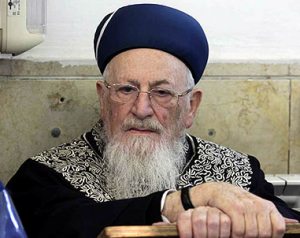
Rav Mordechai Eliyahu in France: A Powerful Expression of Religious Zionism

Since his passing, Rav Mordechai Eliyahu has continued to dominate the Religious Zionist scene. His teaching are all over the weekly Torah sheets, stories about his piety abound. I feel sorry that I was not aware of his greatness in life.
Over Rosh Hashanah, one of the more popular publications (called Mima'ayanei Hayeshua - ממעיני הישועה) published an interview with his son, Rav Shmuel Eliyahu, the Chief Rabbi of Tzefat (who I believe will one day be a chief rabbi of Israel. He really is a special man.) In the interview, he included a story about a state visit that his father once made to France when he was the Chief Rabbi of Israel. If you'd like to read the interview in Hebrew, you can find it here. Translation of the story follows.)

When our teacher Rav Eliyahu ob”m was the chief rabbi of Israel, he traveled to France for an official visit. France, as usual, was not with us. As always, she exerted pressure of Israel to abandon sections of Jerusalem and the Land of Israel for the benefit of the Arabs. During that period, the pressure was quite strong.
The visit schedule included a state reception in the presence of French President Jacque Chirac. Before the official reception the Rav had to follow the accepted tour route, including the State Museum which contains cultural treasures of the French people.
During the visit they showed the Rav a throne upon which Napoleon sat. “When did Napoleon live?” the Rav asked. The hosts were embarrassed by the question, and “explained” to the Rav when Napoleon lived. The Rav then asked, “Is the throne of Napoleon for sale?” An awkward silence hung over the room. “No,” the hosts finally answered, “This is a very important item. We don’t sell historic heirlooms.”
They continued the visit and arrived at the section which described the French monarchy. They showed him the room of Louis XIV: “Who was Louis XIV?” the Rav asked. “What did he contribute to the world? Was he ethical?”
“No,” the hosts answered honestly. “The entire monarchy was not that ethical, but this is our history, and we’re proud of it and honored by it.”
At the state reception with the French president before a large crowd, the Rav spoke about his visit in the museum. He told the guests about how embarrassed his hosts felt that a rabbi from Israel would not know who Louis XIV was. After all, these are very important historical figures. “I asked them whether they were ethical people and they hemmed and hawed, but they told me that this is their history, and they’re proud of it.”
The Rav said to the crowd, which included the president of France and some of his cabinet: “You expect me to know and honor French history, despite the fact that I’m not a citizen of France. Am I as an Israeli not supposed to know and honor my own history? Do the French not have to honor the Bible which has made such a great contribution to the world? Am I able to not honor the words of Moses that told us not to place the Land of Israel into the hands of strangers? Why must we honor your kings, that lived two or three hundred years ago, but not honor a chain of our own kings that lived long before them?”
The [Israeli] translator from the embassy was not so bold as to translate the Rav’s words exactly. The rebbetzin signaled to the Rav – who wasn’t intimidated by anyone, and stopped in the middle of his talk, and said, “I understand that my translator does not exactly recognize the rabbinic mode of speech. I ask the Chief Rabbi of France to translate my words.”
He had no choice. The Rabbi of France rose to translate the Rav’s talk. The Rav explained that he tried to find out the price of Napoleon’s throne. “I wanted to buy it.” The audience burst out laughing. He explained how they “explained” to him, in all seriousness in the museum that the effects from Napoleon are very important, and not for sale. “These are historical items, and we don’t sell our history.”
“Napoleon lived two hundred years ago,” the Rav answered, “and you respect him and refuse to sell his throne. Now I ask: must we sell Jerusalem, a city that has belonged to the Nation of Israel for 2,800 years?”
The entire audience stood, moved, and began to applaud. Even the President of France stood up, approached the Rav, shook his hand firmly and said to him, “I have never heard words like these.” The French President turned to the invited guests and said to them, “We would like to bestow upon the Rabbi a precious golden medallion that we give only to heads of state. When we arranged this reception we did not think to give it to the rabbi. But the instructive words of Rabbi Eliyahu were a ‘once in a lifetime experience.’ We would like to express our appreciation with this state medallion.”
I tell this story because it’s not just a story about Rav Eliyahu. It’s a story about ourselves. This is a story of life training. It’s a story of faith – for if we are strong in [faith] it will prevail.

Wednesday, September 8, 2010