Thursday, May 29, 2014

Audio Shiur: Yerushalayim - Uniting the Divided City

Audio Shiur:
Yerushalayim - Uniting the Divided City

While technically Jerusalem is a united city, do we think that it is truly united? While technically Har Habayit is in our hands, is it really? If not, what do we need to do to change the situation?

Click here to navigate to the shiur on YUTorah.org.

Click to play the Shiur (or right-click to download)

Friday, May 23, 2014

Audio Shiur: Parshat Bamidbar - Don't Count Your Blessings

Audio Shiur:
Parshat Bamidbar - Don't Count Your Blessings

Chazal teach us that if we want true blessings, then the best course of action is not to count them. Why then does the God spend so much time counting us?

Click here to navigate to the shiur on YUTorah.org.

Click to play the Shiur (or right-click to download)

Wednesday, May 14, 2014

Audio Shiur: Parshat Bechukotai - Unraveling the Tochecha

Audio Shiur:
Parshat Bechukotai - Unraveling the Tochecha


By carefully analyzing the text of the tochecha - which we often gloss over - we can see the steps of sin which lead to destruction, and give us a clear sense of what sins lead to the devastating punishments in the Torah. Source sheet here.

Click here to navigate to the shiur on YUTorah.org.

Click to play the Shiur (or right-click to download)

Tuesday, May 13, 2014

Acapella Concerts During Sefirat Haomer: A Curious Psak Halachah

Perusing the pre-Shabbat edition of Mekor Rishon last Friday, I noticed an interesting piece at the bottom of the front page of the paper, announcing an upcoming concert of the Maccabeats, which took place this week.

The headline: "The Jewish Group that Obama Likes Arrives in Israel With a Special Vocal Show for the Days of Sefirat Ha'omer"

OK - the Maccabeats are coming. I'm not entirely sure why Israelis would care (or even think) that U.S. President Obama likes the Maccabeats (from the YouTube video it's pretty clear that he wasn't in the room when they performed, but whatever...)
Yet, a quite curious quote appeared towards the end of the piece.
To the question of how a religious musical group can perform during Sefirat Ha'omer [Maccabeats Manager Chaim (Julian)] Horowitz answered, 'We received permission from Rav Hershel Schachter (Rosh Yeshiva of Yeshiva University) who said that shows with positive content are better than shows that are not appropriate for this time of year. He said that from our shows there's a spiritual elevation.'
Really? Not only did Rav Schachter (recently announced winner of the Katz Prize for applying halachah to modern life) permit the Maccabeats to perform in Israel during the Sefirah - he also endorsed the group! Moreover, Mekor Rishon's sister paper - Ma'ariv - has publicized the Heter under the title: איך מופיעים בספירת העומר, אם אסור להשמיע מוזיקה? - "How Can They Perform During Sefirah if it's Forbidden to Listen to Music?" There Rav Schachter's heter receives prominent placement - basically the same article, but with an entirely different emphasis on the halachic leniency.

I found the psak troubling for a number of reasons.
From a logical perspective, who says that people have to go to any performance during sefirah? Why is the choice between going to the Maccabeats and going to hear Madonna? What if it was between going to hear the Maccabeats and not going? Secondly, why would Rav Schachter issue a psak allowing the Maccabeats to perform in Israel? Shouldn't he tell them to ask someone in Israel? Rabbis in Israel would indeed be correct - and I know that some did in fact raise an eyebrow at this article - to wonder why Rav Schachter would issue such a psak.

It turns out that the psak really is questionable for a very simple reason: Rav Schachter never gave it.
When I reached out to Rav Schachter's son with my questions, he answered me as follows (shared with permission):
I spoke with my father about your email...He said he does not recall any sort of shailah or conversation with the Maccabeats at all. He agreed with your concerns, and felt that if in fact the crowd they are trying to attract, are the types that would otherwise doing things that were less in the spirit of sefira, then they should certainly be encouraged to go here. But this is not something he would suggest, for people who otherwise would not be involved in sefira appropriate activity. 
Moreover, my father said he has always been careful not to issue psakim for Eretz Yisrael, the same way that he doesn't like when Eretz Yisrael rabbanim issue psakim that are relevant to America. He said that makes this conversation with the Maccabeats even more hard to believe, as he in the past has almost never issued rulings that impact the society in Eretz Yisrael.
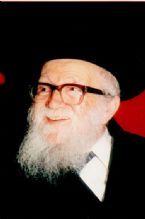
So, it turns out that Rav Schachter did not in fact permit the Maccabeats to perform in Israel.
Incidentally, the show sold out - entirely through advertising on Facebook. I wonder how many of the Maccabeats' fans hesitated due to halachic concerns but ultimately attended having heard that Rav Schachter allowed it.
This also raises a more disconcerting question: If Rav Schachter never issued the psak, why did the Maccabeats' manager say that he had?

Friday, May 9, 2014

What We Believe: It's Time to Start Talking about God Again - A Thought for Behar

Speaking with a rabbinic friend of mine, he mentioned a well-shared article called "The Rise of Social Orthodoxy", which describes leading an Orthodox lifestyle including keeping kosher, donning tefillin daily, keeping Shabbat - all without the inner belief that should be motivating such a lifestyle. Jay Lefkowitz writes,
And so for me, and I imagine for many others like me, the key to Jewish living is not our religious beliefs but our commitment to a set of practices and values that foster community and continuity. 
I said that I thought that the article reflected an extreme. After all, most members of Orthodox communities adhere to Orthodox beliefs, I argued.
My friend begged to differ. Many, he said, if not most members of "Modern Orthodoxy" are exactly like that.
"You mean they don't believe in Torah MiSinai? They don't believe in God?"
He seemed to think that they do not. When I insisted that the vast majority of the people that I knew did adhere to these beliefs, he suggested that I'm naive.
There's no doubt that belief in God, and especially the belief in the divine nature of the Torah, has been under attack by Western Culture for many years. I'm so accustomed to it that I tune it out. To what degree the denigrating comments in the media and the sarcastic attitude towards belief in God affects us is an open question.
But if the issue of fundamental belief truly is in danger, then it's time to start talking about it again. As a rabbis (and writer), I've spoken about so many ancillary topics: Torah study, prayer, Israel...the list goes on and on. But when's the last time you were in talk and the rabbi talked about God - and actually mentioned God Himself?

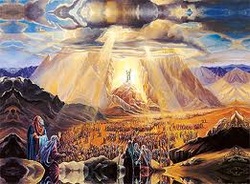
In one of his most famous comments, Rashi quotes the famous question of the Midrash: מה עניין שמיטה אצל הר סיני - "What's the connection between Shemittah and Mount Sinai?" Actually, Rashi's question revolves around the text. The Torah introduces the commandment of Shemittah (to leave the field fallow during the Sabbatical year) unusually: וידבר ה' אל משה בהר סיני לאמר - "And God spoke to Moses on Mount Sinai saying." Throughout most of the Torah, we find the usual introduction: וידבר ה' אל משה לאמר - "And God spoke to Moses saying." Here, the verse emphasizes that this commandment was issued on Sinai. What unique aspect of Shemittah can explain this unusual emphasis?
Interestingly, Rashi explains that it's not about Shemittah at all. Rather, it's about everything else.
אלא מה שמיטה נאמרו כללותיה ופרטותיה ודקדוקיה מסיני, אף כולן נאמרו כללותיהן ודקדוקיהן מסיני
Rather, just as with regard to Shemittah - all of its rules and details were given at Sinai, so too all [of the commandments] - their rules and details were [also] given at Sinai.
It's not just Shemittah. The entire Torah was given at Sinai. All the details of the Oral Torah, and the means to extrapolate those rules to our modern lives, were given by God to Moses at Sinai.
This is a core belief of Judaism - fundamental to the way we live our lives. When we don our tefillin in the morning, sure there's a sense of camaraderie and we're ensuring the future of the Jewish people. But that's not why we put on Tefillin. The Shulchan Aruch writes:
יכוין בהנחתם שצונו הקב"ה להניח ארבע פרשיות אלו שיש בהם יחוד שמו ויציאת מצרים על הזרוע כנגד הלב ועל הראש כנגד המוח כדי שנזכור נסים ונפלאות שעשה עמנו שהם מורים על יחודו ואשר לו הכח והממשלה בעליונים ובתחתונים לעשות בהם כרצונו וישתעבד להקב"ה הנשמה שהיא במוח וגם הלב שהוא עיקר התאוות והמחשבות ובזה יזכור הבורא וימעיט הנאותיו
He should concentrate when he dons [the Tefillin on the fact] that the Holy One blessed is He commanded us to don these four sections [of the Torah], for in them is the unification of His name and the Exodus from Egypt. [And we should place them] on the arm corresponding to the heart and on the head corresponding to the brain so that we remember the miracles and wonder that He did with us, for these teach us about His Oneness, and that He has the power and dominion above and below to do as He wishes. And he should subjugate his soul to the Holy One - which is in the brain and the heart, where the essential thoughts and desires are found, and in this way he will remember the Creator and minimize his desires.
That is why we wear Tefillin.
That is what we believe.

Friday, April 25, 2014

Audio Shiur: Why You Should Live in Israel According to Rav Shaul Yisraeli

Audio Shiur:
Why You Should Live in Israel According to Rav Shaul Yisraeli


Rav Yisraeli, in essay on Yom Ha'atzmaut, offers a number of suggestions why it's better for a religious Jew to live in Israel than in Passaic. But his final answer, quoting Rav Kook, sets our sights much, much higher.

Click here to navigate to the shiur on YUTorah.org.

Click to play the Shiur (or right-click to download)

Wednesday, April 23, 2014

An Amazing Visit to Amatzia

On Pesach, we're always looking for interesting, cheap, uncrowded tiyyulim. There's an organization called Iggud Hamidrashot, which is a loose conglomerate of dozens of tiny Midrashot which comprise small groups of young women doing national service by teaching about the Land of Israel. The Iggud put out a brochure before Pesach with a bunch of flyers advertising different programs over Chol Hamoed, and the first one, from Midreshet Hadarom, caught my eye.


The flyer invited you to see the new archaeological finds in Amatzia, which is the Lachish Region. It caught my eye because I knew that Lachish was relatively close to our house - about a half-hour drive on relatively unpopulated roads (and who wants to fight traffic on Chol Hamoed?). So we loaded up the car, ran to the grocery store for BBQ supplies (hey, it was Pesach), and took off south.


When the tour began, we walked through a fence outside the yishuv, and from there took a short walk up a gravel road. It was there that our tour guide explained that this area would in fact be the new home of Karmei Katif, which would house families that had been expelled from their homes almost 8 years ago. Yes, they're still living in caravans.


But when they went to clear the area to prepare it for houses, they made some amazing discoveries. They found an ancient house, including a bath, and perhaps a mikveh, that they believe existed in Roman times, some two thousand years ago.


You can see the intact floor tile from that period in the background - which we were all walking on. Our tour guide from the Midrasha (who recognized our daughter Leah from a tour she had given to the girls from school) told us that the site would probably not be preserved, as it was slated for future housing. Seemed to make sense to us. You can't preserve everything. Anywhere you dig in Israel you find an ancient site. But the view from that house was breathtaking. (click the picture to enlarge)


I couldn't help but think, standing on that hill and surveying the mountains in the distance, that someone stood on this very hill and enjoyed the same incredible view two millenia ago - and how appropriate it is that in a year or two a Jewish family will be enjoying the self-same view, returning this hill to its rightful owners.

We then progressed down a hill to another huge clearing, where along the side of the road we entered a small cave, which emptied into another cave, which emptied into an ancient oil factory. In fact, it was the largest ancient, underground oil press in the entire State of Israel. (This one they're preserving). When they found the caves, they were only open a small amount at the top - the rest had filled with dirt over time. But what they found was truly astounding.


It was quite easy to see how the oil presses were made - where they crushed the olives; how they then placed the mush in mesh bags where they were pressed into oil using heavy stones to weigh down a huge beam: It was really an amazing site.


With room...


After room...


After room.


In addition, there were smaller tunnels above connected to the caves themselves leading to other caves, which our tour guide suggested were used during the Bar Kochva rebellion. It was like finding a new piece of history that we never knew existed.
But it makes quite a bit of sense.
We've all been to the Bell Caves at Beit Guvrin, which house beautiful, numerous caves which represent an ancient civilization and great economic activity. But why would we imagine that there was only one set of caves? Notice just how close Amatzia is to Beit Guvrin:


It would make sense that there were many more caves and areas of economic activity in the region, which is filled with caves that are perfect to both live and work in, away from the blistering southern heat, and situated on an ancient streambed, which provided water necessary for survival. Our tour guide noted that she had hiked with friends to other hills in the region and had found other caves with sealed earthenware jars (!) - that they just left there (!!!). I guess she didn't want to touch them. When you stand on the site in Amatzia and look at the surrounding hills, you realize just how much Jewish History is left to be uncovered.

At the same time, I couldn't help but feel that this small hill represented something much larger: A people finally reclaiming its lost Land, and rediscovering the history we always knew we had.

Was It a Great Day Yesterday? That Depends on Your Point of View

My day in a nutshell: They wouldn't accept my passport picture at the US consulate in Jerusalem, I lost my car keys, and the grocery store we drove to closed two months ago. And they wouldn't sell me a book at Mosad Harav Kook.

Yes, all those things really did happen. But it was a great day nonetheless.

For the first time in ages, I noticed that my passport was going to expire in plenty of time to renew it before my next trip. I dutifully scheduled an appointment to renew it, and left Yad Binyamin with plenty of time to arrive at the consulate for my appointment. I invited Simcha to join me for the day so that we could spend some time together.
We arrived without a hitch. There's even parking at the consulate, and almost no wait during security. Yet, although I arrived with three different passport pictures, they wouldn't accept any of them. (Actually, they were very nice about it, and promised to readmit me if I ran to have my picture taken). Run, I did, to the mall in Talpiot; had my picture done (after the printer broke), and ran back - where I was promptly readmitted, and didn't even have to wait that long to submit my application.

From there we proceeded to Geulah to make Afikomen present purchases (among other things). We walked around much of the neighborhood, stopping at numerous stores, eating lunch, enjoying a nice afternoon. Yet, as we were about to reach the car, I felt my pockets and realized that I couldn't feel my car keys - because they weren't there. You know that feeling that you get when you realize just how many places you've been to, and the miniscule chance that you'll be able to retrace your steps and find those keys. I was already wondering how I'd be able to get the spare keys from home when Simcha suggested, "Maybe you left them in the ignition?" Maybe. I didn't think that I had - but who leaves their keys in the ignition on purpose? Arriving at the car, I discovered the keys were indeed right where I had left them: in the ignition. How to open the locked car? Easy. Don't tell this to potential thieves, but one of the back seat doors simply doesn't lock. I've been meaning to take car of that for a while now, but small inconveniences like those can be blessings in disguise. Like when you lock your keys in the ignition.

From there we proceeded to Mosad Harav Kook for their yearly Seforim Blow Out Sale! We went there because Rena asked me to purchase a volume of the Torat Hachayim chumash of hers that's missing pages. No problem. Except the guy at the checkout told me that they don't sell individual volumes during the big sale - only sets. "Come any other day, and I'll take care of it no problem! Just not during these two weeks." But I didn't come away empty-handed: standing at the checkout, I noticed that they have just put out three volumes of the writings and teachings of Rav Shaul Yisraeli - which I snapped up. So, not a total waste.

The grocery store Waze directed us to in Mevaseret really doesn't exist anymore (at least temporarily. The roof caved in during the major storm last December). Not much of a big deal. In the end, we just went to a different grocery store in Beit Shemesh.

Yes, there were inconveniences along the way. We took a few wrong turns - actually more than a few - and returned home much later than anticipated. But it was still a great day, for a few reasons:
1. Great time spent with Simcha
2. I actually accomplished most of my goals for the day
3. I was able to look at the bright side of things, and maintain my patience and some good cheer when things didn't go my way - something I can't say that I would have always done in the past.

A very good day indeed.

Sunday, April 13, 2014

Fours Sons Are We - The Song


Each and every year since I was a child, as soon as we reach the Four Sons, we sing the famous "Four Sons" song. Yet, it seems that the song isn't as famous as I might have thought, because whenever I mention it, people give me blank stares. Well, I've found it on the Internet for your listening (and singing) pleasure. You can listen to it above. It's from a record that I'm sure many families had back "in the day".
Also, I'm happy to share the words for you to download. (Thanks to my aunt, Debby Greengart for the lyrics.) The original record is available in its entirety here. Well worth a listen. I think that much of my family's Seder came from it.


Four Sons Are We
Four sons are we we’re one family,
Listen and learn how we think differently

The wise son am I, who asks how and why
My goal is to learn and apply
The words of our sages live down through the ages
The source of our wisdom and pride.

This is the way a son aught to be
Setting examples for you and for me
Four sons are we we’re one family,
Listen and learn how we think differently

I don’t like to study, who want to be good
I don’t care if I’m call wicked son
Who needs all this learning I’m sick of page turning
I’d rather be bad and have fun

Don’t learn from him, he’ll lead you astray
What can you learn from what he has to say
Four sons are we we’re one family,
Listen and learn how we think differently

The last two are we, in this family
I’m simple I never ask why
What’s all this confusion explain what you’re doing
They don’t understand that’s their cry

Four sons are they each one had his say
Now you decide which one thinks the best way
Four sons are we we’re one family,
Listen and learn how we think differently


Wednesday, April 9, 2014

Man's Seder: The Backlash

Rabbi Adam Starr teaching at the Man's Seder
I guess I should have seen it coming.
After all, if the backlash hadn't come, it wouldn't be a truly successful program.
Yesterday, a good friend of mine pointed me to a Facebook group called, and no, I'm not making this up, "I'm also fed up with the way women are treated in Orthodoxy", and the fact that a specific member of that group had pointed to the page of the Young Israel of Toco Hills' Man's Seder pictures (70 participants! Amazing!) with the comment, "My family's "modern orthodox" shul has hit a new low with this event."
This led to a torrent of criticism about how exclusionary Orthodoxy is, and wondering why we have to serve steaks and beer at a Men's event.

The Facts:
Let's get the facts straight: I developed the program after watching my wife participate in a women's only pre-Pesach seder sponsored by the Jewish Federation of Metro Detroit. I wondered why only women were having such an event, and decided to organize a similar program for the men. Was there an outcry at the exclusionary tactics of the Federation for creating a gendered version of the Seder? Hardly. There was a need, and we created it.
Let's ask another question: At your Seder, who recites the Kiddush? Who breaks the Matzah? Who makes the Motzi? At most Sedarim (although I wonder about those of the members of the IAFUWTWWATIO FB group), a man makes the kiddush, breaks the Matzah at Yachatz, etc. In other words, he "leads" the Seder. That doesn't mean he monopolizes or controls it. He leads it. Wouldn't it also make sense that in addition to the technical aspects of leading, that he also came to the Seder prepared to lead a discussion and engage in meaningful conversation about the Exodus? Yes? You agree? That's the basic idea of the Man's Seder.
Why men only? Truthfully, because at the time of its creation, there was already a women's-only event. But there's more to it than that.
Why can't some women recognize that group dynamics change in different environments  Mixed-gender environments have a certain atmosphere, as do separate-gender environments. It's just a different dynamic, and sometimes the "Men's Club" camaraderie is a critical element to a successful program. Like the Man's Seder.
Why steaks and beer? You may not have noticed this, but men like steak and beer. In general, in marketing, its a good idea to use the things that people like to draw them to a program, no matter how snarky and nasty the silly comments on a Facebook page might be.

The Targets
Particularly galling to me, is that the target of this criticism is a synagogue (and the rabbi of that shul) that is not only sensitive to the issues of women in Orthodoxy, but which goes to great lengths to make Orthodoxy as inclusive as possible. I am not a personal friend of Rabbi Adam Starr, but I consider him a colleague, and he's is known, even here in Israel, as a rabbi that takes the issue of inclusiveness in shul and religious life very, very seriously. So, to attack him publicly on Facebook, and to "lump" him in with every other anti-Orthodox gender-related rant is both inaccurate and unfair. The same applies to every other rabbi who organized a Man's Seder this year.

The Tone
I find the tone of the IAFUWTWWATIO FB group appalling.
You're fed up? You're angry? Can there be a more negative, nasty, distasteful group on Facebook? (It is the definition of what's wrong with Facebook. While FB can be a tool to spread ideas and share constructive thoughts, too often it serves as a clearinghouse for venomous spewing of negativity and hatred). If you think that Orthodoxy needs to be more inclusive - and I can readily understand how one might feel this way - how about creating a group titled "I Would Like to Create More Meaningful Opportunities for Women In Orthodoxy", in which dedicated people could share their ideas for programs, encourage one-another, and offer tips to help women become more devoted to God in a positive manner. I can say this quite definitively: participation in the IAFUWTWWATIO will not bring anyone closer to God. Quite the contrary.
I also wonder what percentage of the group members are actually Orthodox. What you end up with is a group of Feminists from across the religious spectrum who have gathered to criticize Orthodoxy. Great.
To the member of the IAFUWTWWATIO group who complained about the Man's Seder: Instead of whining, why not approach your rabbi about creating a similar program for women? I doubt that there would be steaks and beer - maybe smoked salmon and a grilled vegetables (which the Jews ate in Egypt as well). But that would entail work, involvement, and a positive attitude, none of which are necessary in order to rant on a Facebook page.

In a recent article, Rabbi Berel Wein writes,
Perhaps the area of greatest contention in today’s world regarding these matters relates to what is generally called “women’s issues.”  There is no doubt that the status of women in today’s society – even in the most rigorous and conservative Orthodox society – is far different than what it was in eighteenth century Eastern Europe. But after all of the sloganeering and current political correctness is removed from the equation, the basic fact remains that Judaism recognizes and legislates gender equality in human terms but does not favor gender sameness.
The differences in the psychological and emotional makeup between men and women are innate – part of their biological and mental nature. This is a chazaka that is strong and “great.” It teaches us that what was before is now as well, and will also be in the future. One of the great failures of the feminist movement over the last 50 years, in my opinion, is that it tried to make women not only the equal of men in the work place and society but it also tried to make them the same as men.
I'm sure that the members of the IAFUWTWWATIO page don't agree with Rabbi Wein. But in their desire for fairness and equality, they seem to have forgotten that other people have the right to disagree. If these people really care about promoting the inclusion of women in Orthodoxy, item number one on the list should be leaving a Facebook group which will only cause them to grow increasingly angry, disillusioned and disconnected from the Torah.