Wednesday, June 17, 2015

Audio Shiur: Parshat Korach - The Ketoret, and the Chosen People
Audio Shiur:
Parshat Korach - The Ketoret, and the Chosen People

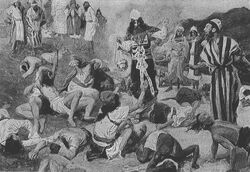
The Ketoret appears in a number of different places in Parshat Korach, making it an important theme deserving our attention. Why did Moshe challenge Korach's men specifically with ketoret? Why did he use it to save Aharon? What does it tell us about the Kohanim, and also about the nature of the Jewish people?

Click here to navigate to the shiur on YUTorah.org.

Click on the player below to play the Shiur or right click here to download)

Tuesday, June 16, 2015

Addressing One of the Hidden Costs of Religious Life among Teenagers

As people of faith, we invest tremendous energy, effort and resources into educating and raising our children to also choose a religious lifestyle. We invest our time, passion and an incredible amount of money so that our children will hopefully see the power, beauty and meaning in living a life connected to God, devoted to the Torah, and enmeshed within the Jewish people.

And, while religious life brings great benefits, it also has costs, both hidden and explicit. The known costs often involve sacrifice – giving up on things that you want in order to lead a life of greater meaning. This might mean not pursuing a certain career; losing out on relationships. It can even be as simple as losing employment opportunities precluded by a Torah lifestyle.

Dr. Yaniv Efrati of Orot
Yet, leading a fully observant Torah lifestyle has hidden costs that we may not be aware of and therefore fail to address. Sometimes, we also really don't want to know about them as well.
Last night, during a staff symposium at Orot, I heard a very short "TED"-Style talk last night given by Dr. Yaniv Efrati, a lecturer on psychology at Orot Israel College. Dr. Efrati has been studying sexual disorders among Orthodox youth and the particular phenomenon of hypersexual activity disorder. I don't really understand the exact nature of the disorder, but basically it implies an excessive focus on sexuality to the point that it begins to interfere with everyday life.
Here's a definition that I found:
Sexual addiction or hypersexuality is defined as a dysfunctional preoccupation with sexual fantasy, often in combination with the obsessive pursuit of casual or non-intimate sex; pornography; compulsive masturbation; romantic intensity and objectified partner sex for a period of at least six months.
We're not talking about a couple of YouTube videos, but instead about teenagers focused on sex to the point that they fail to function. This could include a fixation with pornography that's readily available on the Internet, or staying up so late watching illicit videos that a person can't function the next day.
It probably won't surprise anyone to learn that after conducting a study of over 1,500 secular and religious Israeli teenagers, Dr. Efrati found a statistically significantly elevated rate of self-reported hypersexual behavior among Orthodox teens, predominantly males.

At least it didn't surprise me.

After all, kids raised in Torah environments are taught, incessantly, about the spiritual dangers of inappropriate sexuality. And they should be. While Torah Judaism lauds the notion of healthy sexuality, the Torah completely rejects and absolutely prohibits almost any and all forms of sexual activity or pleasure outside the realm of marriage. Think of all the sexual behaviors Orthodoxy precludes: הסתכלות (gazing), נגיעה (any form of physical contact), שיחה בטלה (flirting), to say nothing of any explicit sexual behavior. It's all out.

I particularly remember studying a specific passage in Masechet Sanhedrin:
אמר רב יהודה אמר רב מעשה באדם אחד שנתן עיניו באשה אחת והעלה לבו טינא ובאו ושאלו לרופאים ואמרו אין לו תקנה עד שתבעל אמרו חכמים ימות ואל תבעל לו תעמוד לפניו ערומה ימות ואל תעמוד לפניו ערומה תספר עמו מאחורי הגדר ימות ולא תספר עמו מאחורי הגדר פליגי בה ר' יעקב בר אידי ור' שמואל בר נחמני חד אמר אשת איש היתה וחד אמר פנויה היתה בשלמא למאן דאמר אשת איש היתה שפיר אלא למ"ד פנויה היתה מאי כולי האי רב פפא אמר משום פגם משפחה רב אחא בריה דרב איקא אמר כדי שלא יהו בנות ישראל פרוצות בעריות (גמרא בבלי סנהדרין ע"ה עמוד א')
Rab Judah said in Rab's name: A man once conceived a passion for a certain woman,  and his heart was consumed by his burning desire [his life being endangered thereby]. When the doctors were consulted, they said, 'His only cure is that she shall submit.' Thereupon the Sages said: 'Let him die rather than that she should yield.' Then [said the doctors]; 'let her stand nude before him;' [they answered] 'sooner let him die'. 'Then', said the doctors, 'let her converse with him from behind a fence'. 'Let him die,' the Sages replied 'rather than she should converse with him from behind a fence.' (Sanhedrin 75a)
I clearly remember studying this piece of Gemara with Rabbi Cooper in high school. The message was pretty clear: anything sexual is totally out, and if you succumb you're a sinner.

Now take that same young man (or woman), and place him in almost any public place in the world today. The mall. The park. A computer connected to the Internet.

Like it or not, sexuality pervades modern society in every publication, television show, magazine, newspaper, many radio programs – it's basically everywhere. It's literally unavoidable. Now tell a teen who has been taught and accepts the Torah's prohibition against illicit sexuality (you know, the good kids…the best kids) who is surrounded by sexuality, that thoughts about sexuality and submission to temptation, even in the simplest form represent the commission of a terrible sin. What do we expect to happen to that child?

Here's what Dr. Efrati found: Orthodox teens reported not only elevated levels of hypersexual behavior, but also greater levels of stress, anxiety and depression than their secular peers. And, he found a direct, statistical correlation between the hypersexual behavior and these negative feelings, which directly led to a diminished sense of well-being among Orthodox youth.
Again, not that surprising: If you think that you're a sinner you're going to feel guilty about it. Some percentage of that population will tend towards anxiety and depression about their inability to suppress their sexual urges and their submission to sinful behavior.

What's the answer? The Gemara had a very clear solution: Marry off your kids early. Very, very early – at the ages of twelve or thirteen respectively.
כדתניא אל תחלל את בתך להזנותה רבי אליעזר אומר זה המשיא את בתו לזקן ר"ע אומר זה המשהא בתו בוגרת (סנהדרין ע"ו עמוד א')
As it has been taught: Do not profane thy daughter to cause her to be a whore; R. Eliezer said: This refers to marrying one's [young] daughter to an old man. R. Akiba said: This refers to the delay in marrying off a daughter who is already a bogereth. (above the age of twelve and a half). (Sanhedrin 76a)
The Sages' solution offers us little solace. Aside from being illegal in most countries, we simply don't marry off our children at these young ages anymore. Teens today confront adolescence and the heightened sexual feelings that come with maturity without any permissible sexual outlet. That's just the way it is.

And for some of them, it's affecting their personal and psychological well-being.

This isn't, by any means, to suggest that an Orthodox lifestyle is harmful or negative. Far from it. But we must begin to acknowledge the struggle and challenge that Orthodox life presents for our children, so that we can openly and honestly begin to formulate a strategy to help those kids suffering from their struggle lead better, happier Orthodox lives.

Thursday, June 11, 2015

Audio Shiur: Parshat Shelach - The Failure of the Spies (and our Challenge Today)

Audio Shiur:
Parshat Shelach - The Failure of the Spies (and our Challenge Today)

Chazal give a number of explanations for the spies' negative report about the Land of Israel. We discuss a number of them, and then study a piece from Rav Shaul Yisraeli in Siach Shaul, in which he describes where he think they went wrong, and what we must learn from their failure as we build the Jewish State today. You can download the source sheet with the commentary from the Siach Shaul here.

Click here to navigate to the shiur on YUTorah.org.

Click on the player below to play the Shiur or right click here to download)

Thursday, June 4, 2015

Rabbinic Life in the Fish Bowl

When we made aliyah seven years ago and I left the pulpit rabbinate, I knew that leaving rabbinic life would prove traumatic. I loved many things about the job and the life: the relationships with congregants; helping people in times of need; the opportunity to teach Torah regularly and speak to the community about important issues on a regular basis. Yet, to me the most challenging, demoralizing and distressing aspects of the rabbinate was the "fishbowl." People were watching us (and yes, I mean "us" - not just me, but my wife and children as well). 
I remember the day that I really understood just how profound the fishbowl effect really is: the day that I went to see Spiderman. 
It was a Sunday night, many weeks after the movie had come out, and my wife agreed to humor me and accompany me to a movie she had no interest in seeing. After dinner, we ended up at a theater nowhere near our home. Yet, as we walked into the theater, I heard someone call out, "Hey - we didn't know that rabbis liked Spiderman!" They didn't mean anything by it. Maybe my presence in the theater made them uncomfortable. Maybe the people just wanted to say hello or be noticed by the rabbi. Truth be told, they weren't even members of my shul. But, then and there I remember realizing that I could never, ever do anything in public (and perhaps even in my own home) and expect it to remain private. I knew then that I could expect that my entire congregation, and probably every member of the Jewish community would know if I did something wrong, questionable, or even notable.
I'm certain that those people in that theater didn't mean any harm. But that comment, and the reality it brought was very painful to me, as it robbed me once and for all, of any sense of personal privacy for as long as I remained a pulpit rabbi.

It should come as no surprise that Moshe Rabbeinu - the greatest pulpit rav ever - faced the same fishbowl life, a challenge highlighted by events recounted at the end of Parshat Beha'alotecha. In truth, so many of the events of the parshah deal with issues of rabbinic leadership; the loneliness, frustration and difficulty inherent in a life of spiritual leadership. Yet, all of these challenges seem to come together in the final episode of the parshah, when Miriam and Aharon discuss Moshe's personal life and his decision to separate from his wife. But that's not the end of the story. When Aharon appeals to Moshe to pray for Miriam's recovery, Moshe accedes, but in an unusual way, crafting perhaps the shortest prayer in history: אל נא רפא נא לה - "God please heal her please." 
One could say, "Nice. Short and sweet. To the point." Yet, it seems a bit strange. It's his sister after all. Couldn't he at least say a Misheberach? Add a bit of flourish. A kapitel tehillim
Rashi asks the same question, and offers a startling answer:
מפני מה לא האריך משה בתפילה? שלא יהיו ישראל אומרים אחותו עומדת בצורה והוא עומד ומרבה בתפילה
Why didn't Moshe pray more extensively? So that [the Children of] Israel would not say, "His sister is in pain, so he stands and prays at length."

Why didn't he daven a little longer for Miriam? He was afraid of what people would say. For his sister! He couldn't pray a few extra moments for his sick sister, because he was afraid of "what people would say." It makes me so sad for him, and angry, and upset. Could they not just give him a moment of peace; a modicum of privacy? Perhaps they could, but they would not.

Over the last week, the Orthodox community once again found itself mired in a scandal surrounding the life of a rabbi, and the questionable choices that he has made. The Internet is literally made for this type of episode, with the ability to share stories in a viral manner around the world. What was once a communal badly kept secret is now international news.
Without commenting on the specifics of the episode itself, this much I will say: what was once a communal fishbowl is now a global fishbowl. Blogs and websites now regularly publicize the actions of rabbis and spiritual leaders (for better or for worse), branding them eternally (via Google) leaving them no ability to defend or protect themselves. What rabbi would want to live under permanent threat of global shaming? Who could defend themselves against a vindictive congregant in a social media environment that shares and condemns first, and asks questions later - if ever? Rabbis are burning out faster than ever. If you've never lived in the fishbowl, you cannot appreciate the toll that it takes emotionally and psychologically. 
Today I watch these episodes play out over the internet and thank God that I no longer live in that fishbowl. It's just too much. And I wonder: how many rabbis leave the pulpit - or never enter it, due to the fishbowl effect? How many sane, talented young people legitimately never enter the pulpit because of episodes like these? The rabbi did sign up for a public life, but he didn't sign up to live in a never-ending reality show for his entire community.

What can you do? I guess the best thing you can do is give your rabbi some space. 
Let him work out at the gym in peace. 
You don't need to make a comment about what groceries are in his cart (really) or what his children are wearing. 
Give him and his family a bit of space. 
Protect his privacy when others talk about him and his family. 
Let him pray for his sister for as long as he needs.
Give him the privacy you yourself would want.
 
The rabbi really does live in a fishbowl. But it doesn't mean that his community has to always be watching.

Audio Shiur: Parshat Beha'alotecha - Rabbis in the Fish Bowl

Audio Shiur:
Parshat Beha'alotecha - Rabbis in the Fish Bowl

Even after suffering insult from his own sister, Moshe Rabbeinu still has to worry about what people will say about him. Through a study of the reaction to Miriam's tzara'at, we discuss the limits of what communities should reveal, and what should remain private. Warning: Many of you will disagree with me.

Click here to navigate to the shiur on YUTorah.org.

Click on the player below to play the Shiur or right click here to download)

Friday, May 29, 2015

Parshat Naso: Birkat Kohanim

Audio Shiur:
Parshat Naso: Birkat Kohanim

What does Birkat Kohanim have to do with dreams?

Click here to navigate to the shiur on YUTorah.org.

Click on the player below to play the Shiur or right click here to download)

Monday, May 11, 2015

Technology and Education: A Site Visit at Amit Amichai Rechovot

On a visit to Amit Amichai Rechovot
I’ve been struggling with the issue of cellphones in my classes at Orot.
Last semester, we the college invited a speaker who spoke out our collective addiction to cellphones. Even more impressive than the truly
frightening statistics and stories he told, was the total command he had over an auditorium of 450 students, and his absolute refusal to allow anyone in the room to take out a cellphone. If someone took one out, he stopped his talk, and waited until the person put the phone away.
I was blown away, and convinced that I needed to do the same thing in my classes. And, when the second semester began, I started each class by asking the students to put away their phones in their bags, telling them two things: (1) It’s a distraction for me (which it really is – try talking to someone who’s staring at their phone) and (2) “If you’re there (on the phone) you’re not here. That’s just a fact. You can’t be on the phone and focusing on the class. For a while, I really stuck to it, and I must say that educationally, it was productive. The students were certainly annoyed, but the classes were better – more productive and focused.
But, as the semester has progressed, I’ve backed off – not because I don’t think that the cellphones are a distraction, but because I simply don’t have the energy to fight with them anymore. I would have hoped that students entering my classes would know to put away their phones. Wishful thinking. Each class I have to remind them – over and over – to please put away the phones until the end of class. And then there’s the laptop issue: a number of students bring laptops, and it’s painfully obvious that they’re not only taking notes. How do you distinguish between cellphones and laptops? Why should there be any difference between them?
As part of my work at Orot, I serve as an administrator for the M.Ed. (Masters) program for Educational Administration at Orot’s Rechovot Campus. Today we’re at a site visit at Amit Amichai High School (for boys) in Rechovot. The Rosh Yeshiva at Yeshivat Amit, Rav Avi Rokeach, explained that three years ago the school made a strategic decision to invest in technology. They recognized that the students’ lives were intimately involved in technology – not just as tools, but in the way that the kids think today. If we were able to translate the materials that they learned – Gemara, Chumash, mathematics, etc –using the technological language of the students today – then they could dramatically improve the educational experience of the school. Every student and teacher received a tablet, and they invested in putting all of their materials on the tablets, so that the kids would be ready to learn in their way.
Three months into the project, they recognized that the experiment wasn’t working. Despite the incredible investment in technology, they realized that the tools – the technology – wasn’t the answer. It wasn’t that the tech wasn’t working. It really was. But the investment didn’t really create the change that the school was looking for. It was the same school, the same students, the same learning.
We took a tour of the school, and saw a number of classes in which the students were working in groups; they had projects in English, mathematics, science; many of the classes of course have frontal learning. In each class, students were working with laptops, their phones, etc. There was a lot of learning taking place, but also a lot of email, facebook and Whatsapp as well. We asked about how the teachers prevent students from using the laptops to play. The teacher said that he doesn’t make them learn or stop them from playing. Rather, he gives the both the freedom and independence to make the right choice, and not waste their time in class (and have to do the work at home).
Is tech the answer in education? Not the answer – but it’s certainly part of our students’ lives. How to use that technology, or limit its ability to distract – represents a challenge that educators struggle with on a constant and continuous basis. These aren’t new questions, but as technology grows even more integral to our lives, the questions grow more pressing.
At Amit Amichai, the school went through a long process trying to figure out what the end goals of the school should be. In a nutshell, the Rosh Yeshiva explained that they want to make “educated people” – with all that this involves: knowledge, intelligence, fear of Heaven, love of learning – all the tools that you could possibly want a student to have. That being said, how do you do this? What, in the end, is the best way to achieve that goal? If you had a chip that you could buy which you could implant in a student and this would produce the most desirable outcome – would you use it? The school also asked another question: Why, if our educational goals are so broad, do we spend so much time in our schools simply transmitting information: history, English, science, Chumash – whatever?
Rather, he explained that they decided that the most important investment that they would need to make is in the teachers. While a student could spend at most six years in the school, a teacher could theoretically spend twenty years or more in the school, and have the greatest possible influence on the students. Believing that the teachers would be the best possible agents to drive their own development, they created a committee for “Investigation and Development” in order to move the process forward. The committee would investigate what’s going on in the school and develop new processes to transform the school and move it towards the school’s desired goals.
Clearly, it’s a work in progress. But the students spend a great deal of time working on individual projects. They receive tasks in classes, and work in pairs or in small groups, to achieve those tasks. Clearly, the school is “different” – far less frontal teaching, far more individual learning. Does the school produce graduates that are substantially different than other schools? That’s a question that will have important implications for education in the future.

Monday, April 27, 2015

President Obama's Un-Presidential Bucket List


At the recent White House correspondents' dinner, President Obama joked about the fact that because he's in the "fourth quarter" of his presidency, people are asking whether he has a "bucket list". According to "The Hill",
"Obama mocked critics of his recent unilateral moves, saying he maintains "something that rhymes with 'bucket list."
"Executive action on immigration? Bucket," Obama said to laughs. "New climate regulations? Bucket. It's the right thing to do.
Essentially, the President of the United States used a subtle rhyme to allude to a crude four-letter term, allowing him essentially to curse without cursing.
It was funny and clever. But it was also inappropriate.
This isn't the first time members of the Obama White House have resorted to profanity to make their point. Late last year, Jeffrey Goldberg famously quoted a senior administration member calling Israeli Prime Minister Netanyahu a chicken#$@!. Whether you agree with the administration's position or not, use of profanity - and even the allusion to profanity - is unbecoming of a head of state, and reflects badly not only on the individual who makes the comment, but on the people he or she represents. Do we really want to see members of Congress cursing (using veiled references, of course) at each-other, or at the President when they disagree?
Many Americans may indeed speak this way in their private lives, and we certainly hear plenty of profanity in the media. But there has always been a higher standard of discourse in the public sphere. This latest example of presidential license does not bode well for respectful and courteous discourse in the future.
This isn't to suggest that politician have to like or agree with each other. Far from it. Yet we can and should expect them to creatively and cleverly insult one-another without having to resort to vulgarity. The President - and his writers - could have, and should have, left this joke off the speech.

Friday, April 17, 2015

Audio Shiur: Parshat Tazria-Metzora - Tzaraat in the Home: The Danger of Permanence

Audio Shiur:
Parshat Tazria-Metzora - Tzaraat in the Home: The Danger of Permanence

The text of the Torah seems to treat Tzaraat in the home as a "gift", especially when we compare the text to other similar texts in the Torah. Some gift. What lessons can we learn from this unusual spiritual phenomenon?

Click here to navigate to the shiur on YUTorah.org.

Click on the player below to play the Shiur or right click here to download)

My Two Cents on the KosherSwitch: Forbidden Today. In the Future? Not So Sure...

The OrthoWeb is once again ablaze about the KosherSwitch (which is not in fact new in any way). If you haven't seen the press, just google it. I've written before about similar issues, such as texting on Shabbat and Shabbat speaker systems.

First let me make it clear that I am not in any way in favor of the KosherSwitch, and don't support its use in normal situations. It's pretty clear that I'm not alone in this view. That being said, a few comments:

Most lay people have trouble distinguishing between sha'at hadchak and lechatchila. One person's lechatchila is another's sha'at hadchak. Would you suggest to someone minimally religious, who tells you that they use the lights in their home - to install this switch? Is it permissible in medical situations? Security situations? Would you install one (or a similar switch) in your shul connected to an emergency alarm in case of medical emergency or some kind of terror attack? A person versed in halachic thinking readily appreciates the nuanced differences, but lay people often wonder at our nuanced perspective, and adopt the lenient view thinking, "I'm not that frum anyway."

Many rabbis have criticized the KosherSwitch as a device which will essentially ruin the essence of Shabbat, turning it into a glorified Sunday. Again, for technical halachic reasons, I'm against using this switch in normal situations. But I don't know how we're supposed to claim that using electricity ruins the spirit of Shabbat, when we do it all the time.

Many years ago, in a famous responsa, Rabbi Moshe Feinstein severely limited the use of Shabbat timers, as he considered having melachot being performed automatically to be a violation of Kibud Shabbat. He only permitted, begrudgingly, the use of Shabbat timers for lights, but not anything else.

He forbade their use, and the world adopted their use for everything from air conditioners to lights to alarm clocks (they have kosher clocks too, with haskamot of poskim). Essentially, we live in a world that universally allows the switching on and off of electrical devices on Shabbat as long as we do it beforehand. And we don't bat an eyelash about it. Has this practice turned Shabbat into Sunday? Hardly. It's just what we're used to.

Would a rabbi permit a quiet Shabbat robot to sweep the floor after we go to sleep on Friday night? How about a dish washing machine that works on a timer, and washes the dishes so they can be clean on Shabbat morning? (may authoritites already allow this). Why is it greater shmirat Shabbat for me to have to wash those very same dishes by hand? I can well envision my grandchildren (I should live and be well) asking me: "What? You washed dishes by hand on Shabbat morning? Why?" How would we feel about a robot that was programmed to clean the table and clear the kitchen after we've already gone to sleep? (not yet invented, but is it that hard to imagine?) Why are we OK with live "help", but find mechanical assistance so troubling?

I get the sense that halachah has yet to settle on a way of categorizing and addressing the incredible technological advances we have witnessed over the past twenty years. We're fine with hashgachah (for kashrut) over video systems, but not with conducting a virtual minyan. We accept Shabbat clocks and lamps, but not switches. It's incredibly confusing for rabbis - much less your average ba'al habayit (layperson). This imbalance is natural and to be expected. A halachic system that slowly developed over centuries is not designed - nor should it - instantly digest incredible changes in lifestyle and society. Our natural halachic "conservatism" is what has maintained us all these years. And yet, we must also acknowledge that something is out of whack, and it will take time for things to come back into balance. We should not cavalierly dismiss people who use the Shabbos switch as "mechalelei Shabbos" who are "turning Shabbos into Sunday." While they might not have an explicit heter, that's a far cry from Chillul Shabbat.

I wonder what poskim who lived two hundred years ago would say about our Shemirat Shabbat - with our kosher lamps (which you essentially turn on and off) and our whole-house timers and our Shabbat ovens. I get a sense that they'd be shocked. I also have a strong feeling that our sense of what Shabbat is or is not will have very little bearing on the practices of future generations.

Their Shmirat Shabbat might look very much different than our own.