As many of you already know, we did not sell our home before we moved to Israel. Sure, we tried to sell our home. And someone even made an offer on the home, and went through the process of having the house inspected. So when he called me to tell me that based on the inspection they decided that they didn't want to buy the house, I was, to say the least, upset. It really sent us right back to the drawing board. As the time for us to depart Michigan approached, I started making arrangements to have someone show the house to potential renters; someone else gracefully agreed to make sure that the rental went through - all in all, everyone in Oak Park was truly generous with their time and energy to try and help. Yet, it's somewhat disconcerting to leave town without having taken care of our single biggest expense - our home.
On Wednesday evening, I decided to try again on Craigstlist and see if someone might want to rent the house. It was a last-ditch effort, as Friday was July 4th, and we were scheduled to leave on Sunday, which we did. Thursday morning I got two calls about the house, and showed them both Thursday afternoon. Both actually filled out applications. When we called the family that we preferred to ask them if they still wanted the house and they answered in the affirmative, we asked them, "When would you like to take possession of the house." They said, "Would Monday be too soon?" Actually, it would not. While we were packing on Sunday they came and got the keys, and they took the house on Monday.
If that sounds like last minute, wait until you hear about our minivan: because we were making aliyah from Edison, where my inlaws live, we needed to keep our minivan until the last week. Then I figured that I would sell the car in New Jersey. After all, I had sold my other car on Craigslist in less than twenty-four hours. So how hard could it be to sell a Honda Odyssey minivan - a really great car. As it turns out, harder than I thought.
I looked on kbb.com (Kelly Blue Book) to estimate the value of the car, underpriced it a little, and posted the car for sale. No bites. Nothing. So I waited a bit. Towards the end of the week, I was getting a little nervous, so I took it to a local used car dealer who looked at the car and called me on Thursday afternoon to let me know that he could only offer half of what I thought I would get. Half. (That's a lot of money.) It turns out the car wasn't worth as much as kbb.com said it was, and he would also have to have work done to make the car new enough for him to sell off his lot. So, he advised me to try and sell it myself (with two days to go), where I'd do much better. So I posted to Craigslist again, with a much lower asking price. I got a couple of calls - and one email from someone who might be interested, but he wasn't sure.
One family came Friday, said that they loved the car, and would most definitely buy it on Sunday, but that their father had to come look at it and bring the money. Great. They call me Sunday morning (Shiva Asar B'tamuz), tell me that they're coming in the evening, and that they're really buying the car. Again, great.
They show up around 6pm, get in the car, take it for a spin to show the father, and get out of the car with long looks on their faces: "Sorry." What do you mean sorry? "It has stains that won't come out, so we don't want the car." What do you mean? Your wife and son saw the car last Friday, and didn't say a word? "Sorry." (To this day, I still don't know if he was trying to bairgain for a lower price or not.) So they walked away, the night before we're supposed to go to the airport and fly off to Israel. That's that.
But it wasn't. On a lark, I called the guy who had emailed me. Do you want the car? Perhaps. OK, I told him, but you have to come see the car tonight - or I can't sell it to you. Can you come? He could. You understand that it's a family car - it has some stains in it? He did.
He came, liked the car, and said that he would bring his mechanic the next morning. OK, we told him, but we need to have the car back by 9:30am so that we can load it up to get to the airport.
8:00am - my cellphone rings: "Reuben, my mechanic won't come to the house. He's kind of old, and wants to bring the car to his garage. Can you do it?" Sure, why not. After all, we're only moving 5,000 miles away today.
His mechanic looks at the car, tells him that it's fine, and we drive back to my inlaws. Now I'm out of time. We have to load up, no easy feat with nine of us going (including three inlaws coming with), and twelve bags that had to fit in a minivan and a small car. My buyer tells me: I need to go to the bank to get the money for the downpayment - he would give my father-in-law the rest later on in the day. Fine. Whatever. To be honest, I wasn't really sure whether he'd also decided to change his mind, and in the back of my head something told me that I wasn't going to see him again.
We stuffed ourlseves in the cars. We're about to leave. The kids are getting antsy. And finally, as I'm getting into the driver's seat, the buyer of the minivan pulls up, gets out of his car, and hands me the cash for the downpayment.
How's that for last minute? I really can't think of any way that it could get any closer.
Why do I tell you all this? First of all, because I think that they're really great stories. But also because I couldn't help but think of both of these "last-minute" stories when I read a great d'var Torah from the Ohr Hachayim on Eikev in a book called "Ma'ayan Hashavua."
Ohr Hachayim notes the strange language found at the beginning of the Parshah:
והיה עקב תשמעון את המשפטים האלה -- "and it will be because you listen to these commandments" (Devarim 7:12). What is the meaning of the word והיה - "and it will be"? He explains that the word והיה always connotes joy, as it says in the Midrash, אין והיה אלא לשון שמחה -- "the word והיה always refers to a state of joy." What does this have to do with listening to the commandments? In his second answer he says, שאין שמחה לאיש אלא בסוף השמיעה -- "a person only experiences joy at the end of [his] hearing."
Sometimes, in the middle of a process, it can be difficult to see the joy during the middle. But then, oftentimes later on at the "end" - בסוף השמיעה -- it becomes easier to see the larger process from hindsight, to understand that God's hand had been behind life's events all along.

Sunday, August 17, 2008


Friday, August 15, 2008
New Chopping Wood Feature - Parshah Questions for Kids
 During these slow summer months, I find it very hard to review the parshah with my children, and when we come to the table, because they don't have school, they don't know what's in the parshah. So, I made up a parshah sheet for them, which, if all goes well, will be an ongoing feature here on the blog. Feel free to tell your friends!
The parshah questions are based on the Mibreishit Sheet for Kids from last year. The sheets are available here.
Download the parshah question sheet here.
Download the parshah question sheet with answers here.
Sunday, August 10, 2008
Tisha B’av and Ganei Tal
I started noticing the small signs just a few days after I arrived. In truth, they were unmistakable. A note in a car here; a comment there. But only over the last few weeks has it begun to sink in to me. Today, on Tisha b’Av, the day we set aside to commemorate and mourn Jewish tragedy and loss, I find myself focused on the evacuees from Gush Katif, specifically the citizens of Ganei Tal. Three years ago, almost to the day, the government of Israel evicted the citizens of the twenty-one communities that comprised the Jewish towns throughout the Gaza strip. Then it destroyed their homes, one by one, until the lives that they had spent the last three decades building were nothing but piles of rubble.
In truth, my new life rests firmly on their tragedy, giving me a small, vague sense of guilt. Personally, I had nothing to do with the expulsion from Gush Katif. Politically, I opposed the plan. So then why do I feel guilty? I’ll explain.
Because the residents of Gush Katif refused, under any circumstances to believe and accept that their government would actually carry out the eviction plan, they made almost no plans for the day after. Following the disengagement, they found themselves dazed, homeless, and bereft of their possessions and livelihoods. After spending three months in temporary lodging, the government sent the people of Ganei Tal, en masse, to a small caravilla-city on the outskirts of a small yishuv called Yad Binyamin, found in the Sorek region about twenty miles west of Jerusalem. In addition, the Torat Chaim Yeshiva, formerly located in Neve Dekalim, the largest settlement in Gaza, relocated to a new home in a formerly closed school in Yad Binyamin. Almost instantly, a small, lazy town of thirty families found itself host to a community several times its size with a yeshiva to boot. The residents of Ganei Tal settled into their new, albeit tiny homes, tried to find jobs, and rebuild their lives following their eviction from the only home that they had known.
This being Israel, someone realized that there might be money to make in Yad Binyamin. And he – actually they -- were right. Yad Binyamin presented a wonderful real estate opportunity. Just a forty-minute drive from Jerusalem, thirty from Tel Aviv and sitting right on the brand new Highway 6, Yad Binyamin could offer large, spacious homes within reasonable commuting distance of good jobs. Moreover, with the yeshiva anchoring the community and the Israeli residents of Ganei Tal serving as a base, the community would attract Torah oriented religious Zionists looking to buy new homes outside of the regular overpopulated areas. Two years ago the building began, and Yad Binyamin has experienced a tremendous period of growth and expansion – as well as skyrocketing home values for those lucky enough to have bought their homes on paper at the beginning.
Today, Yad Binyamin continues to expand at a breathtaking pace. New families move into their homes weekly. I watch from my back porch as the construction on our new shul continues apace, hopefully to be completed in time for Rosh Hashanah. Today, the residents of Ganei Tal find themselves not on the outskirts of Yad Binyamin, but in the heart of town. Their arrival marked the beginning of the explosive growth of Yad Binyamin. Without their presence, I have no doubt that I would not be living here either.
Having just moved into my new home – large by Israeli standards, I walked to shul one morning through the caravilla-town of the residents of Ganei Tal, and realized that these residents lived not in nice homes, of brick and concrete like mine, but temporary small homes made from converted trailers. This past Shabbat my son said to me, again while walking to shul, that it was a good thing that we didn’t live in one of those houses. “Why?” I asked him. “Because our lift container was almost as big as those houses. There’s no way that we would have been able to fit our stuff into one.” Of course he was right. Our lift (a forty-footer, holding way too much stuff) was indeed almost as big as a trailer. And these people have lived in these trailers, every day of the year for the past three years, still waiting for their government to approve the construction of their new homes.
Last night, after reading Eichah, I visited the exhibit just put on display by the residents of Ganei Tal about their yishuv. I found myself unexpectedly, but profoundly moved. The exhibit graphically describes the birth of their yishuv in 1970, literally out of the sands of Gaza. They displaced no one. They took no unclaimed land. The Arabs of the area, they told me, informed them that the last people to plant successfully in the sands of Gaza were Abraham and Isaac. And yet they planted – and the earth, at least in their hothouses – sprouted forth. Every progressive photo documents the growth of the yishuv, the construction of even more and larger hothouses, to accommodate their ever-expanding agricultural industry.
Of course, on tables lie burnt shells and rockets; mortars that landed within the yishuv, fired at the residents for the crime of living in Gaza. And finally, the wall of the fallen; men and women who died in terrorist attacks, living their daily lives, traveling to work or walking near their homes. There aren’t many – five or six. But that’s five or six too many.
I learned about some of daily life in Ganei Tal; the community center, the makolet (small store); the municipal building and the shul. Another wall simply presents pictures of houses – beautiful homes, large even by American standards. The homes were surrounded by green grass, plants, trees – an oasis in the desert.
And as I looked at those pictures – those magnificent, gorgeous homes, I thougt of the homes the very same residents occupy today, a fraction of the size, stuck in the center of a town, as nice as it is, that they did not choose. And I turned to the next wall – a wall of Ganei Tal today – to find pictures of piles of rubble where homes once stood, and the shul – the only building left standing by the Israelis - now a shell of concrete, looted of any material that might be of any value.
Today, on Tisha B’av, I find my mind filled with thought of the people of Ganei Tal. My feelings are not really political. While I realize that many Israelis seethe with anger over the disengagement and even dream of returning to Gaza when the army inevitably reenters Gaza, I’m not so sure. In some ways, we’re far better off without the responsibility and demographic obligations of a million and a half Arabs who hate us. But Tisha B’av isn’t about politics. It’s about national and personal suffering. And as a nation – as a people, we suffered for two reasons: we suffered because the government of Israel felt that we needed to destroy Jewish communities, for whatever reason; and we suffered because we caused wonderful people, our Jewish brothers and sisters – immeasurable pain, pain that they still feel to this day, and probably will feel for the rest of their lives.
In America, I never gave them a second thought. Tsk, tsk – a terrible thing, the evacuation from Gaza. But these are real people, with real challenges and problems, struggling to make a life for themselves each and every day. And on Tisha B’av we need to ask the important questions: what did we do to cause their suffering? How did our behavior fail to save them, and us, from their fate? And, perhaps most importantly of all, what will we change to ensure that what happened to the people - the mothers and fathers and children of Ganei Tal, never happens again?
Friday, July 18, 2008
Thoughts on Fairness, Ethics and Jewish Leadership - Parshat Pinchas 5768
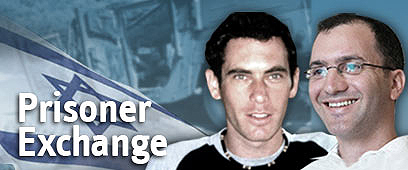 With the gut-wrenching swap this week between Hizbullah and the government of Israel, I felt motivated to write this piece about the nature of Jewish leadership and the ethical and moral commitment that we have to our soldiers, wherever they may be.
May the memories of Ehud Goldwasser and Eldad Regev be a source of strength for the Jewish people.
Tuesday, July 15, 2008
News as Entertainment - the Newseum in Washington
 Last week, we took some time to visit the Newseum, the brand new museum dedicated to news opened sponsored by a consortium of organizations. Surprise, surprise -- the museum was "pro-news". Go figure. Actually, I enjoyed it quite a bit. I am, after all, a bit of a news junkie. But I found that the museum was more interested in the actual news events themselves than the way that news is covered per se.
Most alarmingly, I didn't see any attention given to the shortening and changing nature of news - and especially television news. It has become increasingly clear that the attention span of the average viewer has become increasingly shorter as time progresses. Yet, the museum did not really address the gradual shift from news coverage to sound bites and formulaic coverage. While the 4D infotainment movie about the news (straight out of Epcot Center and Universal Studios) was certainly fun and highlighted the contributions of Edward R. Murrow and the investigative reporting of Nellie Bly, the museum conveniently neglected the shrinking budgets of news services, increasing reliance on blogging, and the near eradication of investigative reporting.
A former member of mine (I left the shul, not her) recently left the newspaper business for precisely that reason; the lack of reporting integrity, the increasing pressure of coming in on deadline, and the inability to have the time and resources to do true community reporting.
The museum was certainly flashy and entertaining, but it lacked a sense of depth and seriousness in covering the news.
Kind of like news coverage itself. I guess in that way the Newseum presents an accurate depiction of the news.
Monday, July 14, 2008
A Rest Stop on the Jersey Turnpike
 Passing by a rest stop on the New Jersey Turnpike - I think that it was the Woodrow Wilson stop, Rena wondered alound how they decide who to name the rest stops after. I wondered in response whether in fact it was an honor, and whether one could refuse. I imagine the following conversation.
"We'd like to name a rest stop after you."
Long pause.
"Gee...thanks. Can you think of something else?"
Friday, July 11, 2008
A Nation of Whiners
 John McCain found himself in hot water yet again, when a close friend and advisor, Senator Phil Graham told the Washington Times that the nation is not in a recession -- it's more like a "mental recession," and that we've become "a nation of whiners." The backpedaling was fast and furious. McCain could not distance himself from Graham fast enough, telling a crowd in Michigan, "He doesn't speak for me, I speak for me," and quipping that the only post he would be eligible for is the "ambassadorship of Belarus." Ha ha. Keep your day job, John.
There's only one problem with Graham's comments. They're right on. We're not in a recession, as any economist will tell you. The country's economy, while certainly stalled and stagnant, continues to grow at a slow rate - almost one percent this past year. If the defenition of "recession" is negative economic growth (and it is), then we're clearly not in a recession. In addition, the dramatic and cataclysmic language that sells in the press and drives the economic frenzies that we watch on CNBC today have little to do with reality. Perception becomes the reality, and makes companies, organizations, people -- everyone - crazy. An article about the woes of the hotel business in the Washington Post entitled "Slide by Marriot Signals Distress for Hotel Industry" - sounds rather ominous, doesn't it -- describes Marriott's recent announcement of negative growth increases in per room revenue - called RevPar. While it sounds pretty bad, it simply means that the increase -- the rate at which the income per room goes up year after year -- will be less this year than last year. So, if the revenue per room increased by 1.5 percent last year, the increase will be less this year -- maybe 1 percent. In fact, the article in the Post is itself misleading, giving the impression that RevPar will decrease, when in fact it's only a decrease in RevPar growth -- it will grow this year less than last year.
Despite all that, revenue is down at Marriott. Last year during the 2nd Quarter, Marriot made $207 million. This year it only made $157 million. No, it didn't lose money, and there should be good reasons why it made twenty-five percent less money than last year, but the hysteria surrounding Marriott caused a steep sell-off of its stock dropping it to 52-week lows, and prompting the Washington Post to write, "Let there be no mistaking it now: The hotel boom is kaput."
Kaput? I'd love to be kaput and only make $157 million this quarter. Just ask Robert LaFleur, an analyst with Susquehanna Financial Group, (also quoted in the Post article) who said: "Let's keep everything in perspective. They are calling for RevPar growth in North America to be down 1 percent. That's not exactly the Great Depression."
But in the recession-frenzied climate in which we find ourselves, no one can keep anything in perspective. Which brings me back to my original point.
We are a nation of whiners.
Sure, some people are suffering, having difficulties making their payments, having their houses foreclosed, forced to find other places to live. But is anyone starving in the streets?
I recently left Michigan on my way to Israel, and things are so bad there that I simply could not sell my house for an affordable price. There was no way, unless I was willing to sell for about $50 thousand less than the price I paid seven years ago. So the recession -- sorry - housing slump hurt me as much as the next guy.
But did it? I rented out my house to a couple who were foreclosed on their house. What happened to them is private information, but for reasons that were in some part beyond their control, they lost their house.
What happened to them? Are they on the street? No - they're both hard-working, great people. They both have good, stable jobs. So they rented my house, a four-bedroom home in a quiet neighboorhood with great neighbors. Is it as nice as their old home? Probably not. But can you say that they're suffering? Can you say that I'm suffering?
But if you ask the New York Times or Washington Post, of course we're suffering. As long as things aren't better today than yesterday, that's suffering.
All of this reminds me of the section in the Torah that describes the complaints of the Jewish people in the desert: (see Bamidbar 10:35) There the Torah tells us that the people were mitonenim - which Artscroll translates at "those who seek pretexts of evil," but really simply means "complainers." We recognize an onen from the laws of mourning -- we refer to someone who lost a close relative but has not yet buried him or her as an onen - a person in anguish. But a mitonen is someone who puts himself into that state of anguish -- notice the reflexive form of the verb. What troubled the mitonenim? The Torah doesn't tell us, but Rashi (on that verse) quotes the Midrash which tells us that they said, "Woe unto us, how much have we struggled on this journey -- three days without any rest!"
Sounds pretty spoiled -- doesn't it?
To my mind, the McCain campaign is floundering -- not just because he's old, can't really give a powerful speech, and represents the incumbent party during an economic downswing. The real problem is that he doesn't convey any vision. Whether you like Obama or not, his sweeping rhetoric engages an audience. It gives the listener a sense of vision for a better America. McCain does no such thing; it's just more of the same. We'll keep slogging along in Iraq until things are secure enough to come home. There are no easy answers on the economy. The current foreign policy of the Bush administration has been doing a pretty good job.
There's no vision. And without vision, there isn't going to be a victory either. To my mind, when asked about Graham's comments, he should have said, "You know what -- we are a bunch of whiners. All of us. Our soldiers are across the world fighting for us, and we're worried about whether we'll be able to afford the newest ipods." He should not extend the Bush tax cuts. Rather, he should take the money that the government would save and use it to pay down the national debt. He should advocate the idea that there must be a price to be paid by the average citizen during a time of war. And paradoxically, if we feel the war - if we sense that we're sacrificing too - I think that the American people would be more supportive of it. He needs to begin to speak about the notion of sacrifice for the country -- economic sacrifice, personal sacrifice, volunteerism, and a sense of dedication to something larger than ourselves.
These are all issues that he personally represents, and can advocate forcefully. In a sense, he needs to become more of a father figure for the country, instead of pandering to us and telling us how he's going to make it better.
Because he can't. And he won't. And unless he starts telling it the way it really is, we all better get ready for an Obama adminstration.
Wednesday, July 9, 2008
The Ideal Husband - and Jewish Love
 Maureen Dowd published this piece in the New York Times this week about the qualities of an ideal husband. While it's certainly a nice list of advice, does it strike anyone as interesting that a priest who's never been married is an expert on marriage? Sure he's got years of counseling experience, but what role does life experience have? This reminds me of the halachah that someone who wants to be the shliach tzibbur for the congregation must be at least thirty years of age, and should preferably have (aside from a nice voice) a wife and children. There's simply no way to compare the prayer of a father and husband responsible for his wife and children to the worries and difficulties of a bachelor, no matter how studious, serious and well-meaning.
At the same time, Father Connor neglected the most important aspect of marriage that Hollywood loves to obscure: the difference between love and infatuation. Infatuation is the feeling of excitement, sexuality and obsession that kindles romanticism, sexuality and passion. Love, on the other hand, is a far deeper sense of mutual respect, identity and most importantly, giving and deviotion. Without that sense of dedication to the well-being to one's spouse, a marriage truly has no solidity or foundation. With it, romantic love can grow and flourish even in the absence of infatuation.
The Mishnah in Avot comments on the notion of lasting and ephemeral love, defining for us true love (which endures) and fleeting love (which does not):
(I'm translating in English - my Hebrew isn't working right now. I'll try and add later.)
Any love based on an external factor - if the factor becomes negated, the love is negated as well. [But love that is] not based on an external factor can never be negated. What is the love that is based on [an external] factor? This is the love of Amnon for Tamar. [And the love] that is not based on a factor? This is the love of David and Jonathan.Amnon doesn't love Tamar. He lusts for her. Once he satisfies his lust, her very presence forces him to confront his terrible behavior and the fact that he could have raped her. So he transforms the lust and "love" he before felt into hatred and disgust. On the other hand, the love - platonic love and respect - that Jonathan and David feel for each-other represents a sense of respect, shared ideals and common goals. Therefore, even when David represents an existential threat to the very life of Jonathan, he cannot and will not abandon the friend he loves so much.
For marriage to succeed, it must be based on the Jewish concept of love. Jewish love is something that can be nurtured and developed, if one really wants to do so. If one has a sense of respect and admiration for another, and shares the same values, goals and ideals, true love can grow, develop and thrive. Give enough to that person, truly from the heart, and love will grow. On the other hand, infatuation, most often based on looks and sexual desire, usually fades. What's there to base a marriage on after that?
Unfortunately, when Hollywood's all you've got to go on - and that's true for most of America - we begin to understand the astounding and troubling divorce rates so prevalent in Western society today.
Sunday, July 6, 2008
My Final YIOP Drashah - The Power of Optimism
 I’ve mentioned a couple of times that I’m on a Steven Ambrose kick; I finished “Band of Brothers,” so I now moved on to "D-Day". Towards the beginning of the book, he describes the difference in mentality between the Supreme Commander of the Allied Expeditionary Force, Dwight D. Eisenhower, and the commander of the German Army in the Western theater of France, Erwin Rommel. While Romell was a realist, cognizant of the difficulty of holding off an Allied landing in France, Eisenhower was an unrelenting optimist. An official US Army biography on Ike writes,
Through D-Day, Eisenhower's most marked characteristics were his unfailing
optimism about the success of the invasion and his determination to overcome all
obstacles that stood in its way.
That type of attitude filters down. When a leader exhibits optimism, positive energy and a can-do attitude, that attitude permeates his or her entire structure. Subordinates feed of that energy, and find ways to accomplish things they thought that they could not. Just think about the power of a simple word of encouragement. Just when you’re ready to give up – at a job, an assignment, a task – it doesn’t matter what. And then someone comes over and says, “You know, I know this is difficult, but I’m sure that you can do it.” How powerful such a simple expression can be! And how easy. And if optimism can bring energy enthusiasm, pessimism can destroy it. And that pessimism can be so dangerous, that it must be rooted out even at great cost.
Today we read about Moshe’s seemingly small mistake – the sin of מי מריבה – the waters of מריבה. The Torah describes a water shortage, and the complaints of the nation for water. God tells Moshe to approach the rock and speak to it – to ask it for water. Instead, Moshe gathers the people around the well, and instead of speaking to the rock says to the people, שמעו נא המורים, המן הסלע הזה נוציא לכם מים – “Listen please you bitter people. From this rock should we extract water from you?!” He then hits the rock twice, the rock gushes a torrent of water and everyone’s happy.
Except God. You see God had instructed Moshe to speak to the rock, not to hit it. God’s judgment is swift. יען לא האמנתם בי להקדישני לעיני ישראל – “Because you did not have faith in Me to sanctify Me in the eyes of the Jewish people,” לכן לא תביאו את הקהל הזה אל הארץ אשר נתתי להם – “therefore, you will not bring this congregation to the Land that I have given them.”
Virtually every פרשן is perplexed. OK – Moshe made a mistake. Yes, he hit the rock. But doesn’t it seem a little extreme? Doesn’t God seem a little harsh to take from Moshe his greatest single desire – to enter the Land of Israel – for such a seemingly small misstep?
Commentators offer scores of answers to this question – each one just a little different. I’d like to focus on one approach suggested in the Midrash. Quoting a פסוק in שיר השירים that refers to an orchard of almond trees, the Midrash compares leadership to climbing an almond tree.
האגוז הזה חלוק, מי שאינו אומן לעלות בו מיד הוא נופל, שצריך לשמור עצמו שלא
יפול הימנו, כך כל מי שמשרת את ישראל צריך לשמור עצמו שלא יטול את שלו מתחת ידיהם
כגון משה וישעיה ואליהו, משה אמר שמעו נא המורים (במדבר כ' י') ונאמר לא תביאו את
הקהל הזה (שם שם /במדבר כ'/ י"ב), ישעיה אמר ובתוך עם טמא שפתים אנכי יושב (ישעיה
ו' ה') מיד ובידו רצפה (שם /ישעיהו/ שם /ו'/ ו'), אליהו כי עזבו בריתך בית ישראל
(מלכים א' י"ט י' וי"ד) ונאמר ואת אלישע בן שפט [מאבל מחולה] תמשח לנביא תחתיך
Just as the almond tree is smooth and slippery, and one who does not know how to
climb it will fall immediately, so too anyone who serves the Jewish people must
guard himself not to take his hands out from under them, as did Moshe, Yishayah
and Eliyahu. Moshe said, “Hear please, you bitter ones,” and it says, “you will
not bring this congregation.” Yishayah said, “And I sit amongst a nation of
impure lips,” immediately [he was punished with] a burning stone. Eliyahu said,
“For the House of Israel has abandoned your covenant,” and it says, “and you
shall anoint Elisha ben Shafat as a prophet in your place.”
What’s the connection between these three examples? In what way do Moshe, Eliyahu and Yirmiyahu – three of our greatest prophets and teachers – fail? They don’t fail as much as they are no longer able to see only the positive. They have lost their rosy glasses. They cannot only see good in the Jewish people anymore. Moshe finally sees the people as, המורים – a bunch of bitter complainers. And that’s why he can no longer lead the Jewish people, because leaders must be eternal optimists. They must always be able to see the good in their people; their potential and beauty and energy, and see not their faults and shortcoming, but their potential to continue to build and grow.
Indeed, this sense of optimism has carried the Jewish people through the darkest imaginable times; through tiresome and tiring persecutions, pogroms and pillaging, hatred and Holocaust. And yet we persevere. Why? How? Because we’re eternal optimists. We have to be. It’s in our blood. Just look at the קדושה we said this morning.
Indeed, this sense of optimism has carried the Jewish people through the darkest imaginable times; through tiresome and tiring persecutions, pogroms and pillaging, hatred and Holocaust. And yet we persevere. Why? How? Because we’re eternal optimists. We have to be. It’s in our blood. Just look at the קדושה we said this morning.
ממקומך מלכנו תופיע – ותמלוך עלינו כי מחכים אנחנו לךNotice that we don’t say, מלוך עלינו, הופיע לנו – “please God, rule over us, reveal Yourself.” We don’t ask for that because we take we take it for granted. Of course God will redeem us. We just don’t know when. So why not now? Indeed, why not?
From Your exalted
place You will appear, and You will rule over us, for we are waiting for you.
We don’t wonder whether the redemption will come. We know that it’s coming, in our sense of faith and belief and yes, eternal optimism. And we are commanded to know it as well – it’s the last of Rambam’s Priciples of Faith – אני מאמין באמונה שלמה – I believe with perfect faith. That’s not just faith. It’s optimism – the ability to overlook the darkness of the tunnel and see the light at the end.
Indeed, every great endeavor; every project or business or enterprise rests on a foundation of optimism. A good friend told me this week, “If you don’t ask, you get a ‘no’ one hundred percent of the time.” And he’s right. But to ask, I’ve got to think that the answer will be yes, because if I didn’t, I’d never ask in the first place. If I thought I’d fail, I’d never take that new job, or begin the new program, or move to Israel – because, “what’s the point if I’m only going to fail anyway”?
I am optimistic not just about the גאולה, but also about the power of community – and specifically this community, to achieve great things. Last week David Ungar spoke at סעודה שלישית, and he said that he loves coming to shul because here we witness the rebirth of Judaism before our eyes, and he’s right. But it’s only happening because the are, were and will be people who put their energies and efforts into the faith that our shul will continue to thrive and prosper.
Winston Churchill once said, “The pessimist sees difficulty in every opportunity. The optimist sees the opportunity in every difficulty.” These are difficult times in the US. A deflated stock market, and a terrible Michigan economy. It’s easy to see dark days ahead. But Churchill, who had a few things to worry about in his time, also said, “For myself I am an optimist - it does not seem to be much use being anything else.”
There will always be challenges and difficulties. The strength of this shul lies in the amazing ability of its members to see above them; to overcome them and continue to build and connect the Jewish people of this entire community to God. It has been an honor to lead this shul, to teach you and learn from you, and to speak from this pulpit week in and week out. And, as I leave you I can honestly say that the future of the Young Israel of Oak Park is very bright indeed.
It’s all up to you.
Thursday, July 3, 2008
The Salvation Serpent - Table Talk for Chukat 5768
 In one of the most unusual sections in the Torah, God commands Moshe to form a molten copper snake and place it on a stand in order to save the Jewish people from the bites of the deadly serpents tormenting the people. Moshe of course follows God's instructions. The Torah tells us that whoever was bitten by a snake would look at the copper serpent and be healed.
This episode leaves us with the obvious question: why would God instruct the Jewish people to create a symbol so similar to the idolatry that the Torah expressly forbids? Could this not lead to confusion and sin?
Rashi quotes the famous Mishnah in Rosh Hashanah:
Does the serpent kill or give life? Rather, whenever the Jewish people focus their gaze towards the heavens and subjugate their hearts to their Father in Heaven, they would be healed. And if not, they would perish. (Rosh Hashanah 29a)Yet, the message of the rabbis in Mishnah begs the question: why create confusion? Why not simply instruct the people to look to God without the need for the serpent?
To my mind, the symbol of the serpent most accurately represents the challenge of faith in the physical world. Modern medicine uses that very symbol to represent the medical profession, and the healing power of medicine in the world. Isn't it ironic that the symbol God wants to represent faith in Him and His ability to heal us, now represents the power of modern man to heal, without need for God. We could ask the very same question as the Mishnah:
Does the doctor kill or give life? Rather, the sick must focus on God and subjugate their hearts to their Father in Heaven.The doctor must do his job. He must act as the agent of God. But in the real world, we sometimes confuse the agent with whom he represents, and put our faith not in God, but in the doctor.
This is the message of the serpent - the danger of confusion. It's up to us to see through that confusion, and maintain our faith in God throughout the trials and tribulations of life.
Subscribe to:
Posts (Atom)