Monday, September 12, 2011

A Video I'm Having Trouble Understanding

I've recently come to realize just how old I truly am:
  1. I have a son in high school. Scary.
  2. Forty rapidly approaches. 
  3. A new cool internet Kiruv video makes absolutely no sense to me at all.
Someone on Facebook linked to a new Aish video called "Rosh Hashanah Rock Anthem" in which a clearly non-religious person complains that Rosh Hashanah is boring. "Jewish New Year? It's just going to be a bunch of guys praying, right? I mean, what's the fun in that?" To this, the frum person says, "It's the holiest time of the year. A time for introspection, appreciation..." At this point, the kiruv-candidate feigns snoring. So the frum guy says, "You know what, let me explain it to you a little bit differently."
At this point, a group of frum-dressed men begin dancing to what must be dance-party music. I must admit, the dancing - if that's what it is, is quite impressive. Something tells me that these guys didn't learn to dance this way at the recent Aish Melave Malka, if you know what I mean.
But I can't hear the words to the song at all, and if anything, the video seems to reinforce exactly what our not-yet-frum friend complained about: Rosh Hashanah really is boring, and it's much better to break dance on your head, jump around Jerusalem, and leap over people (during davening? I'd go to that shul!)
The video, while visually impressive and fun to watch, doesn't seem to have anything to do with Judaism, unless you count the miracle of keeping your kipah on while doing a triple-lutz while overlooking the Kotel.
Aish does incredible work, but I truly fail to see how this video has anything to do with Kiruv. It seems that in our bid to increase page views and attract eyeballs, we're now in a race to the bottom where anything remotely related to Judaism can somehow be considered kiruv.
The best proof? A comment on YouTube about the video:
WOW! This is coool! Especially that blond guy that balances/dances on one and both hands! I'm not Jewish, so whenever Rosh Hashana is, HAPPY NEW YEAR TO YA'LL! :->
Great. So now the non-Jewish world thinks that Rosh Hashanah is precisely like the American New Year. Parties. Dancing. Music.
How again is this supposed to be kiruv?

Update: 
I just got the video sent to me as a link with this email:
I wanted to share with you an amazing Rosh Hashanah video featuring one of Israel's top break dance teams.  We hope that you can post this video on your site, blog, Facebook or twitter accounts and hopefully we will get the entire Jewish nation excited about the upcoming Jewish New Year.
Wishing you a happy and healthy new year,
Ben Feferman
Executive Producer
Forbidden Fruit Media

Again - I have nothing against the break dancing per se. But what connection does it have to Aish HaTorah?

The Limits of Faith - A Lesson from Rav Kook

The Gemara (Berachot 58b) relates a story about Rav Chisda, who upon seeing the ruins of the house of R' Chana bar Chanilai - who was a very rich, very generous man - became depressed. I'll leave out the middle of the story for now, (which I will address in another post soon). Ulla, who was with Rav Chisda at the time, tried to appease him by quoting a pasuk which says,
הַבֹּטְחִים בה'--  כְּהַר-צִיּוֹן לֹא-יִמּוֹט, לְעוֹלָם יֵשֵׁב.
"Those who have faith in Hashem are like Har Tzion, which cannot be moved, but abide forever."
On this the gemara comments,
"Just as Hashem promises to rebuild Har Tzion, so too will Hashem return the houses of the righteous (that were destroyed)."
On this point Rav Kook (Ein Ayah Berachot Vol II, p.  writes,
Bitachon is limited [only to the point] that we complete our efforts to the best of our abilities. That which our hands cannot reach - there is the place for Bitachon. For the place which our ablilies reveal, God forbid that we should use our Bitachon, for this isn't Bitachon, but instead foolishness and insolence towards Heaven."
I'm pretty sure that Rav Kook was talking about building the Land of Israel, and especially those who rejected Jews physically building the Land, instead insisting that we wait for a miraculous redemption. Yet, the message also applies to all aspects of our lives. God doesn't want to have Bitachon first. He wants us to act - to do our part, to the best of our abilities. After we've done that, then we turn to God with faith.
Then it's all up to Him.

Sunday, September 11, 2011

9/11 Then and Now

Like most everyone older the age of eighteen, I do and always will remember 9/11 - the sense of sadness, the eery quiet in the sky that followed, and the sense of disbelief watching the towers fall. Yet, my memories focus not on the tragedy, which was remote, but in our response. I was a new rabbi in Detroit, having arrived earlier in the summer to my shul. It seemed to me, as if often the case, that our best option was to pray. So I called for a communal davening, offering my shul to the community.
It really wasn't that hard to do. People needed an outlet. They wanted to cry out to God, and appreciated the opportunity. But what was most striking was the communal unity on that one night. Detroit, for all its wonderful attributes, isn't unlike many different Orthodox communities, comprised of many varied sub-groups, which often act independent of, and sometimes in conflict with each other. Sure, we got along, but there was (in my memory) all too often a sense of negation of the other, something all too common in the Jewish world today.
But not on the evening of September 11, 2001. On that evening, hundreds of Jews came to our shul to recite Tehillim. Rabbi Irons of the Kollel delivered a short talk. So many people came that the men filled the entire main sanctuary, and the women filled the social hall.
And it wasn't that hard to do. Just a few phone calls, some simple arrangements, and the community came together.
I doubt that our experience was unique. I imagine that this scene played itself out in communities across the United States. But it continues to sadden me that our greatest unity comes from tragedy and loss, and that we cannot come together unless we're suffering together.
Thoughts of the past bring me to the present. I'm worried about our immediate future. Tensions with Egypt. Palestinians about to announce a state in the United Nations - and then protest when nothing happens. And meanwhile, we fight with our neighbors about a building. (No, I'm not laying blame on the victims. But it's a reality.) Who's to say where this all leads?
I yearn for the unity of that evening, but fear the forces necessary to bring it.
One of the major themes of focus on Rosh Hashanah is the concept of Malchut. On that day, we coronate God as King of the World, perhaps best articulated by the powerful words of Aleinu:
והיה ה' למלך על כל הארץ, ביום ההוא יהיה ה' אחד ושמו אחד
And God will be King over the entire world. On that day, God will be One, and His Name One.
Yet, I sometimes wonder: How are we supposed to get the world to agree with us when we have such a hard time agreeing with each other?

Wednesday, September 7, 2011

Parshat Ki Teitzei - The Battle Within

Audio Shiur:
Parshat Ki Teitzei - The Battle Within

The strange section of the Yefat To'ar raises numerous questions about both the text, and the subject matter. Why does the Torah allow a soldier to "succumb" to his urges? Three approaches to the section teach us about war, about the soul (and converts), and finally, about ourselves.

Click here to download the shiur, or here to navigate to the shiur on YUTorah.org.


Now you can subscribe to this shiur as a podcast, directly from iTunes! To subscribe, click here.

Your Worst Moment - Caught on Tape

Recently, Facebook has been abuzz over a security video shot at the Kotel of a man beating his elder daughter. (I'd link to it, but YouTube removed it.) The video is simultaneously both mesmerizing and horrifying: sickening to see a man not just strike his older daughter - which is prohibited in halachah, but also push her down onto stone steps. You watch a helpless mother literally turn away, unwilling or unable to watch the man as he hits the child. Watching the video is like rubbernecking. You know that you should hit the gas and keep moving, but you can't help slowing down to get a good look.
Yet, you (the viewer) knows that this wasn't a one-time incident. Sooner or later, the man will hit his daughter again.
The video struck (no pun intended) me in another way was well. Watching the video in horror, I couldn't help but wonder: what if cameras caught me at my worst, and someone posted it for the world to see? I can honestly state that it doesn't come near the level of the video, but it certainly would be embarrassing, terribly so. The Midrash tells us that after sinning with Batsheva, David Hamelech begged God to leave the story out of the Bible, which I can understand. How would you feel knowing that every educated Jew for the rest of time would know about your worst, most troubling behavior.
All of this seems particularly relevant around this time of year. On Rosh Hashanah, we acknowledge that God sits before us in divine judgment, with the Book of Memories open to our page. But now its pretty clear to me that it's not any old book. It's an iPad. And all God needs to do is click on the link for each day of the year, to watch the YouTube video of me forgetting to bentch, yell at my kids, waste time blogging on the Internet, or any of the other things I'm not actually going to tell you.
Ages ago, Albert Brooks made a film called "Defending Your Life," which imagined that people had to watch the mistakes they had made during their lifetimes after they had died. It's not a new concept. But watching that man on YouTube at the kotel reminded me once again that the cameras are indeed there, whether we see them or not. And they are recording.

Sunday, September 4, 2011

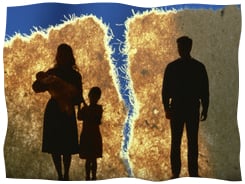
Is a Divorce Ever Final?

As painful, messy and confusing as most divorcees find the process, they take solace in one thing: when it's over, it's over. When the Get (and in the Diaspora the civil divorce) comes through, each side can take a deep breath, enjoy the feeling of freedom, and look forward to a new beginning. It's over.
But is it?
If the marriage produced children, then it's obvious that while the partners have disconnected from each-other, they nonetheless continue to share in the responsibilities, burdens and joys of raising their children. This demands an ongoing interaction with the former spouse over an endless array of issues. From future Bar Mitzvah's to day school tuition to the naming of your grandchildren, a divorcee's former spouse will always be a part of his or her life.
But what if there were no children? At least then can we suppose that divorce represents a "final" separation between former husband and wife? Here again, a mitzvah in the Torah teaches us that while their bond may be small, even unnoticeable, a bond between husband and wife, even after divorce, remains nonetheless.
Among the many mitzvot listed in Ki Tetzei, we find the relatively obscured prohibition against מחזיר גרושתו – remarrying one's divorcee. Actually, that's not an accurate description of the prohibition. One can and should remarry his former wife, but only on the condition that she didn't marry someone else in the interim. If she did, then they may never marry each-other again. The Torah teaches us, )Devarim 24:1-4)
כִּי יִקַּח אִישׁ אִשָּׁה וּבְעָלָהּ וְהָיָה אִם לֹא תִמְצָא חֵן בְּעֵינָיו כִּי מָצָא בָהּ עֶרְוַת דָּבָר וְכָתַב לָהּ סֵפֶר כְּרִיתֻת וְנָתַן בְּיָדָהּ וְשִׁלְּחָהּ מִבֵּיתוֹ. וְיָצְאָה מִבֵּיתוֹ וְהָלְכָה וְהָיְתָה לְאִישׁ אַחֵר: וּשְׂנֵאָהּ הָאִישׁ הָאַחֲרוֹן וְכָתַב לָהּ סֵפֶר כְּרִיתֻת וְנָתַן בְּיָדָהּ וְשִׁלְּחָהּ מִבֵּיתוֹ אוֹ כִי יָמוּת הָאִישׁ הָאַחֲרוֹן אֲשֶׁר לְקָחָהּ לוֹ לְאִשָּׁה: לֹא יוּכַל בַּעְלָהּ הָרִאשׁוֹן אֲשֶׁר שִׁלְּחָהּ לָשׁוּב לְקַחְתָּהּ לִהְיוֹת לוֹ לְאִשָּׁה אַחֲרֵי אֲשֶׁר הֻטַּמָּאָה כִּי תוֹעֵבָה הִוא לִפְנֵי ה' וְלֹא תַחֲטִיא אֶת הָאָרֶץ אֲשֶׁר ה' אֱלֹקיךָ נֹתֵן לְךָ נַחֲלָה:
When a man taketh a wife, and marrieth her, then it cometh to pass, if she find no favour in his eyes, because he hath found some unseemly thing in her, that he writeth her a bill of divorcement, and giveth it in her hand, and sendeth her out of his house, and she departeth out of his house, and goeth and becometh another man's wife, and the latter husband hateth her, and writeth her a bill of divorcement, and giveth it in her hand, and sendeth her out of his house; or if the latter husband die, who took her to be his wife; her former husband, who sent her away, may not take her again to be his wife, after that she is defiled; for that is abomination before the LORD; and thou shalt not cause the land to sin, which the LORD   thy God giveth thee for an inheritance
This commandment raises the obvious question: what's the difference whether she married someone else after she got divorced. Why can't her first husband decide to remarry his former wife after she divorces her second husband?
One of my jobs at Orot is editing the weekly sheet that we send out to our contacts (in Hebrew). Yes, there is some irony in the fact that I'm editing a Hebrew newsletter, but someone else checks the grammar after I'm done checking the content. In the d'var Torah for Ki Tetzei, Yishai Shavit, a student in Meretz Kollel in Mevaseret Zion raises this question, and arrives at a somewhat surprising conclusion.
The fact that halachah prohibits a couple from remarrying after the woman has married someone else in between indicates clearly that even after divorce, a couple remains connected in some way. In fact, the term used for the divorce itself represents a bond between husband and wife.
We know that when a couple divorces, the husband gives his wife a get. But the term get is a Mishnaic word that's really a generic word for "contract." The Torah tells us that the husband writes for his wife a "sefer" - which is the word we use for book. Shavit explains that the Hebrew root ס.פ.ר. always connotes a binding and connection. A Sefer - a book - is a binding of pages. לספור - to count - is to bring a group of items together into a single unit. סיפור - story - is a group of sentences bound together. A sefer, rather than separating, accomplishes precisely the opposite task. It binds. But this is a ספר כריתות - a book of divorce.
Moreover, the doesn't just give her the book. Rather, "he sends her from his house." He doesn't remove her from the house. In the words of the Torah, she is a שליחה - a messenger. She carries something of his, and like any שליח, she serves as his agent and representative in the world.
Shavit suggests that she takes with her "the root connection that they shared." In essence, once they married, he became a new person, someone different than he had been before they had joined together in matrimony. Now that they have decided to separate permanently, what is the man? Does he return to being the man he was before they married? That hardly seems plausible. But he can no longer be the man he was during the marriage either. He's not a husband, and now disconnected from his former wife, he undergoes yet another change. That chapter of his life lives on not in him - but in her, and in the "book" that he gives her representing the part of him that she will forever carry.

Friday, September 2, 2011

Shalom Kitah Aleph

When you make aliyah, they don't tell you everything. Not that anyone's hiding information, but people just don't always realize that something Israelis take for granted as common knowledge would be totally new to you. One of those things is called "Shalom Kitah Aleph." On the first day of school, the entire school crowds into the auditorium for a ceremony to welcome the new first graders into school, and it's a big deal. As Rena was teaching, I took off to watch Petachya's Shalom Kita Aleph. To my great surprise, it was quite emotional.
As I watched my son take his first steps into the big world of "real" education, my mind kept flashing back to the moments in his life; his birth in Michigan on Chol Hamoed Pesach, not really that long ago. Aliyah with a very small three year old. I still remember him crying as we would leave him at gan each morning whimpering, "I don't want to go to Hebrew gan...I don't want to go to Hebrew gan..." It would break your heart to walk away, but that's what you had to do. Three months later he would run into gan, already fluent in Hebrew. Just this past week he finally got the hang of riding his bike, just in time to ride to school. It seems that the growth takes place sometimes in leaps, and other time in baby steps. It's still hard to get used to.
All of these thoughts rushed through my head watching my son, a little confused at the commotion, walk through the homemade "Shalom Kitah Aleph" arch on the stage and take his seat. He seemed unsure of himself. Everything is so new - a new school, new uniform, new rules, new learning. He seemed just a little scared, but determined. It would be all right. And indeed it was.
Oh yes, another thought crossed my mind. Watching the Rav Bet Sefer get up and tell the kids a short d'var Torah to the sixty boys and sixty girls in separate first grade classes, all I could think was, "If I lived in Teaneck, this would cost me seventeen thousand dollars a year."

The Model of Yerushalayim at the Israel Museum

Click on the image to see it bigger.

Thursday, September 1, 2011

Would You Want to Work for Steve Jobs?

With the media circus surrounding the recent retirement of Steve Jobs, and the plethora of eulogies-while-still-alive comparing him to the likes of Thomas Edison and Henry Ford (not a comparison I'd personally like), I've found myself wondering: would I want to work for Steve Jobs?
At face value, the answer is, "Of course. Who wouldn't want to work at Apple, which sits at the top of the technology sector, making money hand over fist? It's a prestigious place to work, seems pretty cool. Why wouldn't I want to work for him?"
You might not want to work for him because, while you do end up making really cool, really excellent products, the work environment might not be that pleasant.
Journalists have been falling all over themselves extolling the greatness that is (or was) Jobs. He truly did have a hand in creating new products, and product categories that have defined modern technological life in the 21st century. People are now writing silly articles about how you should run your company like Steve Jobs. But you can't run your company like he did. He ran his company the way he did for one reason, and one reason only: He knew that he was the smartest person in the room, and he made sure that you knew it too. He made all the important decisions, and had a hand in every detail. He knew that he could do it better than anyone else, and he was right. Essentially, he built the behemoth that is Apple by bullying people. In fact, in 2009 he made Forbes' Bully Bosses Hall of Fame (he's number 4). The piece says that,
Apple CEO Steve Jobs is known for his obsessive attention to detail and iron-fisted management style. He is often accused of making his subordinates cry and firing employees arbitrarily. But Jobs' subordinates remain loyal. Several deputies--even those who have left the company--say they've never done better work. As one Apple employee told journalist John Martellaro, "His autocracy is balanced by his famous charisma--he can make the task of designing a power supply feel like a mission from God.
Really? A (current) Apple employee saying something good about Steve Jobs? I'm shocked. Even journalists shied away from crossing him for fear of being blacklisted by Apple and losing all-important access.
I don't know if people really loved working for Jobs, but they definitely would want the money and prestige that came with working for a winner. So they were willing to put up with a boss that might scream at you, make you cry, and fire you arbitrarily to enjoy the benefits of working for Apple.
But I wouldn't try this in your business for a few reasons:
  • You might be in charge, but there's a good chance that you aren't really the smartest guy in the room. Other people sometimes have very good ideas.
  • People don't like working in hostile environments. There's a good chance your company isn't as cool as Apple (or as wealthy and powerful), and you could lose employees who jump ship because they don't need to deal with your garbage.
  • Finally, have we ever considered the possibility that Jobs' management style might have hurt Apple instead of helping it. How many good ideas from Apple employees never saw the light of day for fear of incurring the "Wrath of Jobs"? If you've ever working in such an environment, people are happy to do their jobs, lay low, and stay off the radar screen.
Have you ever worked in that type of environment? Is it really a recipe for success that can be duplicated (even at Apple)?
I have my doubts.

Hasagat Gvul - A Message for Each of Us

Normally, when we think of the term "hasagat gevul" (overstepping boundaries), the phrase has come to connote a person who engages in predatory business practices in which you open a business in direct competition with mine, knowing that both of us cannot coexist. Yet, that's not really what the phrase means. It means just what it sounds like - overstepping boundaries. The Torah tells us,
לֹא תַסִּיג גְּבוּל רֵעֲךָ, אֲשֶׁר גָּבְלוּ רִאשֹׁנִים--בְּנַחֲלָתְךָ, אֲשֶׁר תִּנְחַל, בָּאָרֶץ, אֲשֶׁר יְהוָה אֱלֹהֶיךָ נֹתֵן לְךָ לְרִשְׁתָּהּ.
Thou shalt not remove thy neighbour's landmark, which they of old time have set, in thine inheritance which thou shalt inherit, in the land that the LORD thy God giveth thee to possess it. (Devarim 19:14)
Rashi comments, 
לשון נסוגו אחור (ישעיה מב יז), שמחזיר סימן חלוקת הקרקע לאחור לתוך שדה חברו למען הרחיב את שלו. והלא כבר נאמר (ויקרא יט, יג) לא תגזול. מה תלמוד לומר לא תסיג? למד על העוקר תחום חברו שעובר בשני לאוין. יכול אף בחוצה לארץ? תלמוד לומר: בנחלתך אשר תנחל וגו', בארץ ישראל עובר בשני לאוין, בחוצה לארץ אינו עובר אלא משום לא תגזול:
The language of תשיג is from the language, "they shall be turned back," that one pushes back the markings of the division of the Land into the field of his friend in order to expand his own. Yet, does it not already state, "Do not steal?" What is the reason for the [prohibition] of "do not move back [the boundaries]?" This teaches you that one who uproots the boundary with his friend violates two prohibitions. I might think this applies even outside the Land? For this reason the verse teaches, "in the inheritance which you shall inherit." In the Land of Israel one violates two prohibitions, [but] outside the Land one [who changes boundaries] only violates [the prohibition of] "you shall not steal."
Rashi's comments, based on Chazal, only compound the questions: If stealing is prohibited, then why does the Torah add a special prohibition for encroaching on boundaries of property? How is property different than other possessions? And, if property truly is different, then why does this halachah apply only in the Land of Israel? Shouldn't moving property lines be equally bad no matter where one does it, whether in the Land of outside it?
The answer to both these questions lies in appreciating the nature of the division of the Land of Israel. The Torah goes to great lengths to describe in detail the divine division of the Holy Land. In Bamidbar we read about the divine, miraculous nature of the distribution of the Land, telling us that the Land was divided as follows:
אַךְ-בְּגוֹרָל, יֵחָלֵק אֶת-הָאָרֶץ:  לִשְׁמוֹת מַטּוֹת-אֲבֹתָם, יִנְחָלוּ. עַל-פִּי, הַגּוֹרָל, תֵּחָלֵק, נַחֲלָתוֹ--בֵּין רַב, לִמְעָט
Notwithstanding the land shall be divided by lot; according to the names of the tribes of their fathers they shall inherit. According to the lot shall their inheritance be divided between the more and the fewer.'(Bamidbar 26:55-56)
There, Rashi (on 26:54) explains that this wasn't just any old lottery. Rather, the words על פי הגורל teach that the lottery itself spoke, and announced the winner of every piece of land. (Think of the Sorting Hat in Harry Potter.) God wanted everyone to know that He had decided who should receive each piece of land, and how much they should receive.
This, I think, explains the special prohibition of hasagat gevul which applies only in the Land of Israel. While we're always supposed to believe that God gives us as much as we require and not more, the division of the Land left nothing to doubt. God Himself gave you your piece of Land. It was not a matter left to question.
For this reason, should a person go ahead and move the border of his property into his neighbors' land, he clearly declares his dissatisfaction with the portion he received from God. It's as if he says, "Sorry God, I think You made an error. You didn't give me enough." That's not just theft. That's a direct affront to one's relationship with God.